
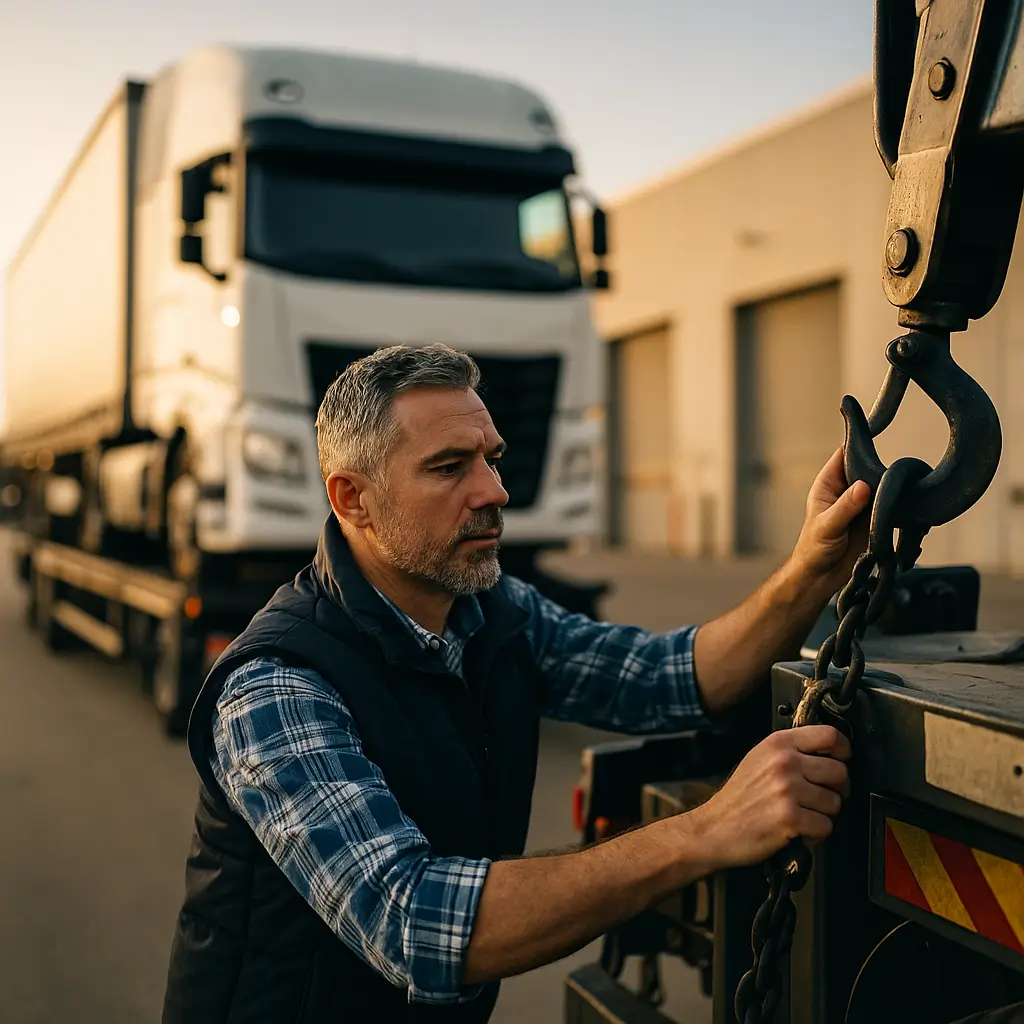

See 2026 towing insurance costs of $450–$1,200/month, annual price ranges, key rate factors, coverage needs, and ways to lower premiums.
If you’re asking how much is towing insurance in 2026, the most common real-world range for a single light-duty truck is $450–$1,200 per month (about $5,400–$14,400 per year), with higher-exposure operations often exceeding $1,500 per month (about $18,000 per year).
Towing insurance usually isn’t one policy—it’s a package built around commercial auto plus towing-specific coverages, so you’ll want to compare quotes based on what’s actually included. Start by reviewing tow truck insurance coverage and program basics so you’re comparing apples to apples.
If you’re just getting started in towing, this breakdown covers what you’ll need beyond just insurance:
Table of Contents
Reading time: 8 minutes
- 2026 quick answer: typical towing insurance price ranges
- What you’re actually buying (the policies that make up towing insurance)
- Cost by operation type + state snapshot (why California often prices higher)
- How to lower tow truck insurance costs + simple cost calculator
- Frequently Asked Questions
- Conclusion

2026 Quick Answer: Typical Towing Insurance Price Ranges (Monthly vs. Annual)
In 2026, many light-duty towing operators land around $450–$1,200 per month ($5,400–$14,400 per year) per truck, while higher exposure operations commonly exceed $1,200+ per month ($14,400+ per year).
Insurance is one of the biggest line items in vehicle-based businesses, and small changes in premium and loss control can move cash flow fast—especially when you’re running daily calls and working in traffic. For broader industry context on operating costs, see ATRI’s research: ATRI’s Operational Costs of Trucking research.
Sanity-check ranges (per truck)
| Pricing level (per truck) | Monthly estimate | Annual estimate | What it usually represents |
|---|---|---|---|
| Lower end (best-case) | $450–$650 | $5,400–$7,800 | Clean loss history, light-duty, smaller radius, moderate limits |
| Typical working range | $650–$1,200 | $7,800–$14,400 | Average risk profile, some towing-specific coverage, financed truck physical damage |
| Higher risk / higher exposure | $1,200+ | $14,400+ | Heavy-duty/recovery, repo/impound-heavy, storage exposure, prior losses |
What “from $X/month” often excludes
Many “cheap” online numbers are basically commercial auto only, and that may exclude towing-specific coverages that motor clubs, municipalities, lenders, and contracts expect (like on-hook limits and storage-related protection).
If you’re trying to understand why two quotes are $700/month apart, it usually comes down to underwriting and rating inputs. This explainer helps you spot what’s moving the price: commercial auto insurance rate factors.
What You’re Actually Buying: The Policies That Make Up Towing Insurance (and What Moves the Price)
A towing insurance “program” is typically a package that combines commercial auto liability, physical damage, and towing-specific coverages like on-hook (and sometimes storage-related protection), and the limits you choose can change the premium quickly.
For a broader look at what underwriters actually look at when pricing your operation:
Think of it like stacked protection: the base layer keeps you legal and contract-ready, and the towing-specific layers keep one claim from turning into a business-ending check.
Commercial auto liability + physical damage (the base layer)
Commercial auto liability pays for bodily injury and property damage you cause while operating the tow truck, and many accounts commonly require $1,000,000 auto liability limits on certificates of insurance.
- Liability: Covers damage/injury you cause to others.
- Physical damage (comp/collision): Covers your tow truck itself and is often required when the truck is financed.
This layer is non-negotiable if you’re running a wrecker, carrier, rollback, or heavy-duty unit—because one major loss can wipe out a year of profit.
On-hook towing coverage (often the biggest towing-specific price driver)
On-hook towing coverage generally applies to the customer’s vehicle while it’s being towed or transported, and higher on-hook limits (for example, $100,000+) can increase premium meaningfully.
This is where towing gets expensive fast: vehicle values are up, claims are costly, and a loading or securement mistake can turn into a big check. Many contracts also require proof of on-hook limits.
If you want to compare quotes accurately, learn how on-hook limits, exclusions, and wording work before you pick a number: on-hook towing coverage.
Pro tip: Don’t guess your limit—review what you actually tow (newer SUVs, EVs, work trucks, vans) and choose a limit that won’t leave you paying out-of-pocket.
Cost by Operation Type + State Snapshot (Why California Often Prices Higher)
Towing insurance pricing is driven heavily by operation type and garaging ZIP, and a common California benchmark for a single light-duty tow truck is roughly $8,000–$18,000 per year depending on limits, losses, and exposure.
A light-duty roadside operator in a rural radius is a different risk than a 24/7 urban impound/repo rotation with a packed storage yard, so “state averages” don’t tell the full story.
Typical ranges by operation (per truck)
| Operation type | Typical annual range | Why it trends that way |
|---|---|---|
| Light-duty towing / roadside | $6,000–$15,000 | Higher frequency, lower severity (generally), lots of backing/traffic exposure |
| Medium-duty towing | $18,000–$35,000 | Higher vehicle values/severity, heavier equipment, more complex jobs |
| Heavy-duty recovery / rotator / winch-outs | $25,000–$45,000+ | Highest severity: expensive units + high-stakes recoveries + higher limits common |
| Repo / impound-heavy operations | Often higher than light-duty | Higher claim frequency potential, confrontation risk, stricter underwriting |
State snapshot (directional, not a promise)
- California: Often a higher-cost market due to traffic density, claim severity, and litigation trends; many operators report roughly $8,000–$18,000/year for single-truck setups depending on history and limits.
- Texas/Florida/New York/Illinois: Can swing widely by metro, weather (hail/hurricanes), theft, and medical/litigation patterns—garaging ZIP and radius matter more than “the state.”
For broader regulatory context on California insurance market data and rate filings, the California Department of Insurance is the official source to check before making state-specific assumptions.
If you’re trying to benchmark California specifically—or you operate across CA and neighboring states—use this as added context: California commercial truck insurance.
Licensing and rotation lists can change required limits
Local rotation lists and state/city rules can require specific liability limits, certificate wording (additional insureds/certificate holders), and storage-related requirements, and those requirements can materially change the premium.
Texas is one example of a state with a defined towing regulatory framework; always confirm current requirements with your regulator: https://www.tdlr.texas.gov/towing/.
How to Lower Tow Truck Insurance Costs (Without Creating a Coverage Gap) + Simple Cost Calculator
Lowering towing insurance costs usually comes from improving loss performance and tightening underwriting inputs (drivers, radius, controls) rather than deleting critical coverages like on-hook or storage-related protection.
Towing isn’t the place to get cute with coverage; the safer path is to reduce losses and present your operation like a professional risk. For more tactics, see how to lower commercial insurance premiums.
For a quick visual overview of startup costs and common mistakes towing operators make:
Practical levers that usually matter
- Raise deductibles strategically: Higher deductibles can lower premium, but only if you have the cash buffer to pay them.
- Dash cams + telematics: Helps defend claims (especially backing incidents) and may earn credits with some markets.
- Driver standards in writing: Clear MVR thresholds, backing rules, spotter policy, and documented training.
- Clean paperwork: No lapses, no late pays, clean loss runs—underwriters punish chaos.
- Secure storage exposure: Lighting, cameras, fencing, controlled access—especially if you store vehicles.
Simple towing insurance cost calculator (DIY estimate)
Step 1 — Pick a base annual range (per truck):
- Light-duty: $6,000–$15,000
- Medium-duty: $18,000–$35,000
- Heavy-duty recovery: $25,000–$45,000+
- Repo/impound-heavy: Start at light-duty, then add multipliers below
Step 2 — Apply rough multipliers (stackable):
- Claims in last 3 years: 1 claim (+15% to +30%); 2+ claims (+30% to +60%+)
- High-cost metro / high-litigation area: +10% to +25%
- Higher on-hook limits (e.g., $100K+): +10% to +25%
- Storage exposure (yard packed, long holds): +10% to +30%
- New venture / limited experience: +10% to +25%
Step 3 — Convert annual to monthly: Annual ÷ 12 = monthly.
Reality check: Underwriting determines the final premium; this calculator is meant to tell you what lane you should be in before you start calling agents.
Where towing overlaps trucking insurance (and why it matters)
Trucking insurance for an OTR unit often rates differently than towing because cargo, radius, and liability patterns aren’t the same, so don’t assume your tow program pricing matches your commercial truck insurance quote.
If you also do transport—hotshot, car-hauling, or a semi—tell your agent, because trucking insurance, hotshot insurance, and semi truck insurance exposures can require different forms and limits.
Frequently Asked Questions
For many light-duty towing operators in 2026, tow truck insurance costs about $450–$1,200 per month (roughly $6,000–$18,000 per year) per truck for a basic program.
That number moves fast based on garaging ZIP, loss history, driver MVRs, truck value (physical damage), and required limits. Heavy-duty recovery and repo/impound-heavy operations often price higher, especially when you add higher on-hook limits and any storage exposure. The most accurate way to compare is to quote the same limits and the same towing-specific coverages across carriers.
The biggest pricing drivers for towing insurance are loss runs/claims, driver MVRs/experience, operation type (light vs. heavy-duty vs. repo/impound), tow radius and call volume, garaging ZIP, truck value, and chosen liability/on-hook limits.
New ventures often pay more until they build time in business and show clean loss performance. Storage exposure also matters: long holds, packed yards, and prior theft/vandalism losses can raise premiums. If you want a cleaner quote process, have loss runs, driver lists, units, radius, and contracts ready before you shop.
Many single-truck towing operators in California see roughly $8,000–$18,000 per year for light-duty setups, depending on metro area, claims history, truck value, and the coverage stack.
California can trend higher in certain areas because traffic density, claim severity, and litigation can increase loss costs. The best approach is to compare multiple quotes using identical limits (like $1M auto liability if required) and identical towing-specific coverages (especially on-hook), then negotiate by improving controls rather than cutting protection.
On-hook generally applies while a customer vehicle is being towed or transported, while garagekeepers generally applies when the vehicle is in your care, custody, or control at your lot or facility (theft, vandalism, weather, fire, or impact—depending on the form and options).
If you store vehicles even overnight, you should review storage-side coverage separately because on-hook alone may not address lot exposures. For a focused breakdown, see garagekeepers insurance.
Yes — new ventures typically pay more until they establish a track record. Most markets want to see 2–3 years of loss runs; without them, underwriters assign a higher rate to reflect the unknown risk. You can offset some of the new-venture penalty by providing detailed operational information, including driver records, radius, equipment list, safety policies, and storage controls. Working with an agent who specializes in towing and starting with clean drivers and documented procedures can also help you avoid being priced like a chaotic risk from day one.
Heavy-duty recovery and wrecker insurance usually costs significantly more than light-duty towing insurance. Heavy-duty recovery operations — rotators, underlift-rotators, and heavy winch-out units — commonly run $25,000–$45,000+ per year per truck, compared with roughly $6,000–$15,000 for many light-duty operators. The gap comes from higher vehicle values, larger on-hook limits, more complex recovery jobs, and the catastrophic severity potential if something goes wrong.
There is no single federal minimum for every towing operation the way there is for many interstate trucking operations. Practical requirements usually come from state regulations, local rotation lists, motor club contracts, and municipal agreements. Many contracts require $1,000,000 combined single limit (CSL) commercial auto liability as a condition of doing business, and some require more. Always confirm current requirements with your state regulator and any contracts or motor clubs you work with before binding coverage.
Yes, but you need to tell your agent because hauling freight or cars for others is a different exposure than towing disabled vehicles. The coverage forms, filings, cargo/on-hook wording, and liability requirements can differ. Mixing towing and transport work without disclosing it can create coverage gaps or claim issues. If you regularly do both, your insurance program should be structured to cover both exposures with the right forms and limits for each type of work.
Commercial auto liability may cover scheduled drivers or permitted drivers depending on the policy language, but most towing programs require all drivers to be listed or approved through an MVR review before operating a covered unit. Drivers with recent major violations, at-fault accidents, reckless driving, or DUI history can affect both eligibility and premium. Confirm with your agent whether new hires must be added before they drive, and keep the driver list current to avoid coverage and underwriting problems.
Conclusion: Price It Like a Program, Not a Guess
Most operators don’t overpay because they’re “bad shoppers”—they overpay because they’re comparing different limits, different on-hook numbers, and different storage assumptions. If you price towing insurance like a program, the quotes start making sense.
Key Takeaways:
- Use a real range: Light-duty often falls around $450–$1,200/month per truck, with higher-exposure operations trending above that.
- Know your big movers: Claims, garaging ZIP, driver MVRs, radius, on-hook limits, and storage exposure usually decide the price.
- Lower cost the smart way: Improve controls (cameras, driver standards, lot security) before you delete coverages that can bankrupt you.
Related reading (to tighten quotes and coverage):
- umbrella liability insurance (when higher limits are worth it for contracts and catastrophic losses)
- commercial insurance quote checklist (what to gather so you get accurate pricing fast)
If you want, take the calculator estimate from this page, then quote the same limits across multiple markets. That’s the fastest way to find a fair price without finding out—after a claim—that you were underinsured.
If you’re trying to price out towing insurance for your operation — whether you’re light-duty, running heavy recovery, or building a fleet — LogRock can help you compare coverage across markets using the same limits so the quotes actually mean something. Talk to our team to ask questions, identify gaps, and get a quote built around what you actually do.
Talk to LogRock and get a towing insurance quote




