
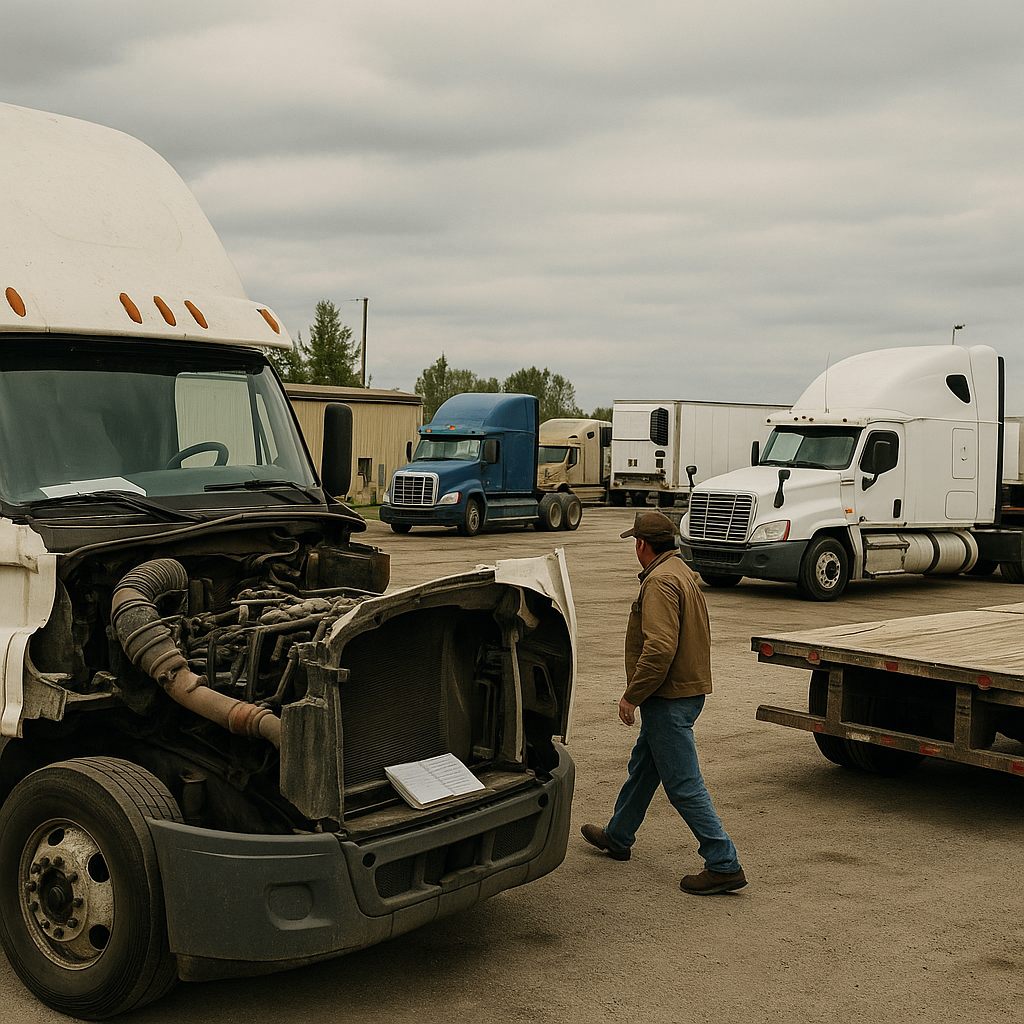

Truck accident liability coverage is the part of commercial auto insurance that pays for other people’s injury and property damage claims after a covered crash. If you run under your own authority or manage a small fleet, this is the coverage that keeps one accident from turning into an uninsured liability problem.
A lot of drivers hear “liability” and assume it covers anything bad that happens with the truck. It doesn’t. Your truck, your cargo, your own injuries, and non-business driving can all fall under different coverages, and federal rules may not match your state’s minimums.
What truck accident liability coverage actually is#
Truck accident liability coverage is the part of a commercial auto policy that helps pay third-party bodily injury and property damage claims after a covered accident. It protects against damage you legally owe to others, not damage to your own truck or your own medical treatment.
In plain English, this is your crash-into-someone-else coverage. If your truck causes injury to another driver, damages another vehicle, or tears up someone else’s building, guardrail, cargo belonging to someone else, or other property, liability is the part of the policy that may respond.
Plain-English definition#
Commercial auto liability is insurance for legal responsibility arising from the operation of a business vehicle. In trucking, that usually means the policy that responds when a covered truck accident causes bodily injury or property damage to someone outside your operation.
Bodily injury liability is the part that pays for other people’s injury-related losses after a covered accident. Property damage liability is the part that pays for damage your truck causes to other people’s vehicles or property.
Primary liability vs. personal auto#
Primary liability usually refers to the main commercial auto liability coverage tied to the truck’s business use. Personal auto insurance usually does not fit a semi, hotshot, or other truck being used for for-hire work, business hauling, or authority-based operations.
That’s where a lot of owner-operators get burned. A personal policy may exclude commercial use, heavier vehicles, or freight hauling. If the truck is being used in commerce, you need the policy to match the actual operation, not just the VIN and driver’s license.
What a claim can include#
A truck accident liability claim can include medical bills, lost wages, property repairs, and sometimes legal defense costs if the policy applies. It can also involve investigation costs and other claim expenses based on the policy wording and endorsements.
What it does not mean is “anything involving my truck is covered.” Liability is built around fault, covered use, and legal responsibility to others.
What liability pays for after a trucking accident#
Truck accident liability coverage usually pays third-party bodily injury, property damage, and related defense costs when the policy applies to a covered accident. It follows legal responsibility and covered operations, so not every accident involving the truck automatically falls under it.
After a serious crash, the money starts moving in different directions fast. One person may be dealing with ER bills, another with time off work, and someone else with a wrecked car or damaged storefront. Liability is meant to address those outside claims against the insured driver or carrier.
Bodily injury#
Bodily injury liability pays for injury-related claims by other people after a covered accident. That can include medical treatment, ambulance charges, rehab, lost income, and in serious cases larger injury claims tied to long-term harm.
If more than one person is hurt, multiple bodily injury claims can hit the same policy. That’s why the limit matters so much in trucking, where one crash can involve several vehicles and several injured people.
Property damage#
Property damage liability pays for damage your truck causes to someone else’s property in a covered accident. That usually means other vehicles, trailers you don’t own if covered under the right setup, buildings, fences, signs, or roadside structures.
For a truck, property damage can get expensive fast. One missed turn or rear-end crash can involve a pickup, a trailer, a load shift, a light pole, and a guardrail in the same event.
If you’re trying to make sure your policy actually matches your operation before a loss happens,
Defense and claim costs#
Defense costs are the legal and claim-handling expenses tied to responding to a covered liability claim. Many policies include defense, but how it’s handled depends on the policy language, endorsements, and the facts of the claim.
Some operators also assume every spill, cleanup bill, or pollution-related expense is automatically part of liability. That’s not safe to assume. Certain pollution, debris, or cleanup costs may be limited, excluded, or handled only with specific endorsements.
What liability does not cover#
Truck accident liability coverage does not pay for damage to your own truck, damage to your freight, your own injuries, or every non-driving business exposure. Those gaps are why trucking policies are built with separate coverages that sit alongside liability.
This is the part that confuses a lot of first-time authority holders. They buy “liability” thinking they bought trucking insurance as a whole, when really they bought one major piece of it.
Your truck#
Physical damage is coverage for your own truck, usually through collision and comprehensive or fire and theft with combined additional coverage. If you hit a bridge, back into a dock, or roll the truck, liability does not fix your tractor.
Collision covers damage from impact or upset. Comprehensive usually handles things like theft, vandalism, weather, or certain non-collision losses, depending on the form.
Your cargo#
Motor truck cargo is coverage for the freight you haul. If a crash, theft, or other covered event damages the customer’s load, cargo coverage is the policy built for that loss, not auto liability.
That’s a big distinction. Liability protects you against injury and property damage claims from others. Cargo protects the load you’re responsible for hauling.
Your own injuries#
Liability does not pay your own medical bills just because you were in the crash. If the insured driver gets hurt, that may involve occupational accident, health insurance, workers’ compensation where applicable, or another structure outside primary liability.
This is also why people asking about illness or off-duty medical issues are usually looking at the wrong type of insurance. Truck liability is accident-based and third-party focused.
Other trucking coverages#
Non-trucking liability, often called bobtail by drivers, is coverage designed for certain non-business uses when you’re not under dispatch or hauling freight, depending on the policy structure. It does not cover paid hauling.
Trailer interchange is coverage used when you have a signed interchange agreement for a trailer you don’t own. Non-owned trailer physical damage is often the better fit when there’s no signed interchange agreement and you’re responsible for a trailer you don’t own.
General liability is separate from auto liability. General liability covers non-driving business exposures, like certain slip-and-fall or premises-type claims, and it is not a substitute for truck accident liability coverage.
How liability limits work in the real world#
Liability limits are the maximum amount the insurer will pay under the policy for covered claims, not the amount a claim is worth and not a guaranteed settlement. In trucking, one crash can involve multiple injured people and multiple damaged vehicles, so the structure of the limit matters.
This is where policy numbers get misunderstood. A driver sees a limit on the declarations page and assumes that’s what any big claim will pay. In reality, the facts of the loss, number of claimants, fault, and policy terms all affect what happens.
Limit per person and per accident#
Split limits break bodily injury into a per-person cap and a per-accident cap. For example, a limit shown as $100,000/$300,000 for bodily injury generally means up to $100,000 for one injured person and up to $300,000 total for all injured people in that accident.
Property damage may be shown as a separate number in a split-limit policy. Some policies instead use a combined single limit, which puts one total amount across bodily injury and property damage together.
Why limits matter after a serious crash#
A truck accident can burn through low limits fast. If several people are injured, the policy’s total available amount may have to be divided among multiple claims, and damages above the limit can become a serious financial problem for the driver, carrier, or both.
That doesn’t mean every large claim gets paid at the full limit. It means the limit is the ceiling on what the insurer may pay for covered liability under that policy section.
What $100,000/$300,000 means#
When people ask what $100,000/$300,000 bodily injury liability means, they’re asking about split limits. The first number is the per-person bodily injury cap, and the second is the total bodily injury cap for the whole accident.
It is not a promise that a settlement will be exactly one of those numbers. A claim may settle for less, more parties may be involved, fault may be disputed, or damages may exceed the limit entirely.
FMCSA rules vs. state minimums#
Truck accident liability coverage requirements are not one universal number. Federal rules can apply to certain interstate trucking operations, while state rules can apply to intrastate operations and policy structures, so the right limit depends on what kind of trucking you actually do.

This is the part many operators hear secondhand and get wrong. Your state minimum isn’t automatically your federal minimum, and a line like “all truckers need the same liability limit” is flat-out inaccurate.
Why trucking liability is not one universal number#
Under FMCSA financial responsibility rules and 49 CFR Part 387, required minimums vary by carrier type, vehicle weight, and commodity. For-hire interstate carriers hauling general freight in vehicles over 10,001 pounds must carry at least $750,000 in public liability under 49 CFR Part 387.
Other operations scope differently. Under the same federal framework, vehicles under 10,000 pounds can fall under a lower threshold, auto haulers require a higher limit, and certain hazmat operations require much higher limits.
Interstate vs. intrastate use#
Interstate commerce means transportation crossing state lines or connected to the flow of goods across state lines. Intrastate commerce means transportation that stays within one state and is regulated primarily at the state level, though the exact compliance picture can still be more complicated than drivers expect.
If you run interstate freight, federal requirements can control. If you run intrastate only, state requirements may control the minimum, but the policy still needs to match the real operation and any shipper, broker, or contract requirements.
The NAIC is a useful reference point for understanding that insurance rules and forms vary by state, even when the trucking operation itself also has federal overlays.
Carrier type, weight, and cargo scope#
Before buying liability, verify whether you’re for-hire or private, whether the truck crosses the federal weight threshold, what cargo you haul, and whether you run interstate or intrastate. Those details drive compliance and affect how the policy should be written.
A small fleet with two trucks doing interstate general freight has a different liability setup than a lighter truck staying intrastate. A hazmat or auto hauling operation has a different requirement than ordinary general freight.
Who may be involved after a truck accident#
A truck accident claim may involve more than just the driver. Depending on the facts, the carrier, owner, another motorist, a shipper, a maintenance provider, or even a manufacturer may get pulled into the claim or lawsuit.
That’s why early assumptions go bad. The truck driver may be partly at fault, fully at fault, or not the only party with legal responsibility.
Driver fault is not the whole story#
Liability follows legal responsibility for a covered loss, and that responsibility can be disputed. Investigators may look at speed, braking, lane position, maintenance records, dispatch pressure, load securement, driver qualifications, and road conditions.
A crash is one event, but the liability picture behind it can have several moving parts.
Carrier, shipper, and manufacturer questions#
In some claims, people look beyond the driver to the motor carrier, the truck owner, the company that loaded the freight, or the manufacturer of a failed part. That doesn’t mean all of them are liable. It means the investigation decides who may share responsibility.
Small fleets should pay attention here. Once there are multiple units, multiple drivers, and different ownership or lease arrangements, the insurance setup needs to be clean.
When claims become legal disputes#
Serious injury claims often turn into legal disputes because damages are large and fault is contested. That’s one reason defense coverage and accurate policy setup matter so much before an accident happens.
How to check whether your liability coverage fits your operation#
The best way to avoid buying the wrong truck accident liability coverage is to match the policy to the real operation before binding. That means checking authority type, haul type, radius, truck weight, interstate or intrastate use, and how many trucks actually run under the business.
A lot of bad surprises start with a policy that looked close enough. In trucking, “close enough” can become a denied claim, a filing problem, or a policy that doesn’t fit your dispatch reality.
Match coverage to the truck and use case#
Start with the basics: who owns the truck, who operates it, what authority it runs under, what freight it hauls, and where it travels. If one truck sometimes stays local and sometimes runs interstate, tell the broker before the policy is issued.
If you’re under your own authority, verify your operating details through SAFER and make sure the policy lines up with what regulators, shippers, and your filings expect.
Questions to ask before binding#
Ask these questions before you bind:
- Is the policy written for for-hire or private use?
- Does the listed radius match how the truck really runs?
- Is the cargo type described correctly?
- Does the policy fit interstate or intrastate operation?
- Are all trucks and drivers disclosed correctly?
- Do I also need cargo, physical damage, non-trucking liability, or trailer coverage?
When to review or update the policy#
Review the policy any time the operation changes. New authority, a new trailer arrangement, adding a second truck, changing cargo, expanding radius, or moving from intrastate to interstate work can all change what fits.
What to do after a covered trucking accident#
After a covered trucking accident, handle safety first, document the scene, and notify the insurer promptly. Claims get decided on evidence, facts, and policy terms, so the paperwork and photos you gather in the first hour can matter a lot later.
Drivers don’t need a lecture here. They need a simple sequence they can actually follow on the side of the road.
Immediate safety steps#
Get to safety if you can do it without making things worse. Call emergency services when needed, follow law enforcement instructions, and secure the scene as best you can.
Don’t admit fault on the spot. Give factual information, cooperate with responders, and stick to what you actually know.
Document the scene#
Take photos of vehicle positions, damage, skid marks, road conditions, signs, trailer numbers, plate numbers, and anything relevant to the crash. Get witness names and contact information if possible.
Also save dispatch details, bills of lading, inspection notes, and any messages tied to the trip. In trucking claims, those details can matter more than drivers realize.
Start the claim process#
Report the accident to the insurer as soon as practical. Delayed notice can complicate claim handling, especially if vehicles get moved, evidence disappears, or stories change.
Have your policy information, accident details, police report information if available, and basic loss summary ready. If you’re not sure whether your current setup really fits your operation,
FAQ#
What is $100000 /$ 300000 bodily injury liability?
$100,000/$300,000 bodily injury liability is a split limit. It usually means the policy can pay up to $100,000 for injuries to one person and up to $300,000 total for all injured people from that accident. If four people are hurt, the total bodily injury payment still can’t go above the accident cap.
It does not mean every claim will settle at those numbers. Actual payment depends on the injuries, fault, the number of claimants, and whether the loss falls within the policy’s covered terms.
What does liability cover on a truck?
Liability on a truck usually covers third-party bodily injury and property damage after a covered accident. That can include another person’s medical bills, lost wages, vehicle repairs, damage to buildings or roadside property, and legal defense costs when the policy applies.
It does not usually cover your own truck, your own injuries, or the freight you’re hauling. Those are separate issues that may call for physical damage, cargo, occupational accident, non-trucking liability, or other coverages depending on the operation.
Is appendicitis covered under accident insurance?
Appendicitis is a medical condition, not an accident, so it is not something truck accident liability coverage pays for. Truck liability is meant for third-party injury or property damage you cause in a covered vehicle accident.
If someone is asking about appendicitis, they’re usually talking about health insurance or a separate accident medical policy, not commercial trucking liability. In other words, that’s a medical coverage question, not a truck liability question.
How much are most truck accident settlements?
There is no standard truck accident settlement amount. Settlements vary widely based on injury severity, medical treatment, lost income, property damage, fault, number of parties involved, and the available insurance limits.
A minor property damage claim looks nothing like a multi-vehicle crash with serious injuries. The policy limit also is not the same thing as the settlement value. Some claims resolve for less than the limit, while others involve damages that exceed available coverage.
Does truck accident liability cover my trailer or cargo?
Not by itself. Truck accident liability is mainly for third-party bodily injury and property damage you cause to others. If your cargo is damaged, that usually points to motor truck cargo coverage. If a trailer you don’t own is damaged, that may involve trailer interchange or non-owned trailer physical damage, depending on the trailer arrangement.
That distinction matters because many owner-operators assume one policy covers the truck, the freight, and the trailer in every situation. In practice, those are separate exposures and should be matched to how the truck actually operates.





