
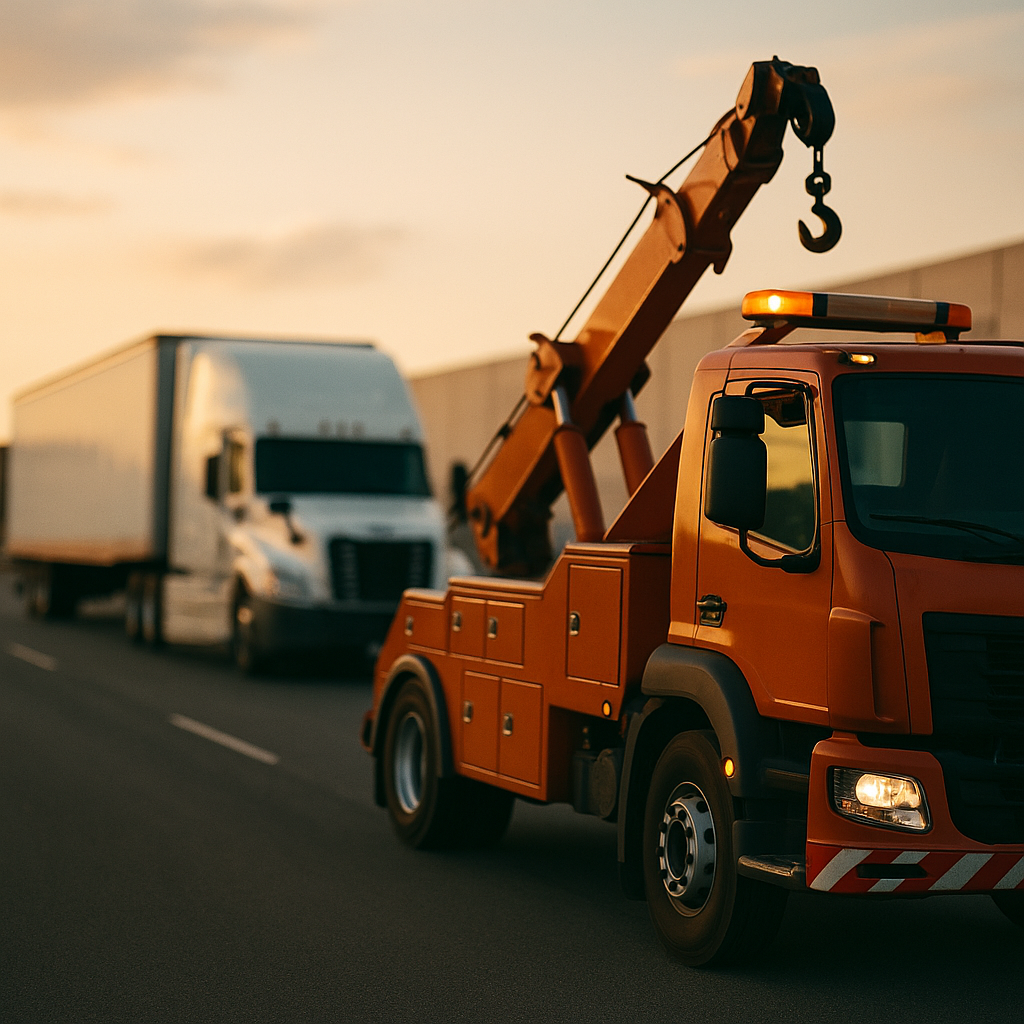

Truck breakdown cover—compare 4 plan levels, what’s included, exclusions, and the call-out process. Updated for 2026 (UK/US). Compare now.
Truck breakdown cover is a service plan (not insurance) that sends roadside help and/or pays for recovery when your truck can’t continue due to mechanical or electrical failure, usually with limits like tow miles, payout caps, and call-out rules. In practical terms, it can mean the difference between a quick roadside fix and a four-figure tow bill plus a missed load appointment.
Before you buy, be clear on what breakdown cover won’t do—because it doesn’t replace liability, cargo, or physical damage from your core commercial truck insurance basics. Use the checklist and plan-level breakdown below to compare options like-for-like (UK and US-style programs).
Table of Contents
Reading time: 8 minutes
- Introduction (read this before you buy)
- Key takeaways
- Truck breakdown cover explained: service plan vs trucking insurance
- What truck breakdown cover includes: 4 plan levels (and the limits that matter)
- Truck breakdown cover costs in 2026: what changes the price (and what’s “affordable”)
- How to use breakdown cover without losing a day (call-out, compliance, and provider checklist)
- Frequently Asked Questions
- Conclusion: buy the right level, then lock down the limits

Introduction (read this before you buy)
Most truck breakdown cover plans are sold as annual memberships with written limits (for example, a maximum tow distance and/or a maximum payout per event), so the contract wording—not the sales pitch—decides your real out-of-pocket cost.
Breakdowns aren’t just inconvenient; they’re cash-flow events. A dead truck can trigger missed appointments, broker complaints, and extra cargo handling risk while your fixed costs (truck payment, insurance, fuel card fees) keep running.
Before you spend money, get clear on what a plan does and what it doesn’t. That one step prevents most “I thought it covered that” surprises.
Featured-snippet answer (40–60 words)
Truck breakdown cover is a service plan that helps when your truck can’t continue due to a mechanical or electrical failure. It typically includes roadside assistance (diagnosis/minor fixes), recovery/towing to a repair facility, and—on higher tiers—trip interruption benefits like hotel/onward travel. Limits and exclusions vary by plan and vehicle class.
Use the checklist below to compare breakdown cover plans in 5 minutes—without getting sold add-ons you’ll never use.
Key takeaways
Truck breakdown cover is a non-insurance service contract that typically provides dispatch, roadside labor, and towing subject to measurable limits like tow-mile caps, maximum payout per event, and call-out rules.
- Pick the service level first (roadside vs recovery vs trip interruption), then compare providers like-for-like on limits and exclusions.
- Breakdown cover is not trucking insurance—it won’t replace semi truck insurance protections like physical damage or cargo coverage.
- “Affordable” comes from fit, not cheap: correct weight class, correct operating area, clear tow limits, and the right add-ons (tires/winching/trailer).
- Your call-out process matters: safety steps + documentation can prevent denials and keep you compliant at the roadside.
Truck breakdown cover explained: service plan vs trucking insurance
In the US, FMCSA financial responsibility rules require at least $750,000 in public liability coverage for most interstate for-hire carriers (general freight), and truck breakdown cover is a separate service plan that does not satisfy that requirement.
Breakdown cover (UK term) and roadside assistance (common US term) are services—someone dispatches help, coordinates towing, or reimburses you for certain costs. Insurance pays for covered losses (collision, theft, fire, cargo claims, liability to others).
What it is (plain English)
A membership or contracted service that can include:
- Call-out/dispatch: A provider sends help to your GPS location.
- Roadside attempt to fix: Minor repairs where possible (often limited by labor time).
- Recovery/towing: Transport to a repair facility or yard (depends on your tier).
- Trip interruption (higher tiers): Hotel/onward travel reimbursement if you’re stranded.
Why it’s essential (business risk)
If you’re an owner-op, one power unit is a single point of failure. A plan won’t prevent a breakdown, but it can reduce time-to-recovery—which is what protects revenue.
Who needs it (exact audience)
Breakdown cover is especially valuable for owner-operators, small fleets, hotshot operators, and any carrier hauling time-sensitive freight (reefer, automotive, high-value).
If you’re building your stack from scratch, start with core insurance first, then layer services on top. A solid reference point is your overall owner-operator insurance guide—because breakdown cover should complement it, not compete with it.
Pro tip: how to “stack” protection
- Commercial auto liability / semi truck insurance: Protects others + satisfies contracts and regulation.
- Physical damage: Protects your truck after covered losses.
- Cargo: Protects the freight.
- Breakdown cover/roadside: Gets you moving again (or gets you to the shop).
What truck breakdown cover includes: 4 plan levels (and the limits that matter)
Truck breakdown cover is commonly packaged into four service levels, and each level is governed by hard limits such as 30–60 minutes of roadside labor, a tow-mile cap (often 25–100 miles), or a maximum payout per event.
Providers market benefits. You need to read the limits—because limits decide whether you pay $0 or eat a heavy wrecker invoice plus extra mileage.
Level 1: Roadside assistance (call-out + diagnosis)
Usually includes dispatch to your location, basic troubleshooting, and minor repairs (often capped by labor time).
- Verify: Call-out fee vs included call-outs
- Verify: Labor time cap (for example, the first 30–60 minutes)
- Verify: Parts included or not (often not)
- Verify: Night/weekend rules and “best effort” language
Level 2: Recovery / towing
This is where many plans start paying off—especially in rural lanes and after-hours. Expect wording like “nearest suitable repair facility” or a defined destination rule.
- Verify: Max tow distance or max payout per event
- Verify: Heavy recovery (winching/uprighting) included or extra
- Verify: Whether they’ll tow truck + loaded trailer or tractor only
Level 3: Trip interruption (UK: onward travel/accommodation; US: trip interruption)
This tier helps when the truck is down and you’re stranded: hotel reimbursement, alternative transport, and sometimes meals.
- Verify: Per-night cap, number of nights, per-person cap
- Verify: Documentation required (receipts, shop note, timestamps)
- Verify: Trigger rules (commonly “X miles from home/base”)
Level 4: At-base/home-start + extended networks (Europe / cross-border where applicable)
Higher tiers may add at-base coverage (UK “home start”) and expanded territory (UK-Europe add-on or US nationwide network rules).
- Verify: Territory definitions (what counts as “covered”)
- Verify: Cross-border dispatch vs reimbursement-only rules
Quick comparison table (use this when shopping)
| Plan level | What’s included | Limits to verify (non-negotiable) | Best for |
|---|---|---|---|
| Level 1 | Dispatch + roadside attempt | Call-out fees, labor cap, parts excluded | Local/regional trucks near shops |
| Level 2 | Level 1 + towing/recovery | Tow miles/payout, heavy recovery, trailer | Long-haul and remote lanes |
| Level 3 | Level 2 + trip interruption | Night caps, distance-from-home trigger | Time-sensitive lanes, team ops |
| Level 4 | Level 3 + at-base + extended territory | Territory, cross-border rules | Cross-border work, multi-lane ops |
The most common misunderstanding (don’t get burned)
Breakdown cover helps you get serviced and moved, but it usually does not pay for major repairs the way insurance can after a covered loss. If you’re trying to protect the truck itself, you’re thinking about physical damage (comprehensive & collision) coverage—not a roadside plan.
Buyer checklist: ask these 10 questions before you buy
- Is my truck’s GVWR / weight class explicitly eligible?
- Is this roadside only, or does it include recovery/towing?
- What’s the maximum tow distance or maximum payout per event?
- Do you cover heavy recovery (winching/uprighting), and what are the limits?
- Are tires/tyres included? What about blowouts vs sidewall damage?
- Do you cover lockout, misfueling, and battery replacement, or only jump-start?
- Do you cover truck + loaded trailer, or tractor only?
- Do you dispatch directly, or is this reimbursement after I pay?
- What proof do you require (photos, invoices, shop report)?
- How many call-outs per year before fees kick in?
Want help picking a level? Get a quick recommendation based on your route and truck type.
Truck breakdown cover costs in 2026: what changes the price (and what’s “affordable”)
For 2026 budgeting, truck breakdown cover commonly ranges from a few hundred dollars per year for light-duty roadside tiers to low-thousands per year for heavy recovery tiers, depending on tow-mile caps, heavy recovery limits, and territory.
There’s no honest single “average cost” because pricing depends on vehicle class, operating area, and service limits. But the cost drivers are predictable—and that’s how you keep it affordable.
Repair, maintenance, and downtime are consistently major operating cost categories for carriers, which is why breakdown planning matters in the first place (see ATRI’s operational cost analysis: ATRI 2024 update).
Pricing models you’ll see
- Annual membership (per vehicle): Predictable cost; common for single-truck ops.
- Pay-on-use: Lower upfront; higher out-of-pocket when it hits.
- Fleet contracts: Negotiated rates, SLAs, centralized dispatch.
Main cost drivers (what actually moves the number)
- Truck type & weight class: A hotshot setup isn’t priced like a loaded tractor-trailer.
- Operating radius & remoteness: Rural breakdowns often mean longer response and longer tows.
- Service level: Tow miles, heavy recovery, trip interruption benefits.
- History: Frequent call-outs can change pricing or eligibility.
Illustrative market ranges (not a guarantee—use for budgeting)
- Light-duty / some hotshot-style setups: often hundreds per year for basic roadside tiers.
- Heavy truck / HGV-class recovery tiers: often several hundred to low-thousands per year depending on recovery limits and territory.
- Pay-on-use dispatch: can look cheap annually, but one heavy recovery event can exceed a full year of membership.
If your goal is affordable trucking insurance overall, don’t treat breakdown cover as a separate island. Use it to reduce downtime risk, then tighten total spend with proven tactics from how to save on truck insurance.
How to use breakdown cover without losing a day (call-out, compliance, and provider checklist)
Under 49 CFR §392.22, drivers must place warning devices within 10 minutes when stopped on a traveled portion or the shoulder (except where not required), so your first “breakdown step” is safety and scene control.
This is where owner-operators win or lose time. When the truck stops, you need a repeatable process—because you’re stressed, you’re on the shoulder, and revenue is bleeding by the minute.
Step 1: Roadside safety (do this first, always)
- Get as far off the travel lane as possible (if safe).
- Hazards on, triangles out, scene protected.
- Message dispatch/broker early if the appointment will slip.
- Use an exact location pin (Trucker Path, Google pin drop, mile marker/exit).
Roadside events can become compliance touchpoints. FMCSA explains roadside inspections and why they happen: FMCSA roadside inspections.
Step 2: Make the call-out (what they’ll ask you)
Have this ready so dispatch doesn’t burn 15 minutes:
- Exact location: direction of travel + nearest marker/exit
- Truck info: unit number, plate, VIN (if required)
- Trailer details: loaded, hazmat, reefer running (Y/N)
- Symptoms: no-start, derate, air loss, coolant leak, etc.
- Safety issues: smoke, fuel leak, traffic exposure
Step 3: Document for reimbursement (if your plan reimburses)
If you’re on a reimbursement-style plan, assume you’ll need:
- Photos (dash/warning lights + location)
- Receipts + invoices
- Timestamps (call time, arrival time, tow time)
- A basic diagnosis note from the shop
Step 4: Avoid the repeat-denial traps
Denials often happen when it looks like:
- Pre-existing/unroadworthy condition
- Poor maintenance (no records)
- Operating outside declared territory
- Unauthorized modifications affecting eligibility
UK vs US terminology (so you don’t buy the wrong thing)
- UK “breakdown cover” often bundles tiers like onward travel/accommodation and sometimes Europe options.
- US “roadside assistance” is commonly towing & labor, network dispatch, or reimbursement—with separate trip interruption limits.
Same goal, different packaging. Always read dispatch and reimbursement rules before you buy.
Provider selection checklist (copy/paste email template)
Use this exact template to get apples-to-apples quotes:
Subject: Quote request — truck breakdown cover (please confirm limits in writing)
Body:
1) Vehicle: (year/make/model), GVWR, tractor only or tractor+trailer
2) Operation: local/regional/OTR; typical radius; cross-border (Y/N)
3) Requested level: roadside + recovery + (trip interruption Y/N)
4) Confirm: max tow miles/payout, heavy recovery/winching limits, trailer coverage, tire/battery/lockout/misfuel add-ons
5) Confirm: dispatch method (direct vs reimbursement), documentation required, call-out caps, response-time targets
Because breakdowns can turn into paperwork fast, it helps to run a clean compliance routine. Keep your basics tight with a DOT compliance checklist for owner-operators—especially if you’re running multi-state, managing HOS/ELD, and don’t want a roadside problem to turn into an out-of-service day.
Frequently Asked Questions
Truck breakdown cover is a service plan that dispatches roadside help and/or pays for towing when your truck can’t continue due to mechanical or electrical failure, and it’s governed by written limits like tow-mile caps and maximum payout per event. It reduces downtime, but it doesn’t replace insurance. For example, it won’t satisfy FMCSA liability requirements (most interstate for-hire carriers need at least $750,000 in public liability) and it typically won’t pay for major mechanical repairs. Treat it as an operational tool: fast dispatch, controlled recovery costs, and optional trip interruption reimbursement depending on the tier.
Most truck breakdown cover starts with roadside assistance (dispatch, diagnosis, and minor fixes) and scales up to recovery/towing plus trip interruption benefits on higher tiers. In practice, plans often cap roadside labor to a set time (commonly 30–60 minutes) and towing to a tow-mile limit (often 25–100 miles) or a maximum dollar payout. Common add-ons include tires/tyres, battery replacement (not just jump-start), lockout, misfueling, and heavy recovery/winching—each with its own exclusions and sub-limits. Always confirm whether the plan covers tractor-only or truck plus loaded trailer.
Truck breakdown cover pricing in 2026 commonly runs from a few hundred dollars per year for light-duty roadside tiers to low-thousands per year for heavy recovery tiers, depending on your truck class, territory, and benefit limits. You’ll typically see annual memberships, pay-on-use dispatch, or fleet contracts with negotiated SLAs. “Affordable” usually comes from buying the right limits—tow miles/payout, heavy recovery, and trailer coverage—rather than buying the cheapest tier. If you’re also trying to lower total premium spend, use breakdown planning alongside proven tactics from how to save on truck insurance.
Many hotshot rigs qualify for truck breakdown cover, but eligibility depends on how the provider classifies your setup by GVWR bands (often under 10,000 lb, 10,001–26,000 lb, and 26,001+ lb) and whether you need tractor-plus-trailer recovery. When you quote, confirm in writing that your truck + trailer configuration is covered, that your operating radius is inside the plan territory, and whether heavy recovery/winching is included or excluded. Hotshot operators should also match roadside services to the right insurance program—start with hotshot insurance explained so you don’t confuse service benefits with liability/cargo/physical damage coverage.
Conclusion: buy the right level, then lock down the limits
The fastest way to buy the right truck breakdown cover is to match your plan to three measurable limits: tow miles/payout, heavy recovery/winching, and truck + trailer coverage. Once those are right, add trip interruption only if your lanes and appointment penalties make it worth it.
Key Takeaways:
- Choose the tier first: Level 1 roadside, Level 2 towing, Level 3 trip interruption, Level 4 territory/home-start.
- Compare limits, not slogans: labor minutes, tow miles, payout caps, trailer rules, reimbursement requirements.
- Stack it with real insurance: pair service coverage with the right liability, cargo, and physical damage (comprehensive & collision) coverage.
If you’re tightening the full risk program (not just roadside), keep these handy: Trucking insurance quotes and Cargo insurance limits and claims.





