
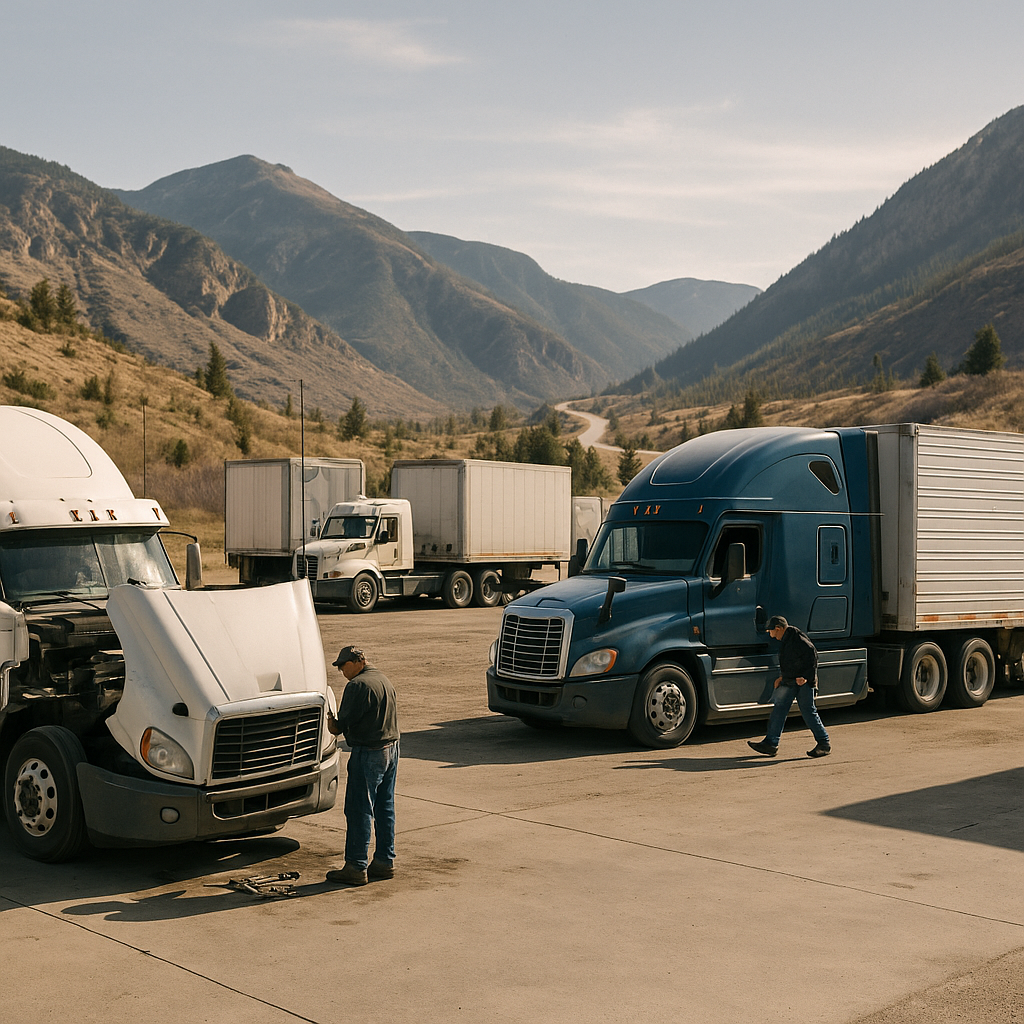

Truck dealer insurance Colorado shoppers often run into the same problem: most search results blur together dealer coverage, garage coverage, and motor carrier insurance. They aren’t the same thing. If you run a used truck lot, a franchised truck dealership, or a sales-and-service operation in Colorado, the right insurance depends on what your business actually does each day.
What Truck Dealer Insurance Covers in Colorado#
Truck dealer insurance is coverage built for dealership operations, not for a trucking company hauling freight. In Colorado, that usually means protection for your business location, inventory, customer vehicles in your care, and the day-to-day risks that come with selling, storing, servicing, or moving trucks.
This guide is for used truck dealers, franchised truck dealers, and smaller lot-only operations trying to sort out what coverage actually fits. It also helps if you’re comparing "truck dealer insurance," "auto dealer insurance," and "vehicle dealer insurance" and aren’t sure whether those labels mean different products.
Truck dealer insurance usually works like an auto dealer insurance package tailored to truck inventory and truck-related exposures. A lot that only sells units has a different risk profile than a dealer with a service bay, storage area, or regular customer test drives.
Who this guide is for#
A used truck dealer is a business that buys and sells pre-owned trucks. A franchised truck dealer is a dealership authorized to sell vehicles under a manufacturer brand. A lot-only dealer is a dealership focused mainly on display, storage, and sales without meaningful repair operations.
Those businesses can all need insurance, but not always the same mix. One operation may lean heavily on liability and property coverage, while another needs more attention on garage exposure and customer vehicles.
How dealer insurance differs from trucking insurance#
Trucking insurance protects a carrier moving freight on the road. Dealer insurance protects a dealership’s business operations. That’s the key split.
A truck dealer may still need commercial auto coverage for owned business vehicles, but that doesn’t turn the policy into motor carrier insurance. If you’re not hauling freight for hire, the coverage conversation is different from an owner-operator setting.
The core coverages most truck dealers consider#
Most Colorado truck dealers start with a core group of policies tied to their operation:
- General liability for customer injuries and premises claims
- Commercial property for buildings, signage, tools, and office contents
- Garagekeepers legal liability for customer vehicles in your care
- Commercial auto for business-owned vehicles used in operations
- Workers’ compensation if you have employees
- Umbrella insurance for extra liability limits
- Business interruption after a covered property loss shuts you down
The right package depends on whether you sell, store, service, or transport vehicles as part of the business.

Colorado Requirements and What Actually Matters Before You Buy#
Colorado truck dealer insurance doesn’t come from one universal package or one magic minimum. What matters first is separating licensing and business setup from insurance buying, then matching coverage to your operation, contracts, and actual risk.
State registration, licensing, lender demands, lease terms, and day-to-day exposures can all shape what you need. The mistake is assuming that "minimum required" equals "enough" or confusing dealer insurance with FMCSA carrier filings.
State licensing and business setup#
Colorado business and insurance oversight runs through state agencies, including the Colorado Division of Insurance under DORA. That matters because insurance questions for a dealership are state-regulated business issues, not automatically federal trucking issues.
Before you buy coverage, get clear on your entity, location, and licensing path. A dealer application, a lease, a floorplan lender, or a vendor contract may all ask for proof of coverage before you open or expand.
Insurance minimums versus business needs#
A certificate of insurance is a document showing that a policy exists and summarizes key limits and dates. An additional insured is a person or business added to certain liability coverage for specific contract-related reasons.
Many dealers focus on "What is the Colorado minimum?" when the practical question is broader. A landlord may require liability coverage. A lender may require property protection. A contract partner may request a certificate or additional insured wording. That’s why business needs often go beyond any simple state minimum concept.
This is also where people mix up dealer coverage with trucker coverage. A commercial auto coverage guide can help explain the vehicle side, but dealer operations are still their own insurance class.
Common compliance gaps for dealer operations#
The biggest gap is buying a generic business policy that doesn’t reflect what happens on the lot. If customers leave vehicles with you, if employees move units, or if test drives happen regularly, those exposures need to show up in underwriting.
The next gap is confusing dealership insurance with FMCSA rules. FMCSA and USDOT rules generally apply to motor carriers and related transportation operations, not simply to a business because it sells trucks. Federal financial responsibility rules under 49 CFR Part 387 apply to certain for-hire interstate carriers, which is a different question from dealership coverage. You can also verify motor carrier status through FMCSA SAFER, but that’s for carrier status checks, not a shortcut for dealer insurance planning.
When this mismatch shows up late, quotes stall, documents get kicked back, and the policy you bought may not match your actual risk. If you’re sorting through dealer coverage versus trucking coverage,
Coverage Types That Matter Most for Truck Dealers#
Most Colorado truck dealers don’t need every possible policy, but they do need the right ones for how the business runs. The main coverages usually center on customer vehicles, your building and contents, injury claims, employee-related exposures, and backup liability protection.
The practical way to think about this is simple: what do you own, what do customers leave with you, what can injure someone, and what would stop the business if something went wrong? That framework keeps the policy aligned with real dealership risk instead of guesswork.
Garagekeepers legal liability#
Garagekeepers legal liability is coverage for customer vehicles left in your care, custody, or control, subject to the policy’s terms and covered causes of loss. If a customer truck is on your lot or in your shop and a covered loss happens, this is the coverage dealers usually look at first.
This matters most for operations that store, inspect, repair, or otherwise hold vehicles that belong to someone else. If that sounds central to your operation, this deeper guide on garagekeepers coverage can help you understand where it fits.
Commercial property and contents#
Commercial property insurance protects your building and business property from covered physical loss. Contents coverage usually refers to the business personal property inside, such as tools, computers, furniture, parts, and office equipment.
For a truck dealer, that can include the office, signage, fencing, equipment, and service-area contents. Property exposure gets bigger when you own the building, have expensive tools, or depend on physical equipment to keep sales and service moving. This overview of commercial property insurance gives useful background on the property side.
General liability and umbrella#
General liability covers common third-party bodily injury and property damage claims that aren’t tied to your own vehicle use. Think slip-and-fall claims, customer injuries on the premises, or accidental property damage connected to ordinary business operations.
Umbrella insurance is extra liability coverage that sits above certain primary policies once their limits are exhausted. NAIC consumer guidance is useful here because it explains liability and umbrella concepts in plain language through NAIC.
For truck dealers with frequent public traffic, higher-value operations, or layered contractual requirements, umbrella coverage can make sense as added protection above the base policies.
Workers’ compensation and business interruption#
Workers’ compensation pays benefits for job-related employee injuries or illnesses as required by state law. If your Colorado truck dealership has employees, this is a core coverage area to address early.
Service bays, vehicle movement, lifting, and lot work all increase employee injury exposure. These workers’ compensation basics help frame the issue, even though your dealership operation has its own underwriting details.
Business interruption insurance helps replace lost income after a covered property loss shuts down operations, subject to policy terms. If a fire, storm, or other covered event leaves the lot or office unusable, this coverage can help the business survive the downtime.
How Truck Dealer Coverage Changes by Business Model#
Truck dealer insurance should match the way the dealership actually makes money. A Colorado used truck lot with no service work has different exposures than a dealer with a repair bay, storage yard, and constant vehicle movement.
That’s why underwriting asks detailed questions. The more clearly you can describe the operation, the easier it is to avoid paying for the wrong coverage or missing a key exposure.
Used truck dealer only#
A lot-only used truck dealer may focus first on general liability, property coverage, and any dealer-related vehicle exposure tied to inventory handling. If customer vehicles rarely stay overnight and no service work happens, garage exposure may look different than it would for a repair-heavy shop.
That doesn’t mean risk is low. Test drives, lot traffic, weather exposure, theft, and building-related claims still matter.
Truck dealer with service or repair bay#
Adding a service bay changes the insurance picture fast. Now you may have more tools, more employee injury risk, more premises exposure, and a stronger need for garagekeepers legal liability because customer vehicles are actively being worked on.
Underwriters also pay more attention to the type of repair work, staffing, housekeeping, and storage controls. A clean, accurate submission matters more once operations get more complex.
Dealer with inventory, storage, and customer test drives#
A dealer carrying larger or higher-value inventory can face more property and vehicle-related exposure. Frequent movement of units, off-site storage, or regular test drives can also affect how commercial auto and liability needs are viewed.
Not every vehicle dealer class fits every market the same way. A used truck dealer, mixed vehicle dealer, or RV-adjacent business may see different underwriting appetite depending on how the operation is classified.
What Affects Truck Dealer Insurance Cost in Colorado#
Truck dealer insurance cost in Colorado depends on the size, value, and complexity of your operation. There isn’t one flat price because underwriting looks at your location, inventory, claims history, employee setup, coverage limits, and how much vehicle handling or service work happens.
The better question isn’t "What’s the cheapest policy?" It’s "What details are driving this quote, and does the coverage fit the risk?" That approach leads to cleaner comparisons and fewer surprises later.
Location and property values#
Where the dealership operates can affect both property and liability exposure. Local weather patterns, crime concerns, traffic patterns, and rebuilding costs all influence underwriting.
If you own the building, construction type and replacement cost matter too. If you lease, your landlord’s insurance requirements still shape the quote.
Vehicle inventory and lot size#
More vehicles and higher-value units usually mean more exposure. Bigger lots can mean more customer traffic, more movement of vehicles, and more opportunities for theft, vandalism, or accidental damage.
A dealership with storage yards or multiple locations may also face more underwriting questions. Inventory type matters as much as quantity.
Claims history and employee count#
Prior losses are one of the fastest ways to change how a risk is viewed. More employees can also mean more chances for workers’ compensation claims, driving incidents, or operational mistakes.
Even one avoidable issue can create friction if the submission doesn’t explain what changed since the loss. Organized records help here.
Coverage limits and deductibles#
Higher liability limits usually increase the quote. Lower deductibles can do the same because the policy responds sooner on covered losses.
That doesn’t mean lower limits or higher deductibles are always smarter. Your actual premium depends on your operation, inventory, property, driving exposure, claims history, and other factors.
How to Get Quotes and Avoid Paying for the Wrong Coverage#
The fastest way to get useful truck dealer insurance quotes in Colorado is to show underwriters exactly what the business does. Good submissions reduce back-and-forth, help classify the operation correctly, and make it easier to compare policies on fit instead of just price.
If your quote request is vague, you’re more likely to get a generic package that misses an important exposure. Dealer insurance goes smoother when the business details are tight from the start.
What to gather before requesting quotes#
Have these details ready before you shop:
- Business entity and operating name
- Colorado location or locations
- Inventory type and approximate values
- Whether you sell only, or also service, store, or transport vehicles
- Employee count and job roles
- Prior losses or claims history
- Any lease, lender, or contract insurance requirements
- Any certificates of insurance or additional insured requests
A clean submission helps underwriting move faster and reduces avoidable rewrites later.
Questions to ask a broker or carrier#
Ask how the policy handles customer vehicles, lot exposure, service work, and business-owned vehicles. Ask what assumptions were made about your operation, because the wrong assumption can lead to the wrong form or missing coverage.
You should also ask what documents will be needed after binding. That includes certificates, financing-related proof, and any endorsements tied to your lease or contracts.
Red flags that suggest a mismatch#
Watch for policies that seem too generic to mention customer vehicles, service exposure, or lot operations. If your quote barely references how trucks are stored, moved, or worked on, that’s a warning sign.
Another red flag is a conversation that treats your dealership like a freight-hauling carrier without first understanding the business model. Specialist help can cut down on that confusion and speed up the process.
How to Reduce Insurance Costs Without Cutting Needed Protection#
You can reduce truck dealer insurance friction by making the operation easier to understand and easier to insure. The goal isn’t bargain hunting. It’s showing underwriters a controlled, well-documented business.
Improve lot and building safety#
Strong lighting, cameras, key control, secure fencing, and locked storage all help tell a cleaner risk story. Service areas should also have organized tool storage and clear housekeeping practices.
Document operations and losses#
Keep records on who moves vehicles, where they’re stored, and what service work is performed. If you had past losses, document what changed afterward so underwriters don’t assume nothing improved.
Choose deductibles strategically#
Higher deductibles can change the quote structure, but only if the business can realistically absorb them. A deductible should fit your cash flow, not just the quote sheet.
Review coverage after business changes#
If you add employees, take on repair work, expand inventory, or move locations, revisit the policy. Coverage that fit last year may be off-target now.
Choose a Colorado Dealer Insurance Partner That Understands Your Operation#
The best fit usually comes from someone who understands the difference between a truck dealer, a used truck lot, and a dealership with garage exposure. Speed matters, but accuracy matters more when certificates, documents, and classification details are on the line.
Ask whether the broker or carrier has real experience with truck dealers, garagekeepers policies, and mixed sales-and-service operations. Ask how they handle document requests, policy review questions, and underwriting follow-up before you bind.
FAQ#
Is truck dealer insurance the same as auto dealer insurance?
Truck dealer insurance is usually the dealer-operations version of auto dealer insurance, but it’s tailored to truck inventory and the way a truck dealership runs. The broad idea is similar: protect the dealership’s premises, liability exposure, business property, and sometimes customer vehicles in the business’s care.
Where it changes is the operation. A used truck dealer may have larger units, different storage patterns, more commercial vehicle movement, or a service bay. So the label can vary, but the real issue is whether the policy fits your actual dealership activities.
Do Colorado truck dealers have a specific insurance minimum?
There usually isn’t one universal Colorado insurance package that fits every truck dealer. What you need depends on your business structure, whether you own or lease the property, whether you have employees, whether customer vehicles are in your care, and what lenders or landlords require.
That means "minimum required" can be the wrong target. One dealer may mainly need liability and property protection, while another also needs garagekeepers, commercial auto, workers’ compensation, or umbrella coverage. Practical requirements often come from real operations and contracts, not just a single published minimum.
What coverages do most used truck dealers need?
Most used truck dealers look first at general liability, commercial property, and coverage for customer or business-related vehicle exposure. If customer vehicles are left on the lot or in a shop, garagekeepers legal liability often becomes important. If the dealership owns vehicles used in operations, commercial auto may also matter.
If the business has employees, workers’ compensation is usually part of the conversation. Some dealers also add umbrella insurance for extra liability protection and business interruption coverage to help after a covered shutdown. The final mix depends on what the dealership actually does each day.
How does garagekeepers legal liability work for a truck dealership?
Garagekeepers legal liability helps protect customer vehicles left in the dealership’s care, custody, or control from covered loss, subject to the policy’s terms. In plain language, if someone else’s truck is on your lot or in your shop and a covered event causes damage, this is the coverage designed for that exposure.
It’s especially relevant for dealers that store, inspect, service, or repair vehicles. It isn’t a catch-all for every vehicle-related issue, and the policy wording matters. That’s why it’s important to confirm exactly how the insurer classifies your operation and what situations the policy is meant to address.
When would a truck dealer need commercial auto insurance?
A truck dealer may need commercial auto insurance if the business owns, uses, or operates vehicles for dealership purposes. That can include moving inventory, making business errands, transporting parts, or using company vehicles in connection with sales or service operations.
This is different from motor carrier insurance for hauling freight. A dealership can need commercial auto coverage without being treated like a for-hire trucking carrier. The key question is whether the business itself uses vehicles in operations, not whether it sells trucks to others.
What makes a Colorado truck dealer quote go up or down?
Several factors affect a Colorado truck dealer quote: location, lot size, vehicle values, employee count, claims history, and whether the business also performs service or repair work. Higher limits and lower deductibles can also change the structure of the quote.
Underwriting also looks at how vehicles are stored, who moves them, whether the property is secured, and whether the submission clearly explains the operation. Clean records, accurate details, and organized documentation can help reduce friction. Your actual premium depends on your operation and the exposures attached to it.
How can I avoid buying the wrong coverage?
Start by matching the insurance to the business you actually run, not the label on a search result. A lot-only used truck dealer may need a different package than a dealer with a repair bay, customer storage, and frequent test drives.
Ask whether the quote addresses garagekeepers exposure, property exposure, customer traffic, and any business vehicle use. Compare policies on protection quality and assumptions, not just price. If the coverage conversation feels generic or treats your dealership like a freight-hauling carrier without understanding the operation, that’s a sign to slow down and recheck the fit.





