
If you’re applying for commercial truck insurance, the underwriter isn’t just pricing a truck. They’re reviewing the business behind it: your operation, drivers, equipment, freight, safety record, and the coverage you’re asking them to insure. For owner-operators and small fleets, that review decides whether a submission moves forward cleanly or gets slowed down by questions.
What Truck Insurance Underwriting Means for an Owner-Operator#
Truck insurance underwriting requirements are the facts, records, and risk details an insurer uses to decide whether it will insure your operation and on what terms. For a one-truck owner-operator, that means the carrier is reviewing a real commercial business, not treating you like a personal auto applicant.
Underwriting is a risk review, not just an application#
Underwriting is the insurer’s review of whether it can insure a specific business, driver, truck, and coverage request. The application starts the process, but the real decision comes from matching your information to the carrier’s guidelines.
That review usually looks at how you operate, who drives, what you haul, where you travel, what truck is involved, and whether the supporting records line up. If something doesn’t match, the underwriter usually asks questions before making a decision.
Why commercial trucking is evaluated differently from personal auto insurance#
Personal auto insurance usually focuses on the driver, vehicle, household, and everyday use. Commercial trucking adds business use, cargo, operating radius, vehicle weight, authority status, contract obligations, and regulatory exposure.
A USDOT number is the identifying number tied to a carrier’s safety and operational records with the Federal Motor Carrier Safety Administration. An MC number is federal operating authority used when certain for-hire interstate operations need it.
If you haul for business, you’re being reviewed as a commercial risk even if you only run one truck. That’s where a lot of confusion starts for new operators who assume personal auto rules or state minimums answer the whole question.
What an approval decision can look like#
An underwriting decision doesn’t always come back as a simple yes or no. A submission might be approved, approved with conditions, sent back for more information, declined, or offered with different terms than you requested.
Conditions can include documentation requests, different deductibles, narrower coverage options, or changes to driver eligibility. That’s normal in trucking, especially for new authority, unusual cargo, inconsistent records, or prior losses.

Start With the Operation Insurers Are Actually Being Asked to Cover#
Underwriters need an accurate picture of your actual trucking operation before they can judge eligibility. The first job isn’t debating price or limits; it’s making sure the submission correctly describes who is operating, what the truck does, where it travels, and what kind of risk the insurer is being asked to take on.
For-hire, private, and leased-on operations#
A motor carrier is the business responsible for operating commercial vehicles in transportation. Underwriters need to know whether you’re hauling for-hire, running private carriage for your own business, or operating leased-on to another carrier.
That matters because each setup changes what the insurer needs to review. A leased-on owner-operator may need coverage scoped around the lease arrangement, while a for-hire carrier operating under its own authority may need a broader review of filings, operations, and freight exposure.
Interstate versus intrastate work#
Interstate means you transport property across state lines or as part of interstate commerce. Intrastate means the transportation stays within one state and is regulated under that state’s rules.
Underwriters usually ask where the truck travels, which states you enter, your operating radius, and whether your work is local, regional, or long-haul. They also often ask for annual mileage, garaging address, and projected or current revenue, because those details help define how the truck is actually used.
Authority status, operating radius, and garaging location#
A new authority submission often gets more scrutiny because there’s less operating history to review. Inactive authority, recently changed authority, or mismatched authority details can also trigger follow-up questions.
The primary garaging address matters because insurers rate and underwrite partly based on where the truck is based. If the truck is parked somewhere different from the application, or the operation runs farther than the stated radius, the underwriter may question whether the submission reflects the real exposure.
Truck weight, equipment type, and cargo#
Gross vehicle weight, truck type, trailer type, and commodity all affect the risk being reviewed. A tractor hauling general freight is different from an auto hauler, a refrigerated operation, or a lighter commercial vehicle running short local trips.
Cargo also changes both liability and cargo exposure. The insurer needs a clear description of what you haul, not a vague catch-all that hides the actual risk.
A MCS-90 is a federal endorsement attached to certain liability policies to satisfy public financial responsibility rules when required. Under 49 CFR Part 387, federal financial responsibility requirements are separate from an insurer’s own underwriting decision, so meeting a filing requirement doesn’t automatically mean every insurer will approve the risk.
The Five Core Areas Truck Insurance Underwriters Review#
Most truck insurance underwriting requirements fall into five buckets: drivers, losses, safety and compliance, equipment, and business operations. Underwriters may weigh them differently from one carrier to another, but these are the categories that usually drive questions, conditions, and approval decisions.
Driver history and experience#
Driver review usually starts with license status, CDL class, age, experience, and commercial driving history. A motor vehicle record, or MVR, is the official driving record showing license status, violations, and other reportable history.
For small fleets, the underwriter often wants the complete driver list, not just the owner’s record. A commercial driver’s license, or CDL, is the license required to operate certain commercial motor vehicles, and the qualification context comes from federal driver standards under 49 CFR Part 391.
Newer drivers, major violations, gaps in commercial experience, or mismatched driver information don’t always mean a decline. But they usually mean closer review.
Loss history and prior insurance#
Underwriters want the truth about prior claims, prior coverage, cancellations, lapses, and non-renewals. Loss runs, declarations pages, and cancellation notices help them verify the timeline and understand what actually happened.
This is one area where bad shortcuts hurt submissions fast. If the application says no prior losses but the records show a claim, or if prior insurance dates don’t line up, the underwriter starts questioning everything else too.
Safety and compliance record#
A carrier’s public safety footprint can shape underwriting, especially for interstate operators. Underwriters may review inspection history, crash history, out-of-service patterns, and other identifying details through SAFER, which is FMCSA’s public safety and company information system.
Written safety practices also matter. Even a one-truck operation can improve a submission by showing how it handles inspections, driver expectations, cargo securement, and accident response.
Equipment condition and maintenance#
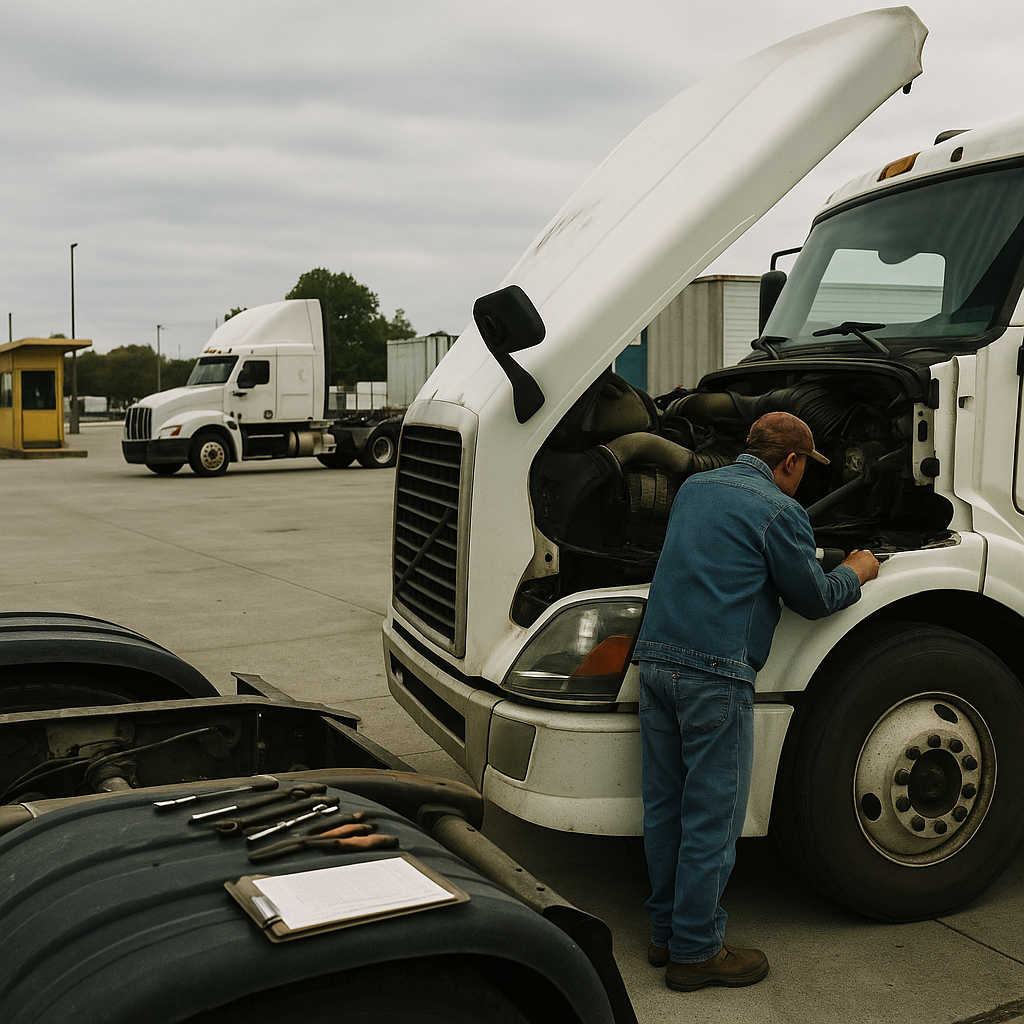
Underwriters also look at the truck itself: age, condition, ownership, lease status, value, and whether maintenance appears controlled. They may ask about inspection routines, major repairs, storage, anti-theft practices, and whether the unit is financed.
A truck with weak documentation isn’t automatically uninsurable. But older equipment with missing records tends to generate more questions than a well-documented unit with a clear maintenance history.
Business stability and operating controls#
The final review area is the business behind the truck. That can include years in business, revenue or projected revenue, consistency of routes, dispatch structure, contracts, and whether the operation appears organized enough to support the requested coverage.
No single factor guarantees approval or decline. Carriers have different guidelines, and the same risk might be viewed differently depending on the full file.
If your submission has gray areas, it’s better to catch them before the underwriter does. If you’re not sure whether your operation profile and records match, [](https://www.logrock.com/?utm_source=BLOG&utm_campaign=Truck-Insurance-Underwriting-Requirements).
Build a Truck Insurance Submission Checklist Before You Apply#
A strong truck insurance submission starts with two groups of information: the basics needed to quote and the documents that help answer underwriter questions quickly. For owner-operators, having both ready can save days of back-and-forth and reduce the odds of avoidable delays.
Information usually required for a quote#
Most submissions need the basic operating profile first. That usually includes your legal business name, garaging address, USDOT number, MC number when applicable, years in business, requested effective date, states traveled, operating radius, annual mileage, and revenue or projected revenue.
You’ll also usually need driver details, truck VINs, unit descriptions, stated vehicle values, cargo description, trailer information, and prior insurance history. If you’re a small fleet, make sure every listed driver and truck is accounted for.
Documents that strengthen a submission#
Helpful support documents can answer questions before they become delays. Common examples include:
- MVRs
- loss runs
- declarations pages
- maintenance logs
- inspection reports
- lease agreements
- driver qualification materials
- written safety policies
- cargo-control procedures when freight type makes that relevant
A driver qualification file is the set of records a carrier keeps to document that a driver is qualified under applicable rules and company standards. You may not need to send every record up front, but having them organized helps when the underwriter asks.
What to verify before sending records#
Before sending anything, check for consistency. Dates, addresses, driver names, VINs, authority details, and prior insurance periods should match across the application and supporting records.
If one document shows interstate operation and another says intrastate only, expect questions. The same goes for mismatched garaging addresses, missing drivers, or cargo descriptions that don’t reflect what you actually haul.
Match the Coverage Request to the Risks in Your Operation#
Underwriting doesn’t stop at auto liability. The insurer also looks at whether the full coverage package fits your truck, freight, contracts, trailer responsibilities, and how the unit is used on and off dispatch.
Auto liability and required filings#
Auto liability is the coverage that pays when your truck causes bodily injury or property damage to others. For interstate for-hire carriers, federal minimum financial responsibility rules depend on carrier type, weight, and commodity under 49 CFR Part 387.
For example, for-hire interstate carriers hauling general freight in vehicles over 10,001 pounds must carry at least $750,000 in public liability under 49 CFR Part 387. That does not mean all truckers need the same limit, and it does not answer whether a particular insurer will underwrite the risk.
Motor truck cargo and customer freight responsibilities#
Motor truck cargo covers legal liability for damage to freight you’re hauling, subject to the policy terms. Cargo underwriting usually turns on what commodities you haul, what limit you’re requesting, how freight is secured, where the truck is left, and how claims are handled if something goes wrong.
If you haul higher-theft or temperature-sensitive freight, expect more questions. Vague answers like “general freight” can create trouble if they don’t match the real commodity mix.
Physical damage and stated equipment value#
Physical damage covers damage to your own insured equipment, usually through collision and comprehensive or fire and theft with combined additional coverage, depending on how the policy is structured. Underwriters usually review truck value, ownership, condition, deductibles, and any lender or lease requirements.
Collision should not be treated like a standalone add-on without the rest of the physical damage structure the insurer requires. If the unit value is overstated or understated, that can create both underwriting and claims problems.
Non-trucking liability, trailer interchange, and reefer breakdown#
Non-trucking liability covers liability when the truck is used for non-business driving, not while hauling or under dispatch. Trailer interchange applies when you have a signed interchange agreement making you responsible for a trailer you don’t own. Non-owned trailer physical damage applies when you’re responsible for a trailer you don’t own but may not have that interchange agreement.
Reefer breakdown covers certain losses tied to refrigeration unit breakdown for eligible temperature-controlled operations. These coverages should be requested because your contracts and real operations create the exposure, not because someone online said every truck needs them.
State minimums, FMCSA filing obligations, and insurer underwriting guidelines are three different questions. Mixing them together is how operators end up with the wrong coverage request.
Address Underwriting Concerns Before They Delay Your Approval#
The best way to handle underwriting concerns is simple: answer the question with records and a clear explanation. Trying to soften, hide, or guess around a problem usually creates more delay than the original issue.
Correct incomplete or inconsistent records#
Start by identifying exactly what the underwriter is questioning. Then pull the source documents, correct any application errors, and make sure the final submission matches the evidence.
If the garaging address changed, update it. If the authority status is wrong, fix it. If a driver was omitted, disclose it before the underwriter finds the mismatch.
Explain claims and violations with supporting facts#
A prior claim or violation is not always a deal-breaker. What slows review is a missing explanation, unclear timeline, or records that don’t agree on what happened.
A short written explanation can help when it sticks to facts: what happened, when it happened, what was repaired or resolved, and what changed afterward. If driver coaching, policy updates, or repaired equipment addressed the issue, document that too.
Strengthen safety and maintenance documentation#
Underwriters like evidence that the operation is being managed, not just promised. Maintenance logs, inspection reports, repair invoices, and preventive service records help show that equipment is being maintained with some discipline.
That matters because federal maintenance rules under 49 CFR Part 396 give context for why equipment condition and maintenance records matter in a trucking submission. The same idea applies to written safety expectations and follow-through.
Avoid coverage gaps and last-minute changes#
A gap in prior coverage, a surprise truck swap, a new driver added at the last minute, or a changed cargo profile can throw off an otherwise clean submission. Tell the broker or insurer when something changes after you apply.
That includes changes to trucks, drivers, trailers, routes, radius, authority, and freight. Underwriting decisions are based on the file submitted, so major changes after submission need to be updated fast.
Use Underwriting Readiness to Make a Better Insurance Decision#
Underwriting readiness means giving the insurer a complete and accurate picture of the business you actually run. It isn’t about making your operation look prettier on paper. It’s about reducing confusion, avoiding preventable delays, and making sure the policy offered fits the risk.
Questions to ask before binding coverage#
Before binding, confirm that the policy matches your freight, states traveled, radius, listed drivers, truck values, trailer responsibilities, and contract requirements. If any of those are off, the cheapest-looking option on paper can become the wrong fit in practice.
That matters even more for new authority or growing fleets. Adding a driver, truck, trailer arrangement, cargo type, or new lane can change what the insurer is underwriting.
When a new authority or growing fleet needs a fresh review#
A new authority often needs a fresh look because there may be limited operating history. A growing fleet also needs updates because the risk profile changes as soon as you add units, drivers, or new business types.
Forum advice usually skips the details that matter most: whether you’re for-hire or private, interstate or intrastate, what you haul, how heavy the equipment is, and what filings apply to your exact setup.
Keep your insurance file current throughout the year#
The easiest way to avoid last-minute problems is to keep your insurance file current. Save updated loss runs, maintenance records, lease documents, truck values, and driver records as the year goes on.
If you’re not sure what coverage fits your operation, LogRock can help you scope it. [](https://www.logrock.com/?utm_source=BLOG&utm_campaign=Truck-Insurance-Underwriting-Requirements)
FAQ#
What are underwriting requirements in insurance?
Underwriting requirements are the information, records, and eligibility factors an insurer uses to decide whether to offer coverage and under what terms. In trucking, that usually includes your operating profile, drivers, claims history, prior insurance, safety record, equipment details, and the coverages requested. The underwriter is not just looking at a truck; they’re evaluating the business use behind it. For owner-operators, that means accurate details about authority, cargo, radius, garaging, maintenance, and driver history all matter because they shape how the insurer sees the risk.
What are the 5 important factors considered in underwriting?
For truck insurance, five practical factors usually drive the review: driver history, claims and prior insurance history, safety and compliance record, truck condition and maintenance, and the operating profile of the business. The operating profile includes things like for-hire versus private use, interstate versus intrastate travel, cargo, radius, revenue, and authority status. These five buckets give you a good prep list before applying. If you gather records for each one up front, you usually make the submission easier for the underwriter to review and easier to correct if questions come up.
What are the underwriting criteria for car insurance?
Personal car insurance underwriting usually looks at the driver, vehicle, garaging location, mileage, prior coverage, and claims history. Commercial trucking starts there but adds business use, cargo type, operating radius, trailer exposure, truck weight, driver qualification, authority status, and regulatory considerations. That’s why a one-truck owner-operator can’t rely on personal auto assumptions when applying for truck coverage. Even if only one person drives the unit, the insurer is underwriting a commercial transportation operation, not just an individual vehicle used for personal transportation.
What qualifies you to be an underwriter?
To be an insurance underwriter, a person is usually hired and trained by an insurance carrier, wholesaler, or managing general agency to evaluate risk and apply company guidelines. Qualifications vary by employer, but they often include insurance knowledge, analytical skills, attention to detail, and training in how to review applications, records, and loss history. Some underwriters also pursue professional education or certifications over time. That’s separate from qualifying for truck insurance. A truck applicant is being evaluated by the underwriter; they do not need underwriter credentials themselves.
Can I still get truck insurance with a claim, violation, or new authority?
Yes, sometimes, but it depends on the full file and the carrier’s guidelines. A prior claim, a violation, or new authority status does not automatically mean a decline. What matters is the surrounding context: what happened, how recent it was, whether the records are accurate, and whether you can show corrective action or stable operating controls. New authority often brings more scrutiny because there is less history to review. Clean documentation, honest explanations, and a submission that matches the real operation usually put you in a better position than trying to leave out details the underwriter is likely to find anyway.