
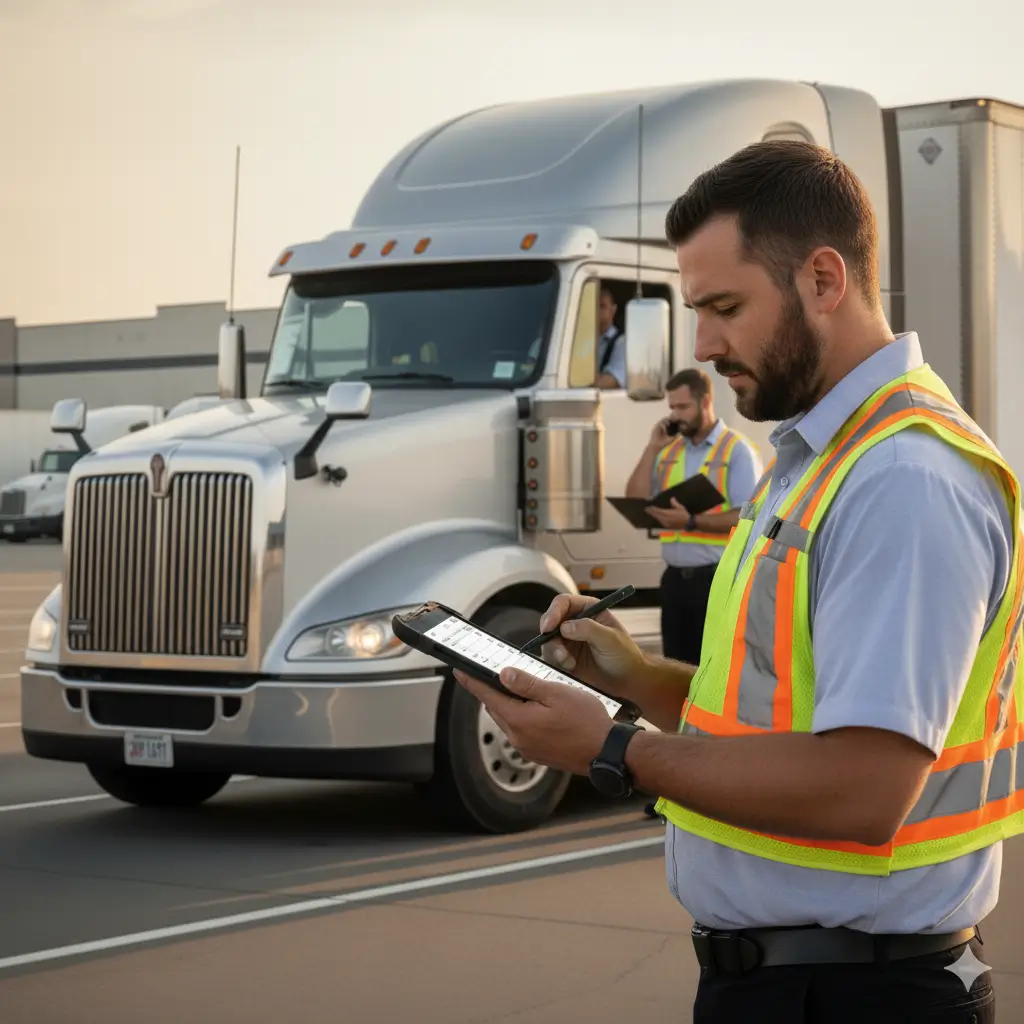

Learn what trucker liability covers, what’s required, typical costs, and how to avoid insurance gaps.
Trucker liability coverage usually means more than one policy, and each one applies in different situations. In practice, it primarily includes Primary Auto Liability (at-fault crashes while operating under dispatch/for-hire) and often Motor Truck General Liability (non-driving claims like dock or premises injuries). Many owner-operators also add Non-Trucking Liability (NTL)/Bobtail for off-dispatch exposure.
Most “not covered” surprises happen when drivers hear “you’ve got liability” and assume that means everything is handled. If you want a deeper breakdown of liability-only terms (and where gaps show up), see this guide: what truck liability insurance is and how it works.
Table of Contents
Reading time: 9 minutes
- What “Trucker Liability Coverage” Really Means
- The Big 3 Liability Policies Most Owner-Operators Need
- What’s Required by Law vs. Required to Get Loads
- How Much Trucker Liability Coverage Costs in 2026
- What Liability Coverage Does NOT Cover (Common Gaps)
- How to Get Affordable Trucking Insurance Without Getting Exposed
- Frequently Asked Questions
- The Logrock Difference
- Conclusion & Get Your Quote

What “Trucker Liability Coverage” Really Means (and Why People Get Burned)
In commercial truck insurance, “trucker liability coverage” commonly refers to multiple liability policies—Primary Auto Liability, Motor Truck General Liability, and often Non-Trucking Liability/Bobtail—each triggered by different use and claim scenarios.
Most problems happen when an owner-operator assumes “I have liability” means everything is covered, then a claim hits and the adjuster says, “That’s not the right liability for this loss.” The fix isn’t complicated, but you do have to match coverage to how you actually run: dispatched miles, deadhead, personal use, docks, yards, and shipper contracts.
The plain-English definition
- Primary Auto Liability: Covers bodily injury and property damage you cause while operating commercially (for-hire/under dispatch).
- Motor Truck General Liability (GL): Covers many non-auto third-party liability claims (examples: certain dock/premises injuries, some operations-related property damage, certain contractual requirements).
- Non-Trucking Liability (NTL) / Bobtail: Covers certain liability exposures when you’re not under dispatch (policy wording and lease setup drive what’s included or excluded).
The fastest way to understand the difference (comparison table)
| Coverage | What it’s for | Common real-world example | What it does NOT do |
|---|---|---|---|
| Primary Auto Liability | Accidents while operating in business use | You rear-end a car while headed to a pickup under dispatch | Doesn’t cover cargo damage; usually doesn’t cover non-driving incidents |
| Motor Truck General Liability | Non-driving business liability | A shipper claims you damaged a dock door; someone is injured near your equipment | Doesn’t cover auto crashes (that’s auto liability) |
| Non-Trucking Liability / Bobtail | Off-dispatch driving exposures (varies by wording) | You’re bobtailing for a personal errand and cause an accident | Often won’t apply if you’re considered in business use (deadhead to pickup may be excluded) |
The “Big 3” Liability Policies Most Owner-Operators Need
Most owner-operators rely on three core liability protections—Primary Auto Liability, Motor Truck General Liability, and Non-Trucking Liability/Bobtail—because they address the highest-frequency lawsuits and the biggest “shutdown” risks.
Think about it like a business owner: what can trigger a major claim, cost you a contract, or put your authority at risk? These three are the foundation for staying bookable and protecting cash flow.
1) Primary Auto Liability (the non-negotiable foundation)
- What it is: Pays for injuries and property damage you cause in an at-fault crash while operating commercially.
- Why it matters: One serious crash can create six- or seven-figure exposure, and plaintiffs will pursue business assets when limits are inadequate.
- Who needs it: Any owner-operator running under their own authority; leased-on drivers should confirm exactly what the motor carrier covers vs. what the driver must carry.
- Practical broker reality: $1M CSL is often the working floor to book better freight, even if the legal minimum is lower.
2) Motor Truck General Liability (GL) (what happens when you’re not driving)
- What it is: Covers third-party bodily injury and property damage claims that aren’t caused by an auto accident.
- Why it matters: Claims that start with “on the shipper’s property” can turn into contract disputes fast, especially with warehouses and large shippers.
- Who needs it: Owner-operators delivering to warehouses, DCs, ports, construction sites, and any shipper that asks for GL in the carrier packet.
- COI detail that costs loads: Many shippers ask for $1M GL and may require Additional Insured wording on the COI.
3) Non-Trucking Liability (NTL) and Bobtail (covering the “off the clock” gray area)
- What it is: Liability protection for certain situations when you’re not under dispatch; “bobtail” usually means operating without a trailer, while “NTL” focuses on not being in business use.
- Why it matters: This is where denials happen—deadhead miles, personal errands, and “between load” scenarios often don’t match what drivers assume is covered.
- Who needs it: Common for leased-on owner-operators whose carrier coverage applies only while dispatched; also useful when you have mixed business and personal miles.
- Do this before you bind: Ask your agent, “Am I covered when I’m bobtailing to a shop?” and “What about deadhead to my next pickup?” Get the answer in writing.
NTL vs. Bobtail (quick clarity table)
| Term | What drivers think it means | What insurers usually mean | Common denial trigger |
|---|---|---|---|
| Bobtail | “No trailer” | Liability while operating without a trailer, often tied to lease requirements | You were still in business use (for example, deadheading to a pickup) |
| Non-Trucking Liability (NTL) | “Off duty” | Coverage when not under dispatch / not in business use | You were doing something considered business-related under the policy wording |
What’s Required by Law vs. Required to Get Loads (FMCSA, States, Brokers)
FMCSA financial responsibility rules set federal minimums (commonly $750,000 for interstate for-hire general freight under 49 CFR §387.9), but brokers and shipper contracts frequently require $1,000,000 auto liability and may require $1,000,000 general liability to tender loads.
This is where owner-operators get trapped: you can be legal and still be unbookable. The “market minimum” is often driven by carrier packets, not just regulations.
FMCSA federal liability minimums (interstate)
For interstate for-hire carriers hauling general freight, the classic baseline is $750,000. In day-to-day freight markets, many brokers and shippers effectively push that to $1,000,000 because it reduces their risk and matches common contract language.
- Common contract requirement: $1,000,000 CSL auto liability
- Higher-risk commodities: Certain hazardous materials and passenger operations can require higher limits under federal rules and contracts
State intrastate requirements (don’t assume they match federal)
Intrastate-only operations can be governed by state-specific minimums and filings, and some permits (ports, specific commodities, passenger) can trigger higher requirements. The practical move is simple: list the states you run, your radius, and what you haul, and have your agent confirm the applicable rules in writing.
Filings that make your liability “real” for compliance (BMC-91/BMC-91X + MCS-90)
- BMC-91 / BMC-91X: Liability filings your insurer submits to the FMCSA to show active coverage; incorrect or missing filings can jeopardize your authority.
- MCS-90 endorsement: A federal endorsement attached to many motor carrier auto liability policies designed to protect the public; it is not “extra coverage” for the carrier and can still involve reimbursement obligations in certain scenarios.
When you buy commercial truck insurance, you’re not just buying a policy—you’re buying compliance and proof that keeps you eligible to haul.
How Much Does Trucker Liability Coverage Cost in 2026? (Real-World Ranges)
In 2026, one-truck owner-operators commonly see Primary Auto Liability around $750–$1,800+ per month, Motor Truck General Liability around $40–$150 per month, and Non-Trucking Liability/Bobtail around $20–$80 per month, with pricing driven by authority age, MVR/PSP, radius, states, commodity, and loss history.
Pricing swings hard based on experience, lanes, filings, and where you operate. If someone quotes a “too good to be true” number without explaining trade-offs, you’re usually looking at a mismatch in use, limits, or exclusions.
Typical cost ranges (budget reality)
| Coverage | Typical monthly range (one-truck owner-op) | What drives the number |
|---|---|---|
| Primary Auto Liability | $750–$1,800+/mo | New authority, high-loss states/metros, filings, radius, experience, prior losses |
| Motor Truck General Liability | $40–$150/mo | Contract requirements, business footprint, claims history |
| Non-Trucking Liability / Bobtail | $20–$80/mo | Lease status, actual usage, driver history, wording triggers |
Quick reality check for new ventures
If you’re a new venture running your own authority in a tougher market, it’s common to see $9,000–$20,000/year for primary liability alone. Established operators with clean loss history can land lower, but year-one pricing is often about surviving while building a clean record.
Regional pressure (why your ZIP code matters)
Underwriters price for claim frequency and severity, and that tends to show up in heavy-traffic corridors and litigation-heavy regions. If you’re chasing affordable trucking insurance, the biggest lever isn’t a secret discount—it’s tightening your operational profile (radius, commodity, consistency) and documenting a disciplined safety culture.
What Trucker Liability Coverage Does NOT Cover (The Gaps That Kill Cash Flow)
Liability coverage generally pays third-party injury and property damage claims, but it typically does not cover your own truck damage, cargo losses, trailer interchange obligations, or work-injury coverage for owner-operators unless those coverages are purchased separately.
A lot of owner-operators buy “liability,” assume the truck, the load, and everything else is handled, then get hit with out-of-pocket costs when a different coverage should’ve been on the policy.
- Damage to your own truck (Physical Damage): Collision and comprehensive are separate from liability.
- Cargo claims (Motor Truck Cargo): Cargo coverage is its own policy section and often has exclusions, sublimits, and commodity rules.
- Trailer damage under a trailer interchange agreement: Often requires Trailer Interchange coverage if you’re hauling non-owned trailers under contract.
- Work-related injury to you (Owner-Op): Often handled via Occupational Accident or workers’ comp where required/available.
- Higher-limit lawsuit protection: Usually requires Umbrella/Excess (availability depends on operation and loss history).
If you’re trying to protect your business like a business, your insurance stack should match your real exposures—not just the minimum to print a COI.
How to Get Affordable Trucking Insurance Without Getting Exposed (7 Practical Moves)
Affordable trucking insurance comes from reducing underwriting risk—clean MVR/PSP, stable lanes and radius, strong safety documentation, correct limits and filings, and no dispatch-status gaps—rather than buying the cheapest “liability-only” setup.
“Cheap” trucking insurance is expensive the first time it denies a claim. The goal is affordable and bankable: coverage that protects cash flow and keeps you bookable.
1) Run a clean operation profile (radius + lanes + commodity)
Underwriters like predictable. If you can tighten your radius, avoid higher-loss freight, and stay consistent, pricing usually improves over time.
2) Prove you’re a safer bet (dash cam + ELD discipline)
A forward-facing dash cam and clean HOS habits can reduce “he said/she said” claims and show you run a disciplined operation.
3) Don’t get stuck in the “new venture” penalty longer than necessary
Year one is about survival with clean loss history, then shopping intelligently at renewal with better leverage.
4) Choose limits that match your contracts (not your feelings)
If your freight needs $1M auto and $1M GL, buying less doesn’t save money—it just blocks better loads.
5) Avoid overlaps and gaps (especially off-dispatch)
If you’re leased-on, confirm what the carrier covers and what you must carry. If you’re on your own authority, confirm how NTL/Bobtail applies to your real week: deadhead, personal errands, shop runs.
6) Treat COIs and additional insureds like operations, not paperwork
Fast, accurate COIs keep you from losing loads at the gate—especially when detention time goes unpaid.
7) Shop on strategy—not just price
A good quote process asks for the details (MVR, commodity, states, experience) and explains trade-offs. A bad one throws a number without backing it up.
Get your trucker liability coverage reviewed (no guessing). If you’re not 100% sure your liability is correct for on-dispatch, off-dispatch, and shipper requirements, you’re one claim away from a cash-flow disaster. We’ll sanity-check your limits, filings, and gaps so your coverage matches how you actually run.
What you get: Fast COIs • Correct filings • Coverage built for owner-operators
Frequently Asked Questions
Owner-operators most often ask about what trucker liability coverage includes, whether general liability is required, how auto liability differs from GL, and what realistic monthly pricing looks like for a one-truck operation.
Trucker liability coverage is the liability insurance package that protects a trucking business from third-party injury and property-damage claims, usually anchored by Primary Auto Liability for at-fault crashes while operating for-hire. Many owner-operators also carry Motor Truck General Liability for non-auto incidents (for example, certain dock or premises claims) and Non-Trucking Liability/Bobtail for off-dispatch driving exposure, depending on lease status and policy wording. In the freight market, brokers commonly expect $1,000,000 auto liability even though FMCSA’s classic interstate general freight minimum is $750,000 under 49 CFR §387.9.
Many truckers need Motor Truck General Liability because brokers and shippers frequently require it in carrier packets, even when it isn’t the primary legal requirement for your authority. A common contract standard is $1,000,000 in general liability, sometimes with the shipper or broker listed as Additional Insured on the COI. GL is designed for non-auto claims (for example, certain third-party injuries or property damage tied to operations), while vehicle crashes are handled under auto liability. If you deliver to warehouses, retail DCs, ports, or job sites, GL requirements show up often.
Primary Auto Liability covers third-party injury and property damage claims caused by operating the truck in an at-fault accident, while Motor Truck General Liability covers many non-auto claims tied to your business operations. If the claim starts with a roadway crash, it’s typically auto liability; if it starts with something like an operations/premises allegation at a shipper or receiver (not a vehicle crash), it’s typically GL. For load eligibility, brokers commonly require $1,000,000 auto liability, and many also request $1,000,000 GL in the carrier packet, especially for warehouses and large shippers.
For a one-truck owner-operator, Primary Auto Liability commonly runs about $750 to $1,800+ per month, with Motor Truck General Liability often around $40 to $150 per month on top, and Non-Trucking Liability/Bobtail often around $20 to $80 per month. New authority, high-loss metros, wider radius, tougher commodities, prior losses, and MVR/PSP issues can push pricing higher, and year-one liability can land in the $9,000 to $20,000/year range for many new ventures. The most reliable way to lower cost is clean loss history plus consistent, well-documented operations.
The Logrock Difference: Trucking Insurance Built for Owner-Operators Who Watch Every Dollar
Logrock builds commercial truck insurance programs around real owner-operator requirements—correct limits, correct filings, fast COIs, and dispatch-status clarity—so you stay compliant and bookable without paying for coverage you can’t use.
What that looks like in practice:
- Aligning liability + GL + off-dispatch coverage so you don’t find a gap after a claim.
- Fast COI turnaround so you can get loaded and keep rolling.
- Correct FMCSA filings (BMC-91/BMC-91X) so your authority stays clean.
- Coverage vs. cash flow balance because “perfect coverage” that breaks your budget still puts you out of business.
Whether you’re running hotshot setups or a full semi program, the goal stays the same: stay compliant, stay covered, stay profitable.
Get Your Trucker Liability Coverage Quote (Built Around How You Run)
Trucker liability coverage is only “simple” until a claim hits, and then policy type, dispatch status, limits, and filings decide whether you keep rolling or get shut down.
If you want a quote that’s built around how you actually run (not a generic template), get it handled now—before you’re stuck in a denial.
Key Takeaways:
- Liability isn’t one policy: Auto liability, GL, and NTL/Bobtail cover different risks and trigger in different situations.
- Plan for the market, not just the law: FMCSA may allow $750,000 for interstate general freight, but $1,000,000 is often the practical broker floor.
- Don’t ignore the “paperwork” pieces: COIs, additional insured requests, and BMC-91/BMC-91X filings affect loads and compliance.
Related reading: What is Truck Liability Insurance?, FMCSA Insurance Filing Requirements, and Motor Truck General Liability Examples (Progressive).





