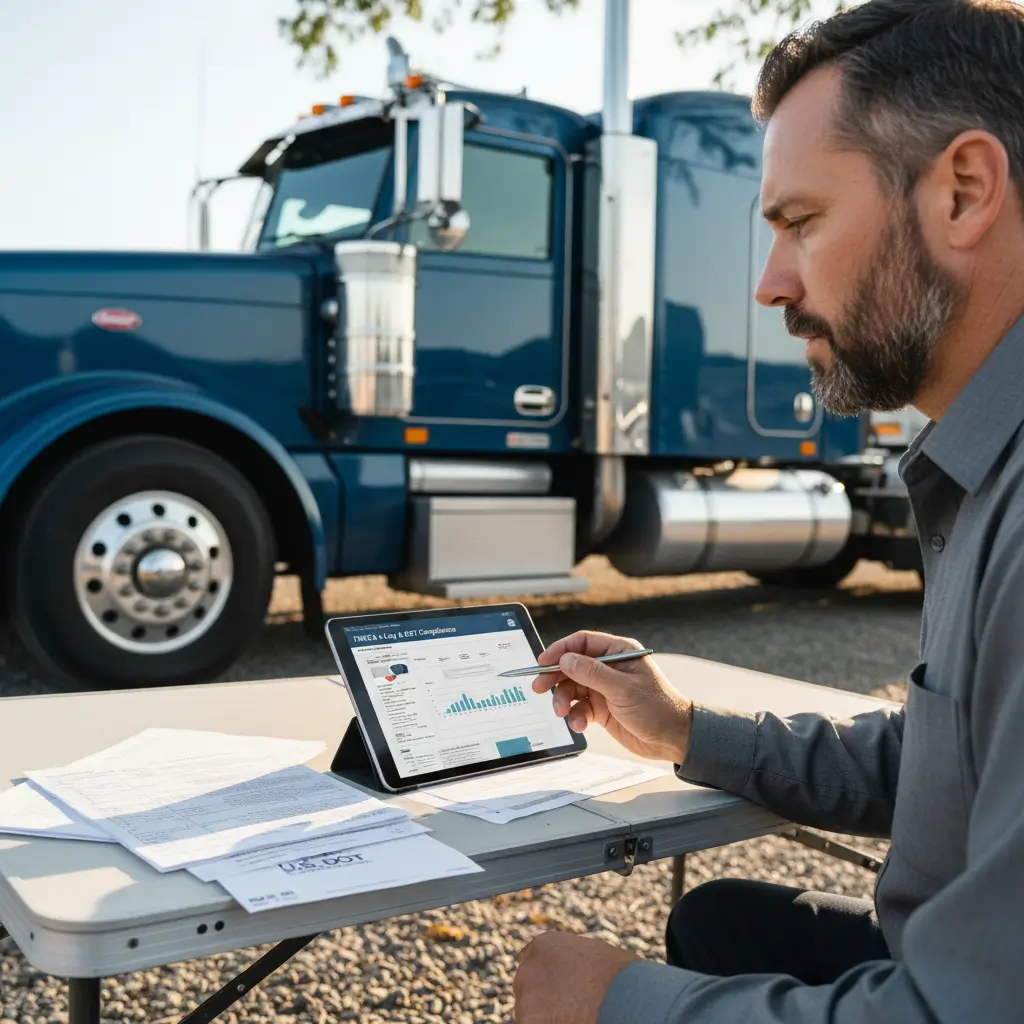

Trucking company bankruptcies 2026 headlines can make it sound like every carrier is failing for the same reason. That’s not what’s happening. Fuel-led rate gains may help some operations, but a one-truck business or small fleet can still run out of cash before better pricing reaches its lanes, contracts, or bank account.
2026 Trucking Bankruptcy and Closure Tracker#
Last updated: September 21, 2026. FreightWaves reported that 16 carriers filed for bankruptcy between late August and September 21, 2026, with small fleets making up much of the activity. A bankruptcy filing, a reported shutdown, and an FMCSA authority action are different events, so this tracker keeps them separate rather than treating every online report as a confirmed closure.
How this tracker separates filings, shutdowns, and authority changes#
A Chapter 7 filing is generally a court-supervised liquidation process, while Chapter 11 is a court process that can allow a company to reorganize. Neither filing automatically means every truck stopped operating that day.
An operational shutdown means the carrier has stopped or announced it will stop hauling. An authority suspension or revocation is a regulatory status change that can affect whether a carrier may operate under its own authority, but it does not by itself prove bankruptcy.
| Status category | What confirms it | Source or event date | What it does not prove |
|---|---|---|---|
| Confirmed Chapter 7 | Court filing or reliable reporting | Late Aug.–Sep. 21, 2026 | Exact shutdown date |
| Confirmed Chapter 11 | Court filing or reliable reporting | Late Aug.–Sep. 21, 2026 | Continued operations |
| Reported shutdown | Carrier statement or reliable reporting | Dated when reported | Bankruptcy filing |
| FMCSA status change | FMCSA operating-status record | Dated record update | Financial condition |
| Unverified report | Rumor, post, or payment claim | Not sufficient alone | Any confirmed event |
Reported activity from late August through September 21, 2026#
FreightWaves reported 16 carrier bankruptcy filings during this late-August-to-September period. The source material for this guide does not provide a reliable, carrier-by-carrier court-record list with event dates and operating footprints, so this article does not publish names that cannot be verified through a primary filing or reliable dated reporting.
That restraint matters. Calling a carrier bankrupt because its insurance filing changed, a driver posted on social media, or a vendor says it missed a payment can spread bad information fast. A carrier may be distressed, changing insurance, selling equipment, or restructuring without having filed bankruptcy or permanently closed.
How to read the status and source dates#
Use the event date to understand when something happened and the source date to understand when it was reported or verified. Those can be different dates, especially when a court filing, an announced closure, and an FMCSA record update happen days apart.
For a carrier you haul for, lease to, or plan to work with, verify the company’s USDOT number and MC number before acting on a headline. The tracker should grow only as confirmed filings, documented shutdowns, and official status changes emerge.

Why Rising Freight Rates Do Not Save Every Fleet#
A higher all-in freight rate does not automatically create a higher profit margin for every carrier. Fuel surcharges can offset higher diesel costs instead of adding profit, while fixed contracts, weak lanes, delayed rate resets, and slow customer payments can leave a small fleet facing the same immediate bills with little extra cash.
Fuel-driven rate gains can be pass-through revenue#
A rate can rise because the fuel surcharge rose. That may protect part of the fuel expense, but it does not necessarily pay for a truck note, a tire replacement, a deductible, or a repair that puts the truck out of service.
The important number is not just gross revenue per load. It’s what remains after fuel, tolls, maintenance, insurance installments, debt payments, and unpaid time are accounted for.
Contract rates, spot rates, and lane mix do not move together#
A carrier running strong spot-market freight in a tight lane may see better opportunities sooner than a fleet locked into a contract rate. Another operator may have freight in a market where demand is still soft, where reloads are scarce, or where customers have not reset rates.
Equipment type and geography matter too. A favorable headline about national rates does not mean a dry van, reefer, flatbed, or specialized operation sees the same result in the same week.
Cash flow can fail before improved pricing reaches a carrier#
Cash obligations hit on a schedule whether freight pricing improves or not. Fuel cards, payroll, owner draws, repairs, truck payments, insurance, and broker-payment delays can create a gap that a small operation cannot bridge.
That’s why a carrier can look busy and still be in trouble. One late-paying customer, one major repair, or a few weeks of weak revenue can hit a one-truck operation much harder than a large carrier with more reserves.
If your authority, lease arrangement, or equipment responsibilities are changing,
before assuming your existing coverage still fits.
The Cost Pressures Behind Small-Carrier Failures#
Small carriers usually fail from a stack of pressures, not one bill or one bad load. Equipment debt, repairs, fuel, insurance, thin pricing, and slow-paying customers can compound quickly when a fleet has only one to five trucks and limited cash reserves to absorb disruption.
Debt, equipment payments, and repair exposure#
A truck payment does not stop because the truck is in the shop. Neither do many fixed business costs. When one truck represents most or all of a fleet’s revenue, an engine problem, collision, tire issue, or missed maintenance window can become a cash-flow event.
Small fleets also have less room to spread a lost customer or a weak lane across other trucks. A larger carrier may shift equipment, drivers, or freight; an owner-operator may have only one revenue-producing asset.
Insurance, deductibles, and coverage lapses#
Commercial trucking insurance is not personal auto insurance with a different vehicle listed. Commercial auto liability, cargo responsibility, physical damage coverage, and other coverages respond to business exposures that depend on the operation, vehicle, cargo, authority, and where the carrier runs.
An insurance lapse can threaten a carrier’s ability to keep required filings in place. But keeping insurance active does not solve debt, equipment problems, customer concentration, or weak revenue.
The MCS-90 is often misunderstood in these discussions. It is a federal financial-responsibility endorsement attached to certain motor carrier policies, not a blanket promise that every loss is covered under every trucking policy. FMCSA explains the endorsement and its role in federal financial responsibility on its MCS-90 information page.
Overcapacity and weak negotiating power#
When too many trucks compete for the same freight, the smaller carrier may have limited leverage to reject weak loads. That pressure gets worse when the carrier needs immediate revenue to cover a fuel advance, a payment due date, or a repair.
A rate that covers variable operating costs may still fail to cover the business over time. Survival requires enough margin and enough cash timing to handle the costs that do not move with each load.
The compounding effect of one disrupted customer or truck#
A small fleet may depend on one broker, one shipper, one lane, or one tractor. Losing any one of those can disrupt revenue fast.
That concentration risk explains why broad reports of rate improvement do not tell the whole story. The same market can include a carrier adding freight and another carrier closing its doors.
Bankruptcy, Shutdown, and Authority Suspension Are Not the Same#
A bankruptcy filing, a shutdown, and an FMCSA authority-status change answer different questions. A filing tells you a court process exists; a shutdown tells you operations stopped or are stopping; an authority record shows regulatory status. None of those facts alone provides a complete picture of a carrier’s finances or future.
What a bankruptcy filing establishes#
A bankruptcy filing establishes that a carrier entered a court process. Chapter 7 generally concerns liquidation, while Chapter 11 can involve restructuring or continued operations under court oversight.
It does not automatically prove the fleet stopped dispatching on the filing date. Confirm the filing date, case details, and any carrier announcement before treating the business as permanently closed.
What an FMCSA authority-status change can indicate#
An FMCSA authority-status change may indicate an insurance, registration, compliance, or operating-authority issue. It should be checked through official records, not guessed from a forum post or a screenshot.
Use FMCSA’s SAFER System to review a motor carrier’s USDOT record and available operating-status information. SAFER is a due-diligence tool, not a complete financial report and not a prediction of whether a company will survive.
What confirms a permanent closure#
A permanent closure is best supported by a carrier announcement, employee or customer notification, a court record paired with reliable reporting, or other dated evidence that operations ended. The source should identify what happened, when it happened, and what part of the operation is affected.
A suspended authority can matter immediately, but it should not be casually labeled a bankruptcy. Likewise, a bankruptcy report should not be used to assume a carrier’s trucks are no longer moving.
What a Carrier Failure Means for Leased Operators#
Leased operators affected by a carrier failure should protect their records and confirm responsibilities before taking another load. Do not assume you can keep hauling under a carrier’s authority, insurance filings, dispatch system, customer agreement, or trailer arrangement after that carrier changes status or stops operating.
Confirm dispatch, settlement, and equipment obligations#
Before accepting or delivering another load, confirm who is responsible for the cargo, trailer, fuel card, delivery appointment, and customer communication. A confusing dispatch situation can create problems even when the load itself appears straightforward.
Ask for clear instructions in writing where possible. If the carrier’s office is unreachable, do not fill in the gaps with assumptions about authority or coverage.
Document the lease and payment status#
Keep copies of your lease, settlement statements, completed-load paperwork, proof of delivery, escrow records, fuel-card transactions, maintenance records, and dispatch messages. These documents help establish what work was completed and what payments or deductions were recorded.
This is operational guidance, not a legal conclusion about any lease rights. If a dispute develops, the written lease and your records matter more than a verbal explanation after the fact.
Avoid operating under uncertain authority or insurance arrangements#
A leased operator needs to know whether the next job is under another carrier’s authority or under the operator’s own authority. That change can alter who carries commercial auto liability, who is responsible for cargo coverage, and whether other insurance filings or contracts apply.
If the operating arrangement changes, review the actual work before moving freight. A prior carrier’s insurance setup is not automatically transferable to a new carrier relationship.
What Owner-Operators and Small Fleets Should Check Next#
Moving from lease-on work to your own authority, changing customers, or changing equipment can change your insurance and compliance responsibilities. Confirm your authority status, drivers, vehicles, cargo, operating area, and trailer arrangements before hauling under a new setup instead of relying on the coverage that worked under a previous carrier.
If you are moving from lease-on work to your own authority#
Operating under your own authority can change who handles compliance filings, insurance requirements, contracts, and customer obligations. Confirm your USDOT and MC-related status, vehicle schedule, driver status, cargo type, and whether your operation is interstate or intrastate.
Federal financial-responsibility rules are not a one-number rule for every trucker. Under 49 CFR Part 387, requirements depend on factors including whether the carrier is for-hire, vehicle weight, commodities, and the operation involved. For example, for-hire interstate carriers hauling general freight in vehicles over 10,001 pounds must carry at least $750,000 in public liability.
If a customer, broker, or carrier relationship changes#
A new customer may require different certificates, limits, endorsements, or cargo terms. A new broker relationship may change payment timing and documentation expectations. A new carrier lease may define who provides which coverage while you are dispatched, parked, or operating outside business use.
Verify the details before the first load. Do not assume a customer’s requirement replaces an FMCSA requirement, or that a state minimum answers the question for an interstate for-hire operation.
If trucks, trailers, or cargo responsibilities change#
Different coverages address different exposures:
- Commercial auto liability addresses bodily injury and property damage liability from covered commercial vehicle operations.
- Motor truck cargo addresses covered loss or damage to freight in transit.
- Physical damage coverage addresses damage to the insured truck, typically through collision and comprehensive or fire-and-theft coverage.
- Non-trucking liability, also called bobtail coverage, applies to qualifying non-business use, not paid hauling.
- Trailer interchange requires a signed interchange agreement, while non-owned trailer physical damage can fit some non-intermodal situations without one.
- Reefer breakdown can address qualifying refrigeration equipment failures for reefer operations.
Coverage needs vary by operation. A trucking-focused licensed professional can help scope the exposures when authority, cargo, trailers, or operating arrangements change.
What the 2026 Closures Could Mean for Trucking Capacity#
Carrier exits can reduce capacity, but they do not guarantee better margins for every surviving truck. The market effect depends on which lanes, equipment types, and customers lose capacity, whether freight demand supports base-rate improvement, and whether the remaining carriers can actually access the stronger freight.
Capacity leaves unevenly by lane and equipment type#
A closure in one region or equipment segment may have little effect on another. Capacity can disappear from a particular lane while another market still has more trucks than available freight.
That is why a national rate headline is useful context, not a business plan. Your own freight mix and customer base decide whether market changes reach your operation.
Fewer carriers does not guarantee stronger margins#
Fewer active carriers may improve negotiating conditions in some markets, but fuel burden, deadhead, maintenance, and payment timing still matter. A rate increase that arrives late or only covers fuel can leave the operating margin unchanged.
Why small fleets should watch their own numbers#
Track revenue per loaded mile, deadhead, fuel burden, repair reserves, customer concentration, days-to-pay, and coverage continuity. Those numbers show whether the business can handle a missed payment, a repair, or a lost customer before a headline does.
This 2026 tracker should be updated as confirmed bankruptcy filings, shutdowns, and authority changes emerge. Treat any unnamed rumor as a lead to verify, not a fact to act on.
Frequently Asked Questions#
What major trucking company is shutting down?
The most reliable answer is the dated tracker above, not an unsupported social-media list. A carrier should be identified as shutting down only when there is a confirmed court filing, a dated company announcement, or reliable reporting that documents an operational closure. An FMCSA authority-status change can be important, but it does not automatically establish a bankruptcy or permanent shutdown. Before changing a lease, accepting a load, or moving equipment, verify the carrier’s USDOT and MC-related information through FMCSA SAFER and confirm the actual operating situation.
What is the outlook for the trucking industry in 2026?
The 2026 outlook is uneven. Capacity exits and improving rates may help some carriers, lanes, and equipment types, while small fleets can still face equipment debt, repair bills, fuel pressure, insurance obligations, slow-paying customers, and limited negotiating leverage. Better all-in rates may include fuel surcharges that offset costs without improving profit. Owner-operators should watch their own loaded-mile revenue, deadhead, customer concentration, payment timing, and repair reserve rather than assuming industry headlines reflect their operation.
Why are all these trucking companies shutting down?
Trucking company closures rarely have one universal cause. Thin margins can combine with fuel costs, equipment payments, maintenance, tires, insurance installments, deductibles, compliance obligations, weak lanes, slow-paying customers, and excess capacity. A small carrier has fewer trucks and fewer customers over which to spread a major repair or lost account. Some companies enter bankruptcy, some shut down without a filing, and some face authority issues. Each case needs its own verified facts rather than a blanket explanation.
What are the 10 worst trucking companies to work for?
A ranked “worst companies” list is not reliable without consistent, current evidence, and it can miss the details that matter to an individual driver or leased operator. Instead, review the written lease, settlement transparency, escrow terms, fuel-card deductions, detention policy, payment history, safety record, authority status, and insurance confirmation. Ask how dispatch, trailer responsibility, cargo claims, and maintenance deductions work before signing. A carrier with a good reputation can still be a poor fit if its contract shifts too much risk to the operator.