
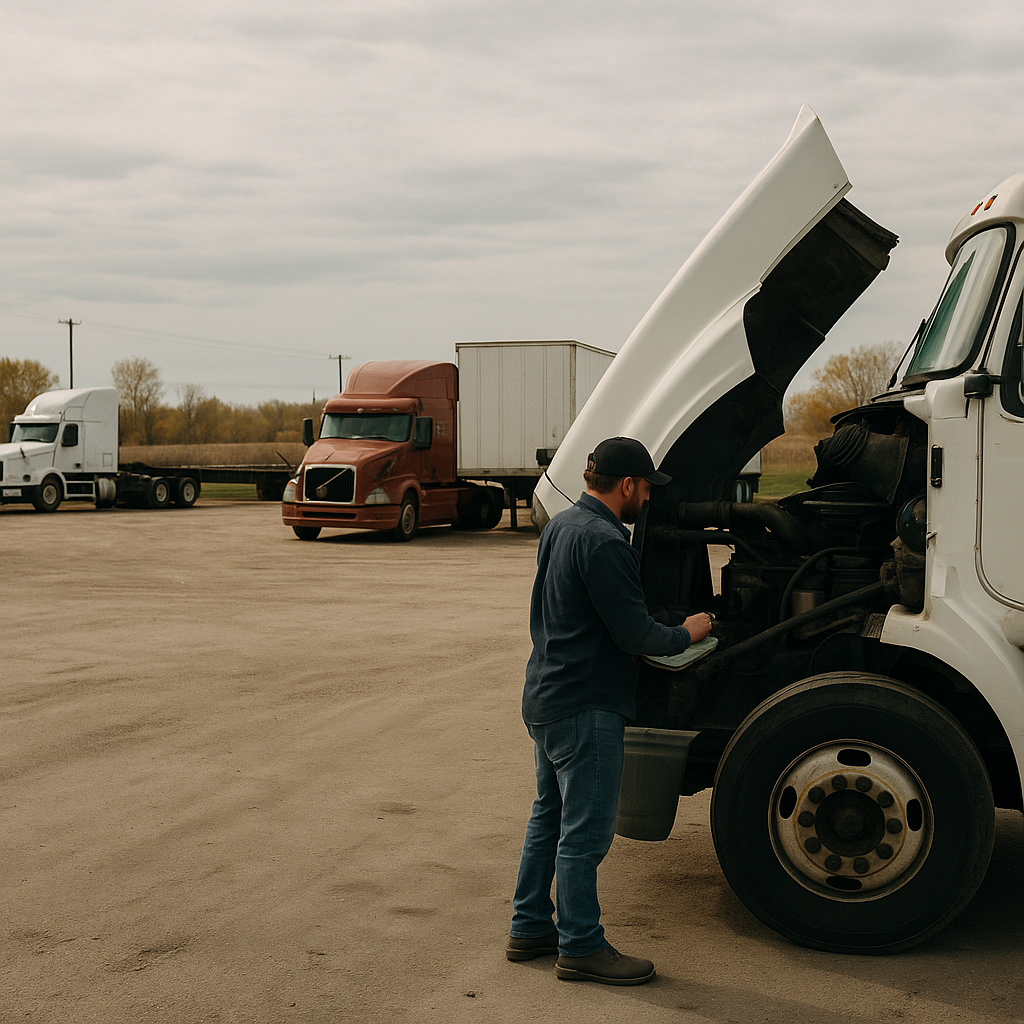

If you’re shopping for trucking fleet insurance Illinois operators actually use, the biggest mistake is treating every truck the same. A two-truck intrastate reefer setup in central Illinois doesn’t have the same insurance needs as a five-truck interstate dry van fleet running under FMCSA authority. This guide breaks down what fleet insurance means, what Illinois and federal rules can affect your policy, and how to compare quotes without buying the wrong coverage.
What Trucking Fleet Insurance Means in Illinois#
Trucking fleet insurance in Illinois usually means one insurance program that schedules multiple trucks or power units under a single policy structure. Commercial truck insurance is the broader category, while fleet insurance is one way to organize that coverage when you have more than one unit. For small fleets, the right setup depends on your operation, not just your truck count.
Fleet insurance is a policy structure that insures multiple scheduled trucks under one program. In plain English, instead of managing separate single-truck policies, you may place several tractors or trucks on one coordinated plan.
Commercial truck insurance is the broader bucket covering trucks used for business, whether you insure one truck or several. That’s why a one-truck owner-operator and a four-truck family fleet may both need commercial coverage, even if only one uses a true fleet structure.
A practical example: a three-truck Chicago-area carrier running similar routes with the same type of freight may prefer one fleet program instead of three separate policies. That can make scheduling units, drivers, coverages, and renewals easier to manage.
Who counts as a fleet in practice depends on the insurer. Some markets think of a fleet as several units under common ownership and similar operations, while others have more specific underwriting rules. Small Illinois operations can still end up on a fleet-style program if the setup makes sense.
That matters because your carrier type, cargo, operating radius, and interstate status shape the policy more than the word "fleet" does. If you need a refresher on the broader category, this guide to commercial truck insurance helps frame where fleet coverage fits.
Illinois and FMCSA Requirements That Can Affect Your Policy#
Illinois trucking insurance requirements and FMCSA insurance requirements are not the same thing. Illinois may control state registration and intrastate operating rules, but federal financial responsibility rules can apply when you haul interstate, operate for-hire, meet certain weight thresholds, or haul regulated cargo. Your actual requirement depends on what you do, where you run, and what you haul.
Start with the big misconception: your state minimum isn’t automatically your federal minimum. For interstate trucking, federal rules often control the minimum public liability a carrier must carry.
FMCSA is the Federal Motor Carrier Safety Administration, the federal agency that regulates many interstate trucking operations. Under FMCSA rules and 49 CFR Part 387, for-hire interstate carriers hauling general freight in vehicles over 10,001 pounds must carry at least $750,000 in public liability. Under 10,000 pounds, the federal minimum can be $300,000. Auto haulers can require $1,000,000, and certain hazmat operations can require $5,000,000.
Auto liability is the coverage that pays for bodily injury and property damage you cause to others in a covered truck accident. In trucking, it’s the base coverage tied most directly to operating authority and financial responsibility rules.
State rules and federal rules can overlap, but they aren’t interchangeable. A local Illinois-only carrier may face a different insurance setup than an interstate carrier with a USDOT number and operating authority.
Interstate means your operation crosses state lines or is part of the continuous movement of freight across state lines. Intrastate means the transportation starts and ends within one state and isn’t part of interstate commerce.
Here’s a practical example. A two-truck intrastate refrigerated fleet hauling only inside Illinois may have different filing and coverage needs than a five-truck interstate dry van fleet running under federal authority. The second operation is much more likely to trigger federal filings and stricter minimums.
MCS-90 is a federal endorsement that helps demonstrate a motor carrier’s financial responsibility when required. MC number is the operating authority number tied to for-hire interstate authority, while a USDOT number identifies carriers subject to federal safety oversight.
You can confirm federal status and authority details on SAFER. If you’re sorting through the overlap, this breakdown of FMCSA insurance requirements is useful before you compare quotes.
Insurers also care about accurate garaging and business location details. If your application says Springfield but the trucks are mainly parked in the Chicago metro, that can affect underwriting, pricing, and claims handling.
Core Coverages Small Illinois Fleets Should Compare#
Small Illinois fleets should compare auto liability, physical damage, cargo, and any operation-specific add-ons before they compare premium alone. The right policy protects the actual work your trucks do, covers lender or contract requirements, and avoids common gaps like uninsured trailers, unrepaired reefer losses, or owner-operator misuse of bobtail coverage.
Physical damage is coverage for damage to your own truck, not damage you cause to others. Motor truck cargo covers covered freight you’re hauling for a customer. General liability covers certain non-driving business risks. Non-trucking liability covers certain personal-use situations when a truck isn’t being used in business.
Auto liability and filings#
Auto liability is the backbone of a trucking policy. It’s the coverage tied to financial responsibility, and it’s the part carriers think about first because it connects to authority, filings, and contract requirements.
If your operation needs federal filings, your insurance setup has to support them correctly. That’s one reason a quote that looks cheaper at first glance can become a problem later if the policy doesn’t match the authority or operation.
Physical damage for your trucks#
Physical damage usually includes collision and comprehensive, or a fire and theft option with combined additional coverage in some setups. Collision pays for damage to your truck from impact or upset. Comprehensive pays for non-collision losses like theft, vandalism, or weather.
If a lienholder financed the truck, they commonly require physical damage. An older paid-off tractor gives you more flexibility, but dropping coverage should still be a deliberate risk decision, not an accident from chasing a lower quote.
For a deeper look at how unit value and deductibles affect this piece, compare physical damage coverage before you bind.
Cargo, GL, and non-trucking liability#
Cargo matters when you’re hauling freight for customers and the value of that freight matters to your contracts. A small Illinois fleet hauling packaged food, retail freight, or electronics may need very different cargo terms than a fleet hauling lower-value materials. This guide to motor truck cargo coverage helps you compare what is and isn’t covered.
General liability isn’t a replacement for auto liability. It’s there for certain off-truck business exposures, and depending on the operation type, customer contracts may ask for it even when your biggest risk still sits on the road. NAIC’s plain-language insurance resources at NAIC are a solid reference point for basic coverage terminology.
Non-trucking liability, often called bobtail in casual conversation, only fits certain leased owner-operator situations. It does not replace primary liability while you’re under dispatch or hauling for business. If that coverage keeps coming up in quote conversations, review what non-trucking liability actually does before adding it.
Optional add-ons and common gaps#
Trailer coverage is a common blind spot. Trailer interchange usually applies when you have a signed interchange agreement, while non-owned trailer physical damage is often the better fit when you’re pulling a trailer you don’t own but don’t have that signed interchange setup.
Reefer breakdown covers certain losses tied to refrigeration unit failure, which matters for temperature-sensitive freight. It’s not universal, but for reefer fleets it’s often one of the first optional coverages worth discussing.
A practical example: a financed newer tractor in a two-truck Illinois fleet will often need physical damage because the lender requires it. The older paid-off spare unit might be insured differently, but if that truck still hauls customer freight, cargo and liability decisions still have to match real use.
How Much Fleet Insurance Costs in Illinois#
Fleet insurance costs in Illinois vary based on how risky the operation looks to the insurer, not just how many trucks you have. The biggest pricing drivers are truck count, routes, state lines crossed, cargo, driver history, garaging location, equipment value, and deductibles. Two fleets with the same number of trucks can price very differently if the exposure is different.

This is why broad price talk is usually misleading. A small local fleet with older paid-off equipment and clean MVRs can quote very differently from a similar-size fleet running interstate with newer financed tractors and tougher freight.
The biggest cost drivers usually include:
- Number of units on the policy
- Radius of operation
- Interstate versus intrastate travel
- Cargo type
- Driver records and experience
- Garaging location
- Truck value
- Chosen deductibles and optional coverages
Practical example: adding one truck to an existing policy doesn’t always affect pricing the same way as placing three newly purchased units on a fresh policy. The insurer may look at the age of the units, replacement cost, who will drive them, where they’ll be parked, and whether the operation itself is changing.
Another example: a small fleet based downstate running local building materials may rate differently than a Chicago-area fleet crossing multiple state lines with time-sensitive loads. Same state, different exposure.
The cheapest-looking quote can also be the most expensive mistake if it leaves out cargo, skimps on physical damage, or can’t support the filings your authority needs. That’s where operators get stuck with a policy that technically exists but doesn’t fit the work.
Do You Need a Business Entity or Office to Get Fleet Insurance?#
You don’t always need a specific business entity before you can discuss fleet insurance, but insurers do need accurate ownership and operating details. Some carriers prefer an LLC or corporation for certain setups, while others focus more on who owns the trucks, who runs the authority, and how the business actually operates. The key is that your documents and your real-world operation line up.
LLC means limited liability company, a common business entity used by small trucking operations. A corporation is another formal business structure with different legal and tax treatment.
Insurers usually care less about whether you feel "official" and more about whether the application is clear. Who owns the truck? Who employs the driver? Whose authority is being used? Where are the trucks actually garaged?
The virtual office question matters because underwriting relies on real location details. A mailing address may be different from a truck’s home base, but it shouldn’t be misleading. If the truck is parked nightly in Joliet, that’s material underwriting information whether your business mail goes somewhere else or not.
A practical example: a home-based owner-operator in Illinois who adds one extra truck may still be quotable if the ownership, garaging, driver, and authority details are complete and truthful. Problems usually start when the address, entity, and operating paperwork don’t match each other.
How to Compare Quotes Without Buying Too Much Coverage#
The best way to compare fleet quotes is to match each quote to the work your trucks actually do, then compare terms before premium. Confirm the freight type, routes, drivers, truck values, and required filings first. After that, look for exclusions, deductibles, and contract requirements that could leave you exposed even if the price looks good.
Start with a simple process:
- Confirm whether the fleet is intrastate or interstate.
- Confirm what freight is hauled and for whom.
- Confirm who drives each unit and their history.
- Confirm truck values, VINs, and lender requirements.
- Confirm garaging locations and operating radius.
- Confirm any filings, contract insurance requirements, and requested add-ons.
VIN means vehicle identification number, the unique serial number for each truck. Your unit schedule should match the actual VINs and equipment details exactly.
Then compare what each quote is really offering. Don’t just ask, "What’s the premium?" Ask whether cargo is included, whether physical damage deductibles changed, whether the policy supports filings, and whether any major exclusions affect your operation. This trucking insurance quote checklist is a good way to keep those comparisons straight.
Common mistakes are predictable. Operators buy cargo they don’t need, skip physical damage on financed units, or assume bobtail coverage replaces primary liability. Another big one is treating a parked or broken-down truck like it can always come off coverage immediately. Sometimes it can. Sometimes lienholder requirements, contractual obligations, or active filings mean some coverage still needs to stay in place.
Before you bind, ask:
- What exactly is covered for each unit?
- Which filings are included?
- What are the deductibles?
- What exclusions matter for my freight?
- What happens if I park, sell, or add a truck mid-term?
Step-by-Step: Getting a Fleet Policy for an Illinois Trucking Operation#
Getting a fleet policy usually comes down to clean information and a broker who understands trucking. You’ll need unit, driver, freight, and authority details up front, then you’ll review terms, approve filings if needed, and update the policy as the fleet changes. Accurate submissions cut down on delays and reduce unpleasant surprises in underwriting.
Start by gathering your unit schedule. That includes each truck’s VIN, year, make, value, and financing status. Then pull driver details, garaging locations, freight description, operating radius, and authority status.
Next comes the application. If you’re interstate, the insurer or broker may need to coordinate filing-related details tied to your authority. If you’re intrastate only, the focus may be more on matching the policy to your actual routes and business setup.
Review the quote carefully before binding. Make sure the covered units, deductibles, listed drivers, and requested coverages match what you asked for. If a truck is financed, confirm the lienholder is shown correctly.
After binding, keep the policy current. Update it when you add a truck, sell one, change your freight mix, move a truck’s garaging location, or park a unit long-term. Small fleets get into trouble when the policy still reflects last year’s operation instead of today’s.
Frequently Asked Questions About Illinois Trucking Fleet Insurance#
How much does it cost for fleet insurance?
Fleet insurance cost depends on the number of trucks, where they run, what they haul, who drives them, where they’re garaged, and which coverages you choose. A local Illinois fleet with older equipment and clean driving records can look very different to an insurer than an interstate fleet with newer trucks, higher-value cargo, and broader coverage needs.
The best way to judge cost is to compare like-for-like quotes. Make sure the truck values, deductibles, filings, cargo terms, and driver information are the same before deciding one quote is better than another. Your actual premium depends on your operation, cargo, radius, driving history, and other factors.
What is the difference between commercial insurance and fleet insurance?
Commercial truck insurance is the broad category for trucks used in business. Fleet insurance is one way that coverage can be organized when you have multiple scheduled trucks or power units under one program.
In practice, a one-truck owner-operator may have commercial truck insurance without having a fleet policy. A three-truck or five-truck Illinois operation may still be in the same commercial insurance category, but structured as a fleet depending on the insurer and how the business is set up. Fleet is about the policy structure; commercial is the overall insurance type.
Do you have to have a business to get fleet insurance?
You need clear legal ownership and operating information, but that doesn’t always mean every insurer requires the same business setup. Some carriers prefer an LLC or corporation, while others focus on who owns the units, who runs the operation, and whether the paperwork matches the real business.
The main thing is accuracy. If the trucks are owned personally but operated through an entity, or if the authority sits under one name while the garaging address shows another, underwriting will want that explained clearly. Matching the entity, address, and operating documents usually matters more than sounding formal.
Does a broken-down or parked truck still need insurance?
A parked or broken-down truck may still need some coverage, depending on whether it has a lienholder, sits on an active policy schedule, or supports an authority or contract requirement. Removing coverage too quickly can create gaps you didn’t intend.
For example, a financed truck may still need physical damage because the lender requires it. A truck that’s temporarily down may also still need to remain scheduled until the policy is formally changed. Ask before making assumptions, especially if the truck could return to service soon.
Does bobtail insurance replace regular trucking liability?
No. Bobtail is often used loosely, but non-trucking liability only applies in limited non-business-use situations and is not a substitute for your main auto liability coverage. It won’t cover you while you’re hauling freight for business.
This confusion causes a lot of bad buying decisions. If you’re leased on, dispatch status and trip purpose matter. If you’re running your own authority, primary auto liability is the core coverage, and non-trucking liability generally isn’t the answer to a regular business-use exposure.





