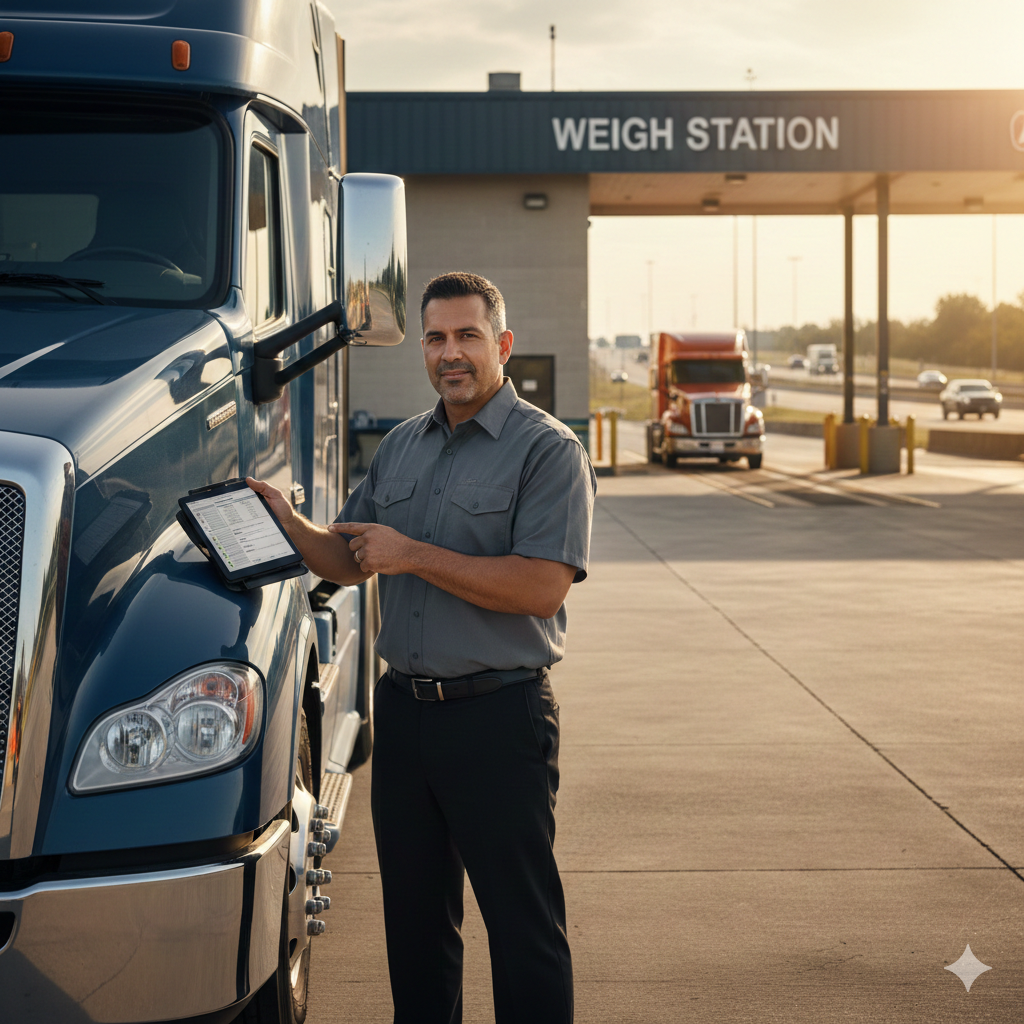
Learn how to be a DOT compliant truck driver with a practical checklist covering HOS, ELDs, medical cards, drug tests, audits, and trucking insurance. Get a Logrock quote.
How to be DOT compliant truck driver in 2026 comes down to one repeatable system: keep your credentials current, run legal HOS on a compliant ELD, stay enrolled in required drug/alcohol programs (and Clearinghouse), keep audit-ready files, document maintenance, and keep permits and insurance filings active if you run your own authority.
DOT compliance isn’t “nice to have.” It keeps you out of the chicken coop, protects your authority, and prevents a single roadside inspection from turning into a week of lost revenue. If you’re an owner-operator, you’re the driver and the compliance department—so this guide is built like a tool you can run off your phone.
Key Takeaways: Essential DOT Compliance for Truck Drivers
- DOT compliance is a system: Credentials + HOS/ELD + drug testing + files + maintenance + permits/filings must all match.
- Out-of-Service is a profit-killer: One OOS event can mean missed appointments, broker chargebacks, and higher insurance.
- Owner-operators get hit twice: You’re responsible for both driving rules and business paperwork (DQF, maintenance files, UCR, IFTA/IRP, and insurance filings).
- Go digital or get buried: Reminders + cloud folders + templates make audits and renewals predictable.
Table of Contents
Reading time: 9 minutes
- What DOT Compliant Means (Fast Answer)
- Step 1: CDL, Medical Card, and Endorsements
- Step 2: Hours of Service (HOS) + ELD Compliance
- Step 3: Drug & Alcohol Testing + Clearinghouse
- Step 4: Build Your Driver Qualification File (DQF)
- Step 5: Vehicle Inspections, Annuals, and Maintenance
- Step 6: Authority, Permits, Filings + Trucking Insurance
- Step 7: Digital DOT Compliance Toolkit (2026-ready)
- Step 8: One-Page DOT Compliance Checklist
- Frequently Asked Questions
- The Logrock Difference
- Conclusion & CTA
What DOT Compliant Means (Fast Answer)
To be DOT compliant as a truck driver in interstate commerce, you generally need a valid CDL and Medical Examiner’s Certificate, legal HOS records (often on an ELD under 49 CFR Part 395), required drug/alcohol testing and FMCSA Clearinghouse compliance, audit-ready driver qualification documentation (49 CFR Part 391), documented vehicle inspection/maintenance (49 CFR Part 396), and current permits/filings—including active insurance filings if you hold your own authority.
Think of DOT compliance like a three-part business protection plan:
- Driver legality: CDL, medical card, HOS
- Company legality: files, testing, authority/permits
- Equipment legality: inspections, maintenance, load securement
If any one part breaks, you don’t just risk a ticket—you risk an Out-of-Service (OOS) order, a lost load, or insurance headaches when you can least afford them.
Step 1 — CDL, Medical Card, and Endorsements
A DOT-compliant driver must hold the correct CDL class and endorsements for the vehicle and freight being hauled, and must keep a current Medical Examiner’s Certificate (often valid up to 24 months) on file and properly recorded with the state where required.
1. Keep your CDL and endorsements matched to your freight
- What it is (plain English): The license class and endorsements you’re legally required to run your equipment and haul your freight (tank, hazmat, doubles/triples, etc.).
- Why it’s essential (business risk): Wrong endorsement can trigger violations, OOS risk, and claim/contract problems—brokers verify this.
- Who needs it: Everyone running CMVs; owner-operators get extra scrutiny because it’s your name on the door.
- Pro tip: If you switch lanes (dry van → hazmat, hotshot → heavier GCWR), update your compliance stack before booking the first load.
2. Don’t let your DOT medical card lapse (and track the deadlines)
- What it is: Your Medical Examiner’s Certificate (“DOT medical card”).
- Why it’s essential: An expired medical card can trigger roadside issues and, depending on your state process, can lead to a CDL downgrade/suspension if not updated.
- How often it expires: Commonly every 24 months, but shorter if you have follow-ups (blood pressure, sleep apnea documentation, etc.).
- 2026 reality: Electronic medical certification updates are tighter—don’t assume “the clinic sent it.” Verify it posted.
Quick system: Set two reminders—90 days and 30 days before expiration—and save the new card as a PDF in your compliance folder.
Step 2 — Hours of Service (HOS) + ELD Compliance
FMCSA HOS rules for most property-carrying drivers include an 11-hour driving limit, a 14-hour on-duty window, and a 60/70-hour limit over 7/8 days, and most drivers required to keep RODS must use an ELD that complies with 49 CFR Part 395.
3. Run legal on HOS every day (not just when you’re tired)
- What it is: Federal limits on driving and on-duty time.
- Why it’s essential: HOS violations are a fast way to get placed OOS and rack up CSA points.
- Who needs it: Most CMV drivers in interstate commerce (with limited exceptions).
- Pro tip: Plan your week around your 60/70, not your 11. That’s where profits get wrecked—late loads, more deadhead, and bad dispatch calls.
4. Use an ELD that won’t get you shut down
- What it is: Your ELD plus a supported data transfer method for roadside.
- Why it’s essential: If your device is on the FMCSA revoked ELD list, you can be cited even if you didn’t know.
- Who needs it: Most drivers required to keep electronic RODS.
- Pro tip: Check your ELD provider status monthly, keep a paper log backup for malfunctions, and learn your malfunction process.
Reference (FMCSA ELDs): https://www.fmcsa.dot.gov/hours-service/elds
Step 3 — Drug & Alcohol Testing + Clearinghouse
FMCSA drug and alcohol rules require covered CDL drivers to be in a compliant testing program with random testing, and FMCSA’s Drug & Alcohol Clearinghouse must be checked and kept current for drivers subject to the rule.
5. If you’re an owner-operator, join a drug testing consortium (most of the time)
- What it is: A consortium/third-party administrator (C/TPA) that manages random testing pools and program compliance.
- Why it’s essential: Random testing is required for DOT-covered CDL roles; “I’ll test if asked” isn’t a compliant program.
- Who needs it: Most owner-operators with authority who are responsible for their own program.
- Pro tip: Save proof of enrollment and test results in your compliance folder—those documents get requested.
6. Clearinghouse compliance is not optional
- What it is: FMCSA’s Drug & Alcohol Clearinghouse tracks violations and return-to-duty status.
- Why it’s essential: A Clearinghouse violation can make you undispatchable until the return-to-duty process is completed.
- Who needs it: CDL drivers and employers/owner-operators subject to the rule.
- Pro tip: If you switch from company driver to authority (or add drivers later), build Clearinghouse checks into onboarding.
Reference (Clearinghouse): https://clearinghouse.fmcsa.dot.gov/
Step 4 — Build Your Driver Qualification File (DQF)
A Driver Qualification File (DQF) is the documentation package required under 49 CFR Part 391 that shows a driver is qualified, monitored, and properly documented for DOT-regulated operations.
7. Treat your DQF like a “get out of jail” folder
- What it is: A file proving you’re qualified and documented.
- Why it’s essential: In an audit, “I have it somewhere” is the same as “I don’t have it.”
- Who needs it: Carriers and owner-operators running under their own USDOT/MC authority.
Here’s a practical DQF starter list (requirements vary by operation—verify for your setup):
| DQF Item | Why it matters | Simple storage tip |
|---|---|---|
| CDL copy + endorsements | Proves legal class/privileges | PDF in cloud folder |
| Medical card copy | Prevents lapse/OOS surprises | Calendar reminder + PDF |
| MVR (state record) | Shows driving history review | Save date-stamped copy |
| Road test / equivalent | Qualification documentation | Scan signed form |
| Drug testing program proof | Proves compliance | Keep consortium docs |
| Clearinghouse queries (as required) | Shows checks were done | Save confirmations |
Pro tip: Build your folders like this: /Compliance → /DQF → /2026 → /DriverName (even if “DriverName” is you).
For a business-side view of staying audit-ready, see: owner-operator compliance basics.
Step 5 — Vehicle Inspections, Annuals, and Maintenance
FMCSA requires systematic inspection, repair, and maintenance documentation for commercial motor vehicles, and an annual inspection is required under 49 CFR 396.17 for vehicles operating in DOT-regulated service.
8. Pre-trip and post-trip inspections are about protecting uptime
- What it is: Driver vehicle inspections (DVIR rules vary by operation; many fleets still document post-trips as policy).
- Why it’s essential: Tires, lights, brakes, and leaks get found at the worst time—roadside or during a claim.
- Who needs it: Every driver who wants to stop donating money to downtime.
- Pro tip: Write defects up and fix them fast; repeat violations on the same equipment are what enforcement and insurers notice.
9. Annual inspections + a preventive maintenance schedule keep you off the radar
- What it is: Annual DOT inspection plus your preventive maintenance (PM) plan.
- Why it’s essential: Brake, tire, and lighting issues are common OOS triggers; PM is cheaper than road calls and missed loads.
- Who needs it: Any commercial operation—especially owner-ops with tight cash flow.
- Pro tip: Track maintenance by cost-per-mile (CPM). If maintenance CPM spikes, your “cheap truck” is getting expensive.
Basic PM cadence (starter—adjust to your OEM and duty cycle):
- Every trip: tires, lights, fluids, air leaks
- Weekly: brakes visual, air system check, lug nuts, coolant level
- Every 10k–15k: oil/filters (operation-dependent), grease points
- Quarterly: DOT-style inspection sweep + fix small stuff
- Annually: DOT inspection + full brake/steer/suspension review
Step 6 — Authority, Permits, Filings + Trucking Insurance (Owner-Operator Zone)
If you operate under your own USDOT/MC authority, staying “DOT compliant” also means keeping registrations and required financial responsibility active, including minimum public liability coverage (often $750,000 for for-hire interstate non-hazardous property carriers under 49 CFR Part 387) and any required insurance filings used to keep authority in good standing.
This is where a lot of good drivers get burned—because it’s not driving skill, it’s paperwork.
10. Keep your authority and permits current (or you’re effectively parked)
- What it is: Active USDOT/MC authority (if applicable), UCR, IFTA/IRP (if applicable), and any state permits you need.
- Why it’s essential: Inactive authority or missing registration can stop you from running loads instantly.
- Who needs it: Anyone running under their own authority; many hotshot operations too, depending on weight and operation.
Common owner-op compliance stack (verify what applies to your operation):
- UCR (annual)
- IFTA (quarterly reporting) if you’re qualified
- IRP (apportioned plates) if you’re qualified
- IRS Form 2290 (HVUT) if you’re 55,000+ lbs (verify your setup)
- State permits depending on lanes, weight, and commodity
11. Your insurance is part of DOT compliance when filings are required
DOT compliance isn’t only safety—insurance and insurance filings can determine whether your authority stays active and whether brokers will load you.
| Insurance / document | What it does | Why it matters for compliance/business |
|---|---|---|
| Auto Liability | Pays for damage/injury you cause | Often required for authority and broker setups; lapses can shut down work |
| Cargo | Protects the freight | Broker/shipper requirement; claims can end contracts |
| Physical Damage | Protects your truck/trailer | One wreck shouldn’t wipe out your business |
| Filings (when required) | Proof of financial responsibility to regulators | Filing problems can disrupt authority status and dispatch |
| COIs (Certificates of Insurance) | Proof to shippers/brokers | Late COIs can cost loads the same day |
If you want to stop overpaying while still staying compliant, start here: commercial truck insurance basics.
Pro tip: “Affordable trucking insurance” isn’t the cheapest monthly payment. It’s the lowest total cost of risk (premium + deductible exposure + downtime + contract compliance).
Keep your authority active (without overbuying coverage): Logrock helps match coverages and filings to your operation so you can stay loaded and legal.
Step 7 — Digital DOT Compliance Toolkit (2026-ready)
A practical DOT compliance toolkit in 2026 is a phone-based system that stores documents in the cloud, schedules renewal reminders, and provides quick roadside access to logs, permits, and insurance paperwork.
If your compliance system depends on paper stuffed in a glovebox, you’re one spilled coffee away from a bad week.
12. Use a simple “Compliance Stack” on your phone
- Cloud storage: Google Drive/Dropbox folder for DQF + maintenance + permits + insurance COIs
- Calendar reminders: med card, UCR, IFTA quarters, IRP renewals, 2290, annual inspection
- ELD portal access: confirm you can log in and export roadside data
- Routing/parking apps: reduce last-minute parking chaos (fatigue → HOS risk)
Pro tip: Make one folder called “Roadside” with: insurance card, registration, annual inspection, med card, permit copies, and your ELD instructions.
Step 8 — One-Page DOT Compliance Checklist (Print or Screenshot)
A weekly DOT compliance checklist should confirm driver credentials, ELD/HOS accuracy, drug/alcohol program status, inspection/maintenance documentation, and active permits and insurance payments to reduce OOS and audit risk.
Use this as your weekly reset. If you can say “yes” to all of it, you’re in a strong position.
Driver
- CDL valid + correct endorsements
- Medical card valid and posted with state (verify)
- Clearinghouse status clean (and queries done if required)
- Drug testing program active (consortium enrollment proof saved)
HOS / ELD
- Logs current; no obvious form & manner errors
- You know your 60/70-hour plan for the week
- ELD is compliant and not on a revoked list
- Paper log backup in truck for malfunctions
Truck / Trailer
- Pre-trip habit is consistent (tires, lights, brakes, air)
- Annual inspection current
- Maintenance records saved and organized
- Load securement equipment present and usable
Business / Paperwork
- UCR / IFTA / IRP / 2290 handled (if applicable)
- Authority is active (if you have it)
- Insurance payments current; no cancellation notices ignored
- COIs ready for brokers/shippers
Frequently Asked Questions
DOT-required training depends on your operation, but you must be able to demonstrate and document competency in safety-critical areas like HOS/ELD use (49 CFR Part 395), inspections/maintenance reporting, and company safety policies, and you need hazardous materials training if you haul hazmat. The risk isn’t “not knowing”—it’s not having proof when an auditor asks. If you run under your own authority, build a simple orientation checklist, keep signed policy acknowledgments, and store training records in your DQF/safety folder so they’re audit-ready.
Most DOT medical cards (Medical Examiner’s Certificates) are issued for up to 24 months, but the examiner can issue a shorter period based on medical conditions or follow-ups. The only date that matters is the expiration date printed on your certificate, so set reminders at 90 days and 30 days before it ends. Also verify the medical certification is properly recorded with your state if your state requires electronic posting, and keep a PDF copy in your cloud “Roadside” folder for inspections.
For most property-carrying CMV drivers, the core FMCSA HOS limits are 11 hours of driving after 10 consecutive hours off, a 14-hour on-duty window, and a 60/70-hour limit over 7/8 days (49 CFR Part 395). Exceptions exist (short-haul, adverse driving, sleeper berth splits), but exceptions are where most “good drivers” get dinged. If your operation relies on an exception, apply it consistently and keep supporting documentation so a roadside inspection doesn’t turn into an OOS surprise.
In most cases, yes—if you’re a CDL owner-operator responsible for your own DOT drug and alcohol testing compliance, you must be in a compliant program that includes random testing, and that’s commonly done through a consortium/third-party administrator (C/TPA). If you’re leased on to a motor carrier, you may be covered under their testing program, but you shouldn’t guess. Get confirmation in writing and keep proof of enrollment and test records in your compliance folder because those documents are frequently requested during audits.
DOT audits typically require documentation that proves driver qualification (49 CFR Part 391), HOS/ELD compliance (49 CFR Part 395), drug/alcohol program compliance and Clearinghouse checks, and vehicle inspection/maintenance records (49 CFR Part 396). Practically, that means a complete DQF, ELD/RODS records and supporting documents, testing program enrollment and results, annual inspection proof, and maintenance files. Keeping insurance paperwork organized also helps you move faster when brokers request COIs or when regulators verify financial responsibility—see commercial truck insurance basics.
The Logrock Difference: Insurance Built for Business Owners
A business-first trucking insurance program should match your actual operation (authority vs leased-on, lanes, equipment, and cargo) and keep COIs and filings moving fast enough to avoid load cancellations and compliance gaps.
Logrock isn’t here to “sell you a policy.” We’re here to help you run a tighter business—because insurance mistakes hit owner-operators harder than big fleets.
What we focus on:
- Matching coverage to your operation: hotshot vs power-only vs under your own authority vs leased on
- Keeping paperwork moving: COIs when brokers need them (not tomorrow)
- Reducing preventable exposure: gaps like non-trucking/bobtail confusion, wrong radius, or wrong cargo class
If you want a clean quote process that doesn’t waste your time, start here: trucking insurance quote checklist.
Conclusion: Get a Quote That Won’t Break Your Cash Flow
DOT compliance protects your authority, uptime, and margins by keeping credentials, logs, testing, files, equipment, permits, and commercial truck insurance aligned.
Compliance failures cost more than tickets—think downtime, lost loads, and insurance fallout. Build a repeatable system (reminders + cloud folders + weekly checklist), and don’t let paperwork park your truck.
Key Takeaways:
- Prevent OOS events: stay ahead of med card dates, HOS planning, and equipment defects.
- Stay audit-ready: keep a date-stamped DQF and maintenance file in the cloud.
- Keep authority workable: handle UCR/IFTA/IRP/2290 (if applicable) and avoid insurance lapses that disrupt loads.
Want help tightening up the insurance side without overbuying? Get a quote built around your real operation.
Related reading: Commercial Truck Insurance Basics, Owner-Operator DOT Compliance Basics, and Trucking Insurance Quote Checklist.