
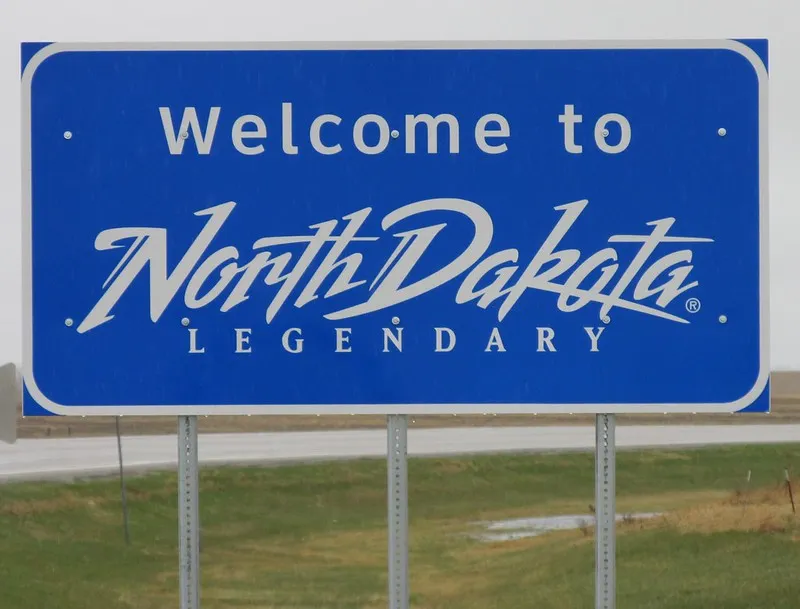
Driving in North Dakota means handling the brutal cold of the Northern Plains. From the flat, icy stretches of I-29 to the busy, rough roads of the western oil fields near Williston, the terrain demands respect.
For regulatory purposes, North Dakota is largely deregulated for intrastate general freight. If you haul dry goods or construction materials, you do not need a "Certificate of Public Convenience" or a Form E filing. You simply need to register your vehicle and meet safety standards.
However, the Bakken Oil Field operates by its own rules. To work for major energy companies (Halliburton, Hess, etc.), you will need insurance limits far higher than state law requires, including General Liability and Pollution coverage.
In North Dakota, the average commercial truck insurance premium typically lands between $8,000 and $16,000 per year. This guide breaks down exactly what you need to pay to keep your trucks legal.
Key Takeaways: North Dakota Truck Insurance Costs
- The Price Tag: Expect to pay around $10,500 annually for a standard Ag/Freight Semi. However, Oil Field trucks often pay $15,000+ due to higher liability requirements.
- The "Bakken" Factor: If you work in the oil fields (Williston/Dickinson), you need General Liability, Hired & Non-Owned Auto, and often an Umbrella Policy to satisfy Master Service Agreements (MSAs).
- Harvest Season: North Dakota allows a 10% weight tolerance for harvest loads during specific seasons. Your insurance must cover these heavier loads.
- Winter Risk: Temperatures drop to -40°F. "Diesel gelling" and engine failure are common. Ensure your policy includes Towing & Labor coverage, as a tow in rural ND is incredibly expensive.
Real Numbers: Estimated Costs by Truck Type
Let's look at the hard data. The following estimates represent the average annual cost for Auto Liability ($1M Limit) for a driver with a clean record in North Dakota. Note: The gap between "Ag Haulers" and "Oil Haulers" is significant. Ag is low risk; Oil is high risk.
| Vehicle Type | Limit $300,000* | Limit $750,000 | Limit $1,000,000 (Standard) |
|---|---|---|---|
| Hotshot (Oil Field) | $8,500 | $11,200 | $13,500 |
| Box Truck | $5,200 | $6,800 | $8,200 |
| Grain Hauler | $6,000 | $8,000 | $9,500 |
| Semi (General Freight) | $8,200 | $10,500 | $12,200 |
| Water/Sand Hauler | N/A | $12,500 | $15,500+ |
Last updated: December 15, 2025.
Logrock Reality Check: If you are a Water Hauler in the oil patch, you need Pollution Liability (CA9948). If you spill saltwater (brine) on a farmer's field, the cleanup cost can be astronomical. A standard auto policy excludes this.
Liability Limits: Intrastate vs. Interstate
North Dakota rules change depending on whether you cross state lines. We have broken this down into two tables to make it clear.
Table 1: Intrastate Requirements (NDDOT)
For trucks that never leave North Dakota (e.g., Fargo to Bismarck).
| Vehicle Weight / Type | Minimum Liability Limit | Filing Required? |
|---|---|---|
| Freight < 10,000 lbs GVW | $300,000 CSL | No (Proof in Cab) |
| Freight > 10,001 lbs GVW | $750,000 CSL | No (Proof in Cab)* |
| Household Goods (Movers) | $300k - $750k + Cargo | No (Usually exempt) |
| Passenger (16+ seats) | $5,000,000 CSL | Yes (Form E) |
| Hazmat (Gas/Oil) | $1,000,000 - $5,000,000 | Yes (Form E/ MCS-90) |
Note: "CSL" means Combined Single Limit. Critical: North Dakota is very deregulated for property carriers. You generally do not file Form E for hauling freight intrastate. You just need to register the truck commercially and carry proof of insurance. Passenger carriers are the main exception.
Table 2: Interstate Requirements (FMCSA / Federal)
For trucks that cross state lines (e.g., Fargo, ND to Moorhead, MN).
| Vehicle Weight / Type | Minimum Liability Limit | Filing Required? |
|---|---|---|
| Freight < 10,000 lbs | $300,000 CSL | No (Unless Hazmat) |
| Freight > 10,001 lbs | $750,000 CSL | Yes (BMC-91X) |
| Hazmat (Gas/Oil/Explosives) | $1,000,000 - $5,000,000 | Yes (MCS-90) |
| Passenger (16+ seats) | $5,000,000 CSL | Yes (BMC-91X) |
North Dakota Requirements & Critical Filings
To operate legally, your insurance agent must understand the difference between a farm truck and a commercial truck.
- Commercial Plates: If you haul for hire, you need commercial plates. ND has specific "Farm Plates" which are cheaper but strictly prohibit hauling for hire. Insurance for farm plates is cheap; insurance for commercial plates is higher.
- Form E: Rarely required for ND intrastate freight. Only needed for Passenger carriers or if you are based in ND but need to prove insurance to another state (like MN or MT).
- Oil Field Endorsements: If you enter oil lease sites, you need Waiver of Subrogation and Primary & Non-Contributory wording on your certificate. Without this, the site supervisor will turn you away.
- 10% Weight Exemption: During harvest (July 15 - Dec 1) and winter (Dec 1 - Mar 7), ND allows 10% extra weight on certain roads. Your policy must cover you at this heavier weight.
Your Questions Answered: "People Also Ask" FAQs
Yes. North Dakota adopts federal safety regulations. All commercial vehicles over 10,001 lbs GVW need a USDOT number, even if they never cross state lines.
Because most ND hotshots work in the oil fields. They haul heavy equipment on rough, icy roads 24/7. The accident rate is higher, and the liability requirements of the oil companies force premiums up.
This is illegal. If you crash while hauling a load for pay on Farm Plates, your insurer can deny the claim for "Material Misrepresentation." You are paying for personal/farm risk but exposing them to commercial risk.
The Logrock Difference: Ag vs. Energy
North Dakota trucking is split in two. A sugar beet hauler in the Red River Valley needs a completely different policy than a sand hauler in Williston. At Logrock, we know the difference. We check if you need the Oil Field Package (GL + Pollution) or just a standard Ag policy. We ensure you aren't paying for "Bakken rates" if you never go west of Jamestown.
Conclusion & Get Your North Dakota Quote
Whether you are chasing the harvest or the oil boom, North Dakota offers high-paying work. Ensure your insurance covers the cold and the cargo. Ready to get a solid number for your business? Contact Logrock today for a customized, no-obligation quote and keep your wheels turning.



