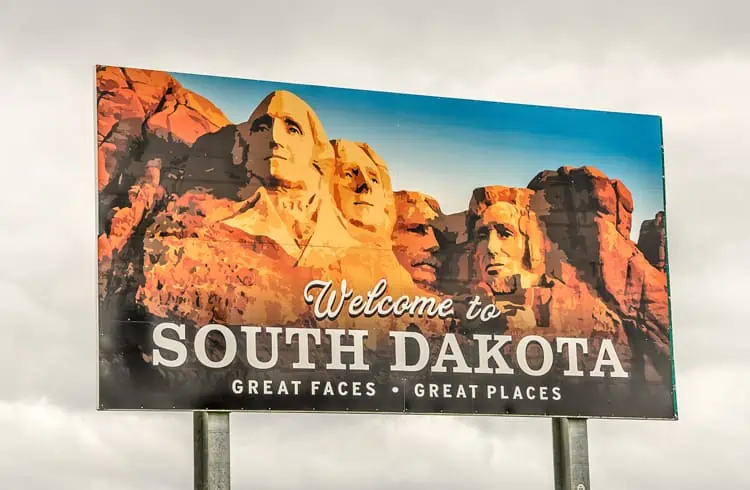
South Dakota commercial truck insurance costs in 2026: truck type rates, intrastate vs interstate limits, filings, harvest permits, winter risk, and ways to save.
From the cornfields of the East River to the ranchlands of the West River and the Black Hills, South Dakota is built on agriculture and logistics.
South Dakota is unique because it has largely deregulated intrastate general freight. Unlike states that require a complex Certificate of Authority, South Dakota focuses on commercial licensing and plates. If you haul general freight within the state, you generally do not need a specific authority number, but you must still follow weight, registration, safety, and insurance rules managed by state and federal agencies.
However, the winter weather is brutal. The I-90 corridor experiences high winds and black ice events that can lead to jackknife accidents. While liability can be affordable, Physical Damage deductibles and claim severity can rise because of weather risk.
In South Dakota, the average commercial truck insurance premium typically lands between $7,000 and $12,000 per year. This guide breaks down what you may need to pay to keep your trucks legal and bookable.
Key Takeaways: South Dakota Truck Insurance Costs
- The Price Tag: Expect to pay around $9,800 annually for a Semi-Truck with a clean record. South Dakota is generally a low-cost state for truck insurance.
- Registration Haven: Many truckers base their IRP plates in South Dakota due to low fees and taxes. Your insurance must still match the real garaging address and operating pattern. See also: Cheapest Commercial Truck Insurance in South Dakota (2026 Guide).
- Harvest Season: During harvest, the South Dakota DOT issues harvest and oversize/overweight permits. Your insurance must not exclude permitted overweight operations if you use them.
- Deregulation: For standard general freight intrastate work, there is minimal red tape. A Form E is typically not required for dry van or grain intrastate work, but proof of insurance in the cab is still essential.
Real Numbers: Estimated Costs by Truck Type
The following estimates represent the average annual cost for Auto Liability with a $1M limit for a driver with a clean record in South Dakota. Rates are often lower than higher-density states, but final quotes still depend on radius, cargo, MVR, claims history, filings, and equipment value.
| Vehicle Type | Limit $300,000* | Limit $750,000 | Limit $1,000,000 (Standard) |
|---|---|---|---|
| Hotshot | $5,500 | $7,200 | $8,500 |
| Box Truck | $4,800 | $6,200 | $7,500 |
| Grain Hauler | $6,500 | $8,500 | $9,800 |
| Semi Truck | $7,800 | $9,500 | $11,200 |
| Livestock Hauler | $8,500 | $10,800 | $12,500 |
Last updated: July 28, 2026.
Want to understand what is behind these numbers? Watch this breakdown of every factor that affects your truck insurance premium:
Logrock Reality Check: While rates are low, Livestock Haulers face a unique challenge. If a cattle pot overturns, Cargo Insurance can pay for covered loss to the cattle, but you often need Debris Removal coverage to pay for cleanup of the highway, which can cost $10,000+ alone.
Liability Limits: Intrastate vs. Interstate
South Dakota rules change depending on whether you cross state lines. These two tables separate state-level intrastate expectations from federal FMCSA requirements.
Table 1: Intrastate Requirements (SD DOR / Highway Patrol)
For trucks that never leave South Dakota, such as Sioux Falls to Rapid City.
| Vehicle Weight / Type | Minimum Liability Limit | Filing Required? |
|---|---|---|
| Freight < 10,000 lbs GVW | $300,000 CSL | No (Proof in Cab) |
| Freight > 10,001 lbs GVW | $750,000 CSL | No (Proof in Cab) |
| Grain / Ag Exempt | $300k–$750k | No (Proof in Cab) |
| Hazmat (Gas/Oil) | $1,000,000–$5,000,000 | Yes (MCS-90 / Form E may apply) |
| Passenger (For-Hire) | $1,500,000–$5,000,000 | Yes (Form E may apply) |
Note: CSL means Combined Single Limit. South Dakota generally does not require a Form E filing for standard intrastate general freight carriers. You need to carry a valid insurance ID card and register the vehicle commercially.
Table 2: Interstate Requirements (FMCSA / Federal)
For trucks that cross state lines, such as Sioux Falls, SD to Minneapolis, MN.
| Vehicle Weight / Type | Minimum Liability Limit | Filing Required? |
|---|---|---|
| Freight < 10,000 lbs | $300,000 CSL | No (unless hazmat) |
| Freight > 10,001 lbs | $750,000 CSL | Yes — BMC-91X filing with FMCSA |
| Hazmat (Gas/Oil/Explosives) | $1,000,000–$5,000,000 | Yes (MCS-90) |
| Passenger (16+ seats) | $5,000,000 CSL | Yes (BMC-91X) |
Not sure which limit to choose? Here is a practical guide to selecting the right coverage amount for your operation:
South Dakota Requirements & Critical Filings
To operate legally, your insurance agent must understand the relaxed nature of South Dakota intrastate regulation compared with stricter federal requirements.
- Commercial Licensing: The primary requirement in South Dakota is obtaining commercial plates through the County Treasurer or Department of Revenue. You must show proof of insurance to get plates.
- Harvest Permits: During harvest, you can purchase permits for overweight loads through South Dakota DOT permits. Your insurance policy must not exclude overweight operations, or claims can become problematic during a harvest accident.
- Form E: Usually only required for passenger carriers or if a South Dakota-based carrier needs to prove insurance to another state where it holds authority.
- UCR: South Dakota participates in the Unified Carrier Registration (UCR) system. Interstate carriers must register annually.
- USDOT number: Per federal safety regulations, commercial vehicles over 10,001 lbs GVW generally need to register for a USDOT number with FMCSA.
Your Questions Answered: “People Also Ask” FAQs
This is a complex legal area. While you can form an LLC in SD, insurance must be rated where the truck is garaged. If you register in SD to save on taxes but park or operate in California and do not tell your insurer, they may treat it as material misrepresentation or rate evasion. That can create claim problems or even denial. Always disclose the actual garaging state and operating territory to your insurance agent.
For intrastate general freight over 10,001 lbs GVW, South Dakota operators commonly budget around a $750,000 Combined Single Limit (CSL) liability minimum. Standard dry van or grain hopper intrastate work generally does not require a Form E filing in South Dakota; you need a valid proof-of-insurance card in the cab and proper commercial registration. Still, confirm your policy covers ag or grain hauling and does not exclude the commodity or permitted weight you actually run.
Usually no. South Dakota generally does not require a Form E filing for standard intrastate general freight carriers, including many dry van and grain hopper operations. You need to carry a valid proof-of-insurance card in the cab and register the vehicle commercially through the County Treasurer or South Dakota Department of Revenue. Form E is typically more relevant for passenger carriers or situations where a South Dakota-based carrier must prove coverage to another state where it holds authority.
There is not an insurance exemption. While certain ag haulers may receive exemptions from some hours-of-service or CDL rules within specific farm-related operating limits, they are not exempt from financial responsibility. If you operate on a public road, you still need liability coverage that matches your vehicle, load, and operation.
Yes. This is a detail many South Dakota truckers miss. Some policies have exclusions for overweight operations. If you haul grain during harvest using a state overweight or harvest permit and your policy excludes overweight operations, a claim from that load can become a serious problem. Before harvest season, confirm with your agent that your policy has no overweight exclusion or request an endorsement that clearly covers permitted overweight operations.
Physical Damage insurance covers damage to your own truck, depending on the policy terms. Collision coverage typically handles rollover damage, while comprehensive coverage can apply to certain non-collision events. If you carry freight, Motor Truck Cargo may respond to covered loss or damage to the cargo, subject to exclusions. Debris Removal can also matter because clearing a trailer, cargo, or livestock-related debris from a highway can become expensive fast.
Yes, in many cases. South Dakota adopts federal safety regulations, and commercial vehicles over 10,001 lbs GVW generally need a USDOT number. You can review the federal registration process through FMCSA, and if you are not sure whether your exact vehicle or operation qualifies, confirm before you haul.
IRP plates should be based in your base jurisdiction: the state where your trucking business is established and where operational records are maintained. Many carriers legitimately base IRP in South Dakota, but your insurance must still be rated where the truck is primarily garaged and operated. Registering in South Dakota while garaging and running mostly elsewhere can create a misrepresentation issue on an insurance application. Disclose your actual garaging state and operating pattern to your insurance agent.
The Logrock Difference: We Know the Plains
South Dakota is a great place to do business, but the weather requires respect. At Logrock, we help you avoid paying for filings you do not need, such as Form E for a grain hopper when it does not apply. We also help you find Physical Damage coverage that will not break the bank, so you are better protected if high winds tip your trailer on I-90.
Before you sign a Physical Damage policy, this quick tip can help you think through savings without cutting the wrong coverage: Trucker Discounts: Maximize Savings on Physical Damage.
Conclusion & Get Your South Dakota Quote
Take advantage of South Dakota’s friendly business climate, but make sure your coverage is ready for winter roads, ag season, and the exact routes you run. The cheapest policy only works if it matches your real garaging location, authority type, freight, and operating radius.
Key Takeaways:
- South Dakota can be one of the more affordable states for truck insurance, but weather and ag exposures still matter.
- Intrastate general freight may not require a Form E, but proof of insurance, correct registration, and proper limits still matter.
- Interstate operations trigger FMCSA filing requirements, and carriers should keep UCR and USDOT details current.