
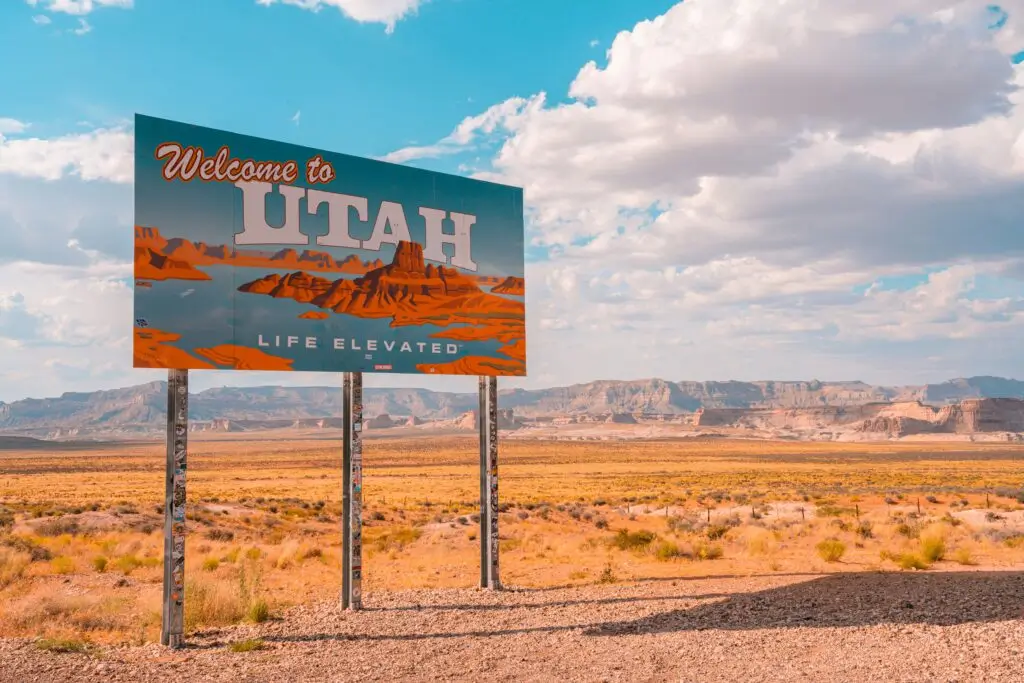

For regulatory purposes, the Utah Department of Transportation (UDOT) Motor Carrier Division oversees trucking. Utah is generally a business-friendly state with less “red tape” than its neighbors. For General Freight, Utah is largely deregulated—you do not need a state-specific operating authority certificate (like a TXDOT or CA number), but you must have a USDOT number and meet federal insurance limits.
However, if you are a Tow Truck Operator or a Household Goods Mover, the rules are stricter, and you may need to be on the UDOT Rotation Roster, which has specific insurance mandates.
In Utah, the average commercial truck insurance premium typically lands between $8,500 and $14,000 per year. This guide breaks down exactly what you need to pay to keep your trucks legal in the Beehive State.
Want the quick version? Watch our breakdown of Utah truck insurance costs below.
Key Takeaways: Utah Truck Insurance Costs
- The Price Tag: Expect to pay around $11,500 annually for a standard Semi-Truck. Utah is a Tier 3 (Moderate Cost) state.
- LCV Operations: Utah allows Doubles and Triples. If you haul these, your policy must not exclude “multiple trailers.” You also need an LCV Permit from UDOT.
- Tow Truck Rotation: To be on the police dispatch list (Rotation), Tow Trucks must carry higher cargo (On-Hook) limits and General Liability.
- Winter Weather: The I-80 corridor near Park City is infamous for chain-up requirements. Physical Damage deductibles are often higher here due to winter accident risks.
Real Numbers: Estimated Costs by Truck Type
Let’s look at the hard data. The following estimates represent the average annual cost for Auto Liability ($1M Limit) for a driver with a clean record in Utah. Rates in the Salt Lake City / Provo metro area are higher than in rural areas like Cedar City or Logan due to traffic density on I-15.
| Vehicle Type | Limit $300,000* | Limit $750,000 | Limit $1,000,000 (Standard) |
|---|---|---|---|
| Hotshot | $7,000 | $9,200 | $10,500 |
| Box Truck | $5,800 | $7,500 | $8,800 |
| Dump Truck | $7,500 | $9,800 | $12,000 |
| Semi Truck | $9,000 | $11,500 | $12,800 |
| LCV (Doubles) | $10,500 | $13,200 | $15,500 |
Last updated: December 15, 2025.
Logrock Reality Check: While Utah law allows lower limits for lighter trucks, if you haul construction materials for the booming housing market in Utah County (“Silicon Slopes”), developers will demand $1,000,000 Auto Liability and $1,000,000 General Liability.
Not sure how Auto Liability and General Liability differ? Watch our Auto Liability vs General Liability for Truckers explainer.
Liability Limits: Intrastate vs. Interstate
Utah rules change depending on whether you cross state lines. We have broken this down into two tables to make it clear.
Table 1: Intrastate Requirements (UDOT)
For trucks that never leave Utah (e.g., Ogden to St. George).
| Vehicle Weight / Type | Minimum Liability Limit | Filing Required? |
|---|---|---|
| Freight < 10,000 lbs GVW | $300,000 CSL | No (Proof in Cab) |
| Freight > 10,001 lbs GVW | $750,000 CSL | No (Proof in Cab) |
| Household Goods (Movers) | $750,000 + Cargo Ins. | Yes (File with UDOT) |
| Tow Truck (Rotation) | $750,000+ On-Hook | Yes (File with UDOT) |
| Passenger (16+ seats) | $5,000,000 CSL | Yes (Form E) |
Note: “CSL” means Combined Single Limit. Critical: Utah adopts the Federal Regulations (49 CFR 387) for intrastate commerce. This means even if you don’t leave the state, if your truck is over 10,001 lbs, you need $750,000 liability. General freight carriers do NOT need to file Form E, just maintain proof in the cab.
Table 2: Interstate Requirements (FMCSA / Federal)
For trucks that cross state lines (e.g., Salt Lake City, UT to Las Vegas, NV).
| Vehicle Weight / Type | Minimum Liability Limit | Filing Required? |
|---|---|---|
| Freight < 10,000 lbs | $300,000 CSL | No (Unless Hazmat) |
| Freight > 10,001 lbs | $750,000 CSL | Yes (BMC-91X) |
| Hazmat (Gas/Oil/Explosives) | $1,000,000 – $5,000,000 | Yes (MCS-90) |
| Passenger (16+ seats) | $5,000,000 CSL | Yes (BMC-91X) |
Utah Requirements & Critical Filings
To operate legally, your insurance agent must understand UDOT’s specific needs for regulated industries.
- Tow Truck Roster: If you want to perform non-consensual towing (police calls), you must be certified. This requires filing proof of insurance directly with UDOT showing Liability, Cargo (On-Hook), and Garage Keepers coverage.
- LCV Permit: To haul doubles or triples exceeding standard lengths, you need an annual permit. Your insurance must cover these configurations.
- UCR: Utah participates in the Unified Carrier Registration system. Even intrastate carriers must register for UCR in Utah.
- Form E: Generally only required for Passenger Carriers or companies based in Utah seeking authority in other states that require it.
Your Questions Answered: “People Also Ask” FAQs
Yes. Utah requires all commercial vehicles with a GVW or GCWR of 10,001 lbs or more to obtain a USDOT number. You must mark it “Intrastate” if you never leave Utah.

Yes, for general freight, Utah does not require a separate state operating authority certificate the way some neighboring states do—you still need a USDOT number and must meet federal insurance minimums, but there’s no Utah-specific “for-hire” permit for standard freight. See our guide on how to get a DOT number and MC number.
You’d be out of compliance with UDOT’s adopted federal standard (49 CFR 387), which risks fines, a downgraded safety rating, or being placed out of service during a roadside inspection.
Not automatically. Most standard policies cover one trailer. If you haul LCVs (Doubles/Triples) on I-15 or I-80, you must explicitly declare this to your agent. If you jackknife a triple without the endorsement, the claim could be denied.
Utah is experiencing a construction boom. With more dump trucks on the road, accident frequency has increased, leading insurers to raise rates for the “Sand & Gravel” class code.
Yes. Household goods movers must file proof of insurance directly with UDOT, carrying at least $750,000 in combined liability plus cargo coverage—this is one of the few Utah intrastate categories with a mandatory filing requirement.
It can. Carriers running the I-80 corridor near Park City or Parleys Canyon in winter often see higher Physical Damage deductibles, since insurers price in the increased accident risk from chain-up conditions and mountain grades.
The Logrock Difference: We Know LCVs & Mountains
Utah trucking is about efficiency and overcoming geography. If your agent forgets to endorse your policy for “Double Trailers” or sets your deductibles too high for winter driving, you are at risk. At Logrock, we customize your coverage. We ensure your Tow Truck meets UDOT rotation standards and your Semi is covered for the long hauls across the Great Basin.
Conclusion & Get Your Utah Quote
If you’re trying to pin down a realistic insurance budget for your Utah operation—whether you’re running I-15 freight, hauling dump trucks for the Silicon Slopes construction boom, or chasing a spot on the UDOT tow rotation—LogRock can help you review your coverage, filings, and available options. Talk to our team to ask questions, identify possible gaps, and request a quote based on your business.





