
Commercial Truck Insurance Cost in Mississippi by Truck Type

How much does commercial truck insurance cost in Mississippi?
Check a truck insurance availability with LogRock
 

Commercial truck insurance in Mississippi costs an estimated $8,500 to $14,500 per year on average. Truck type and liability limit drive the price: the page’s table shows semi trucks at $8,800 to $13,800 and log trucks at $9,500 to $14,500 for $300K to $1M limits.See Mississippi commercial truck insurance costs by truck type, MDOT/Form E requirements, liability limits, logging risks, and ways to get a quote.

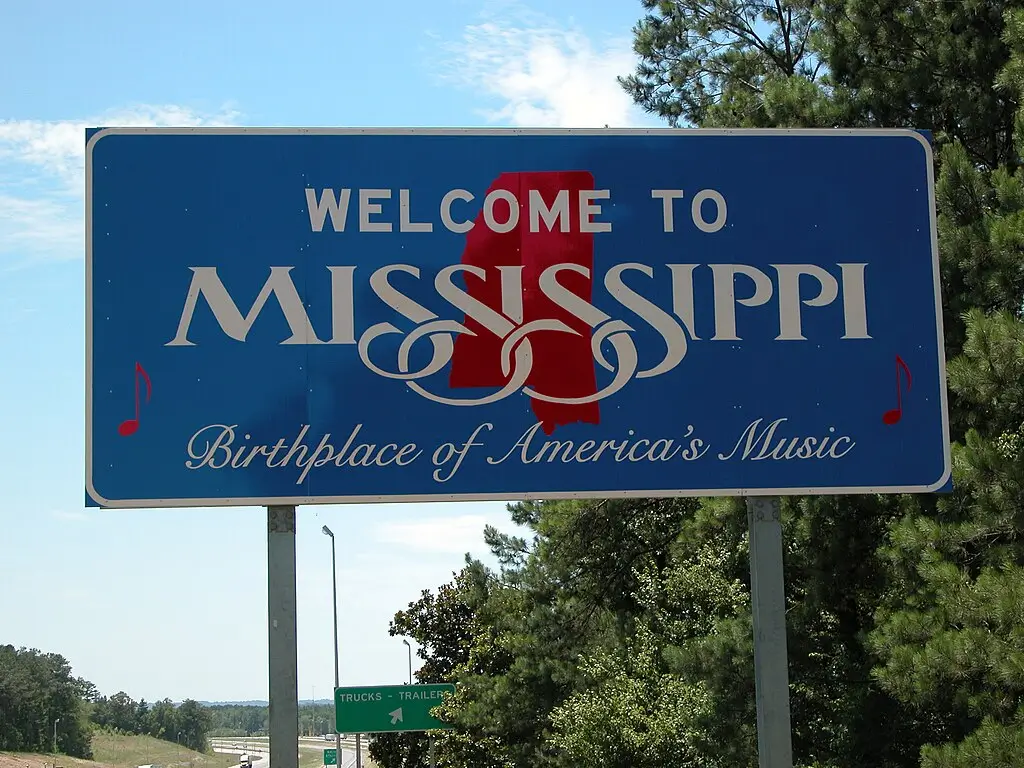
From the catfish farms of the Delta to the pine forests of the south and the industrial corridor of I-55, Mississippi keeps the supply chain moving. For business owners, the good news is that Mississippi is usually a lower-to-moderate cost state for truck insurance compared with harder markets nearby. The legal environment is less severe than Louisiana, which helps keep premiums more stable. However, if you haul timber or poultry, you face specific physical damage and cargo risks. A log truck overturning on a dirt road or getting damaged during loading can create claims that a standard highway-focused policy may not handle well. In Mississippi, the average commercial truck insurance premium typically lands between $8,500 and $14,500 per year. This guide breaks down what you need to pay to keep your Mississippi operation compliant, including MDOT/MDOT Certificate of Insurance filings, federal minimums, and logging-specific coverage concerns.

Key Takeaways: Mississippi Truck Insurance Costs

Price context: The inherited ranges and scenario figures in this guide are planning illustrations, not a verified 2026 market survey or binding quote. Actual eligibility, coverage, deductibles and payment terms determine the written offer; do not assume every monthly figure equals an identical installment schedule.

  • The Price Tag: Expect to pay around $12,200 annually for a semi truck with a clean record.
  • Monthly Breakdown: A typical owner-operator may pay roughly $1,000/month for liability and $200/month for physical damage, depending on equipment, routes, and losses.
  • Intrastate Authority: If you haul for-hire within Mississippi, you may need state authority and a MDOT Certificate of Insurance filing with MDOT.
  • The Logging Factor: Mississippi timber operators should ask about Loggers Broad Form or similar endorsements that address loading, unloading, and non-public-road exposure.

👉 Need to save money on truck insurance in Mississippi?

Watch the video below for a quick overview of truck insurance in Mississippi requirements, how much it costs, and practical ways to save. Or give us a call: (704) 290-3630

Table of Contents

Reading time: 8 minutes

Check a truck insurance availability with LogRock

Real Numbers: Estimated Costs by Truck Type

The following estimates represent average annual pricing for auto liability at a $1M limit for a driver with a clean record in Mississippi. While rates are generally lower than in neighboring hard markets, log trucks and dump trucks can pay more because rollover, off-road, and falling-object claims are more common.
Vehicle Type Limit $300,000* Limit $750,000 Limit $1,000,000 (Standard)
Hotshot $6,800 $9,200 $10,500
Box Truck $5,500 $7,500 $8,800
Dump Truck $7,200 $9,800 $11,500
Semi Truck $8,800 $12,200 $13,800
Log Truck $9,500 $12,500 $14,500
Last updated: November 5, 2026. Logrock Reality Check: While some lower-weight intrastate vehicles may qualify for lower liability limits, most commercial activity involves heavier trucks or contract requirements. Paper mills and poultry plants often require $1,000,000 liability and $100,000 cargo before you can enter their gates. Running hotshot loads? Cargo insurance requirements can differ from standard freight. Dump truck operators should also compare state-specific requirements before bidding on construction or materials work. Considering a dump truck operation in Mississippi? This step-by-step guide covers what it takes to launch a dump truck business — from equipment decisions to insurance to getting your first loads.

Liability Limits: Intrastate vs. Interstate

Mississippi commercial auto insurance rules change depending on whether you cross state lines, the vehicle weight, and what you haul. The tables below separate intrastate Mississippi requirements from federal interstate requirements.

Table 1: Intrastate Requirements (MDOT Only)

MDOT’s published general-freight packet covers intrastate property except household goods and passengers; verify applicability and separate authority categories.
Vehicle Weight / Type Minimum Liability Limit Filing Required?
Nonhazardous general freight (MDOT packet) $750,000 CSL per general-freight packet Certificate of Insurance per applicable MDOT instructions
Different vehicle/authority category: confirm scope $750,000 CSL Certificate of Insurance per applicable MDOT instructions
Hazmat (Gas/Oil) $1,000,000–$5,000,000 Certificate of Insurance per applicable MDOT instructions
Household Goods (Movers) Separate household-goods authority; not covered by this packet Request the correct authority-specific instructions
Passenger (16+ seats) Separate passenger authority; not covered by this packet Certificate of Insurance per applicable MDOT instructions
Note: “CSL” means Combined Single Limit. Intrastate carriers should confirm authority and filing details with MDOT before operating.

Table 2: Interstate Requirements (FMCSA / Federal)

For trucks that cross state lines, such as Hattiesburg, MS to Mobile, AL.
Vehicle Weight / Type Minimum Liability Limit Filing Required?
Nonhazardous property below 10,001 lbs GVWR $300,000 CSL Applicable insurer financial-responsibility filing required
Nonhazardous property at/above 10,001 lbs GVWR $750,000 CSL Yes (BMC-91X)
Hazmat (Gas/Oil/Explosives) $1,000,000–$5,000,000 Applicable insurer filing; MCS-90 is a separate policy endorsement
Passenger (16+ seats) $5,000,000 CSL Yes (BMC-91X)
Federal hazmat and property-carrier liability minimums are set by FMCSA financial responsibility rules in 49 CFR § 387.9. Not sure which liability limit fits your operation? Watch this breakdown:

Mississippi Requirements & Critical Filings

To operate legally, your insurance agent may need to submit specific forms to MDOT or federal systems depending on whether you operate intrastate, interstate, household goods, hazmat, or specialized hauling. Mississippi’s motor-carrier authority forms are available through MDOT’s official motor-carrier resources.
  • MDOT Certificate of Insurance: MDOT’s general-freight packet requests a Certificate of Insurance on file; confirm the current agency submission requirements for the actual authority.
  • Separate authority categories: Household goods and passengers are excluded from the cited general-freight packet; obtain their actual agency instructions.
  • Loggers Broad Form: While not a government filing, this is an essential endorsement in many Mississippi timber operations. Standard auto policies can be limited when damage happens in the woods or at loading sites.
  • Harvest Permit: Mississippi offers harvest permits and seasonal weight tolerances for certain commodities such as agricultural products and unprocessed forestry products. Confirm current permit details with MDOT’s permit division.
For official Mississippi carrier application resources, start with MDOT’s FMCSA/motor carrier portal and the relevant intrastate authority forms before binding coverage.

What insurance proof do MDOT’s general-freight instructions request?

MDOT’s published general-freight packet calls for a Certificate of Insurance on file. Its guidelines cover intrastate property transportation except household goods and passengers. They list $750,000 nonhazardous liability, with separate hazardous-material categories. Do not transfer a generic Form E label or a different operation’s schedule onto every Mississippi carrier without checking the actual application.

MDOT’s general-freight guidelines and the corresponding application distinguish the coverage and proof requested. Household goods and passenger authority need separate agency-specific review rather than extrapolation from this freight packet.

Why can a legal cargo minimum differ from the premium table’s load value?

MDOT’s general-freight cargo schedule uses load weight, not the premium examples in this article. The packet lists $5,000 cargo liability for loads of three tons or less and $10,000 for more than three tons. These amounts are regulatory proof requirements for that operation, not a guarantee of full replacement value for a shipment.

Compare the actual goods, maximum value, exclusions and customer contract separately. A $100,000 customer request is not the same question as the packet’s minimum, and a legal floor does not establish the price or adequacy of the policy.

Your Questions Answered: People Also Ask FAQs

MDOT’s general-freight application concerns intrastate property except household goods and passengers and requests a Certificate of Insurance on file. Federal operating authority and its insurer proof are separate and depend on the actual commerce, vehicle and cargo. Do not assume a trip wholly inside one state cannot be interstate commerce or that crossing a line alone decides every authority exception. MCS-90 is a policy endorsement, not a substitute for the applicable insurer filing.
Mississippi generally prices lower than Louisiana because its legal and claims environment is less severe for commercial auto insurers. Louisiana’s litigation environment, including direct-action exposure, has historically pushed truck insurance costs higher. If you operate in both states, compare your Mississippi quote against Louisiana commercial truck insurance requirements before assuming one policy structure works for both. This short breakdown shows what Louisiana owner-operators typically pay and why the market there runs hotter than Mississippi.
Do not decide registration from a single generic weight sentence. The applicable federal and Mississippi requirements depend on the vehicle, actual commerce and authority category. MDOT’s general-freight packet lists the application information and insurance proof it requests; household goods and passengers are excluded from that packet. Confirm the actual vehicle and service with the agency rather than assuming every local trip or a non-CDL label settles USDOT or operating-authority obligations.
A rough terrain exclusion limits or removes coverage for damage that happens away from public roads, such as forest access roads, farm roads, or jobsite paths. In Mississippi, that matters for timber, ag, and equipment hauling because many losses happen during loading, unloading, or movement on unpaved property. If your work takes you off highway pavement, ask whether the policy excludes rough terrain and whether a Loggers Broad Form or similar endorsement is needed.
Required insurance proof and actual coverage must remain current for the applicable authority. MDOT’s published general-freight packet requests a Certificate of Insurance; do not rely on a generic MDOT Certificate of Insurance label as a complete statement of its instructions. Coordinate policy changes and renewals with the insurer and agency, confirm accepted proof and operating status, and obtain the appropriate separate instructions for household goods, passengers or another authority category.
Only if the policy is written to handle that exposure. Standard commercial auto forms may be designed around public-road operations, while logging and timber work often involves private land, dirt roads, loading sites, and falling-object exposure. If you haul logs or work around timber sites, ask specifically whether your policy includes Loggers Broad Form or equivalent off-road/loading-site protection.
Yes to the first question — and the off-road part is where many Mississippi timber operators get caught short. Physical damage covers collision and comprehensive losses, but its terms matter as much as its premium. A standard commercial auto physical damage policy is often written around public-road use. If your policy excludes rough terrain or logging roads, a rollover during a loading operation or damage on a private timber road may fall outside your coverage even though physical damage is technically on the policy. Ask your agent specifically whether the coverage applies while your truck is off public roads and during loading and unloading — and whether Loggers Broad Form is needed to fill that gap.
Loggers Broad Form is usually added as an endorsement rather than purchased as a standalone policy, so the cost depends on your base liability, physical damage, equipment value, routes, and loss history. For a log truck already pricing near the higher end of the Mississippi table, expect the endorsement to add cost, but it can be far cheaper than discovering a woods or loading-site claim is excluded.
Yes. Even when you are leased on, your contract may require cargo limits that are backed by your own policy or a specific endorsement. Paper mills, poultry plants, and freight contracts may expect $100,000 cargo or more, so compare the lease language to your policy before assuming the motor carrier’s coverage fully protects you. For pricing context, see cargo insurance cost.
Yes, but your options will be more limited and your upfront premium will likely be higher than the averages shown in this article. Insurance carriers treat new-authority operations as elevated risk because there’s no loss history, CSA data, or operating track record to underwrite against. Specialized new-venture programs exist to help bridge that gap, but your driver MVRs, vehicle age, equipment value, and any prior experience as a company driver or owner-operator will all factor into what’s available to you. Coming to market with clean driving records, properly valued equipment, and documentation of prior trucking experience strengthens your application considerably.
Yes. Even in a lower-cost state, a recent at-fault accident, rollover, serious violation, or poor CSA pattern can push quotes above the average range. Timber and ag carriers pay close attention to rollover and off-road loss history because those claims can be expensive and difficult to adjust. Clean records, documented maintenance, dashcams, and driver files can help keep renewal options open.
Insurers review all BASIC categories at renewal, but the ones that drive the biggest premium impact are Unsafe Driving, Controlled Substances/Alcohol, and Driver Fitness — because they tie most directly to crash severity and claims likelihood. For timber and dump truck operators working on unpaved or rural routes in Mississippi, Vehicle Maintenance violations also carry significant weight: log trucks and dump trucks accumulate inspection issues faster when operating off-highway, and a pattern of maintenance violations signals higher physical damage risk to underwriters. Monitoring your CSA scores regularly, challenging inaccurate violations through the DataQ process, maintaining documented driver files, and equipping trucks with dashcams are the most effective steps to protect your renewal options and keep premiums in range.

No. The published general-freight guidelines expressly address intrastate property transportation except household goods and passengers. They request a Certificate of Insurance and specify liability and cargo amounts for that freight process. Do not treat that packet as the complete filing schedule for every Mississippi operation or assume a generic Form E reference resolves the application. Identify the actual authority and obtain the correct agency instructions before binding or comparing a supposedly compliant quote.

MDOT’s general-freight guidelines list $5,000 cargo liability for loads of three tons or less and $10,000 for loads of more than three tons. Exactly three tons falls in the first category. These are the packet’s minimum proof amounts, not evidence that the shipment’s entire value is protected. Review the actual goods, maximum value and customer requirements separately, and do not use the premium examples or a broker’s requested limit as a substitute for the applicable rule.

No. The general-freight packet specifies required coverage and proof, not a premium schedule or statewide rate survey. Actual pricing depends on the accepted operation, vehicle, drivers, limits, deductibles and policy terms. The inherited dollar ranges and tables here are planning illustrations without a verified 2026 survey methodology. Compare written proposals for the same work and coverage, and distinguish a legal minimum from the amount needed to protect the actual cargo or satisfy a customer contract.

The Logrock Difference: We Know Timber & Ag

Mississippi trucking is rugged. If your agent gives you a standard highway-only policy for a logging truck, you may be paying for coverage that does not fit the woods, mills, yards, and farm roads where the work actually happens. At Logrock, we help with the compliance and coverage details: MDOT Certificate of Insurance filing support, liability limits, cargo coverage, Loggers Broad Form conversations, and policy wording that better matches the specific needs of the Magnolia State.

Conclusion & Get Your Mississippi Quote

Mississippi can be a stable and affordable market for truckers, but the “right” price depends on matching the policy to the route, cargo, and terrain. If you haul freight, timber, poultry, ag, or construction materials, make sure your quote accounts for off-road risks, cargo requirements, and filing needs before you bind.

If you run freight, timber, or ag loads in Mississippi and want coverage that holds up off the highway — including Loggers Broad Form conversations, harvest permit weight tolerances, and Form E filing support — LogRock can help you review your current policy and identify any gaps before they become claims. Speak with LogRock and request a quote
Check a truck insurance availability with LogRock

Tags

Written by

Daniel Summers
daniel@logrock.com
My goal is simple: help people start trucking companies and keep them rolling. With years of experience in the transportation industry, I chose to specialize in commercial trucking insurance, a niche I know inside and out. From helping new owner-operators get the right coverage to supporting established fleets with their insurance needs, this work is my comfort zone: demanding, fast-paced, and never boring, exactly what keeps me passionate about serving the commercial trucking community.
Share this article

Posted by

Daniel Summers
My goal is simple: help people start trucking companies and keep them rolling. With years of experience in the transportation industry, I chose to specialize in commercial trucking insurance, a niche I know inside and out. From helping new owner-operators get the right coverage to supporting established fleets with their insurance needs, this work is my comfort zone: demanding, fast-paced, and never boring, exactly what keeps me passionate about serving the commercial trucking community.

Related Reading

Catering Operation Insurance: Coverage and 2026 Costs
Daniel Summers
Freight Insurance (2026 Guide): Coverage, Cost, Types, Legal Limits & Claims
Daniel Summers
Catering Insurance for a Day: What It Covers, Costs, and How to Get a COI Fast
Daniel Summers
Need Insurance?

Lorem ipsum dolor sit amet, consectetur adipiscing elit. Ut elit tellus, luctus nec ullamcorper mattis, pulvinar dapibus leo.

Stop Overpaying for Truck Insurance

Get quotes in a minute. Most truckers save $200+/month.

Join 5,000+ Truckers Saving on Insurance

Average savings: $2,400/year. See what we can find for you.

Tired of Shopping Around for Quotes?

One application gets you the best rates. We do the work.

logrock Blog

Related Posts
2 min

Start Your Trucking Company: 6 Steps to Prep Your FMCSA Authority Application

Thinking about hitting the road with your own trucking company? This guide is your no-nonsense roadmap to getting your FMCSA authority without hitting any bumps. We'll walk you through the essential prep work, from figuring out those hefty insurance costs and picking the right business structure like an LLC, to setting up your business addresses and handling the flood of calls and emails that come with starting up. You'll learn how to keep your personal life separate, manage your communications like a pro, and what to look out for when the FMCSA comes calling for your new entrant audit. This isn't just theory; it's practical, actionable advice to help you build a solid foundation, stay compliant, and get your wheels turning smoothly. Don't just hope for the best; prepare for success.
Daniel Summers
dot record
12 min

DOT Record and Trucking Insurance: How It Affects Rates

Learn how your DOT record impacts truck insurance premiums. Discover actionable strategies to maintain a clean DOT record, reduce risk, and save money on commercial truck insurance.
Daniel Summers
2 min

Trucking Insurance 101: 6 Coverages for Owner-Operators

Daniel Summers