
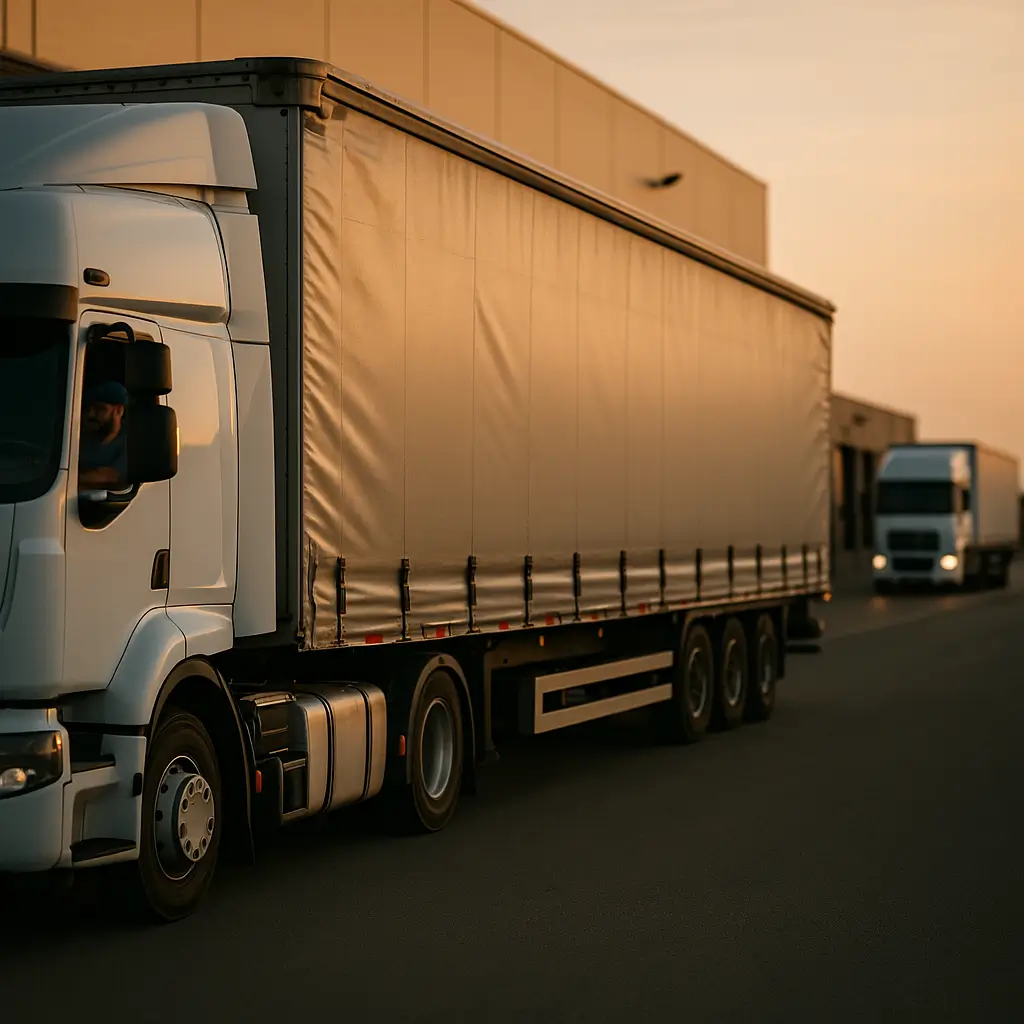
Learn when commercial auto covers trailers, when you need physical damage or interchange coverage, and how to list trailers.

If you’re asking are trailers covered under commercial auto insurance, the practical answer is: liability is often covered while a trailer is attached, but damage to the trailer itself usually is not unless you add trailer physical damage (and some operations need interchange coverage). That’s why a bent axle or a stolen trailer can turn into an unpaid claim even when your truck is insured.
Owner-operators run into trouble when they assume “automatic trailer coverage” includes theft, collision, and drop-and-hook responsibility. In real life, your policy endorsements, your lease/broker contract, and common weight language (often 2,000–3,000 lbs GVW) decide what’s actually covered.
Table of Contents
Reading time: 8 minutes
- Quick Answer — Are Trailers Covered Under Commercial Auto Insurance?
- Liability vs. Physical Damage — What “Trailer Coverage” Actually Means
- Weight Thresholds & “Automatic Coverage” — When Are Trailers Automatically Covered?
- Trailer Interchange Coverage — The Drop-and-Hook Problem
- How to Schedule/List a Trailer (and What It Usually Costs)
- Frequently Asked Questions
- Why This Matters for Owner-Operators (and How Logrock Quotes)
- Conclusion: Don’t Assume Trailer Coverage—Verify It in Writing
Quick Answer — Are Trailers Covered Under Commercial Auto Insurance?
Commercial auto policies commonly extend liability coverage to a trailer while it’s attached and being towed, but physical damage to the trailer (theft, collision, hail, fire) often requires scheduled/listed trailer physical damage on the policy declarations.
If you want the cleanest “what’s covered and when” breakdown, use this reference: commercial trailer insurance coverage types and requirements.
Do I need to list my trailer on my commercial auto policy? (Featured Snippet Answer)
You should list (schedule) your trailer when you need the policy to clearly cover damage to that trailer, not just liability while it’s attached. Many carriers treat “automatic” trailer wording as limited and often tied to small trailer language (commonly 2,000–3,000 lbs GVW), while financed, high-value, or revenue-critical trailers are typically expected to be scheduled for comp/collision. If you can’t replace the trailer out of pocket without stopping work, putting it on the declarations page is usually the safest cash-flow move.
Typical coverage split (what most people mix up)
| Situation | What commonly responds (depends on policy) |
|---|---|
| You cause an accident while towing | Auto liability may respond for injury/property damage to others |
| Your trailer is damaged (collision, theft, hail, fire) | Trailer physical damage (comp/collision) if scheduled/listed |
| You’re pulling a trailer you don’t own (drop-and-hook) | May require interchange or a non-owned trailer endorsement based on contract |
Liability vs. Physical Damage — What “Trailer Coverage” Actually Means
Before diving into the physical damage side, it helps to be clear on what auto liability actually covers—and what it doesn’t:
Trailer coverage is usually two separate questions—liability (damage you cause to others) and physical damage (damage to the trailer)—and they can be insured differently even on the same commercial auto policy.
This is the most important distinction to get right before a claim: truck trailer insurance — coverage types and costs explained.
1) Trailer liability coverage (damage you cause to others)
What it is: Liability pays for bodily injury and property damage to other people when you’re legally responsible—another vehicle, a guardrail, a building, or dock damage.
Why it matters: Liability claims are the ones that can wipe out savings fast and put contracts at risk, especially for for-hire operators and new authorities.
- Watch-out: If you’re leased on, the motor carrier’s primary liability may apply, but your lease agreement can still make you responsible for deductibles or gaps.
2) Trailer physical damage coverage (damage to the trailer)
What it is: Physical damage generally includes collision (impact, rollover) and comprehensive (theft, fire, vandalism, hail—based on form) for the trailer itself.
Why it matters: A stolen trailer can mean lost equipment, lost revenue, and a missed week—especially if the trailer wasn’t listed and the adjuster can’t tie it to covered equipment.
- Financed trailer reality: If you still owe the note, a total loss without the right physical damage coverage can leave you paying on equipment you no longer have.
3) Don’t confuse trailer coverage with cargo insurance
Cargo insurance covers the freight; trailer physical damage covers the trailer. They’re different coverages, often with different deductibles, conditions, and claim documentation.
Real-world example: If a trailer is stolen from a yard, trailer physical damage may address the trailer (if scheduled) while cargo insurance may address the load (if the commodity, security requirements, and exclusions allow it).
Weight Thresholds & “Automatic Coverage” — When Are Trailers Automatically Covered?
Many insurers use policy wording that mentions small-trailer thresholds (often 2,000–3,000 lbs GVW), but there is no universal weight rule across carriers. FMCSA sets minimum liability coverage levels for for-hire carriers, but physical damage thresholds are carrier-specific and should be verified on your declarations page.
For a deeper look at how policy language and exceptions show up on real commercial auto forms, read: commercial trailer insurance requirements — federal and state.
Common thresholds you’ll hear (verify with your carrier)
| Threshold people quote | Where it shows up | What you should do |
|---|---|---|
| 2,000 lbs GVW | Agent guidance / generic form language | Ask: “Is that liability only or does it include physical damage?” |
| 3,000 lbs GVW | Some carrier guidelines or endorsements | Confirm if trailers must be scheduled above that number |
| Any weight if financed or high-value | Lender/lease/broker requirements | Schedule it and carry comp/collision—get it in writing |
The question that matters more than weight
If the trailer is totaled tomorrow, can your business eat the loss? If the answer is no, relying on “automatic” language is a risky bet.
Trailer Interchange Coverage — The Drop-and-Hook Problem Most New Authorities Miss
Trailer interchange coverage typically applies when you have a written interchange agreement and you’re contractually responsible for physical damage to a non-owned trailer while it’s in your care, custody, and control. The agreement should clearly state the responsibilities and limits that apply; review the broader motor-carrier financial-responsibility framework in 49 CFR Part 387.
Coverage needs can flip fast when the trailer isn’t yours, especially with borrowed, rented, or shipper-owned equipment—use this as your checkpoint: trailer interchange insurance for small fleets — costs, limits, and COI checklist.
1) What trailer interchange is (plain English)
Interchange is usually about damage to the trailer (collision, theft, vandalism, etc.) when you’re responsible under a written agreement, not about third-party liability.
2) Why it’s essential (business risk)
A yard incident—jackknife, dock damage, theft, or a roll-away—can become a bill for a trailer you don’t even own. For a one-truck operation, that kind of surprise can crush cash flow.
Here’s a quick example of exactly the kind of incident that interchange coverage is designed for:
3) Who typically needs it
- Carriers doing drop-and-hook with other carriers or terminals
- Lease-on operators who take possession of non-owned trailers under agreement
- Any contract that says you’re responsible for physical damage to their equipment
Pro tip: If someone says “we require interchange,” ask for the required limit (max value per trailer and/or max number of trailers) in writing before buying coverage.
How to Schedule/List a Trailer (and What It Usually Costs)
Scheduling a trailer means listing it on the policy with identifying details (VIN/serial, type, value, deductibles), which reduces claim disputes and is the most common way to insure physical damage to owned trailers.
If you want a step-by-step underwriter-friendly checklist, use: commercial trailer insurance cost — 2026 rates by trailer type.

1) What “scheduled trailer” means
What it is: Your policy lists the trailer (or trailers) with coverage terms—often VIN/serial, trailer type, value basis (ACV or stated amount), territory, and deductibles.
Why it matters: Scheduling cuts down the “gray area” where an adjuster can’t clearly match the damaged trailer to covered equipment.
2) What underwriters typically need from you (copy/paste checklist)
- Trailer type (flatbed, enclosed, gooseneck, reefer, tanker)
- Year/make/model and VIN/serial
- Value (ACV or stated amount depends on form)
- Garaging ZIP (theft exposure matters)
- Radius/operations (local, regional, OTR)
- Deductible you can pay without wrecking cash flow
3) What it costs (honest answer)
Trailer physical damage pricing is driven by trailer value/type (a utility trailer isn’t a reefer), theft exposure, loss history, and how/where you operate. The cheapest premium can become the most expensive decision if the claim gets denied over how the trailer was listed.
Trailer type and value drive your physical damage premium—here’s a quick breakdown of what goes into the trailer decision:
Frequently Asked Questions
These FAQs summarize the most common trailer claim gaps—especially the split between liability while towing and physical damage to the trailer, plus when contracts trigger interchange requirements.
Commercial auto insurance often covers a trailer for liability while it’s attached and being towed, but it usually does not automatically cover damage to the trailer itself unless you have trailer physical damage (comp/collision) on the policy. In practice, the trailer claim that surprises owner-operators is theft or collision to the trailer when it wasn’t scheduled/listed. Always confirm what your declarations page and endorsements say about “any trailer,” “owned trailer,” and weight language (commonly 2,000–3,000 lbs GVW) because carrier forms vary.
You don’t always need a separate stand-alone trailer policy, but you often need separate coverage added to your commercial auto program to protect the trailer. The common setup is adding trailer physical damage (comprehensive and collision) with a deductible and a stated value/ACV approach, plus any required endorsements if you pull non-owned equipment. If a lender, motor carrier, broker, or shipper requires trailer coverage, get the requirement in writing and match limits and deductibles to that contract.
Trailers are sometimes “automatically covered” for liability while attached, but automatic wording is often limited and rarely means your trailer is insured for theft, fire, hail, or collision. If you need the trailer itself protected, scheduling/listing it with comp/collision is the usual fix. A quick way to avoid confusion is to separate freight coverage from equipment coverage—cargo is not the trailer and trailer physical damage is not cargo—see: semi trailer insurance — coverage, costs, and interchange.
There is no single universal weight threshold that requires listing a trailer, because insurers use different policy forms and endorsements. You’ll commonly hear 2,000–3,000 lbs GVW referenced, but the real decision should be based on what your declarations page says and whether you need physical damage coverage for that trailer. If the trailer is financed, high-value, or essential to your revenue, scheduling it is usually the safer move than relying on vague “automatic” language.
Trailer interchange coverage typically pays for physical damage to a non-owned trailer when you have a written interchange agreement that makes you responsible for that trailer while it’s in your possession. It’s most common in drop-and-hook operations, where the trailer owner (carrier/terminal/shipper) expects you to pay if their trailer is damaged, stolen, or vandalized while you have it. Always confirm the required limit (max value per trailer and/or how many trailers at once) because interchange limits are often contract-driven.
A non-owned trailer endorsement typically extends your policy to cover liability while you’re towing a trailer you don’t own — meaning damage you cause to others. Trailer interchange coverage, by contrast, covers physical damage to the non-owned trailer itself (collision, theft, vandalism) when you’re responsible for it under a written interchange agreement. The distinction is critical: if a trailer in your care is stolen from a yard or damaged at a dock, interchange is what responds — not a standard non-owned trailer endorsement. Always confirm which coverage your contract actually requires before accepting responsibility for non-owned equipment.
When you’re leased on, the motor carrier’s primary liability policy typically covers liability for accidents while you’re operating under their authority, but your trailer’s physical damage is almost never covered by the carrier’s policy. You’re generally still responsible for damage to your own equipment. Your lease agreement may also hold you responsible for the carrier’s deductible on a liability claim involving your trailer. Read your lease carefully and confirm with both the carrier and your own agent what gaps exist before you assume you’re fully covered.
Not necessarily the same policy document, but having the trailer and truck covered under the same commercial auto program generally simplifies claims. When they’re on separate policies with different carriers, a loss involving both can trigger coverage disputes over which carrier responds first. Most commercial auto carriers allow trailers to be added as scheduled equipment with their own deductible and stated value — that’s the most common and cleanest setup. If your truck is financed through one lender and your trailer through another, confirm with both what their insurance requirements are and whether they need to be separately listed as loss payees.
This is one of the most common coverage gaps. When a trailer is unattached—parked in a yard, dropped at a shipper, or sitting at your lot—it is not considered “while attached” for liability purposes, and theft or damage to it may not be covered unless you have scheduled trailer physical damage (comprehensive) on the policy. Some policies also have yard-specific exclusions. If you regularly drop trailers overnight or leave them unattended, confirm with your agent how your policy responds in that specific scenario.
Rented trailers are often treated like non-owned trailers for liability while attached, but physical damage to a rented trailer is typically not covered by a standard commercial auto policy unless you have a non-owned trailer physical damage endorsement. If the rental company offers a damage waiver, review exactly what it covers and at what dollar limit before you sign — in some cases it’s cheaper than your deductible. If you regularly rent trailers for short-term work, ask your agent whether adding a blanket non-owned physical damage endorsement makes more sense than relying on rental company waivers job by job.
Trailer physical damage costs vary widely based on trailer type, stated value, deductible, garaging ZIP, and your loss history. As a rough range, a basic utility or flatbed trailer might run $8–$50/month, while a refrigerated trailer (reefer) or specialized equipment can run $75–$150+/month. Higher deductibles lower the premium, but only choose a deductible you can actually pay out of pocket without stopping work.
Actual cash value (ACV) pays what the trailer is worth at the time of loss, including depreciation. Stated amount sets a value at the start of the policy, but the carrier may still pay the lesser of the stated amount, ACV, or the cost to repair. The right option depends on the trailer’s age, condition, lender requirements, and how critical it is to your operation.
No—cargo insurance covers the freight inside the trailer, not the trailer itself. If a collision damages both the load and the trailer, you would typically file separate claims: one under cargo insurance for the freight, subject to its exclusions and deductible, and another under trailer physical damage for the trailer, if it is scheduled on the policy.
At minimum, you’ll typically need: the police report (required for theft or accident), photos of the damage taken before any repair, the trailer’s VIN or serial number, your policy declarations page confirming the trailer is scheduled with its stated value and deductible, and repair estimates from a qualified shop. If the trailer was financed, notify your lender as soon as possible — many loan agreements require prompt notice of a total loss. Keeping a photo of the trailer’s ID plate and a copy of your declarations page in your cab means you’re not scrambling for identifiers when a claim call starts.
Why This Matters for Owner-Operators (and Why Logrock Builds Quotes Differently)
Most trailer insurance problems happen when an operation changes—new authority, new trailer, new lanes, new contracts—but the policy endorsements don’t change with it, which creates preventable claim denials and COI headaches.
Logrock quotes based on how you actually run: radius, equipment, trailer ownership (owned vs non-owned), and contract requirements (including drop-and-hook). If you want the big-picture map of how these coverages fit together, start here: insurance for semi truck and trailer — costs, coverage, and FMCSA minimums.
Conclusion: Don’t Assume Trailer Coverage—Verify It in Writing
Trailer liability and trailer physical damage are different coverages, and “automatic trailer coverage” is rarely a reliable way to protect your equipment or your contracts. If the trailer is owned, financed, high-value, or part of drop-and-hook work, scheduling it and matching endorsements to the agreement is the safer move before a claim happens.
Endorsements and the declarations page decide—not assumptions. For general help understanding policy terms, consult the NAIC consumer resource center.
Key Takeaways:
- Liability may extend while towing, but trailer damage often requires scheduled physical damage coverage.
- “Automatic” rules vary by carrier and form—endorsements and the declarations page decide, not assumptions.
- If you pull non-owned trailers, confirm whether the contract triggers interchange responsibility and limits.
If you want one more refresher that prevents the most common mix-ups between freight, trailer, and auto coverages, read: trailer insurance cost 2026 — rates by trailer type.
If you’re unsure whether your trailer is actually covered — or you’ve just taken on a contract involving drop-and-hook, non-owned equipment, or a financed trailer — LogRock can help you review your current policy, identify gaps, and get a quote built around how you actually operate.
Speak with LogRock and request a quote




