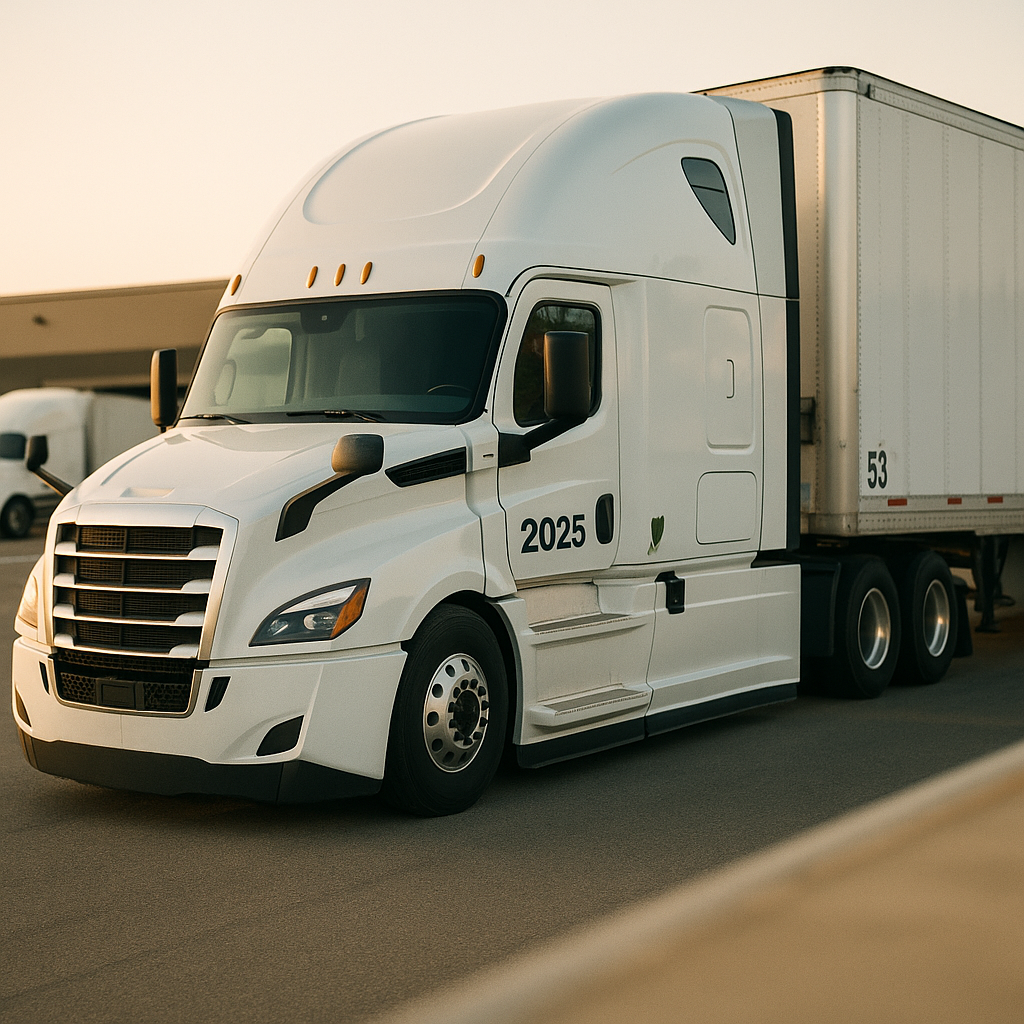
Looking for the best fuel savings trucking companies 2025 list? Here are the real-world systems top fleets use to cut fuel cost per mile—and what those habits can mean for your trucking insurance risk profile.
The phrase best fuel savings trucking companies 2025 usually points to fleets that reduce fuel cost per mile with repeatable controls—speed governance, idle reduction, aero spec, tires/pressure, routing, maintenance, and driver coaching—not a single “miracle” device. If you’re an owner-operator, you can copy most of this playbook with a weekly routine and a few disciplined policies.
Here’s the business angle many lists skip: the same behaviors that improve MPG (lower speeds, smoother driving, tighter maintenance) often reduce claim frequency and severity over time, which can support more stable commercial truck insurance outcomes at renewal.
Key Takeaways: Fuel Savings That Actually Moves Your Cost-Per-Mile
- The “best” fuel-saving fleets don’t rely on one gadget: They combine aerodynamics, idle reduction, tires, speed governance, and disciplined maintenance—then measure it.
- Awards aren’t MPG: Many fleets don’t publish lane-normalized MPG, so the smarter comparison is which systems reliably produce savings and can be repeated.
- Owner-operators can copy 70% of the playbook: You may not buy a microgrid, but you can control speed, idle, tire spec, alignment, and route planning.
- Efficiency + safety tech can support “affordable trucking insurance” over time: Not a guaranteed discount, but better controls and a cleaner loss history usually help underwriting.
Table of Contents
Reading time: 9 minutes
- Best fuel savings trucking companies 2025: What “Best Fuel Savings” Really Means
- Best fuel savings trucking companies 2025: Leaders to Learn From
- Fuel-Saving Technologies That Actually Pay (With Realistic ROI)
- The “Messy Middle”: Why Most Fleets Use Multiple Fuels in 2025
- Owner-Operator Fuel Savings Playbook (Steal This Process)
- How Fuel Savings Connects to Trucking Insurance Costs
- The Logrock Difference: Insurance Built for Business Owners
- Frequently Asked Questions
- Conclusion: Cut CPM Without Adding Headaches
Best fuel savings trucking companies 2025: What “Best Fuel Savings” Really Means
The most credible “fuel efficient” fleets in 2025 can point to measurable controls—governed speed targets, idle-time limits, tire pressure standards, routing discipline, and preventive maintenance intervals—tracked weekly through telematics and scorecards.
If a company claims they’re fuel efficient but can’t explain how they manage speed, idle, tire pressure, and routing, it’s marketing—not a system. In 2025, the best signal isn’t a one-time pilot; it’s repeatable process plus measurement.
A practical way to judge fuel savings without their private MPG
- Measurement: Telematics + driver coaching + simple scorecards (speed, idle, hard-brake events, MPG by lane).
- Spec discipline: Aero packages, powertrain matching, rear-axle ratio choices, APUs or bunk heaters, low rolling resistance tires.
- Operations: Idle policies, optimized routing, reduced deadhead, planned maintenance.
- Energy strategy: Diesel optimization first, then renewable diesel/CNG/EV where lanes support it.
- Safety tie-in: Collision mitigation, cameras, and speed management because crashes destroy fuel savings and spike claims.
If you want a simple way to estimate value before you spend money, use a lane-based baseline: annual fuel savings ≈ (annual miles ÷ baseline MPG × fuel price) − (annual miles ÷ new MPG × fuel price). Even a small MPG improvement can add up at 80,000–120,000 miles per year.
Best fuel savings trucking companies 2025: Leaders to Learn From
Public “leader” lists in 2025 often reference programs and recognition such as Heavy Duty Trucking (HDT) Top Green Fleets, which typically highlights fleets for measurable efficiency and emissions strategies rather than one-off experiments.
Below are examples that get discussed in industry coverage and fleet announcements, plus the specific plays an owner-operator can realistically steal.
Important: Most carriers don’t publish lane-normalized MPG, so the most honest comparison is the system—the set of controls that consistently produces savings across drivers, lanes, and seasons.
1) Knight-Swift Transportation (systems approach + alternative fuels where it makes sense)
- What they’re known for: Large-scale operational discipline (spec, routing, driver management) plus testing lower-carbon options where lanes support them.
- Why it matters: Big fleets win by making “good habits” non-optional—governed speed, reduced idle, and consistent maintenance.
- What you can copy: Set a realistic top speed, cut avoidable deadhead with routing tools, and run maintenance like you’re managing a fleet—because you are.
Owner-op reality check: Don’t chase a gadget before you control speed and idle; those two habits often decide whether the “mods” pay back.
2) USA Truck (practical stack: aero + tires + in-cab discipline)
- What they’re known for publicly: Equipment and efficiency initiatives that tend to be “boring but repeatable,” like aero components and tire choices aligned with efficiency programs.
- Why it matters: Reducing rolling resistance and aerodynamic drag is one of the few fuel strategies that doesn’t depend on fuel prices staying high.
- What you can copy: Low rolling resistance tires (when lane/weight fits), keep aero parts intact, and focus on smoother throttle and fewer hard stops.
Hotshot note: If your operation is lighter weight with more stop-and-go, idle and acceleration control can matter more than highway aero at 70 mph.
3) WattEV (electrification focus for lane-specific operations)
- What they’re known for: Heavy-duty EV operations designed around route feasibility, charging, and predictable duty cycles (often more drayage/short-haul than random long-haul).
- Why it matters: EV efficiency works when the operation fits; if it adds downtime, it can erase savings fast.
- What you can copy even in diesel: Lane discipline—build repeatable routes where you know fuel stops, grades, traffic patterns, and parking.
Insurance angle: If you change powertrain or add expensive components, confirm your physical damage values reflect real replacement and repair costs.
4) The repeatable pattern across “Top Green Fleet” style winners
- Aerodynamics + speed management as the base layer
- Idle reduction (APUs, bunk heaters, auto start/stop, enforcement)
- Tire and alignment discipline (TPMS, alignment checks, axle spec choices)
- Telematics + coaching (unmanaged driving habits eat MPG)
- Alternative fuels only where infrastructure and lanes support uptime
If you want a simple back-office workflow that keeps fuel tax tracking from turning into chaos, start with an IFTA basics guide so your fuel purchases and miles stay audit-ready.
Fuel-Saving Technologies That Actually Pay (With Realistic ROI)
Real-world fuel savings in 2025 usually come from stacking 5–6 proven changes—speed discipline, idle reduction, aero, tires, alignment, and coaching—because each one adds a few percentage points instead of “magic” 20% gains.
Savings vary by lanes (mountains vs flat), speed, weights, wind, and driver habits, so treat every upgrade like a test: baseline → change one thing → measure by lane.
| Fuel Saver | Typical Impact (Real-World Range) | What It Costs You | Best For |
|---|---|---|---|
| Speed governance / cruise discipline | 3%–10%+ fuel improvement | Time + lane planning | Highway-heavy operators |
| Idle reduction (APU / bunk heater / policy) | High savings where idle is high | Upfront cost + maintenance | Reefer, cold climates, long waits |
| Aero (skirts, tails, gap reducers) | 2%–8% | Repairs when damaged | Steady highway lanes |
| Low rolling resistance tires + proper inflation | 1%–3% | Tire trade-offs by traction/weight | Consistent weights and lanes |
| Alignment + wheel-end health | “Quiet” savings + tire life | Shop time | Everyone (especially uneven wear) |
| Telematics coaching | Depends on habits | Data + discipline | Anyone willing to review weekly |
1) Speed is the cheapest “mod” you’ll ever buy
Speed discipline is a low-cost fuel strategy because aerodynamic drag rises sharply as speed increases, which means running 72–75 mph everywhere can burn profit you won’t recover on most rates.
- What it is: Set a realistic top speed and stick to it with cruise habits, not emotions.
- Why it works: Less wind resistance, fewer hard-brake events, less driver fatigue.
- Owner-op truth: If a lane “requires” 75 mph to be on time, the appointment is too tight, the rate is too low, or the broker’s expectations aren’t realistic.
2) Idle control—especially when detention isn’t paid right
Idle reduction lowers both fuel burn and engine hours, which makes it one of the cleanest cost-per-mile wins for operators who sit at shippers, ports, warehouses, or in extreme temperatures.
- What it is: Reduce engine idle during breaks, sleeper time, and shipper waits.
- Why it matters: Unpaid detention hits you twice—fuel plus wear.
- Pro move: Track idle time the same way you track revenue; repeat offenders get priced differently or avoided.
3) Tires and alignment: the “boring” stuff that keeps paying
Tires, inflation, and alignment are repeatable fuel levers because rolling resistance and mechanical drag don’t care about market cycles, and misalignment can quietly waste fuel while destroying tire life.
- What to watch: Feathering, uneven wear, pull, and vibration—those are money leaks.
- What to do: Match tire spec to your lanes/weights, maintain pressure, and align on schedule.
If you’re tightening operations overall, pair this with a simple preventive maintenance checklist so you’re not “discovering” problems at scale houses or during DOT inspections.
The “Messy Middle”: Why Most Fleets Use Multiple Fuels in 2025
The trucking industry’s “messy middle” in 2025 describes a practical reality: most fleets can’t switch 100% of operations to alternative fuels quickly because infrastructure, duty cycles, uptime needs, and capital constraints vary by lane.
Constraints are real:
- Infrastructure: You can’t run what you can’t refuel or charge reliably.
- Duty cycle fit: Long-haul, regional, and drayage have different energy needs.
- Downtime risk: A “fuel strategy” that creates missed appointments becomes a liability.
- Capital: Cash flow beats press releases when you’re the one paying repairs.
So the most consistent approach usually looks like this:
- Optimize diesel operations first (speed, idle, spec, maintenance, routing).
- Deploy renewable diesel where it’s actually available in your lanes.
- Test EV/CNG only where routes, facilities, and uptime support it.
That’s also the sane owner-operator approach: don’t gamble your authority and cash flow on tech that doesn’t fit your lanes.
Owner-Operator Fuel Savings Playbook (Steal This Process)
An owner-operator fuel savings process in 2025 is a weekly routine that tracks MPG by lane, idle hours, and driving behaviors, then tests one change at a time so you can prove ROI before you spend more money.
You don’t need a sustainability department—you need a repeatable checklist.
Step 1 — Know your true cost per mile (CPM) and fuel burn
- Track MPG by lane, not only a monthly average.
- Split loaded vs deadhead MPG.
- If you’re short on time, at least capture: miles, gallons, idle hours, average speed.
Step 2 — Attack the “Big 4” in order
- Speed discipline
- Idle time
- Tires / pressure / alignment
- Route planning + appointment strategy (reduce deadhead and avoid choke points)
Step 3 — Use tech like a tool, not a distraction
- ELD data is useful only if you review it weekly; if you never look, it’s just a compliance box.
- Routing and parking apps reduce late-day stress, and late-day stress causes expensive mistakes.
If you’re still fighting paperwork fires (IFTA, IRP, renewals), build a simple calendar/checklist system or partner with someone who keeps you organized. A clean operation is usually a cheaper operation.
How Fuel Savings Connects to Trucking Insurance Costs
Fuel savings doesn’t directly set your insurance premium, but insurers commonly rate commercial auto using factors like loss history, driver experience, equipment value, cargo, operating radius, and safety controls, and those same controls often overlap with fuel-efficient behavior.
Here’s the straight business logic that tends to show up over time:
- Lower average speed → fewer severe crashes → better loss history at renewal.
- Smoother driving (less hard braking) → fewer rear-end claims.
- Better maintenance → fewer breakdown-related incidents and roadside problems.
- Telematics/cameras → faster claim resolution and better evidence in disputed losses (case-by-case).
- Lane discipline → less exposure in high-theft or high-accident areas.
If you’re doing specialized ops, tighten your coverage details:
- Hotshot operations: Verify radius, trailer type, and cargo assumptions match the policy; gaps often appear when the operation changes mid-year.
- Equipment changes: If you add an APU or other high-value parts, confirm your physical damage values aren’t outdated.
Stop Overpaying for Risk You’re Already Managing
If you’re running disciplined—speed control, maintenance, lane selection, and safety tech—your policy should reflect a well-managed business. We’ll review your operation, filings, and coverages so you’re not paying fleet prices for one-truck risk.
- Fast certificates (COIs)
- Coverage gap check
- Business-first advice
The Logrock Difference: Insurance Built for Business Owners
Owner-operators are businesses with tight margins, and Logrock’s approach is to match coverage to your real operation—radius, trailer type, cargo, authority vs leased-on—so you can protect cash flow without buying coverage you don’t need.
What that looks like in real life:
- Coverage built around your operation: radius, trailer type, cargo, and how you’re operating (own authority vs leased-on).
- Help staying ahead of COIs and compliance: fewer preventable delays when a shipper needs paperwork fast.
- Straight talk on trade-offs: so you can protect your downside without paying for “junk” coverage.
If you’re trying to grow from one truck to two, the right insurance setup is part of keeping your authority and reputation intact.
Frequently Asked Questions
The most fuel-efficient trucking companies in 2025 are usually the fleets that run a measurable fuel program—weekly telematics review, governed speeds, idle limits, tight preventive maintenance, and equipment specs aligned to their lanes—often highlighted in industry recognition such as HDT “Top Green Fleets.” Exact MPG rankings are hard to compare because most fleets don’t publish lane-normalized MPG, and lanes/weights vary widely.
If you want a fair benchmark as an owner-op, track loaded vs deadhead MPG by lane for 4–6 weeks, then test one change (speed cap, idle reduction, tire pressure routine) at a time so you can prove ROI.
A “Top Green Fleet” recognition typically reflects a documented mix of fuel-efficiency practices, emissions strategy, and real operational deployment (not just a one-truck pilot), but it is not a universal MPG leaderboard. A fleet can be “green” through alternative fuels, idle reduction, and spec choices while still running a duty cycle that doesn’t produce the best MPG compared to a different lane mix.
Use the recognition as a signal that the fleet runs systems—speed, idle, maintenance, routing, and driver coaching—then copy the system, not the headline.
In 2025, the most common fuel-saving stack is aerodynamics + idle reduction + tires/TPMS + telematics coaching + speed discipline, with alternative fuels added only where routes and infrastructure protect uptime. These are popular because each item can deliver incremental savings (often a few percentage points) and can be standardized across a fleet.
If you’re buying only one “thing” first, start with what you can enforce: a speed plan, an idle plan, and a maintenance routine that catches alignment and wheel-end issues before they become a fuel leak.
Better fuel efficiency does not automatically lower commercial truck insurance premiums, because underwriting is driven primarily by factors like loss history, driver profile, operating radius, equipment value, and safety controls, not MPG. For example, many for-hire carriers must meet FMCSA financial responsibility minimums of $750,000 (and often $1,000,000+ by contract), and pricing will still hinge on risk and claims.
Where fuel habits can help is indirectly: lower speeds, fewer hard-brake events, and stronger maintenance discipline can reduce claim frequency and severity over time. If you use cameras or telematics, document it during underwriting so it’s actually considered.
In 2025, many large fleets use renewable diesel where supply exists, while electric trucks are most common in lane-specific operations such as drayage and short-haul where charging, parking, and route planning are predictable. The best alternative-fuel deployments are built around uptime, not hype, because missed appointments can erase any fuel savings.
If you’re considering alternative fuels or new equipment, confirm you have maintenance support in your lanes and ensure your physical damage coverage reflects real replacement costs, specialty components, and longer repair timelines.
Conclusion: Cut CPM Without Adding Headaches
The best fuel savings trucking companies in 2025 win with process, not secrets: speed, idle, spec, maintenance, routing, and measurement. You can copy that as an owner-operator and lower cost per mile without gambling your cash flow.
Key Takeaways:
- Fuel savings comes from systems: stack small, repeatable wins instead of chasing miracle products.
- Start with the highest-ROI basics: speed + idle + tires/alignment + routing discipline.
- Disciplined operations support better insurance outcomes over time: fewer severe losses and cleaner underwriting narratives help at renewal.
Related reading: IFTA Basics for Owner-Operators, Preventive Maintenance Checklist, and How to Lower Your Trucking Insurance Premium.