Car hauler insurance in 2026: real cost per month, required coverages, FMCSA filings (BMC-91/91X, MCS-90), and proven ways to lower premiums. Get a quote.
Car hauler insurance is the commercial trucking insurance package built for auto transport, and many operators pay about $700–$1,500 per month per truck in 2026 depending on liability limits, vehicle-in-transit exposure, radius, equipment value, and loss history. The “right” setup usually includes auto liability + FMCSA filings (BMC-91/91X), plus vehicle-in-transit (auto hauler cargo) limits that match the maximum total value you carry on one trip.
Most car haulers don’t go broke from a slow week—they get clipped by one claim that wasn’t covered the way they thought it was. A strap rubs through paint, hail tags an entire load, a customer says you “accepted it that way,” or a four-wheeler cuts you off and suddenly you’re arguing over liability vs cargo vs “vehicle-in-transit.” This guide breaks down what’s required, what’s optional, and what actually moves price.
Key Takeaways: Essential Car Hauler Insurance
- Budget reality: Many for-hire car haulers land around $700–$1,500/month per truck, with higher pricing for new authorities, enclosed/high-value units, long-haul, or poor loss history.
- Filings aren’t “extra coverage”: BMC-91/91X is the insurer’s proof-of-liability filing with FMCSA; MCS-90 is an endorsement tied to federal financial responsibility.
- Car hauling is care/custody/control heavy: Policy form, exclusions, and limit structure can matter as much as the premium.
- Fastest path to lower premiums: Reduce claim frequency with photo documentation, securement SOPs, dashcams/telematics, and tighter radius control.
Table of Contents
Reading time: 11 minutes
- What Is Car Hauler Insurance (and Who Needs It)?
- FMCSA Requirements: Liability Minimums + Filings (BMC-91/91X, MCS-90)
- Coverage Types: Required, Common, and Optional
- How Much Does Car Hauler Insurance Cost in 2026?
- Real-World 2026 Pricing Examples (3 Case Studies)
- How to Lower Car Hauler Insurance Premiums (Without Cutting the Wrong Coverage)
- State-by-State Differences (Intrastate vs Interstate)
- Frequently Asked Questions
- Why Logrock for Commercial Truck Insurance
- Conclusion & Get a Quote That Won’t Blow Up Your Cash Flow
What Is Car Hauler Insurance (and Who Needs It)?
Car hauler insurance is commercial truck insurance specifically underwritten for hauling vehicles for hire, where a single loss can involve multiple high-value units and higher claim scrutiny than general freight.
If you transport customer vehicles—dealer units, auction cars, private-party moves, repossessions, or fleet transfers—you’re in car hauling, even if you only move one or two vehicles at a time. Underwriters rate you on maximum exposure per trip, not the “average” day.
Operations that qualify as car hauling
- Hotshot operators: Pickup/medium-duty + wedge/flatbed hauling 1–3 vehicles.
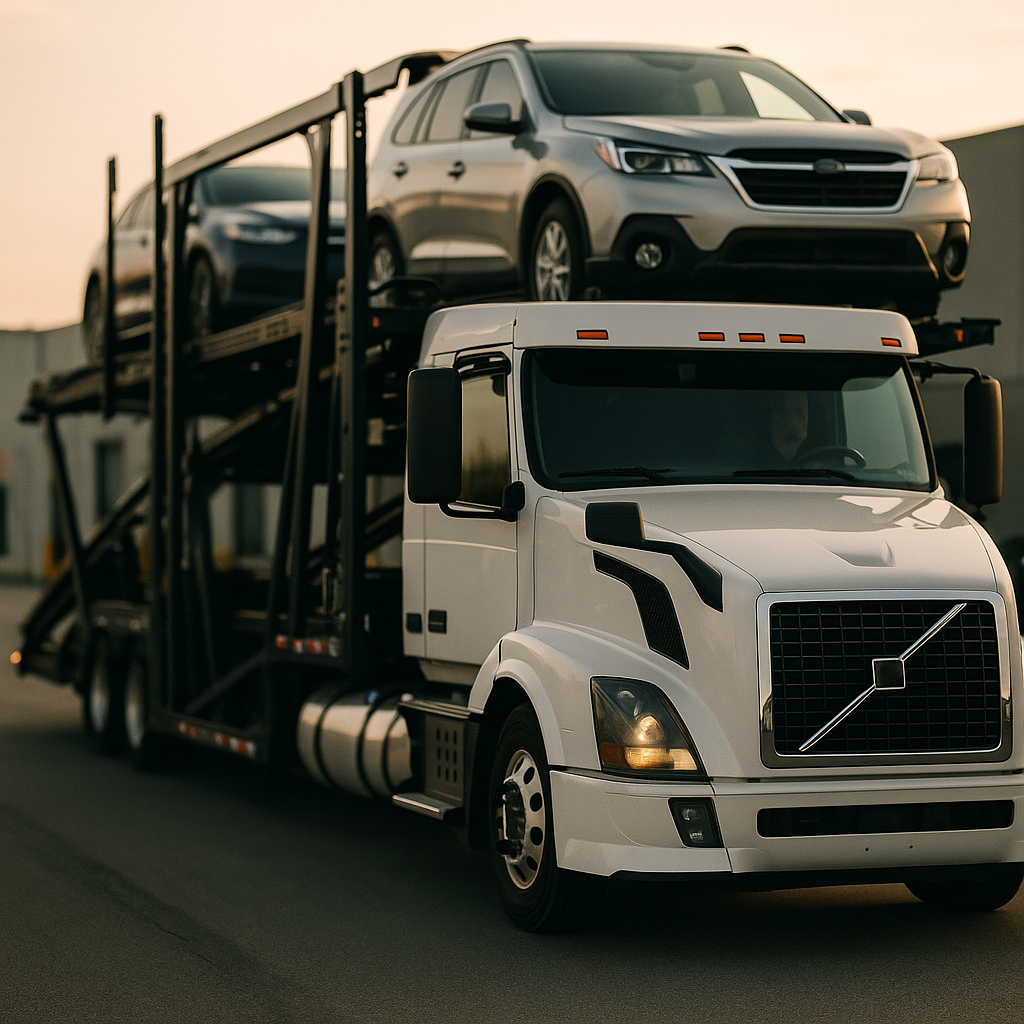
- Open carriers: Multi-car setups (often 5–10 units) with higher aggregated value.
- Enclosed transport: Fewer units but higher theft severity and higher per-unit values.
Pro tip: If you occasionally haul a $120,000 SUV, pricing can move even if “most loads are cheap,” because limits and theft controls have to support the peak.
Owner-operator vs fleet vs leased-on
Who provides primary liability—and who covers the cars—depends on how you’re set up: your own authority, leased-on to a motor carrier, or running under a fleet’s umbrella. “Carrier covers me” often means liability while dispatched, not automatically the vehicle exposure in your care, custody, and control.
Practical question to ask: “What covers customer vehicles in my care, custody, and control when I’m on dispatch, off dispatch, and deadheading?”
FMCSA Requirements: Liability Minimums + Filings (BMC-91/91X, MCS-90)
FMCSA financial responsibility for for-hire motor carriers hauling non-hazardous property is commonly shown as a $750,000 minimum public liability under 49 CFR §387.9, but many brokers and auctions require $1,000,000 to load you.
This is where new authorities get jammed up: coverage, endorsements, and filings are different things. One is protection, one is a contract/legal add-on, and one is compliance paperwork. If any of those are wrong, you can lose loads—or your authority.
Primary auto liability (required vs demanded)
Auto liability pays for injuries and property damage to others when you’re at fault. Even when the legal minimum is lower, many shipper contracts and broker packets effectively set the “real minimum” at $1,000,000.
BMC-91 / BMC-91X filing (proof of liability filed with FMCSA)
BMC-91/91X is the electronic filing your insurer submits to FMCSA to prove you have the required public liability; without an active filing, your authority may not be properly activated even if you’ve paid for a policy.
- No filing on file: brokers/load boards can see the gap and decline you.
- Filing cancels: you can get shut down if it isn’t replaced correctly.
- Mid-term carrier changes: confirm the new insurer filed and the old insurer cancelled without leaving a gap.
MCS-90 endorsement (what it does—and what it doesn’t)
MCS-90 is a federal endorsement tied to financial responsibility rules (see 49 CFR §387.15) that functions as a public protection backstop, and it is not cargo insurance or “coverage for the cars you haul.”
It’s designed to protect the public, not your business assets. In some situations, the insurer can pay under MCS-90 and then seek reimbursement from the motor carrier, so it’s not “free extra coverage.”
Intrastate-only operations (state rules can differ)
Intrastate carriers may face different liability minimums and state-specific filing requirements depending on the state, the type of operation, and whether the move is still considered interstate commerce.
Bottom line: “Intrastate” doesn’t always mean “simpler.” It often means “different,” and your policy has to match that reality.
Car Hauler Insurance Coverage Types (Required, Common, and Optional)
Car hauling insurance programs typically combine auto liability with optional but commonly required lines like physical damage and vehicle-in-transit (auto hauler cargo) to protect both your equipment and the vehicles you transport.
Car hauling is different from general freight because the “cargo” has keys, VINs, and higher theft appeal—and claims often turn into documentation fights.
Auto liability (required)
Pays third-party bodily injury and property damage when you’re at fault. It’s the foundation for compliance and broker onboarding.
Physical damage (truck + trailer)
Comprehensive/collision on your power unit and (if scheduled) your trailer. One total loss can erase cash reserves and put you out of service.
- Common mistake: underinsuring the trailer value (wedge and multi-car trailers can be expensive to replace).
- Dial to set: deductible that matches your cash reserves, not just the cheapest premium.
Vehicle-in-transit / “cargo” (the line that really matters for car hauling)
Vehicle-in-transit (sometimes written as motor truck cargo adapted for auto haulers) is the coverage designed to respond when customer vehicles are damaged, stolen, or vandalized while in your care, custody, and control.
- High-value sublimits: caps per vehicle or per loss can be the difference between “covered” and “short-paid.”
- Unattended theft language: where you park and how you secure keys can matter.
- Securement exclusions: “improper securement” disputes are common if you can’t prove straps/chains were correct.
- Wear/tear vs transit damage: documentation at pickup/drop-off is your best defense.
General liability (often required by facilities)
Covers certain non-auto third-party injuries/property damage (for example, incidents at a yard or during loading that aren’t considered auto use). Many auctions and lots want it listed on the COI.
Trailer interchange (only if you pull someone else’s trailer)
Physical damage coverage for a non-owned trailer under a written interchange agreement. If you hook to a trailer you don’t own and it gets damaged, trailer interchange is often what responds.
Garagekeepers (only if you store customer vehicles)
Covers customer vehicles while stored at your lot/yard. If you stage units overnight, your exposure isn’t just “on the road.”
Bobtail / non-trucking liability (mostly for leased-on drivers)
Liability coverage for certain off-dispatch use, depending on how the policy defines “non-trucking.” Leased-on drivers commonly need it because the motor carrier’s liability may not apply off dispatch.
Occupational accident (owner-operators)
Medical/disability benefits designed for owner-operators, often used instead of workers’ compensation depending on state rules and lease requirements. It’s cash-flow protection when an injury stops revenue.
How Much Does Car Hauler Insurance Cost in 2026?
Car hauler insurance commonly runs about $700 to $1,500 per month per truck in 2026, but it can be higher for new authorities, enclosed transport, long-haul routes, higher-value vehicles, or poor loss history.
Car hauling isn’t priced like “regular” trucking because your maximum loss per load can be several vehicles at once, which raises severity risk even if you’re a careful operator.
Typical monthly cost ranges by operation type
| Operation type | Typical monthly range (per truck) | Why it moves |
|---|---|---|
| Hotshot car hauler (1–3 vehicles) | $600–$1,200 | Power unit class, radius, claims, max vehicle value |
| Open multi-car carrier (5–10 vehicles) | $1,000–$2,500+ | Higher aggregated value per trip, severity risk |
| Enclosed transport (higher-value units) | $1,500–$4,000+ | Theft severity, higher limits/sublimits, tighter underwriting |
These are planning ranges, not a quote. Your state, garaging ZIP, authority age, and driver record can swing pricing.
What you’re really paying for (by “bucket”)
- Liability: drivers, miles/radius, losses, DOT/CSA profile, prior experience
- Physical damage: stated value, deductible, parking/garaging, comp losses (hail/theft)
- Vehicle-in-transit: max load value, theft controls, documentation practices, claim history
Why you might see “$50–$70/month” online (and why it’s misleading)
Those numbers are usually a single line item, a non-commercial scenario, or a marketing average that ignores FMCSA filings and real auto transport exposure. If a quote doesn’t satisfy COI requirements, it’s not “affordable trucking insurance”—it’s unusable insurance.
Real-World 2026 Pricing Examples (3 Case Studies)
Car hauler pricing examples usually vary by garaging state, authority age, driver pool, operating radius, and maximum load value, so any numbers shown should be treated as illustrative—not a promise of rate.
These examples show how underwriters think about exposure and why two “similar” operators can land far apart on monthly cost.
Case 1: Hotshot (2-car wedge), regional lanes
- Authority: Established (not brand new)
- Radius: Regional (home weekends)
- Load exposure: 1–2 vehicles, mid-value
- What kept cost stable: clean MVR + controlled radius + realistic vehicle-in-transit limit
- Illustrative monthly range: $700–$1,200
Case 2: 8–9 car open carrier, interstate, multi-driver
- Authority: Established but expanding (adding drivers)
- Radius: Long-haul interstate
- Load exposure: multiple units per trip, higher aggregated value
- What pushed cost up: bigger driver pool + more miles + higher severity on vehicle exposure
- Illustrative monthly range: $1,500–$3,000+
Case 3: Enclosed transport, higher-value vehicles + theft controls
- Authority: Established
- Radius: Mixed (some metro deliveries)
- Load exposure: fewer units, higher per-unit values
- What helped underwriting comfort: GPS tracking, geofencing, documented custody/keys, tighter parking controls
- Illustrative monthly range: $2,000–$4,500+
How to Lower Car Hauler Insurance Premiums (Without Cutting the Wrong Coverage)
Car haulers typically lower premiums by improving underwriting inputs that drive losses—especially claim frequency, theft controls, driver behavior, and documentation—rather than simply deleting coverage.
You lower premiums two ways: design the policy correctly and reduce claimable events. Car hauling is documentation-heavy—use that to your advantage.
Underwriting-friendly safety tech (ROI-first)
- Dashcam (inward/outward): improves liability defense and helps fight “your driver did it” allegations.
- Telematics/driver coaching: flags speeding, hard braking, lane events before they become claims.
- GPS tracking + geofencing: especially valuable for enclosed/high-value vehicles.
- Secure parking discipline: documented locations reduce unattended theft disputes.
Build a claims-proof pickup/drop process
- Walkaround photos: time-stamped, clear angles, close-ups of existing damage.
- Condition report: note pre-existing damage at pickup and get acknowledgment.
- Securement proof: photos of strap/chains and contact points before you roll.
- Delivery confirmation: signed receipt with condition notes (or “no new damage observed”).
This isn’t paperwork for fun—it’s how you avoid paying a deductible on someone else’s pre-existing scratch.
Policy design levers that actually move the needle
- Deductibles: raise only to what your cash reserves can handle.
- Limits: don’t overbuy limits you can’t monetize, but don’t underbuy and get rejected by brokers/auctions.
- Driver lists: keep them accurate; unlisted-driver problems can blow up a claim.
- Timing: start renewal shopping 30–45 days early to avoid expensive last-minute placement.
State-by-State Differences (Intrastate vs Interstate)
Car hauler insurance pricing and compliance vary by state due to differences in liability environments, theft patterns, weather losses (including hail), and intrastate minimums/filings.
If you’re truly intrastate (and not triggering interstate commerce), your state may set different minimum limits or require state-specific filings. If you cross state lines—or haul loads tied to interstate commerce—federal rules and filings can apply.
Intrastate minimums and filings
- Minimum liability limits: can differ from federal baselines for some intrastate operations.
- State filings: some states require proof-of-insurance filings at the state level.
- Operational reality: one “intrastate” run can still be treated as interstate commerce depending on the shipment.
Use contracts to set your real insurance target
Even if a state minimum is lower, your shipper/auction/broker requirements usually determine whether you can book and keep the lane.
Frequently Asked Questions
Most for-hire operators pay about $700–$1,500 per month per truck for car hauler insurance in 2026, with higher pricing common for new authorities, enclosed/high-value units, long-haul lanes, and prior losses. Your final number is driven by your liability limit (often $1,000,000 for contracts), the maximum total value of vehicles you carry, operating radius, driver MVR, garaging ZIP, deductibles, and theft controls (GPS, secure parking, documented custody). If your quote doesn’t meet broker/auction COI requirements, it may be cheaper—but it won’t be usable.
To haul cars under your own authority, you need commercial auto liability that meets your regulatory requirements and an active FMCSA liability filing (BMC-91 or BMC-91X) submitted by your insurer. For most car haulers, being “legal” also isn’t enough—brokers and auctions commonly require $1,000,000 liability and proof of vehicle-in-transit (auto hauler cargo) limits that match your maximum load value. If the filing isn’t active, your authority can show as non-compliant even if you paid the premium, so filing verification matters.
Yes—if you haul customer vehicles for hire, you typically need vehicle-in-transit coverage (often written as motor truck cargo adapted for auto haulers) because it’s the line designed to respond when vehicles are damaged or stolen in your care, custody, and control. Limits should be set by your maximum total value carried at one time (worst-case trip), not the average load. Pay close attention to common restrictions like high-value sublimits, unattended theft conditions, and securement-related exclusions, because those are frequent reasons claims get disputed or reduced.
MCS-90 is a federal endorsement tied to FMCSA financial responsibility rules (49 CFR §387.15) that is intended to protect the public, and it is not physical damage coverage and not insurance for the vehicles you haul. Whether it applies to your specific operation depends on your regulatory status and how your policy is written, so you should confirm directly with your licensed agent/carrier. In some situations, an insurer may pay a claim under MCS-90 and then seek reimbursement from the motor carrier, which is why it shouldn’t be treated as “extra free coverage.”
Hotshot car hauler insurance is the same core concept—auto liability + vehicle-in-transit exposure + equipment protection—but underwriting and pricing can differ because hotshots are rated on power unit class (pickup/medium-duty), trailer type, radius, and the number/value of vehicles carried. A hotshot can still be priced “high exposure” if they regularly haul multiple units or higher-value vehicles with limited theft controls. The biggest practical difference is making sure your vehicle-in-transit limits and any high-value sublimits match your maximum load value, not just what you “usually” carry.
Why Logrock for Commercial Truck Insurance
A COI that works for auto transport typically includes $1,000,000 auto liability for contract acceptance and vehicle-in-transit limits aligned to your maximum total load value, with filings and endorsements set up correctly so you can stay compliant.
You’re not buying a policy—you’re buying uptime and fewer surprises at claim time. Logrock’s approach is built around making sure the structure matches how you actually run: trailer type, radius, max vehicle value, theft controls, and the documentation process you use at pickup and delivery.
- Coverage built around real exposure: vehicle value, trailer type, radius, and where you park.
- COI-ready setup: limits and wording aligned to common broker/auction requirements.
- Straight talk on trade-offs: deductibles, exclusions, and limits explained in plain English.
Conclusion: Get Car Hauler Insurance That Pays When the Claim Hits
Car hauler insurance is only “cheap” if it pays when the claim hits and your filings keep your authority active. Build your program around (1) liability + correct filings, (2) equipment protection, and (3) vehicle-in-transit limits that match your maximum load value—then protect your loss history with photos, securement SOPs, and safety tech.
Key Takeaways:
- Budget realistically: $700–$1,500/month per truck is common in 2026, with higher ranges for enclosed/high-value and new authority.
- Separate the concepts: coverage protects you, endorsements change obligations, and filings prove compliance.
- Reduce claims to reduce premiums: dashcams + telematics + consistent pickup/drop documentation usually pay for themselves.
If you want a quote that matches what brokers and auctions actually require, start with your trailer type, max load value, and operating radius.