
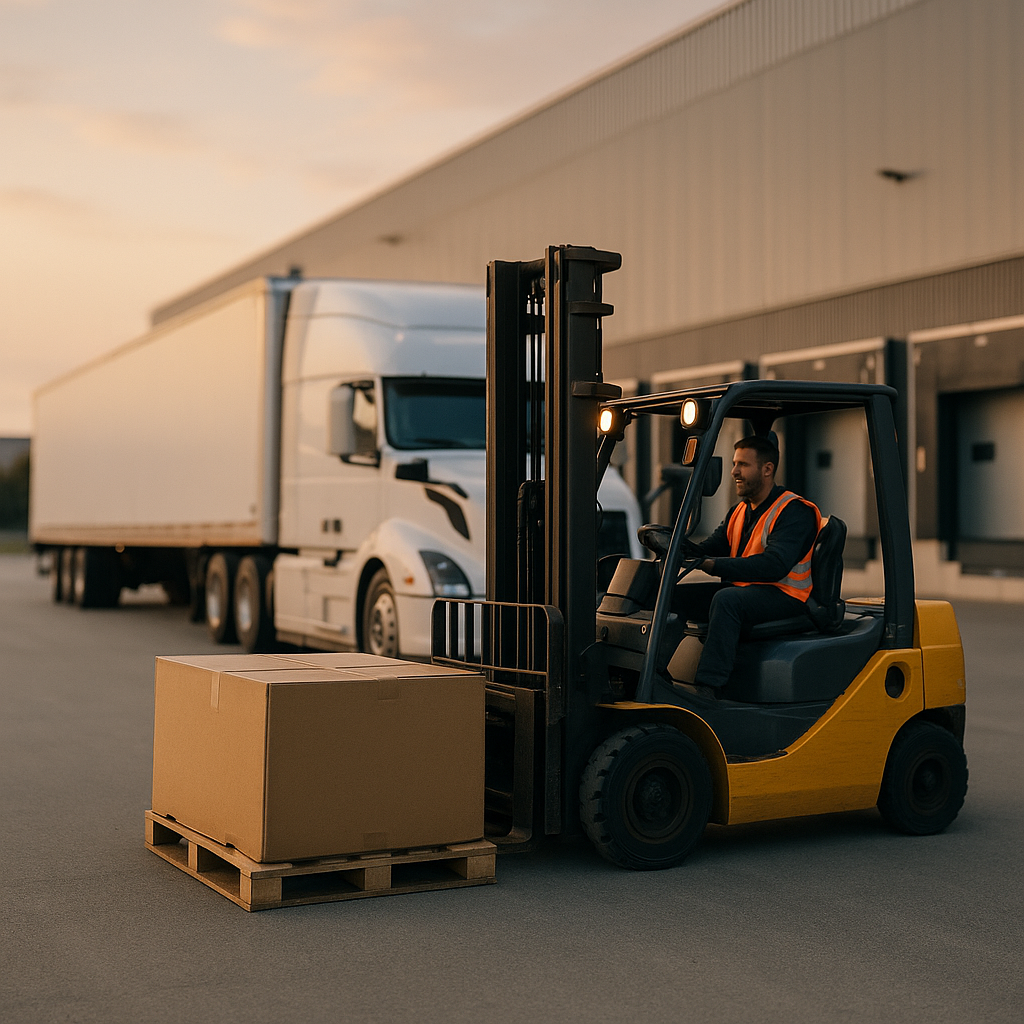

Forklift truck insurance in 2026: real cost ranges, required vs optional coverages, common contract requirements, and proven ways to lower premiums. Get a quote.
Forklift truck insurance in 2026 typically costs a few hundred to a few thousand dollars per year per forklift once you combine general liability with equipment coverage, and many small operations budget around $150–$600 per month for a basic package. One “small” incident can turn into a five-figure bill fast—racked product collapse, a pedestrian injury, a tipped load, or a stolen unit off a jobsite.
What makes it worse is the paperwork and finger-pointing after the fact—contracts demanding specific limits, a customer refusing access without a COI, and a claim getting delayed because the coverage was placed on the wrong policy. This guide breaks it down like a business owner: what it costs, what coverage you actually need (by situation), what’s “required” vs “contract-required,” and how to lower premiums without gambling your operation.
Key Takeaways: Essential Forklift Truck Insurance
- Most forklift “insurance” is a bundle, not one magic policy: general liability + equipment coverage (often inland marine/contractor’s equipment) + workers’ comp (if you have employees) + optional add-ons like equipment breakdown.
- Typical forklift insurance cost ranges widely based on forklift values, indoor vs outdoor use, jobsite exposure, theft controls, and claims history—not just your revenue.
- Legal requirements depend on the situation, but customers, lessors, and GCs often require specific limits, additional insured wording, and proof of coverage (COI) before you can work.
- The fastest premium wins come from controls you can prove: training records, inspection logs, access control, and theft prevention—because underwriters price what you document.
Table of Contents
Reading time: 11 minutes
- How Much Does Forklift Truck Insurance Cost in 2026?
- Is Forklift Insurance Legally Required? (Requirements by Situation)
- What Does Forklift Truck Insurance Cover? (Core + Optional)
- What Affects Forklift Truck Insurance Premiums?
- How to Lower Forklift Insurance Premiums (Safety + OSHA-Driven Actions)
- Forklift Insurance and Total Cost of Ownership (TCO): Buy vs Lease vs Rent
- Best Forklift Insurance Providers & How to Get Quotes (What to Compare)
- Real-World Claim Examples (What Coverage Would Apply?)
- Frequently Asked Questions
- Why Logrock: Practical Insurance Placement for Real Operations
- Conclusion & Get a Forklift Truck Insurance Quote

How Much Does Forklift Truck Insurance Cost in 2026?
In 2026, forklift truck insurance commonly runs a few hundred to a few thousand dollars per year per forklift when you combine general liability with equipment (inland marine/contractor’s equipment) coverage, and many small operations land around $150–$600 per month for a basic package.
That’s the honest answer: anyone quoting a single “average” without asking questions is guessing.
Typical monthly and annual cost ranges (what to expect)
Use these as budget bands, not a quote.
| Operation Type | Typical Coverage Setup | Budget Range (Monthly) | Budget Range (Annual) |
|---|---|---|---|
| 1 forklift, indoor warehouse, low theft exposure | GL + scheduled equipment | $150–$450 | $1,800–$5,400 |
| 1–3 forklifts, mixed indoor/outdoor | GL + equipment + higher limits | $300–$900 | $3,600–$10,800 |
| Construction/jobsite exposure (mobile, higher theft risk) | GL + contractor’s equipment + endorsements | $500–$1,500+ | $6,000–$18,000+ |
| Multi-location fleet | Package + fleet rating + umbrella | $1,000–$3,000+ | $12,000–$36,000+ |
Why “forklift insurance cost per month” varies so much
- Liability only vs equipment included: Are you insuring just third-party claims, or the forklift itself too?
- Valuation: Replacement cost vs actual cash value (ACV) changes the premium and the claim payout.
- Off-premises/jobsite exposure: More theft and vandalism risk usually means higher rates.
- Employees operating units: Workers’ comp can be a major part of total spend.
- Contract limits: $1M vs $2M vs $5M drives GL/umbrella pricing.
- Deductibles: Higher deductibles can reduce premium, but don’t pick one that breaks cash flow.
Cost by state (what changes and why)
Forklift pricing can swing by state because of claims severity, litigation environment, wage levels (workers’ comp), theft rates, and local construction activity.
| State Example | Relative Cost Tendency | Why it often trends this way |
|---|---|---|
| IN / IA | Lower | Lower claim frequency in some segments, lower wage pressure |
| TX / FL | Medium–High | High volume, theft exposure, more varied operations |
| CA / NY / NJ | High | Higher loss costs, wage rates, legal environment |
Cost by coverage type (quick breakdown)
| Coverage | What it’s for | Cost Direction | When it’s usually necessary |
|---|---|---|---|
| General liability (GL) | Third-party injury/property damage | Low–Medium | Almost always (contracts demand it) |
| Contractor’s equipment / inland marine | Theft/damage to the forklift itself | Medium | If you own/finance the unit or take it off-premises |
| Workers’ compensation | Employee injuries operating forklifts | Medium–High | If you have employees (often required) |
| Equipment breakdown | Electrical/mechanical failure (not wear/tear) | Low–Medium | Higher uptime needs; expensive repairs; critical operations |
| Umbrella/excess | Higher liability limits | Medium | Big customers/GCs require $2M+ or $5M+ |
Quick Reality Check on Your Forklift Insurance Budget
Tell us how many forklifts you run, where they operate (warehouse vs jobsite), and whether you need equipment coverage. We’ll sanity-check your coverage and pricing assumptions so you’re not building your bids on guesswork.
Is Forklift Insurance Legally Required? (Requirements by Situation)
In the U.S., there is usually no single forklift-specific insurance law, but most states do require workers’ compensation when you have employees, and contracts commonly require $1,000,000 or $2,000,000 in general liability before you can access a site.
So “not legally required” doesn’t mean “safe to operate uninsured.” It just means the requirement often comes from somewhere else.
Forklift insurance requirements usually come from three places
- Employment law: workers’ comp if you have employees (state rules vary).
- Contracts: customers, GCs, property owners, municipalities, brokers.
- Leases/financing: the lender wants the collateral protected (loss payee wording is common).
What’s legally required vs what customers require
Legally required (common):
- Workers’ compensation if you have employees (varies by state).
- Commercial auto if you’re using road-licensed vehicles for business transport exposures (not the forklift itself, but the trucks/trailers moving it).
Contract-required (very common):
- $1M or $2M general liability limits (sometimes higher).
- Additional insured status for the customer/GC.
- Waiver of subrogation endorsements.
- Primary and noncontributory wording.
- Proof via certificate of insurance (COI) before site access.
Warehouse/manufacturing vs construction jobsites (risk changes fast)
Warehouse/manufacturing: more premises liability exposure (pedestrian traffic, visitors, contractors) and higher property damage potential (racking systems, inventory, dock doors).
Construction/jobsites: higher theft/vandalism exposure, more off-premises use, and heavier contract language from GCs (with less patience for paperwork mistakes).
If you have employees operating forklifts
If someone is on your payroll and driving a forklift, you should assume workers’ comp is likely required, training documentation matters at renewal, and a single serious injury can affect your pricing for years.
Business reality: if your labor model is “a couple operators when we’re busy,” your insurance still needs to reflect that—misclassification is a common and expensive problem.
What Does Forklift Truck Insurance Cover? (Core + Optional)
Forklift truck insurance is usually a stack of policies—most commonly general liability plus contractor’s equipment/inland marine, and workers’ comp if you have employees—because each policy responds to a different type of loss.
The biggest mistake is thinking one policy covers everything.
1) General liability (third-party injury and property damage)
What it is: Pays when your business operations cause bodily injury or property damage to others.
Why it’s essential: Forklifts share space with pedestrians, contractors, and “not your employees,” and many customers won’t let you operate without GL.
Pro tip: Watch for “care, custody, or control” issues. Some GL forms limit coverage for damage to property you’re working on or handling (pallets, product, customer inventory).
2) Inland marine / contractor’s equipment (your forklift as mobile equipment)
What it is: Covers your forklift itself (and often attachments) for physical loss like theft, fire, vandalism, and certain accidental damage—especially off-premises.
Why it’s essential: Your forklift is a profit-center; if it disappears or gets wrecked, your revenue stops, and lenders/lessors often require this coverage with loss payee wording.
Pro tip: Decide whether you need scheduled coverage (listed units with serial numbers) vs blanket coverage (a broader pool). Scheduled is cleaner for 1–5 units; blanket can be efficient for fleets if set up correctly.
3) Equipment breakdown (mechanical/electrical failure)
What it is: Helps pay for sudden mechanical/electrical failure (motor, electrical systems, control modules), depending on the form and endorsements.
Pro tip: Equipment breakdown is not a maintenance plan; wear-and-tear and poor maintenance are common exclusions, and underwriters expect logs.
4) Commercial auto / hired & non-owned auto (the transport and errands exposure)
What it is: Covers liability for vehicles used in your business (company-owned, hired, or employee-owned vehicles on company business).
Why it’s essential: Even if the forklift isn’t road-registered, many operations use trucks, trailers, or employee vehicles to move people and equipment.
Pro tip: If you run both forklifts and delivery trucks, don’t split coverage across carriers in a way that creates gaps.
5) Umbrella/excess liability (when limits actually matter)
What it is: Adds extra liability limits on top of GL/auto/employer’s liability (depending on how it’s written).
Why it’s essential: Serious injury claims can blow through $1M, and larger customers/GCs commonly require $2M–$5M total limits.
Quick Coverage Map: “Loss Scenario → Policy That Responds”
| Loss Scenario | Coverage that typically responds | Common gotchas |
|---|---|---|
| Pedestrian injured in warehouse aisle | GL (or umbrella if severe) | Training records, incident reports, CCTV matter |
| Forklift damages customer racking/product | GL (property damage) | “Care/custody/control” wording can matter |
| Forklift stolen from jobsite | Contractor’s equipment / inland marine | Theft conditions, security requirements, sublimits |
| Electrical failure shuts down unit | Equipment breakdown (if purchased) | Wear/tear exclusions; maintenance logs |
| Employee operator injured | Workers’ comp | Classification/payroll errors can bite you |
What Affects Forklift Truck Insurance Premiums?
Forklift truck insurance premiums are priced primarily on total equipment value, indoor vs outdoor/off-premises use, theft controls, contract limit requirements (often $1M–$5M), payroll for operators, and loss history.
Underwriters don’t price “forklifts” in the abstract—they price what you run, where you run it, and how controlled the operation is.
1) Forklift and operation factors
- Number of units and total insured value
- Class/capacity (bigger loads can mean bigger losses)
- Indoor vs outdoor (weather, uneven surfaces, public exposure)
- Attachments (clamps, booms, fork positioners)
- Shift length and utilization (more runtime = more exposure)
- Locations (multi-site operations typically cost more)
- Prior losses and how you corrected the root cause
2) Controls underwriters care about (because they predict claims)
- Documented operator training and refreshers
- Pre-use inspection checklists (daily) and maintenance logs
- Pedestrian separation (painted walkways, barriers, mirrors, spotters)
- Speed/access control (keys, badges)
- Charging/fueling controls (battery charging safety, LPG storage rules)
- Theft controls (fencing, lighting, immobilizers, indoor storage)
3) Policy structure choices that change cost (fast)
- Deductibles: Don’t pick a deductible that breaks cash flow.
- Limits: $1M vs $2M vs $5M changes pricing and eligibility.
- Valuation: Replacement cost vs ACV affects both premium and claim settlement.
- Scheduled vs blanket equipment: Efficient for fleets, but must be built correctly.
- Bundling lines: GL + equipment + auto + umbrella can reduce gaps.
How to Lower Forklift Insurance Premiums (Safety + OSHA-Driven Actions)
Forklift insurance premiums usually drop when you can document fewer losses using controls tied to OSHA’s powered industrial truck training standard 29 CFR 1910.178(l) plus consistent inspection, maintenance, and theft-prevention records.
Lowering premiums isn’t about begging the carrier. It’s about proving you’re a better risk than the next account.
1) Training and documentation that reduces claims
- Keep operator training/certification organized and retrievable.
- Require refreshers after a near-miss, incident, new equipment, or layout changes.
- Write a spotter policy for blind corners and congested docks.
- Maintain an incident/near-miss log that shows corrective action (this matters at renewal).
2) Maintenance, inspections, and “proof you’re not winging it”
- Daily pre-use checklist (tires, forks, hydraulics, horn, lights, brakes).
- PM schedule with service records.
- Consider impact sensors/telematics if you see frequent product damage or racking strikes—some underwriters respond well when you can show trend improvement.
3) Theft prevention (jobsite operators: this is your premium lever)
- Indoor storage when possible.
- Immobilizers and key control.
- Fenced storage, lighting, cameras.
- Don’t leave units on trailers overnight unless secured.
Forklift Insurance and Total Cost of Ownership (TCO): Buy vs Lease vs Rent
Forklift insurance is part of total cost of ownership because financing and lease contracts commonly require physical damage coverage on the unit and may set minimum limits and maximum deductibles before delivery or funding.
Insurance isn’t a side cost—it’s part of your true cost per operating hour.
How leasing/financing changes insurance requirements
- Expect lender/lessor to require equipment coverage.
- They may require loss payee wording.
- They may set maximum deductibles and minimum limits.
- They may require proof of coverage before delivery or funding.
If you rent
- The rental agreement may make you responsible for damage (even if accidental).
- Some rental contracts include damage waivers; many don’t cover everything.
- You still may need GL for third-party claims during your operations.
Mini calculator: estimate your annual insurance budget (fast)
Gather these inputs before you request quotes:
- Number of forklifts: ___
- Total forklift value to insure: $___
- Indoor-only or off-premises/jobsite: ___
- Employees operating forklifts: ___
- Payroll for operator roles (annual): $___
- Required limits in contracts: $___
Simple estimate formula (budgeting only): GL (annual) + Equipment coverage (rate × insured value) + Workers’ comp (rate × payroll) + Umbrella (if required).
Best Forklift Insurance Providers & How to Get Quotes (What to Compare)
The best forklift insurance provider in 2026 is the carrier that can correctly write your mix of GL + contractor’s equipment/inland marine + workers’ comp and still meet contract limits like $1M, $2M, or $5M with COIs your customers accept.
“Best” depends on whether you’re a clean warehouse account, a jobsite-heavy contractor, or a mixed operation with vehicles and equipment.
Where forklift coverage is commonly placed
- GL on a BOP or commercial package (when eligible)
- Forklift physical damage on inland marine/contractor’s equipment
- Workers’ comp separate (often state-sensitive)
- Equipment breakdown as an endorsement or separate coverage
- Umbrella on top (if contracts require higher limits)
Quote checklist (to avoid surprises)
- Forklift schedule: year/make/model, serial numbers, class/capacity, attachments
- Values: replacement cost vs ACV preference
- Locations and job types (warehouse vs construction vs mixed)
- Employee count, operator payroll, training program description
- Loss history (loss runs if you have them)
- Contract insurance requirements (limits, additional insured, waiver wording)
What to compare beyond price (this is where you win)
- Off-premises coverage terms (critical for jobsites)
- Theft requirements and sublimits
- Valuation method (ACV vs replacement cost)
- Exclusions around rented/borrowed equipment
- Additional insured wording and COI process speed
- Claims handling (ask direct questions)
Compare Forklift Insurance Quotes (Apples-to-Apples)
We’ll review your operation, match coverage to your contracts/lease, and shop it correctly—so you’re not finding out about a gap after the incident.
Real-World Claim Examples (What Coverage Would Apply?)
Most forklift losses fall into three buckets—third-party injury/property damage (GL), damage/theft to the unit itself (contractor’s equipment/inland marine), and employee injuries (workers’ comp)—and the outcome often depends on documentation and policy wording.
Example 1: Forklift tips a pallet into a customer’s product
- Likely coverage: General liability (property damage), depending on policy wording.
- Why it gets messy: If the damaged goods are in your “care, custody, or control,” coverage can vary by form.
- What helps: Photos, incident report, witness statements, equipment inspection record.
Example 2: Forklift stolen from a jobsite over the weekend
- Likely coverage: Contractor’s equipment / inland marine, subject to theft conditions.
- Why it gets denied: No forced entry, keys left in unit, or failure to meet stated security requirements.
- What helps: Police report, proof of security measures, serial number records.
Example 3: Electrical failure disables forklift and delays operations
- Likely coverage: Equipment breakdown (if purchased), sometimes with extra expense depending on endorsement.
- Why it matters: This is a “no collision, still expensive” loss.
- What helps: Maintenance logs and proof the unit wasn’t run with known defects.
Frequently Asked Questions
These answers reflect how forklift truck insurance is commonly structured in the U.S. market in 2026 (GL + equipment + workers’ comp), plus the contract requirements that routinely show up on COIs.
Forklift insurance often costs $150–$600 per month for many small businesses when priced as a basic bundle of general liability + equipment coverage, and jobsite-heavy operations or higher limits can push $1,000+ per month. The price swings based on forklift replacement value, off-premises use, theft controls, claims history, and whether you also need workers’ comp for employees. For clean indoor warehouse risks, annual budget bands like $1,800–$5,400 for a single unit are common; for construction/jobsite exposure, $6,000–$18,000+ annually isn’t unusual. The fastest way to get a real number is quoting with the same limits and deductibles across carriers.
Forklift truck insurance usually covers third-party injury and property damage through general liability and covers the forklift itself through contractor’s equipment/inland marine for theft, fire, vandalism, and certain accidental damage. If you have employees operating forklifts, workers’ compensation typically covers employee injuries and is often required by state law. Optional coverages include equipment breakdown for certain mechanical/electrical failures and an umbrella to reach contract-required totals like $2M–$5M. The key is matching the coverage stack to where the forklift operates (indoor vs jobsite) and what your contracts require on the COI.
Forklift insurance is often not legally required as a single forklift-specific policy, but workers’ compensation is commonly required in most states when you have employees, and you may need commercial auto for the trucks/trailers and errands tied to your business. In practice, the “requirement” usually comes from contracts: customers, property managers, and GCs routinely require $1,000,000 or $2,000,000 in general liability (and sometimes $5,000,000 total with an umbrella), plus endorsements like additional insured and waiver of subrogation. If your COI wording doesn’t match the contract, you can be denied site access even if you’re otherwise insured.
You can lower forklift insurance premiums by cutting claim frequency and proving it with documentation—especially training and inspections that align with OSHA’s powered industrial truck training standard 29 CFR 1910.178(l). Carriers respond to organized operator training files, daily pre-use inspection logs, maintenance records, and physical controls like pedestrian separation, mirrors, and access control (keys/badges). For jobsites, theft prevention is a major lever: indoor storage, immobilizers, fencing, lighting, and cameras can materially improve pricing. After that, fine-tune deductibles and shop renewal early so you can negotiate terms instead of accepting last-minute pricing.
Many commercial insurance carriers offer forklift coverage, but it’s usually written as a combination of general liability plus contractor’s equipment/inland marine (and sometimes equipment breakdown and umbrella), not a standalone “forklift policy.” The right carrier depends on your exposure—clean indoor warehousing is underwritten differently than jobsite-heavy construction operations with theft risk and higher contract limits. When you compare providers, compare coverage terms (off-premises and theft conditions), valuation (ACV vs replacement cost), and how quickly they can issue COIs with endorsements like additional insured, waiver of subrogation, and primary/noncontributory wording. Price matters, but claims handling and contract compliance matter more.
Yes, you often need insurance for a rented or leased forklift because rental and lease agreements commonly make you financially responsible for damage, theft, and third-party claims during your operations. Leases frequently require equipment coverage on the unit and may require lender wording like loss payee, plus minimum limits and maximum deductibles before the unit is delivered. Rentals may offer a damage waiver, but those waivers can be limited and typically do not replace your need for general liability (for example, a pedestrian injury claim). The safest approach is to review the contract and align your insurance to the contract’s responsibility section before the forklift hits the floor.
No, general liability usually does not cover damage to your own forklift because GL is designed for third-party bodily injury and property damage claims, not damage to your property. Your forklift is typically insured under contractor’s equipment/inland marine for theft and physical damage (fire, vandalism, certain accidental damage), and certain internal failures may be covered by equipment breakdown if you purchase it. If you want your forklift protected, you need the equipment coverage written correctly for where the unit operates (indoor vs off-premises) and with the right valuation (ACV vs replacement cost). Mixing up GL and equipment coverage is a common reason claims get delayed or denied.
Why Logrock: Practical Insurance Placement for Real Operations
Most forklift insurance failures come from misalignment between how you actually operate (off-premises use, leased equipment, contract COI wording) and how the policy was written, which is why correct placement is often more important than chasing the lowest premium.
Most forklift insurance headaches aren’t caused by “bad luck.” They’re caused by coverage that wasn’t placed with your real workflow in mind—jobsite exposure, contract language, leased equipment requirements, and how claims get handled in the real world.
Logrock’s job is simple: translate what you do every day into insurance terms underwriters understand, so you get coverage that responds when it matters—and COIs that don’t get you turned away at the gate.
Conclusion & Get a Forklift Truck Insurance Quote
Forklift truck insurance in 2026 is mainly about two things: protecting cash flow and staying contract-compliant with limits like $1M–$5M and COI wording that gets accepted. The right setup is usually a bundle: general liability + equipment coverage + workers’ comp (if applicable), with add-ons like equipment breakdown and umbrella limits when your operation or contracts demand it.
Key Takeaways:
- Pricing drivers: forklift value, off-premises/jobsite exposure, theft controls, documentation, and loss history.
- “Required” is often contractual: additional insured, waiver of subrogation, primary/noncontributory, and COI before access.
- Cheap can be expensive: the wrong policy structure can leave you uncovered for theft, equipment damage, or contract obligations.
If you want to stop guessing, quote it correctly: same limits, same deductibles, same forklift schedule, and contract requirements in hand.
Get Forklift Truck Insurance That Matches How You Actually Operate
Tell us where you run your forklifts, how many units you have, and what your contracts require. We’ll help you build a clean coverage stack and compare quotes without coverage gaps.
Related Reading
Editorial note: Internal links were not inserted in this environment because source URLs were unavailable. Add 2–3 relevant Logrock links here after re-running retrieval (examples: general liability guide, COI/Additional Insured guide, inland marine/contractor’s equipment guide).
- General liability insurance limits and contract requirements
- Certificate of insurance (COI) mistakes that delay site access
- Inland marine / contractor’s equipment coverage basics





