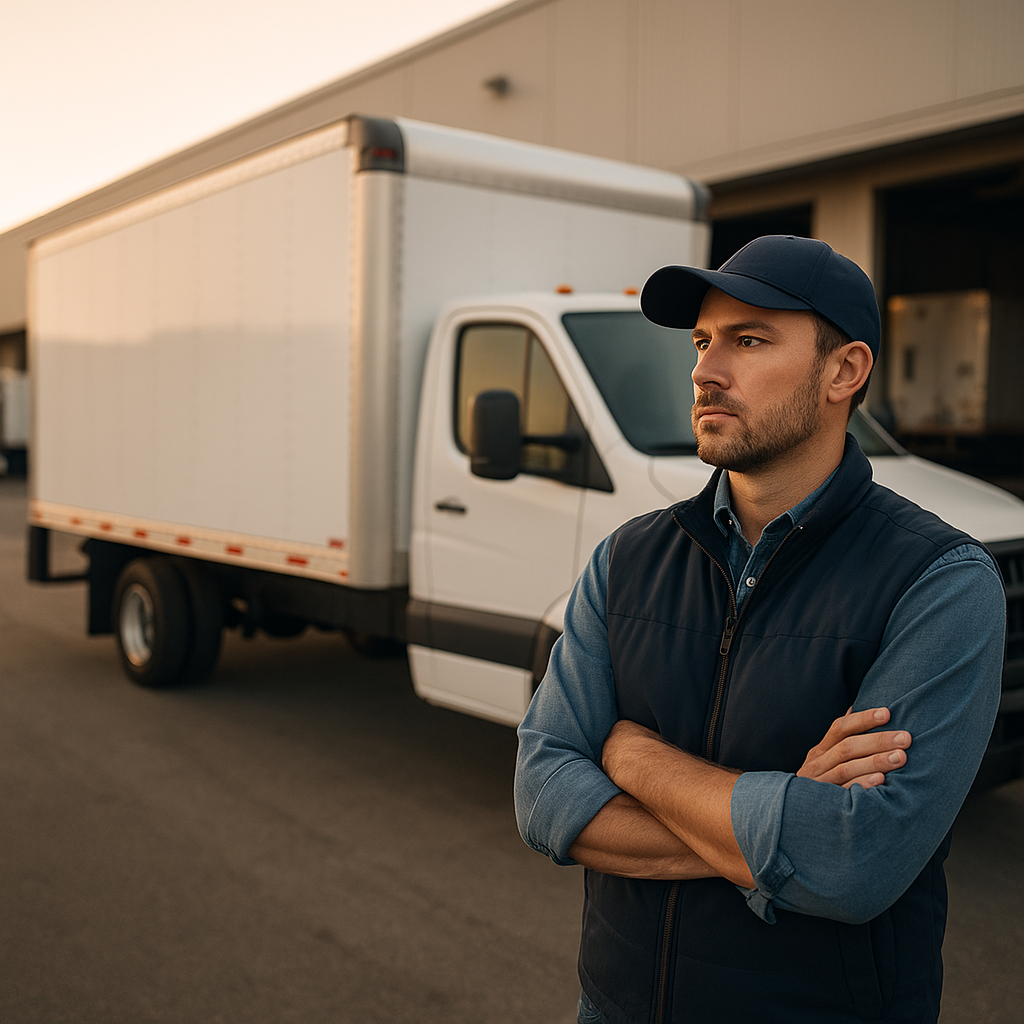
Non CDL box truck insurance for 2026: required coverages, FMCSA minimums, interstate filings (MCS-90/BMC-91), cost ranges, and proven ways to save. Get a quote.
Non CDL box truck insurance is still commercial truck insurance, and the “non-CDL” part only answers a licensing question. Your real requirements depend on whether you’re for-hire vs private, intrastate vs interstate, what you haul, and what brokers/clients require on a COI.
Fast answer: Most non-CDL box truck operators carry commercial auto liability (required), plus cargo (often contract-required for for-hire), physical damage (to protect the truck or satisfy a lender), general liability (common for warehouse/delivery contracts), and workers’ comp or occupational accident (driver injury coverage depending on your setup). If you run for-hire interstate, you may also need FMCSA insurance filings tied to your authority.
Table of Contents
Reading time: 10 minutes
- Do you need a CDL to drive a box truck?
- What insurance is required for non-CDL box trucks?
- FMCSA minimums + interstate filings (MCS-90/BMC)
- State-by-state differences that change your requirements
- Non-CDL box truck insurance cost in 2026 (benchmarks)
- How to get cheaper non-CDL box truck insurance (without getting burned)
- Compliance traps that cause denials and authority delays
- Quick checklist before you buy
- Frequently Asked Questions
- Why Logrock’s approach is built for owner-operators
- Conclusion & get a quote
Do you need a CDL to drive a box truck? (And why it matters for insurance)
A CDL is generally not required to drive a box truck with a GVWR under 26,001 lbs unless the operation triggers passenger or hazmat CDL rules. That “non-CDL” lane is common for 16–26 ft box trucks, but it doesn’t change the need for commercial coverage when you’re operating a business.
If you’re delivering for pay, you’re in the commercial world—claims adjusters and underwriters won’t treat it like personal driving just because your license isn’t a CDL.
1) When a box truck becomes CDL (the common trigger)
CDL requirements are driven mainly by weight (26,001+ GVWR/GCWR) and specific uses like certain hazmat or passenger configurations. The practical move is to verify the exact GVWR on the door jamb sticker before you quote or sign a contract.
- What to check: Door sticker GVWR, trailer use (if any), and any hazmat/passenger rules tied to your operation.
- Why it matters: Underwriting and compliance both key off the actual rated weight—not what you “think” it is.
2) Non-CDL doesn’t remove DOT/FMCSA obligations
You can be non-CDL and still operate as a commercial motor vehicle depending on weight, use, and whether you run interstate. If you’re stopped for an inspection or have a serious accident, “I’m non-CDL” won’t fix missing authority, missing filings, or misclassified insurance.
What insurance is required for non-CDL box trucks?
Commercial auto liability is the baseline required coverage for non-CDL box trucks, and most contracts then add requirements like $1,000,000 liability, cargo limits, and general liability on the COI. The goal is three things: stay legal, meet contract terms, and survive a claim without a shutdown.
Required + common coverages (quick table)
| Coverage | What it protects | Who usually requires it | Typical limits you’ll see |
|---|---|---|---|
| Commercial Auto Liability | Injuries/property damage to others | State law, contracts, brokers | $300K–$1M+ (many contracts: $1M) |
| Motor Truck Cargo | Customer/broker freight | Brokers, shippers, programs | $25K–$250K (common: $100K) |
| Physical Damage (Comp/Collision) | Your truck | Lender/lease company, smart operators | Truck value, deductible-driven |
| General Liability | Slip-and-fall / premises / delivery ops | Warehouses, clients | $1M per occurrence is common |
| Workers’ Comp / Occ Accident | Driver injury protection | State law / contract | Varies by state & setup |
1) Commercial auto liability (the must-have baseline)
Commercial auto liability pays for bodily injury and property damage you cause with the truck, and it typically includes defense coverage based on the policy terms. Even a “minor” accident can turn expensive fast once injuries, attorneys, and downtime show up.
2) Cargo insurance (often contract-required)
Cargo insurance covers the freight you’re hauling if it’s damaged, stolen, or lost, subject to exclusions and conditions. Many brokers and shippers won’t tender loads without cargo coverage listed on the COI.
- Watch for: unattended vehicle theft rules, locked-vehicle/forced-entry requirements, and any excluded commodities.
- Reality check: If your contract says $100K cargo and you bought $25K, you’re the gap.
3) Physical damage (comp/collision)
Physical damage covers your truck for collision and comprehensive losses like theft, vandalism, weather, and animal strikes. If the truck is financed, lenders typically require it; if it’s paid off, it still protects your cash flow.
4) General liability (GL)
General liability covers non-auto claims tied to delivery operations, such as property damage while using a dolly or a slip-and-fall allegation at a delivery site. Warehouses and commercial clients often want GL shown on the COI.
5) Workers’ comp vs occupational accident
Workers’ comp is state-regulated coverage for employees, while occupational accident is often used for 1099/contractor setups where allowed by the state and contract. If you have drivers, driver injury coverage is one of the fastest ways a “cheap” policy turns into a business-ending surprise.
FMCSA minimums + interstate filings (MCS-90/BMC)
FMCSA financial responsibility rules can apply when you operate for-hire interstate, and the common federal public-liability minimum for non-hazardous property is $750,000 under 49 CFR Part 387 (with higher minimums for many hazmat categories). Even when the legal minimum is lower, brokers and facilities often require $1,000,000 liability on the COI.
This is where non-CDL operators get blindsided: federal rules are driven by how you operate and what you haul—not whether your license is a CDL.
1) When federal minimums apply
If you’re for-hire and interstate (and operating under federal authority), you may need coverage that satisfies federal financial responsibility and must be correctly filed to activate authority. Missing or incorrect filings can delay your start date and cost real revenue.
2) Common federal minimums (high-level, not one-size-fits-all)
Federal minimum liability levels vary by operation and commodity (general freight vs passengers vs hazmat). If you’re quoting based on a number you saw online, you’re taking a compliance risk—confirm your exact requirements for your operation and authority.
3) Interstate filings & endorsements (MCS-90 + BMC filings)
- MCS-90: A federal endorsement tied to public liability financial responsibility; it is not cargo coverage and it is not “full coverage” for your truck.
- BMC filings (e.g., BMC-91/BMC-91X): Proof your liability coverage is on file with FMCSA when filings are required.
Always ask your agent one direct question: “Will you file what FMCSA needs for my authority, and when will it show active?”
State-by-state differences that change your requirements
Intrastate commercial truck insurance requirements are set by each state, so minimum liability limits and any state filings can change when you cross a border or expand your service area. If you start “local only” and later add regional runs, your current policy setup may not match the new exposure.
1) Intrastate minimums and filing rules vary
Some states have different minimum limits for commercial vehicles and may add state-specific filings or proof requirements for certain operations. Being “legal” in one state doesn’t automatically mean you’re adequately insured for a new state or a new contract.
2) How to verify your requirements quickly
- Contracts first: Broker/shipper/warehouse requirements usually become your real standard.
- State rules: Check your state DOT/DMV commercial guidance for your operation type.
- Written checklist: Get a written compliance summary from your agent for your exact operation.
Non CDL box truck insurance cost in 2026 (benchmarks)
Non CDL box truck insurance cost in 2026 commonly ranges from $600 to $4,000+ per month per truck depending on state, radius, new-venture status, driver MVR, cargo, and whether you buy liability-only or a full package. Stop frequency, urban theft exposure, and prior losses can swing pricing fast.
For a deeper explanation of cost drivers and where operators overpay, see Logrock’s guide to affordable trucking insurance.
2026 benchmark ranges (business reality, not fantasy quotes)
| Profile (Non-CDL Box Truck) | Typical Package | Monthly benchmark (per truck) |
|---|---|---|
| Local delivery (<100 miles), established, clean MVR | Liability + physical damage | $600–$1,500 |
| Local delivery, new venture | Liability + physical damage | $900–$2,200 |
| Regional routes (100–300 miles), mixed freight | Liability + cargo + physical damage | $1,200–$3,000 |
| Interstate for-hire, brokered freight | Liability + cargo + physical damage (+ filings as needed) | $1,500–$4,000+ |
What drives your price up (non-CDL specific)
- Stop-and-go delivery exposure: more backing, tight docks, and claim frequency.
- Urban routes + theft hotspots: especially overnight parking and unsecured lots.
- New venture status: fewer carrier options and tougher terms/down payments.
- Driver MVR: speeding, at-fault accidents, suspensions, or gaps.
- Cargo type/value: higher theft/value commodities cost more than general freight.
Mini case examples (how underwriters actually think)
- Example A (local appliance delivery, 16’): Often lower cost than interstate, but GL and cargo wording matter a lot.
- Example B (interstate general freight, 26’): Higher radius + broker cargo requirements typically increases premium.
- Example C (new venture, “expedite-style” lanes): New operation + inconsistent lanes often triggers new-venture pricing.
How to get cheaper non-CDL box truck insurance (without getting burned)
Cheaper non-CDL box truck insurance usually comes from tightening underwriting variables (drivers, radius, parking, and controls) instead of stripping coverage that your contracts require. The right strategy lowers premium while keeping your COI acceptable and your claims defensible.
For more saving levers and common mistakes, read how to pay less for commercial auto insurance in 2026.
1) Use deductibles like a business tool
Higher deductibles can lower premium, but only if you can pay the deductible without missing payroll, repairs, or rent. A “cheap” quote with a deductible you can’t fund is just delayed pain.
2) Tighten the operation you present to underwriting
- Quote the real radius: Don’t quote “local” and then run 700 miles—claims and audits get messy.
- Use secure parking: Theft losses destroy affordability and renewability.
- List only active drivers: Extra drivers can add cost and create preventable risk.
3) Add controls insurers reward
- Dash cams
- Telematics / GPS tracking
- Maintenance logs (prove the truck isn’t running unsafe tires/brakes)
4) Make quoting fast (and prevent re-quotes)
- Truck: VIN, garaging address, GVWR, value, lienholder/lessor info
- Drivers: DOB/license, experience, violations/accidents, prior losses (loss runs if available)
- Cargo: what you haul, max value, lanes, any special handling
- Contracts: required limits and special COI wording
Compliance traps that cause denials and authority delays
Claim denials and authority delays most often come from misrepresenting the operation (for-hire vs private), using the wrong policy type, or missing required filings for interstate authority. These mistakes usually surface at the worst moment: after an accident, during a broker onboarding, or when your authority is supposed to go active.
1) Using a personal policy for business delivery
Personal auto policies commonly exclude commercial delivery and for-hire use, which is how operators end up with denied claims. If the truck is used to make money, insure it with a commercial policy that matches the work.
2) Misclassifying your operation (private vs for-hire)
If you haul someone else’s freight for a fee, you’re for-hire—even if it’s “just a few loads.” Incorrect classification can cause coverage disputes and mismatched filings.
3) Interstate operations without proper authority/filings (when required)
Crossing state lines for pay can trigger DOT/authority and filing needs depending on the operation. The fix is simple: confirm your authority setup and make sure your insurer files what’s required—before you plan a start date.
4) COI doesn’t match the rate confirmation
Many brokers require $1M liability and $100K cargo on the COI, and they won’t tender loads until it matches. Hauling anyway is worse: you’re accepting contract terms you might not be insured to satisfy.
5) Lapses in coverage
Coverage lapses can trigger higher premiums and stricter renewal terms, and they can disrupt authority/contract eligibility. If cash flow is tight, talk to your agent before you cancel—don’t wait until after.
Quick checklist before you buy
A complete non-CDL box truck insurance quote typically requires operation details, truck specs, driver info, and contract requirements so the policy and COI match the work. If you’re missing basics like VIN, radius, or cargo value, you’ll get re-quoted (or worse, misquoted).
- Operation: for-hire vs private, intrastate vs interstate, radius, garaging/terminals, parking plan
- Truck: VIN, GVWR, value, lienholder/lessor requirements
- Cargo: type, max value, handling (white glove, liftgate, temp control)
- Drivers: who drives, experience, MVR issues, prior losses/loss runs
- Compliance: DOT/MC status (if applicable), filings needed (if applicable)
- Contracts: broker/shipper/warehouse insurance requirements (limits + COI wording)
Frequently Asked Questions
You usually don’t need a CDL to drive a box truck if the vehicle’s GVWR is under 26,001 lbs and the operation doesn’t trigger passenger or hazmat CDL rules. The safest way to confirm is to check the door-jamb GVWR sticker and then verify any state-specific commercial rules for your use case. Even when a CDL isn’t required, insurers and regulators still treat for-hire delivery as a commercial operation, so you typically need commercial auto liability (and often cargo/GL depending on contracts).
At minimum, non-CDL box truck operators typically need commercial auto liability, and many contracts require higher limits like $1,000,000 on the COI. For-hire work commonly adds motor truck cargo (often $100,000), while financed trucks usually require physical damage (comp/collision) to protect the vehicle value. Many warehouses and delivery accounts also require general liability, commonly $1,000,000 per occurrence. If you have drivers, you may need workers’ comp or an approved alternative depending on state rules and contract language.
Non-CDL box truck insurance in 2026 often benchmarks around $600 to $4,000+ per month per truck depending on state, radius, driver MVR, new-venture status, cargo, and whether you buy liability-only or a full package. Local established operators with clean records tend to land on the lower end, while interstate for-hire and new ventures tend to land higher—especially with higher cargo limits or theft-sensitive lanes. For a practical breakdown of cost drivers and where operators overpay, start with affordable trucking insurance.
FMCSA minimum public-liability requirements for many for-hire interstate carriers hauling non-hazardous property are commonly $750,000 under 49 CFR Part 387, with higher minimums for many hazmat and passenger operations. In practice, many brokers and facilities still require $1,000,000 liability on the COI even when the legal minimum is lower. If you operate under federal authority, your insurer may also need to submit proof via BMC filings, and your policy may include an MCS-90 endorsement tied to financial responsibility (not cargo or physical damage coverage).
Why Logrock’s approach is built for owner-operators
A one-truck business typically needs contract-ready coverage like $1,000,000 liability, common cargo limits (often $100,000), and fast certificate support so loads don’t get delayed. The point isn’t to sell you the most coverage—it’s to structure the policy so your COI gets accepted, your filings (if needed) don’t slow down authority, and a claim doesn’t turn into a shutdown.
That’s the difference between buying “cheap” and buying coverage that actually performs when it matters.
Conclusion: Protect the truck, the freight, and your cash flow
Non-CDL only answers a licensing question, while insurance and compliance are driven by your operation and contracts. Get clear on for-hire vs private, intrastate vs interstate, cargo, and required limits—then buy a policy that matches how you really run.
Key Takeaways:
- Liability is the baseline, but many contracts still require $1,000,000 on the COI.
- Cargo and physical damage are where exclusions and deductibles can wreck cash flow.
- Interstate for-hire may require FMCSA-related filings—paperwork mistakes can delay revenue.
If you want coverage that matches your truck, radius, and contracts (without COI drama), get a quote and compare options side-by-side.