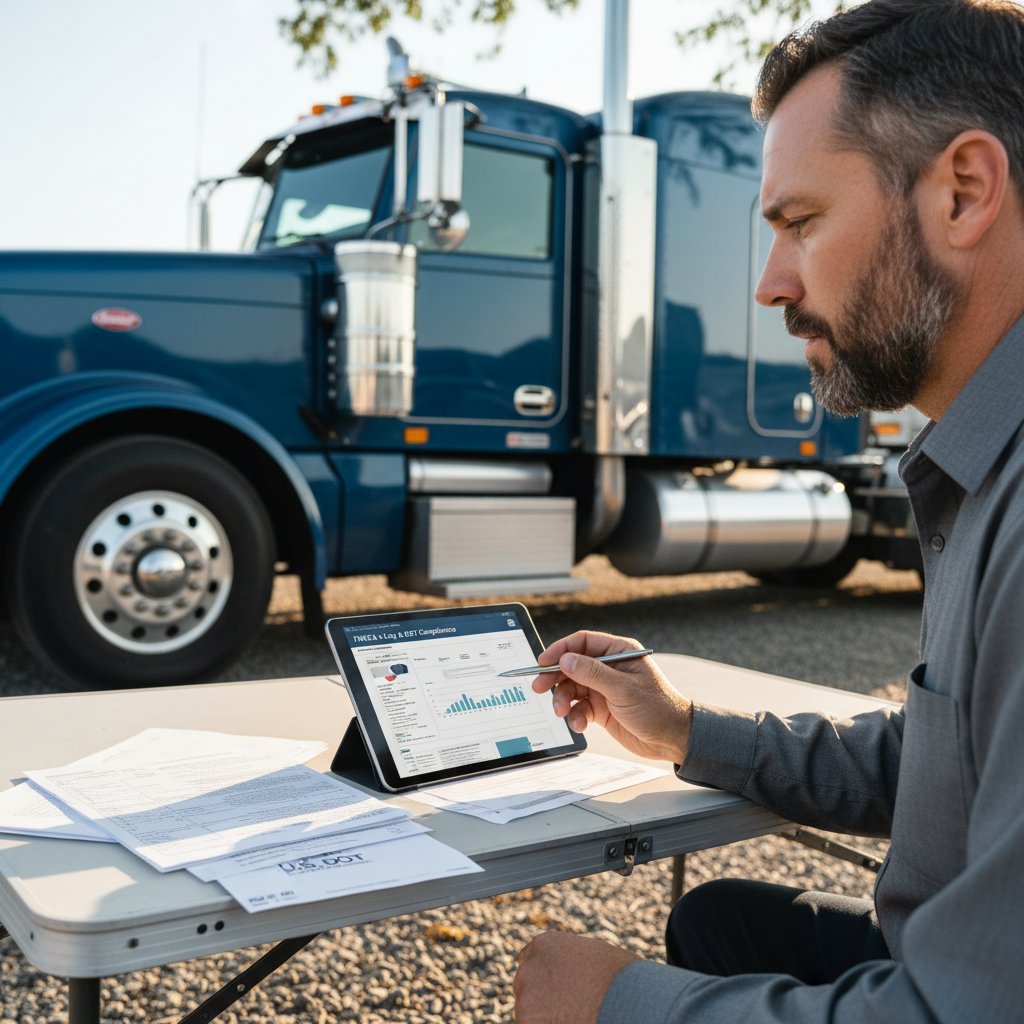
Owner operator insurance coverage in 2026: required policies, costs, and leased vs own authority differences—avoid gaps, cut risk, and get a quote.
Owner operator insurance coverage is the mix of commercial policies that keeps one accident, cargo claim, theft, or contract requirement from wiping out your trucking business. For most one-truck operations, the practical “core” is primary auto liability, motor truck cargo, and physical damage, with common add-ons like general liability and non-trucking liability depending on whether you’re leased to a carrier or running under your own authority.
If you want the short version first, start with this deeper dive on owner-operator insurance coverage—then come back here to build a complete plan for your authority, lanes, and freight.
Key Takeaways: Essential Owner Operator Insurance Coverage
- Legal minimums aren’t the market minimums: FMCSA rules are the baseline, but brokers and shippers often require higher limits to tender loads.
- Leased vs own authority changes everything: Leased owner-operators may be covered while dispatched, but gaps (off-dispatch, deductibles, physical damage responsibility) are common.
- Cargo and contracts drive your real risk: One cargo claim can erase months of profit—know your limits, exclusions, and commodities.
- “Affordable” is about total cost of risk: The cheapest policy can be the most expensive after a denial, exclusion, or missed contract requirement.
Table of Contents
Reading time: 11 minutes
- What “Owner Operator Insurance Coverage” Actually Means
- 2026 Requirements: FMCSA, State Rules, and Broker Minimums
- Required Coverage Types (What Each One Covers)
- Leased vs Own Authority: A Decision Framework
- Optional Add-Ons That Prevent Expensive Gaps
- How Much Does Owner Operator Insurance Cost in 2026?
- How to Lower Premiums (Practical Strategies)
- Step-by-Step: Authority + Insurance Setup Timeline
- Frequently Asked Questions
- The Logrock Difference
- Conclusion: Build the Right Coverage Mix
What “Owner Operator Insurance Coverage” Actually Means (and Why It’s Different From a Company Driver)
Owner-operator insurance coverage is a business protection stack (not a single policy) that commonly includes $750,000–$1,000,000+ auto liability, plus cargo and physical damage, because you—not a carrier—absorb the financial risk after a claim.
Owner-operator vs company driver: who carries the risk?
If you’re a company driver, the carrier’s commercial policy usually carries the heavy load (liability, filings, contracts). As an owner-operator, you’re the business owner—meaning your truck, your authority, your contracts, and your cash flow are on the line.
- Company driver: “I’m covered” usually means “the carrier is covered.”
- Owner-operator: “I’m covered” must mean “my business survives a claim” (lawsuit, cargo loss, theft, downtime, or a contract dispute over limits).
Two paths that change everything: leased vs own authority
Your insurance setup depends on one question: are you leased to a motor carrier or running under your own authority?
- Leased to a motor carrier (permanent lease): The carrier may provide primary liability while you’re under dispatch, but gaps (off-dispatch, deductibles, physical damage responsibility) are common.
- Own authority: You’re buying semi truck insurance and related policies, maintaining them, and ensuring filings are done correctly to keep your authority active.
If you want a clean foundation on how trucking insurance fits together, read Trucking Insurance 101 next.
2026 Requirements: FMCSA Liability, State Rules, and Broker/Shipper Minimums
FMCSA’s federal minimum public liability requirement for most interstate for-hire general freight is $750,000 (49 CFR Part 387), but many broker packets won’t tender loads unless you carry $1,000,000 auto liability and other contract-specific limits.
Federal baseline (FMCSA) vs what brokers require
FMCSA requirements set the legal baseline for interstate operations—but brokers and shippers set the “you won’t get loaded without it” baseline.
- You might be legal at a lower threshold (depending on operation type), but
- Many brokers commonly expect $1,000,000 auto liability before they’ll set you up (varies by commodity, lanes, and broker packet).
Business reality: If your limits don’t match your contracts, you’ll lose access to freight—or worse, you’ll haul it and discover you breached the contract after a claim.
Intrastate vs interstate: why your state can change the minimums
Intrastate insurance minimums can differ by state (and sometimes by vehicle weight class, commodity, or carrier type), so a “mostly local” operation still needs state-specific verification—not assumptions.
- Confirm whether your operation is truly intrastate (many runs become interstate through the “stream of commerce”).
- Keep your COIs accurate and ready—brokers and shippers will request them fast.
- Don’t assume the carrier’s insurance covers you the way you think it does; get it in writing.
Required Owner Operator Insurance Coverage Types (What Each One Covers)
In many broker and shipper onboarding packets, the “standard” minimums requested are $1,000,000 auto liability, $100,000 cargo, and $1,000,000 general liability, even though the legal minimum for general freight liability can be $750,000.
| Coverage | What it protects (plain English) | Who typically requires it | Common limit ranges (varies) |
|---|---|---|---|
| Primary Auto Liability | Injuries + property damage you cause with the truck | FMCSA/state + brokers/shippers | Often $750k–$1M+ |
| Motor Truck Cargo | Freight you’re hauling (damage/theft) | Brokers/shippers; sometimes lease | Common $100k; higher for certain freight |
| Physical Damage (Comp/Collision) | Your tractor (and sometimes trailer) value | Lender/lessor; smart for owners | Deductibles often $1k–$5k+ |
| General Liability | Non-auto claims (dock/premises/operations) | Many shippers/brokers | Often $1M |
| Filings/Proof | Not “coverage,” but compliance paperwork | FMCSA/state | Depends on authority/operation |
Primary auto liability (bodily injury + property damage)
- What it is: Pays for the damage you cause to other people and their property when you’re at fault in an accident.
- Why it’s essential: A serious crash can turn into a lawsuit that threatens your truck, your savings, and your authority.
- Who needs it: Any owner-operator under their own authority, and many leased arrangements where the carrier requires certain limits/endorsements.
- Practical tip: Don’t build your plan around “bare minimum.” Build it around broker packets and the states you actually run.
Motor truck cargo insurance
- What it is: Covers certain cargo loss or damage while the freight is in your care, custody, and control.
- Why it’s essential: One claim can erase months of profit—especially if your contract makes you responsible for more than you expected.
- Who needs it: Anyone hauling freight for others—dry van, reefer, flatbed, power-only, and often hotshot setups too.
Common gotchas to watch (policy-specific):
- Theft requirements (locked unit, reported promptly, police report timing)
- Reefer/temperature-control exclusions or conditions
- Commodity restrictions (electronics, alcohol, copper, etc.)
- “Unattended vehicle” language
Physical damage (comprehensive + collision)
- What it is: Protects your tractor if it’s wrecked, stolen, vandalized, or hit by weather.
- Why it’s essential: If your truck is financed, physical damage is often required; if it’s paid off, it’s still about survival—can you repair/replace without going broke?
- Practical tip: Choose deductibles based on your cash reserve. A low premium with an unaffordable deductible creates downtime risk.
General liability (slip/fall, premises, non-auto claims)
- What it is: Coverage for incidents not caused by operating the truck on the road—think loading dock claims, property damage while unloading, or certain third-party injuries.
- Why it matters: Many shippers require it, and it can respond to claims auto liability won’t touch.
Filings & paperwork (what’s insurance vs what’s compliance)
Filings are proof of insurance submitted to a state or federal system; the filing isn’t the policy, but missing or incorrect filings can delay activation or trigger an “inactive” authority status.
Leased vs Own Authority: A Decision Framework for the Coverage You Need
Leased owner-operators are typically covered under a carrier’s primary liability only while dispatched, while owner-operators with their own authority must buy and file their own liability to stay compliant and contract-ready.
If you’re leased to a carrier (permanent lease)
- What the carrier may cover (often): Primary auto liability while dispatched.
- Where operators get burned:
- Off-dispatch driving (personal use) not covered the way you assumed
- High deductibles the carrier charges back after a claim
- Physical damage responsibility (who pays for what, and when)
- Cargo responsibilities defined inside the lease
Action step: Review your lease like a business contract (because it is). If something is unclear, get it clarified in writing.
If you have your own authority
- You’re responsible for: Buying coverage, keeping it active, and meeting broker/shipper requirements.
- Cash flow reality: New authority operations often see higher premiums in year one. Budget for it so you don’t risk a cancellation/lapse.
Quick self-check: questions to ask before you buy
- Who provides primary liability while under dispatch?
- Do I need NTL or bobtail for off-dispatch exposure?
- What limits do my brokers require for my lanes and freight?
- Am I financed/leased (physical damage requirements)?
- Am I pulling other people’s trailers (interchange exposure)?
- Do I do any hotshot work that changes cargo, radius, or vehicle class assumptions?
Optional (But Common) Add-Ons: Niche Coverages That Prevent Expensive Gaps
Optional coverages like non-trucking liability, trailer interchange, and occupational accident are designed to handle common gaps—off-dispatch driving, responsibility for non-owned trailers, and injury-related income/medical benefits.
Non-trucking liability (NTL) and bobtail (plain-English differences)
Direct explanation: NTL is generally for personal use when you’re not under dispatch (policy-defined). Bobtail is generally about operating without a trailer, but how it applies depends on the policy wording and whether you’re in business use.
| Topic | Non-Trucking Liability (NTL) | Bobtail |
|---|---|---|
| Typical purpose | Off-dispatch personal use exposure | Driving without a trailer (varies by policy) |
| Common user | Leased owner-operators | Leased owner-operators; sometimes others |
| Biggest mistake | Thinking it replaces primary liability | Thinking “no trailer” always means “covered” |
Pro tip: Ask your agent to explain coverage using your exact week: deadhead to a shop, bobtail to pick up a trailer, personal grocery run, etc. Coverage hinges on details.
Trailer interchange and hired/non-owned trailer considerations
- What it is: Protects a trailer you don’t own but are responsible for under a written interchange agreement.
- Why it matters: If you’re pulling a carrier’s trailer, a shipper’s trailer, or doing power-only, the contract may make you responsible for damage.
- Who needs it: Power-only operators, some leased setups, and anyone frequently hauling non-owned trailers.
Uninsured/underinsured motorist, medical payments, towing, rental reimbursement, downtime-style options
- UM/UIM: A four-wheeler hits you and doesn’t have enough insurance.
- Towing/roadside: Heavy tow bills can hit hard.
- Rental reimbursement/downtime options: Helps keep cash moving while the truck is down (availability varies).
- Med payments: Faster medical coverage in certain situations (policy-dependent).
Occupational accident (for independent contractors)
- What it is: A benefit plan many independent contractors use for medical/disability-style benefits (structure varies).
- Important: It’s not the same thing as workers’ comp.
How Much Does Owner Operator Insurance Cost in 2026? (Benchmarks + Real Pricing Drivers)
In 2026, one-truck owner-operator insurance premiums commonly range from several thousand dollars to well into five figures per year, depending on authority status, experience, MVR/claims, cargo, operating radius, and garaging location.
Typical 2026 cost ranges (what to expect)
There’s no honest “one price” for semi truck insurance. But you can ballpark it—and more importantly, you can understand what moves your number:
- New authority often costs more in year one because underwriters price uncertainty.
- Higher-risk freight (theft-prone, high value, certain equipment) can raise cargo and liability pricing.
- Urban/metro garaging and certain states/lanes can materially increase rates.
For a deeper breakdown of what drives pricing, use this guide on Truck Insurance Costs.
“Operator profile” examples (not quotes—just reality checks)
| Profile | Operation snapshot | What tends to raise/lower premium |
|---|---|---|
| New authority dry van | Interstate, moderate radius, commodity freight | New authority factor is big; clean MVR helps |
| Reefer owner-op | Longer lanes, time-sensitive, potential temp claims | Cargo complexity + claims severity concern |
| Local/hotshot style | Short radius, frequent stops, mixed loads | Frequency exposure; correct classification matters |
What changes your premium the most
- MVR/PSP: violations, accidents, claims
- Years of CDL and verifiable experience
- Operating radius: local vs regional vs OTR
- Cargo/commodities: hazmat, reefer, high-value theft targets
- Garaging ZIP: theft, weather, litigation, repair costs
- Truck value + deductibles
- Safety tech: dash cams/telematics (when documented and used well)
Regional/state pricing reality (examples)
Rates aren’t uniform. Weather, theft trends, traffic density, litigation environment, and repair costs all vary by state and lane.
How to Lower Owner Operator Insurance Premiums (Advanced, Practical Strategies)
Lowering owner operator insurance coverage cost usually comes from improving underwriting inputs—accurate classification, clean driving history, documented safety controls, and deductibles you can actually afford—because insurers price expected loss frequency and severity.
If you want affordable trucking insurance, the goal isn’t “cheap.” The goal is lower premium + fewer uncovered losses + fewer contract issues.
- Get your operation details right (don’t misclassify): Radius, annual mileage, commodities, and garaging must be accurate. Misrating can backfire at claim time.
- Use safety tech with intent: Dash cams and telematics can help, especially when you can show coaching and improvement.
- Treat CSA/inspections like profit leaks: Bad roadside outcomes follow you; maintenance and pre-trip discipline matter to underwriters.
- Pick deductibles based on cash reserves: An unaffordable deductible turns a claim into downtime.
- Avoid lapses—period: Even short cancellations can hurt options and pricing later.
- Shop early: Clean submissions and time for underwriting typically improve outcomes.
For more ways to cut premium without cutting protection, read affordable trucking insurance. Also avoid the common traps in mistakes that increase insurance costs.
Step-by-Step: Authority + Insurance Setup Timeline (So You Don’t Get Stuck Inactive)
FMCSA authority activation can stall if required insurance filings aren’t submitted and accepted, so the safest sequence is to bind the correct policies, submit the filings, and confirm active status before you book loads.
Before you apply
- Decide: own authority vs lease-on, lanes, cargo, and equipment plan
- Collect the details insurers will ask for:
- VIN, unit value, garaging address
- Driver history (CDL experience, MVR)
- Operating radius + states
- Commodities (be specific)
During application + activation
A common sequence looks like this:
- File for authority
- Choose insurance program and limits
- Bind coverage
- Submit required filings/proof
- Confirm active status before booking loads
If you’re applying soon, use this prep guide for the FMCSA authority application to reduce delays and rework.
First 90 days
- Keep COIs, endorsements, and certificates organized (digital folder + backup).
- Avoid preventable claims (speed, following distance, tight backing situations).
- Set a maintenance cadence that prevents roadside violations (tires, lights, brakes).
- Document safety processes (it matters when shopping at renewal).
Frequently Asked Questions
Most owner-operators need primary auto liability, motor truck cargo, and physical damage as the core owner operator insurance coverage, and many contracts also require $1,000,000 general liability. Leased owner-operators often add non-trucking liability (NTL)/bobtail for off-dispatch exposure because carrier liability usually applies only while dispatched. If you’re leased, confirm in writing what the carrier covers and what gets charged back (deductibles, physical damage responsibility, and cargo terms). If you have your own authority, make sure your limits match broker packets—not just FMCSA minimums.
Owner-operator trucking insurance cost can range from several thousand dollars to well into five figures per year for a one-truck operation, depending on authority age, experience, MVR/claims, cargo, operating radius, and garaging ZIP. New authorities often pay more in year one because underwriters price uncertainty and limited operating history. The most reliable way to know your price is to compare multiple quotes using the same, accurate details (commodities, radius, mileage, and equipment value) so you’re not misrated or declined later.
Often yes, because many brokers and shippers require motor truck cargo insurance (commonly $100,000) before they’ll tender freight, even when it’s not strictly a legal requirement for your exact scenario. Cargo insurance protects you against theft or damage claims that can exceed months of profit—especially if your rate confirmation shifts liability to you. Coverage varies heavily by commodity and exclusions, so reefer operators should ask specifically about temperature-control requirements, unattended vehicle language, and any commodity restrictions that could turn a claim into an out-of-pocket loss.
Leased owner-operators are commonly covered by the carrier’s primary auto liability while dispatched, but they may still need physical damage and NTL/bobtail for off-dispatch driving, plus any coverage required by the lease (deductible responsibility and cargo terms are common pain points). With your own authority, you typically must secure and maintain your own liability, cargo, and related policies and ensure filings are accepted so your authority stays active. In practice, broker packets often set higher minimums than FMCSA’s baseline.
Non-trucking liability (NTL) is liability coverage that generally applies when you’re using the truck for personal use and you’re not under dispatch, based on the policy’s specific definitions. It’s commonly used by leased owner-operators to help cover liability exposure when the motor carrier’s liability doesn’t apply off-dispatch. NTL is not the same as primary auto liability for operating under your own authority, and it won’t meet broker packet requirements for a carrier operating interstate under its own DOT/MC.
The best insurance for an owner-operator is the policy stack that meets your contracts and matches how you actually run—authority status, operating radius, commodities, and equipment—at a sustainable cost, typically including $1,000,000 auto liability and contract-ready cargo/GL limits. “Best” also includes correct classifications, endorsements, exclusions you understand, and carrier claims performance—not just the cheapest premium. If you’re shopping options, start by understanding how modern programs can affect access and pricing for commercial truck insurance.
The Logrock Difference: Trucking Insurance Built for Owner-Operators
Certificates of Insurance (COIs) and required filings must match your authority and limits, and mismatches can lead to broker rejections, delayed onboarding, or authority status issues when you’re trying to stay rolling.
Most problems with commercial truck insurance don’t show up at quote time—they show up when a broker rejects your COI, a filing delays your authority, or a claim gets complicated by an exclusion you didn’t know you had.
- Coverage structured around how you run (authority, radius, cargo, equipment)
- Support for COIs and proof of insurance so you can get set up faster
- A practical approach to pricing—helping you find affordable trucking insurance without sacrificing the coverages that keep your business alive
Whether you’re running OTR, regional, local, or need hotshot considerations, the goal is the same: protect your income-producing asset and keep you rolling.
Conclusion: Build the Right Coverage Mix for How You Actually Run
Owner operator insurance coverage is a multi-policy plan—liability, cargo, physical damage, and often general liability—built to satisfy FMCSA minimums and broker requirements while protecting cash flow after a claim.
The right setup keeps you compliant, contract-ready, and harder to financially derail under pressure.
Key Takeaways:
- Legal minimums are the floor; broker requirements are often the real standard.
- Leased vs own authority determines who covers what—and where gaps hide.
- The best plan is one you can afford and trust when a claim hits.
If you want a quick checklist refresher before you shop, review owner-operator insurance coverage and build your quote request around your real operation details.
Related Reading: Trucking Insurance 101, Truck Insurance Costs, and How to Find Affordable Trucking Insurance.