
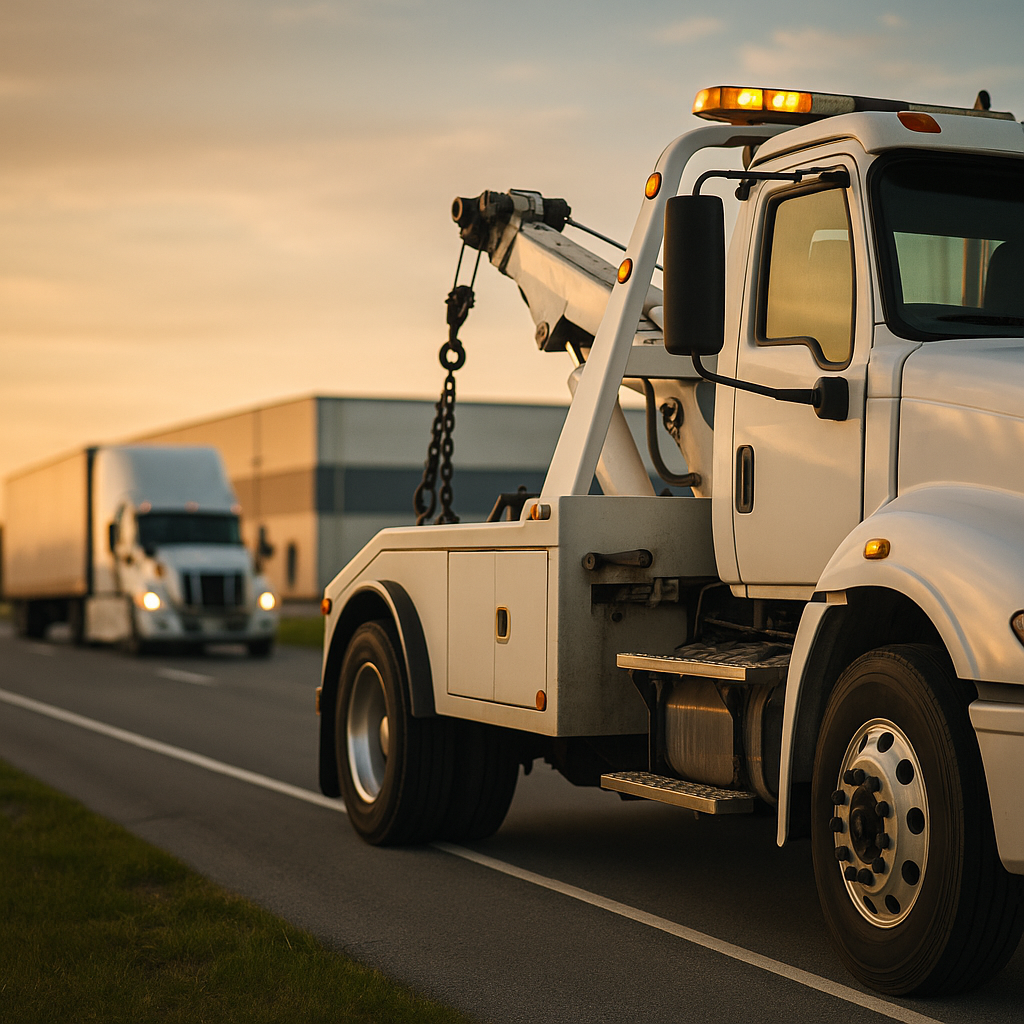
Tow truck insurance Georgia guide (2026): required coverages, non-consensual towing compliance, typical cost ranges, and ways to lower premiums. Get a quote.
Tow truck insurance Georgia isn’t won or lost on easy calls—it’s won on the one bad hookup, the one impound-yard claim, or the one contract that rejects your COI because the wording is wrong. Most Georgia tow operators need commercial auto liability, physical damage (comp/collision), and towing-specific coverage like on-hook/in-tow; if you store vehicles, you typically also need garagekeepers and garage liability.
This guide is written for working tow operators: match coverage to how you actually get paid (consensual vs non-consensual), meet rotation/property/motor club requirements, and keep premiums under control. If you want a quick reference, start with the Tow truck insurance coverage checklist and then come back for the details.
Featured Snippet Answer: Most Georgia tow operators need commercial auto liability, physical damage (comp/collision), and towing-specific coverage like on-hook/in-tow. If you store vehicles (impounds/yard), you typically also need garagekeepers and garage liability. Non-consensual towing programs often require specific limits and proof-of-insurance wording—get requirements in writing before quoting.
Key Takeaways: Essential Tow Truck Insurance Georgia
- If you tow cars, on-hook/in-tow is not optional in the real world—even when it’s not “state-required.”
- If you store cars, garagekeepers is the make-or-break coverage (vandalism, theft, hail, fire, fence claims).
- Your “required” limits are often contract-driven, not just state minimums—rotations and property contracts set the bar.
- Cheapest premium can be the most expensive decision if your COI, endorsements, or coverage triggers don’t match how you actually operate.
Table of Contents
Reading time: 9 minutes
- Georgia Tow Operations: Consensual vs. Non-Consensual
- Required Tow Truck Insurance in Georgia (Baseline)
- Tow-Specific Coverages Most Georgia Operators Need
- Georgia Compliance: Non-Consensual + Intrastate vs. Interstate
- Tow Truck Insurance Cost in Georgia (2026)
- How to Lower Tow Truck Insurance Premiums in Georgia
- Common Coverage & COI Mistakes
- Real-World Georgia Tow Scenarios
- Frequently Asked Questions
- Why Logrock (How We Think About Towing Risk)
- Conclusion & Get a Quote
Georgia Tow Truck Operations: Consensual vs Non-Consensual (Why It Matters for Insurance)
Consensual towing means the owner/driver requests the tow, while non-consensual towing includes impounds and rotations where the vehicle is moved and often stored without the owner’s consent under a lawful process.
Your insurance should match how you get paid, because underwriting (and claims) cares about your real exposure—not what’s printed on your card.
Consensual towing (roadside, motor clubs, private calls)
What it is (plain English): The owner/driver requests the tow (breakdowns, accidents, lockouts, winch-outs).
Why it matters: Roadside towing is high-frequency and chaotic: traffic, weather, tight shoulders, and “it was fine until you touched it” disputes. Many claims are hookup damage, mirror/fascia scrapes, or undercarriage issues that turn into arguments.
Who needs it: Every towing business—wheel-lift, flatbed, heavy-duty.
Non-consensual towing (impounds, private property, law enforcement rotations)
What it is: You tow/impound without the owner’s consent under a lawful process (rotations, private property impounds).
Why it matters: The moment you store vehicles, your exposure shifts hard toward yard losses (vandalism, theft, storm, fire) and “care, custody, control” disputes. That’s where operators find out too late they bought the wrong form—or the wrong limits.
Who needs it: Anyone doing impounds, property contracts, police rotations, or operating a storage yard.
Required Tow Truck Insurance in Georgia (Baseline Coverages)
Georgia tow-truck insurance “requirements” are often driven by contracts (rotations, motor clubs, property managers, auctions) rather than a single statewide checklist that fits every towing operation.
Use this as your baseline “stay in business” stack, then dial limits and endorsements to match your accounts and call types. If you need a refresher on limits and how they apply after a crash, see Commercial auto liability for trucks.
Quick coverage checklist (owner-operator view)
| Coverage | What it pays for | Who usually requires it | Common “gotcha” |
|---|---|---|---|
| Commercial Auto Liability | Injuries / property damage to others | State + contracts | Rotation contracts often require higher limits than “minimums” |
| Physical Damage (Comp/Collision) | Your tow truck repairs/total loss | Lender/lease + you | Wrong value basis or a deductible you can’t fund |
| On-Hook / In-Tow | Vehicle you’re towing | Motor clubs + smart operators | Loading/unloading may be excluded unless written |
| Garage Liability | Premises/operations claims (slip/fall, etc.) | Landlords + contracts | Often confused with garagekeepers |
| Garagekeepers | Stored vehicles in your care | Impound/yard contracts | Wrong form (legal liability vs direct primary) |
| Workers’ Comp / Employers’ Liability | Employee injuries | State rules + contracts | Misclassifying labor can trigger audits and back premiums |
1. Commercial Auto Liability (Georgia baseline + contract reality)
Commercial auto liability pays for bodily injury and property damage you cause to others, and it’s the core coverage every tow truck needs to operate legally and contractually.
Why it’s essential: One at-fault crash can sink a small towing operation with medical bills, attorney fees, and a judgment that follows your business.
Pro tip: Don’t set limits based on “what’s cheapest.” Set them based on what your contracts require (motor clubs, municipalities, property management, auctions, lenders). The contract is what gets you paid.
2. Physical Damage (Comprehensive + Collision) for the Tow Truck
Physical damage coverage (comprehensive and collision) pays to repair or total your tow truck after a covered loss like a crash, theft, vandalism, hail, or fire.
Why it’s essential: If your truck is down, you’re not earning—and downtime still has truck payments, yard rent, and payroll.
If you want the clean explanation on deductibles and valuation, see Physical damage (comp/collision) for commercial trucks.
Pro tip: Deductibles are a lever—but don’t pick a deductible you can’t stroke today. In towing, claims happen at the worst possible time (often right after a slow month).
Tow-Specific Coverages Most Georgia Operators Need (Even When Not “Required”)
Towing creates daily “care, custody, and control” exposure because you physically handle other people’s vehicles during loading, transport, unloading, and sometimes storage.
This is where towing is different from generic “commercial truck insurance.” The policy has to match what happens in the field.
1. On-Hook / In-Tow Coverage (damage to vehicles you’re towing)
On-hook/in-tow coverage pays for damage to a customer’s vehicle while it’s attached to your unit and being towed or transported, subject to the policy language and limits.
Why it’s essential: One damaged vehicle—especially newer SUVs, luxury cars, or EVs—can be a five-figure payout. Without on-hook, you’re paying out of the business account.
Who needs it: Every tow operator touching customer vehicles—wheel-lift, flatbed, heavy-duty.
- Documentation that saves claims: Photograph the vehicle before hookup and after drop (time-stamped).
- Training that reduces losses: Use a standard hookup checklist (strap points, dolly use, wheel-lift arms, “neutral/parking brake” verification when applicable).
For a deeper breakdown of what’s usually included (and what isn’t), see On-hook / in-tow coverage explained.
2. Garage Liability (your yard/shop operations)
Garage liability covers bodily injury and property damage arising from your premises and operations, like a slip-and-fall, a customer trip hazard, or damage tied to shop operations.
Why it’s essential: You can run a clean yard and still get sued. Garage liability keeps a premises claim from turning into a business-ending event.
3. Garagekeepers (Legal Liability) for stored/impounded vehicles
Garagekeepers coverage addresses damage to customer vehicles while they’re stored at your lot, yard, or shop in your care, custody, and control.
Why it’s essential: If you do impounds, this is often the biggest uncovered loss category: vandalism, theft, hail, falling objects, fence/chain damage claims, and “mysterious disappearance” disputes.
If you want the plain-English forms discussion (legal liability vs direct primary), see Garagekeepers legal liability explained.
Pro tip: Ask whether your garagekeepers is written legal liability vs direct primary and what per-vehicle/per-location limits apply. Your yard is not a “maybe” exposure—it’s daily.
4. Workers’ Comp / Employers’ Liability (or alternatives)
Workers’ compensation pays for employee injuries arising out of and in the course of work, and employers’ liability can respond to certain lawsuits tied to workplace injuries.
Why it’s essential: Towing is physically risky—roadside hookups, winch-outs, traffic exposure, and heavy equipment. An injury claim can crush cash flow fast.
Pro tip: If you use 1099 labor, don’t assume you avoided exposure; misclassification can trigger audits, back premiums, and legal problems.
When this matters most: Adding rotation work, opening a yard, hiring drivers, or moving into heavier calls can make an “active” policy functionally wrong for your contracts.
Georgia Legal & Compliance Requirements (Non-Consensual + Intrastate vs Interstate)
Non-consensual towing insurance requirements in Georgia are commonly set by local ordinances and rotation/property contracts, and those documents often specify limits, forms, and COI wording that carriers must match.
This section is about avoiding the most expensive towing mistake: being “insured,” but not accepted by the people who pay you.
1. Non-consensual towing requirements (Georgia local programs)
What it is: Non-consensual towing programs and local jurisdictions may set minimum insurance limits and proof requirements as part of rotation approval or contract compliance.
Why it’s essential: If your COI/endorsements don’t match the program requirements, you can lose rotation placement or get removed from a property list.
What to ask for (get it in writing):
- Required coverages + limits: liability, on-hook, garagekeepers, garage liability, etc.
- COI certificate holder wording: exact entity name and address
- Additional insured requirements: and which policy needs the endorsement
- Cancellation notice requirements: number of days and delivery method
- Any required endorsements: for impound/storage operations
2. Intrastate vs. interstate: when federal rules and filings may apply
FMCSA’s financial responsibility rules set minimum public-liability requirements for many for-hire interstate motor carriers, including a $750,000 minimum for most non-hazardous property carriers under 49 CFR §387.9.
Not every tow operator needs filings, but if you operate interstate under authority (or your business model triggers FMCSA requirements), missing filings can delay authority activation or cause compliance issues. If you’re unsure what filings mean in plain English, see FMCSA insurance filings (MCS-90 / BMC-91X).
3. COI paperwork: the fastest way to lose a contract
COI (Certificate of Insurance) errors are a common reason rotations and property managers reject tow operators, and fixes often require endorsements—not “notes” on the certificate.
Common COI mistakes that get you rejected:
- Wrong insured name (LLC vs DBA mismatch)
- Wrong garaging address
- Limits shown incorrectly (or missing required coverages)
- Certificate holder listed, but no endorsement for additional insured when required
For the exact terminology (certificate holder vs additional insured) and why endorsements matter, see COI requirements (certificate holder / additional insured).
Reality check: Rotation coordinators and property managers don’t care about explanations—they care about correct documents.
Tow Truck Insurance Cost in Georgia (2026): Typical Ranges + What Drives Price
Tow truck insurance pricing in Georgia commonly varies by drivers (MVRs), territory/ZIP, call type, limits, deductibles, and loss history, so the goal is a realistic budget range—not a single “average” number.
Use the ranges below to sanity-check your quotes, then focus on the controllable factors that keep you eligible and stable at renewal.
1. Typical cost ranges (illustrative) by tow setup
These are illustrative ranges many towing businesses see when quoting; your exact premium depends on limits, drivers, loss history, garaging ZIP, and call type.
| Tow operation (typical) | Typical monthly range (per truck) | Why it swings |
|---|---|---|
| Light-duty wheel-lift (local) | $800 – $2,500+ | Driver MVRs, territory, on-hook limits |
| Flatbed (local/regional) | $1,000 – $3,200+ | Higher vehicle values, claim severity |
| Heavy-duty towing | $2,000 – $6,000+ | Higher severity, experience requirements |
| Impound yard exposure (adds) | +$300 – $2,000+ | Garagekeepers limits, yard controls |
New ventures usually pay more because fewer carriers want first-time towing risks, and underwriting has less proof you run tight. Clean, continuous prior coverage helps.
2. Top rating factors for Georgia tow operators
Underwriters price towing based on risk signals that typically include driver behavior, territory, equipment, and loss history.
- Driver MVRs: speeding, reckless, at-fault accidents
- Years towing experience: not just CDL years
- Metro vs rural territory: frequency + severity trends
- Call type: motor club volume, police rotation, private property impounds
- Limits + deductibles: especially on-hook and physical damage
- Truck value and equipment: flatbed hydraulics, wheel-lift, heavy wrecker
- Loss history: including “small” on-hook claims
How to Lower Tow Truck Insurance Premiums in Georgia (Without Creating Coverage Gaps)
Lowering tow truck insurance premiums usually comes from reducing claim frequency/severity and proving controls to underwriters, not from stripping essential coverage like on-hook or garagekeepers.
- Driver screening + ongoing MVR monitoring: Don’t wait for renewal to discover your rate went up; many fleets check quarterly.
- Hookup SOP + training (document it): The best shops have a checklist and training log, and documentation helps during claims.
- Yard security upgrades (especially for impounds): Cameras, lighting, fencing, and gate logs can affect eligibility and garagekeepers pricing.
- Photo process for every tow: Before/after photos reduce “you did it” claims and can shorten claim cycles.
- Deductible strategy (be honest about cash flow): A higher deductible can lower premium, but only if you can actually fund it.
- Renew early (30–60 days): Last-minute renewals usually mean fewer options and worse pricing.
If you want a practical savings playbook built around operations (not wishful thinking), see How to lower commercial truck insurance premiums.
Quote rule: The only fair comparison is identical limits, identical deductibles, and identical coverages (especially on-hook and garagekeepers).
Common Compliance & Coverage Mistakes Georgia Tow Operators Make
Most expensive towing insurance mistakes come from coverage misunderstandings and paperwork errors that cause rejected contracts, denied claims, or out-of-pocket losses.
- Confusing on-hook vs. garagekeepers: On-hook is “in tow.” Garagekeepers is “in storage.” Many operators need both.
- Buying low liability limits while towing high-value vehicles: Your limits should match real severity exposure, not the cheapest invoice.
- COI errors and missing endorsements: “Additional insured” usually requires an endorsement, not just a certificate note.
- Not updating the policy when the business changes: Add a yard, add drivers, start rotations, start heavy-duty—tell your agent immediately.
- Letting coverage lapse: Lapses are premium killers and can reduce market availability.
Real-World Georgia Tow Scenarios (Match the Coverage to the Loss)
Claim outcomes in towing often depend on the exact coverage trigger (in-tow vs in-storage vs premises), the policy language, and whether documentation supports your timeline.
Scenario A: Vehicle slides off the flatbed during unloading
- Likely coverage: On-hook/in-tow (depending on policy language and whether unloading is included)
- Your cost: Deductible + possible rate impact
- Best defense: Photos, unloading SOP, documentation of vehicle condition
Scenario B: Impound yard vandalism overnight
- Likely coverage: Garagekeepers
- Underwriting reality: Yard security strongly influences pricing/eligibility
- Best defense: Cameras, lighting, controlled access, incident logs
Scenario C: Employee injured on roadside hookup
- Likely coverage: Workers’ comp / employers’ liability
- Best defense: Training, PPE, cones/triangles, traffic control procedure
Frequently Asked Questions
Tow trucks in Georgia typically need commercial auto liability, physical damage (comprehensive and collision), and towing-specific coverage like on-hook/in-tow to cover customer vehicles while they’re being towed.
If you store vehicles (impounds, holds, or yard storage), you usually also need garagekeepers for stored vehicles and garage liability for premises/operations. For non-consensual towing, your actual “required” stack is often contract-driven, so get the coverage list, limits, and COI wording in writing before you bind coverage.
Tow truck insurance cost in Georgia commonly ranges from about $800 to $3,200+ per month per truck for light/medium towing, and $2,000 to $6,000+ per month for heavy-duty, depending on drivers, territory, limits, and loss history.
Pricing swings the most when you add higher liability limits, higher on-hook limits, physical damage on newer equipment, or garagekeepers for storage yards. To compare fairly, quote apples-to-apples with matching limits, deductibles, and towing endorsements.
Non-consensual towing insurance requirements in Georgia are typically set by local ordinances and rotation/private-property contracts, not a single statewide limit that applies to every tow operator.
The contract usually specifies the coverages (liability, on-hook, garagekeepers, garage liability), the limits, and the exact COI certificate holder and additional insured wording required for approval. The practical rule is simple: if your COI and endorsements don’t match the written requirements, you can be rejected or removed from a rotation list even if your policy is paid and active.
Garagekeepers coverage may not be universally required for every tow operator statewide, but it is commonly required by contract for impound yards, non-consensual towing programs, and any operation that stores customer vehicles.
Even when it isn’t contract-required, garagekeepers is one of the most important protections if you have a lot, yard, or shop because it addresses stored-vehicle losses like vandalism, theft, hail, and fire. Ask whether your form is legal liability or direct primary, and confirm per-vehicle and per-location limits so your worst-case yard loss is actually insurable.
Required liability limits for a Georgia tow truck depend on whether you operate intrastate only, whether you’re tied to non-consensual towing programs with contract minimums, and whether you operate interstate in a way that triggers federal rules.
For many for-hire interstate motor carriers, FMCSA sets a $750,000 minimum public-liability requirement under 49 CFR §387.9, but towing-specific contracts can still require higher limits and additional coverages. The fastest way to get the right limit is to provide your written rotation/property/motor club requirements and have your agent match the policy and endorsements exactly.
On-hook/in-tow covers damage to a vehicle while it’s attached to your tow truck and being transported (and sometimes during loading/unloading, depending on policy wording), while garagekeepers covers vehicles while they’re stored at your lot, yard, or shop.
In practice, if you do both towing and storage, you usually need both coverages because the loss triggers are different: “in tow” vs “in storage.” Many claim disputes come from assuming one covers the other, so confirm your policy language, limits, and deductibles for each exposure.
Why Logrock (How We Think About Towing Risk)
Most tow truck insurance quotes fail because they’re priced like generic commercial auto and then patched with add-ons that don’t match towing operations or contract requirements.
We treat towing like its own risk class:
- Contract-first insurance review: rotation requirements, motor club requirements, property contracts
- Exposure mapping: tow vs storage vs shop/yard operations
- COI/endorsement accuracy: so you don’t lose work over paperwork
If you’re building from one truck to a small fleet, your insurance has to scale cleanly—without blowing up cash flow every renewal.
Conclusion: Get the Right Tow Truck Insurance in Georgia
Tow truck insurance in Georgia isn’t “buy a policy and go.” It’s a business system: the right tow-and-storage coverages (on-hook and garagekeepers are the big ones), the right limits for your contracts, and the right paperwork so you stay on rotation and keep the phone ringing.
Key Takeaways:
- Match coverage to operations: tow + storage + premises
- Treat limits as contract requirements, not just “minimums”
- Fix COI/endorsements before they cost you accounts
- Control premiums with training, documentation, and yard security
Tip: Bring your rotation/property/motor club requirements when you request quotes so your policy, limits, and endorsements match what your accounts actually demand.



