
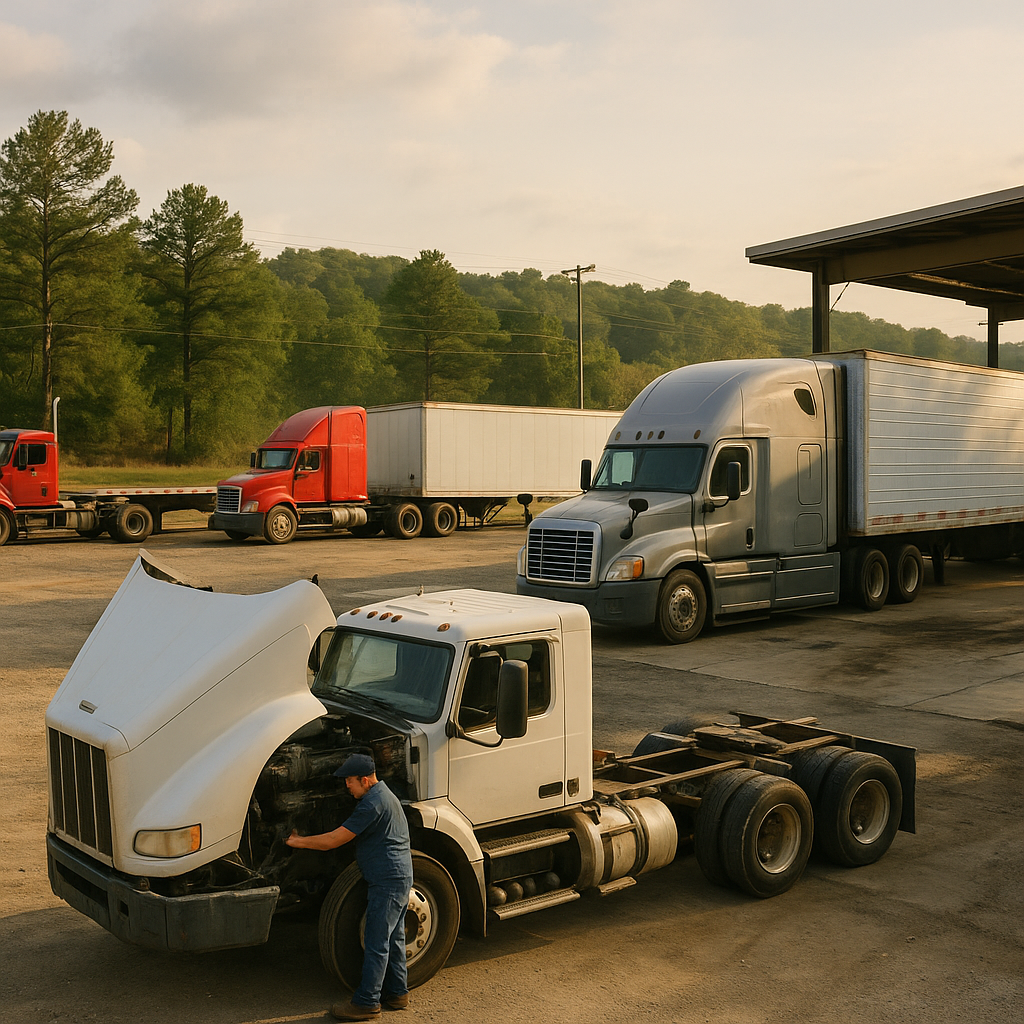

If you’re shopping for fleet truck insurance south Carolina, the first thing to clear up is simple: “fleet,” “commercial auto,” and “commercial truck insurance” don’t always mean the same thing. For owner-operators and small fleets, the right setup depends on what you haul, how many units you run, where you operate, and whether state rules or FMCSA rules control your authority.
This guide is built for South Carolina operators running one to five trucks. It breaks down what fleet truck insurance covers, what qualifies as a fleet, how South Carolina rules differ from federal requirements, what affects cost, and how to compare quotes without missing something important.
What South Carolina Fleet Truck Insurance Covers#
South Carolina fleet truck insurance usually means insuring multiple business vehicles under one policy structure, but the actual coverage still has to fit the trucking operation. For a one-to-five-truck business, the policy package is shaped by carrier type, vehicle weight, cargo, and whether you run interstate or intrastate.
Fleet truck insurance is a policy setup that groups business vehicles under one insurance program instead of treating each unit like a separate personal auto policy. That matters because the word “fleet” describes how coverage is organized, not a single standard product every trucking business buys.
Fleet insurance vs. commercial auto vs. commercial truck insurance#
Commercial auto insurance is the broad category for business vehicles. Commercial truck insurance is the trucking-specific version, built around heavier vehicles, freight exposure, authority, and federal or state filings.
Fleet insurance can sit inside that structure when more than one vehicle is insured together. So a two-truck South Carolina operation might have a fleet-style commercial truck policy, while a single-truck owner-operator might still need the same core trucking coverages without a formal fleet rating structure.
Common coverages for 1-5 truck operations#
Auto liability pays for bodily injury and property damage you cause to others in a covered crash. In trucking, this is the big required coverage tied to state rules, federal rules, or both.
Other common coverages include:
- Motor Truck Cargo, which covers the freight you’re hauling, subject to exclusions and conditions
- Physical Damage, which covers damage to your truck through collision and comprehensive causes; collision should not be written by itself
- General Liability, which can matter for for-hire operations outside actual driving losses
- Non-Trucking Liability or Bobtail, which applies to certain non-business-use situations, not paid hauling
- Trailer Interchange, which applies when you use a trailer under a signed interchange agreement
- Non-Owned Trailer Physical Damage, which often fits non-intermodal operators using trailers they don’t own without that interchange setup
- Reefer Breakdown, for temperature-control equipment exposure when eligible
When a policy needs to match hauling type and authority#
A quote only works if it matches the job. A South Carolina dump truck staying intrastate, an interstate general freight carrier, and a refrigerated operator all present different insurance needs, even if each has only two trucks on the road.
What Qualifies as a Fleet for Insurance Purposes#
What qualifies as a fleet is mostly an underwriting question, not a universal legal definition. In practice, many insurers use “fleet” to mean multiple vehicles under one policy, but eligibility and pricing still depend on the operation, drivers, garaging, and loss profile.
That trips up a lot of small operators because “fleet” sounds like a fixed category with automatic discounts. It isn’t. One carrier may treat two or three trucks as a fleet-style account, while another may reserve true fleet handling for larger schedules or different risk profiles.
How insurers usually think about fleet size#
Underwriters usually look at how many power units or covered vehicles are being insured together. They may also care about whether the units are all the same type, whether they’re garaged in one place, and whether the business has stable drivers and consistent routes.
For a South Carolina micro-fleet, that means the same truck count can price very differently from one operation to another. A clean two-truck fleet hauling dry van general freight won’t look the same on paper as a mixed two-unit operation with specialty cargo and wider radius.
Can a single-truck owner-operator buy fleet-style coverage?#
A single-truck owner-operator usually won’t qualify as a fleet in the literal sense, but may still want the same trucking-specific coverage structure. That’s the practical point: don’t chase the word “fleet” if what you really need is the right commercial truck insurance package.
Why 2-5 truck micro-fleets are a special case#
Small fleets often sit in an awkward middle ground. They’re bigger than a true solo owner-operator account, but not large enough to fit every carrier’s fleet appetite or rating approach.
That can create quote spread. One insurer may see efficiency in writing all units together, while another may not. A lower “fleet” quote also doesn’t help if it strips out cargo, changes deductibles, or misses the filings your authority needs.

South Carolina Rules vs. FMCSA Requirements#
South Carolina rules do not automatically satisfy federal trucking requirements. If your operation falls under FMCSA financial responsibility rules, federal minimums and filings can control even if the state’s basic vehicle insurance minimums are lower.
This is where a lot of bad advice starts. Drivers hear a state minimum, then assume that’s enough for a truck running for-hire freight. It usually isn’t that simple.
State minimums are not the whole story#
The South Carolina Department of Insurance handles state-level insurance oversight and consumer guidance, but trucking buyers also have to think beyond ordinary auto insurance rules. Personal auto minimums and standard business auto assumptions are not a reliable shortcut for a for-hire trucking operation.
BIPD means bodily injury and property damage liability. In trucking, that’s the public liability coverage tied to financial responsibility rules.
MCS-90 is a federal endorsement used to show proof of required public liability financial responsibility for certain motor carriers. It is not a substitute for understanding what your underlying policy actually covers.
When federal rules apply#
For interstate for-hire carriers, FMCSA rules can set the minimum required liability by carrier type, vehicle weight, and commodity. Under 49 CFR Part 387, for-hire interstate carriers hauling general freight in vehicles over 10,001 pounds must carry at least $750,000 in public liability. Under 10,000 pounds, the minimum is $300,000. Auto haulers need $1,000,000, and certain hazmat operations require $5,000,000.
FMCSA is the Federal Motor Carrier Safety Administration, the federal agency that regulates interstate commercial motor carriers. USDOT number means the identification number used to track a carrier’s safety and operating status, while an MC number is motor carrier authority for certain for-hire interstate operations.
Intrastate vs. interstate operation differences#
Intrastate means you operate only within one state. Interstate means the trip crosses state lines or is part of interstate commerce, even if a specific leg stays inside South Carolina.
That distinction matters because your filing needs, authority, and minimum liability rules can change. Federal rules may apply because of the operation itself, not just because a driver physically crossed the state line that day. You can also verify a carrier’s authority and registration status through SAFER, which is often useful when checking quote prep against actual operating status.
The biggest mistake is assuming “South Carolina minimum” equals “legal for my trucking business.” It may not.
If you’re not sure whether your operation needs state-only coverage, federal filings, or both,
Is South Carolina a No-Fault State?#
No. South Carolina is not a no-fault state, and that usually isn’t the main issue driving a trucking insurance decision anyway. For most owner-operators and small fleets, the bigger concerns are liability structure, cargo exposure, physical damage, and whether the quote includes the right filings.
No-fault means a system where each driver’s own policy pays certain losses regardless of who caused the crash. South Carolina follows a fault-based system instead.
What no-fault means in plain English#
For regular passenger cars, people ask this because it changes how injury claims may be handled. That’s a fair question, but it doesn’t tell you much about whether your trucking quote is built correctly.
Why it does not change most trucking policy decisions#
A truck policy still has to match hauling activity, authority, vehicle type, and required limits. Whether South Carolina is fault or no-fault doesn’t replace the need to review liability, cargo, trailer, and physical damage details.
What matters more for trucking claims#
When reviewing a quote, focus on what freight is covered, which units are scheduled, which filings are included, and whether the policy matches actual business use. Those details matter a lot more than the no-fault label.
How Fleet Truck Insurance Cost Is Calculated#
South Carolina fleet truck insurance cost is based on risk details, not just truck count. Underwriters look at the vehicles, drivers, cargo, routes, filings, loss history, and coverage choices, so two fleets with the same number of trucks can price very differently.
That’s why broad online price talk usually causes more confusion than help. A quote that looks cheaper at first glance may simply cover less.
What drives pricing for South Carolina operations#
The big cost inputs usually include:
- Vehicle type and insured value
- Operating radius and routes
- Interstate versus intrastate use
- Cargo type
- Driver experience and motor vehicle records
- Authority type and filing needs
- Prior claims or losses
- Requested liability limits
- Physical damage deductibles
- Garaging location and security
A reefer operation, for example, can carry different exposure than dry van freight. A truck financed at a higher stated value can also push physical damage cost differently than an older paid-off unit.
Why one quote can look cheaper than another#
This is where many buyers get burned. One quote may look lower because it uses a higher deductible, excludes or reduces cargo, leaves out trailer-related coverage, narrows business-use assumptions, or doesn’t include the same filing setup.
That doesn’t make it wrong by itself. But it does make side-by-side comparison useless unless you’re comparing the same scope.
Typical cost inputs for owner-operators and small fleets#
When people ask, “How much does a $1,000,000 liability insurance policy cost?” the honest answer is that there is no universal number. The premium depends on the operation type, driving record, commodity, unit details, operating territory, and underwriting appetite at the time of quote.
For South Carolina micro-fleets, liability is only one piece anyway. Total insurance spend may also include cargo, physical damage, general liability, non-trucking liability, trailer coverage, and reefer breakdown where needed. Your actual premium depends on your operation, cargo, radius, driving history, and other factors.
The cheapest quote isn’t automatically the best fit. In trucking, a cheap mistake often shows up after a claim or during a filing issue.
How to Get a South Carolina Fleet Truck Insurance Quote#
A good South Carolina fleet truck insurance quote starts with accurate operating details. The faster you can hand over clean information, the faster an underwriter can price the risk without guessing wrong about your operation.
That matters because rushed quotes often create avoidable corrections later. Fast is useful only when the quote actually matches what the trucks are doing.
Information to gather before you request quotes#
Have these details ready:
- USDOT and MC information, if applicable
- VINs and unit details
- Garaging address
- Driver list and MVR history
- Current limits and deductibles
- Cargo description
- Operating radius and lanes
- Years in business and prior coverage
- Loss runs if you have them
You can confirm carrier registration basics and status through SAFER before finalizing details.
What underwriters need to see#
Underwriters want a clear picture of exposure. If you say “general freight” but actually handle higher-risk commodities or wider routes than stated, the quote can come back wrong or require rework.
How to compare quotes without missing coverage gaps#
Compare the same liability limit, cargo limit, deductibles, scheduled units, trailer setup, and filings across every quote. If one option is much lower, ask what changed before assuming it is the better deal.
Ways to Lower Cost Without Underinsuring#
You can lower insurance cost by improving the risk, tightening the information you submit, and making smart coverage choices around deductibles and operations. What usually backfires is cutting core protection just to force the premium down.
That distinction matters for small fleets. Saving on paper doesn’t help if the policy stops fitting the trucks.
Coverage tweaks that may change price#
Higher physical damage deductibles can change cost if the business can absorb more out-of-pocket repair expense. Reviewing stated values on older equipment can also matter, especially when a unit’s insured value is no longer realistic.
Operational habits that underwriters like#
Clean MVRs help. So do stable drivers, better garaging, theft deterrence, clear maintenance habits, telematics, and disciplined claims reporting.
Underwriters also like consistency. If your routes, cargo, and driver roster constantly change without documentation, the account can become harder to price well.
When to raise deductibles versus trim coverage#
If you need to adjust a quote, start by reviewing deductibles and optional pieces around the edges. Don’t casually reduce liability, cargo, or physical damage below what your operation actually needs just to chase a lower number.
What to Check Before You Bind Coverage#
Before you bind coverage, make sure the quote matches the real operation, includes the right filings, and covers the specific trailer and cargo setup you use. Price matters, but scope matters more.
A last review can prevent the most common surprises. This is where a lot of “cheap” trucking insurance stops looking cheap.
Coverage scope by hauling setup#
Check whether your cargo has exclusions. Confirm whether you need trailer interchange or non-owned trailer physical damage, because those are not the same thing.
State and federal filing needs#
Make sure the quote lines up with your authority and operating footprint. If you’re interstate for-hire, the policy may need federal financial responsibility support beyond what an ordinary business auto policy would show.
Questions to ask the broker before you buy#
Ask what changed between quotes. Ask what isn’t covered. Ask whether the policy matches your actual hauling type, radius, and filing needs.
South Carolina Fleet Truck Insurance FAQ#
How much does a $1,000,000 liability insurance policy cost?#
There isn’t one fixed price for a $1,000,000 trucking liability policy. Cost depends on the type of operation, whether you run interstate or intrastate, the cargo you haul, your drivers’ records, your radius, your loss history, and the units being insured. A quote can also look lower because deductibles, filings, or other coverages differ. The smart way to compare is to line up the same limits, same coverage scope, and same endorsements across each quote before judging price.
Is fleet insurance cheaper than commercial insurance?#
Sometimes, but not automatically. “Fleet” usually refers to how multiple vehicles are insured together, while commercial insurance is the broader category. A multi-unit policy can be more efficient for some operations, especially when units, drivers, and routes are consistent. But a fleet setup is not always cheaper if the operation has higher-risk cargo, poor loss history, mixed vehicle types, or filing complexity. The real question is whether the policy structure fits the business and keeps coverage consistent across all trucks.
What qualifies for fleet insurance?#
Usually, insurers look for multiple business vehicles insured under one policy, but there is no single universal threshold that applies everywhere. Qualification is underwriting-driven. Some carriers may treat a small two- or three-truck operation as a fleet-style account, while others may use different breakpoints or rating methods. They also look at how the trucks are used, where they’re garaged, who drives them, and what they haul. For one-to-five-truck operators, the better question is often which policy structure fits the operation best.
Is SC a no-fault state?#
No. South Carolina is not a no-fault state. It uses a fault-based system, which means liability usually follows who caused the accident. For trucking buyers, though, that answer is only a small piece of the puzzle. The bigger issues are whether your liability limits meet the rules that apply to your operation, whether cargo and physical damage are set up correctly, and whether your quote includes the right filings for intrastate or interstate use. That’s what to verify before you bind coverage.





