
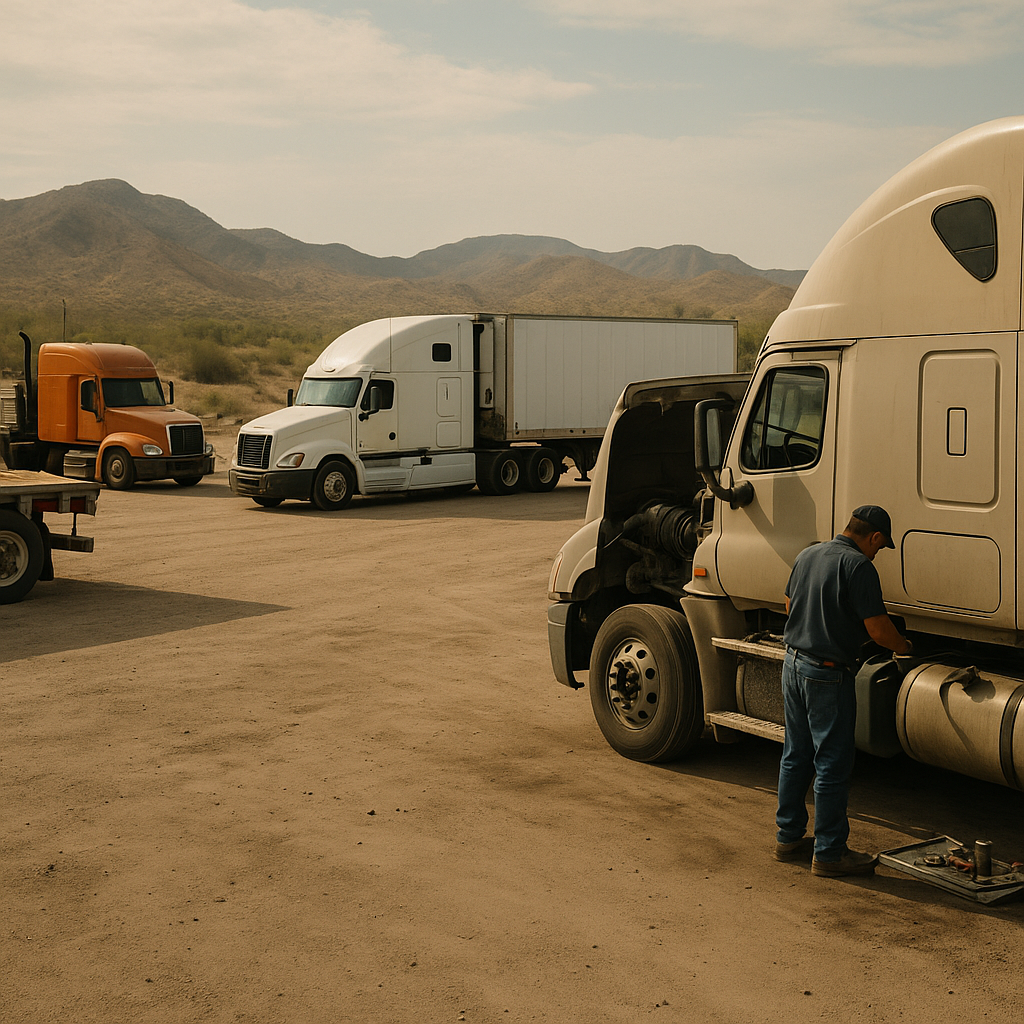

Arizona motor truck cargo insurance pays for covered loss or damage to freight you’re hauling for someone else. If you run under your own authority or haul under someone else’s contract, this is the coverage that answers the cargo question your auto liability policy does not.
A lot of Arizona owner-operators get tripped up here. They hear “cargo insurance,” assume every cargo policy is the same, or think state registration rules tell them what freight coverage they need. They don’t. Your operation, the freight, and the contract usually matter more.
What Motor Truck Cargo Insurance Covers#
Arizona motor truck cargo insurance covers the freight in your care while you’re hauling it for hire, subject to the policy’s limit, terms, and exclusions. It protects the cargo owner’s financial interest when a covered loss damages, destroys, or steals the load, but it does not insure your truck, trailer, or personal gear in the cab.
Motor truck cargo insurance is trucking coverage for freight the insured is hauling for others.
The basic promise of cargo coverage#
If you’re pulling a dry van loaded with boxed retail goods and a hard stop sends pallets forward, this is the policy that may respond to the freight damage. If a thief cuts a seal and steals part of the load from a yard, this is the policy the broker or shipper will ask about. If you’re hauling temperature-sensitive freight and the load spoils after a covered reefer-related event, cargo coverage may be part of the recovery path.
The key point is simple: cargo coverage protects the load, not the power unit. If your hood, bumper, or trailer doors get damaged in the same event, those losses usually fall under different policies, such as physical damage. If your backpack, tools, or personal electronics are stolen from the cab, cargo insurance generally doesn’t pay for that either.
Common loss scenarios: theft, collision, fire, and spoilage#
A few common examples help make this real:
- A collision crushes packaged freight in the trailer.
- A parked trailer gets broken into and several pallets disappear.
- A fire damages the load before delivery.
- A reefer load arrives warm and the receiver rejects it.
Reefer means refrigerated cargo hauled in a temperature-controlled trailer. Not every cargo policy handles temperature-related loss the same way, so refrigerated operators need to read that part closely.
The NAIC is a good plain-language source for general insurance terms like limits, exclusions, and deductibles if you want the basics behind how policies are built.
What cargo insurance does not pay for#
Arizona motor truck cargo insurance does not pay every freight loss just because the load was rejected or damaged. Common exclusions often include poor packaging, dishonest acts, unattended vehicle conditions, delay, and damage that already existed before you took the load, depending on the policy wording.
That matters in the real world. If the shipper loaded weak pallets that collapse under normal transit conditions, the insurer may question whether the loss came from transit or packaging. If a driver leaves a load in a place or manner that violates a security condition, theft coverage can get harder. If you can’t prove when the damage happened, the claim may turn into an argument over custody and condition.
If you’re not sure whether your freight, routes, or contracts fit the cargo coverage you’re being shown,

Who Needs Cargo Coverage in Trucking#
For-hire trucking operations hauling someone else’s freight typically need cargo coverage because they can be held responsible for a covered loss to that load. Whether you’re a one-truck owner-operator or a small fleet, the real question is not CDL size or local versus long-haul by itself; it’s whether you’re transporting freight for others and what your agreement says you’re responsible for.
Owner-operators leased to a carrier#
A leased-on owner-operator may still need to understand exactly whose cargo policy applies and when. Some carriers provide cargo coverage under their program, some push responsibility back by contract, and some require proof that your unit and haul type fit their insurance rules.
Don’t assume “the carrier has insurance” ends the conversation. Read the lease, dispatch packet, and any broker instructions. If a loss happens, finger-pointing starts fast when responsibility isn’t clear.
Small fleets hauling freight for others#
A two-truck or five-truck fleet hauling another party’s freight usually has the same basic cargo issue as a single-truck operator: if the freight is damaged, stolen, or spoiled, who pays? A non-CDL setup doesn’t automatically avoid the need for commercial cargo coverage if it’s still moving value-bearing freight for hire.
Owner-operator means an independent trucker who owns or leases the truck they run. Small fleet usually means a trucking business with a handful of trucks, often one to five.
If you’re checking operating status or authority details, the SAFER system can help you verify carrier registration information tied to a U.S. DOT number.
When contracts require higher limits#
A bill of lading is the shipping document that identifies the freight, the shipper, the carrier, and the delivery terms. Brokers, shippers, and motor carriers often use contracts plus the bill of lading to set expectations around cargo responsibility.
That means your required limit may come from the load, not from a simple rule of thumb. One Arizona operator hauling low-value packaged goods may need a different limit than another hauling electronics, produce, or other theft-sensitive freight. Contract language often matters more than assumptions.
Arizona-Specific Context: What Matters and What Does Not#
Arizona motor truck cargo insurance is usually driven by your trucking operation, freight, and contracts more than by a single Arizona-wide cargo rule. State registration, business filing, and DMV issues matter for running the business, but they are not the same thing as proving you have the right cargo protection for a for-hire trucking load.
Why Arizona rules are often confused with trucking insurance requirements#
This is where a lot of drivers lose time. They handle Arizona plates, business setup, or local licensing and assume those steps answer the cargo insurance question. They don’t.
Cargo coverage is separate from basic state business compliance. It’s also separate from FMCSA public liability requirements. Under 49 CFR Part 387, FMCSA financial responsibility rules deal with public liability for motor carriers, not a universal cargo requirement for every trucking setup.
Interstate vs. intrastate hauling considerations#
FMCSA is the Federal Motor Carrier Safety Administration, the federal agency that regulates interstate commercial motor carriers. If you haul across state lines, your federal operating setup matters. If you stay inside Arizona, contract demands can still require cargo evidence even without the same interstate framework.
A local Arizona operator hauling building materials inside the state may still be asked for cargo coverage by a broker or customer. Another operator crossing into New Mexico or California under an MC number will usually see even more contract-driven insurance scrutiny.
How carrier and contract rules can matter more than generic state minimums#
A U.S. DOT number identifies a carrier in federal safety and registration systems. An MC number is motor carrier operating authority used for certain for-hire interstate operations.
You can verify carrier status through FMCSA and check public registration details on SAFER. Those tools help you confirm operating context, but they still won’t tell you what cargo limit your shipper contract requires. That’s why Arizona trucking insurance questions need to be scoped around the actual haul, not generic state minimum talk.
Two Types of Cargo Insurance and How They Differ#
The two cargo terms most people mix up are motor truck cargo insurance and general cargo insurance. For a trucking business, the practical rule is simple: if you’re hauling freight as a motor carrier, you should not assume a policy labeled only “cargo” fits your operation unless it’s built for trucking exposures.
Motor truck cargo insurance#
Motor truck cargo insurance is the trucking-specific form. It follows the freight while a motor carrier hauls it for others and is built around freight transit exposures like collision damage, theft, and certain handling-related losses during the trip.
This is the version owner-operators and small fleets usually mean when they ask for cargo coverage.
General cargo insurance#
General cargo insurance is a broader label that can refer to non-trucking cargo exposures, depending on the policy and the business buying it. It may fit importers, warehouses, logistics operations, or other businesses with cargo interests that are not the same as a for-hire trucking carrier’s exposure.
That difference matters because policy language, covered property, and claim triggers may not line up with what a trucker actually does.
How to choose the right fit#
If your business is transporting freight as a trucking carrier, motor truck cargo insurance is usually the starting point. If your business has some other cargo exposure outside trucking transit, a different cargo form may be the better fit.
| Policy type | Best fit | Main exposure | Common buyer |
|---|---|---|---|
| Motor truck cargo insurance | For-hire trucking | Freight loss in transit | Owner-operator |
| Motor truck cargo insurance | Small trucking fleet | Damage, theft, spoilage issues | Small fleet |
| General cargo insurance | Non-trucking cargo business | Stored or otherwise handled goods | Shipper or logistics firm |
| General cargo insurance | Mixed cargo exposures | Broader cargo interest | Non-carrier business |
A trucking operation shouldn’t buy based on the word “cargo” alone. It needs the right cargo form for the way the freight actually moves.
How Much Motor Truck Cargo Insurance Costs#
Arizona motor truck cargo insurance cost depends on what you haul, how much value is on the trailer, how far you run, what limit you need, and how your operation looks to underwriters. There is no honest flat price because a dry van hauling boxed general freight is a very different risk from a reefer hauling produce or a truck moving theft-prone commodities.
Main cost drivers#
The biggest drivers usually include:
- freight type
- cargo limit
- operating radius
- loss history
- security practices
- authority setup
- vehicle and trailer type
A dry van owner-operator hauling ordinary general freight around Arizona and nearby states may be viewed differently than a reefer operator hauling temperature-sensitive loads on tighter schedules. High-theft freight can change the conversation fast. Prior cargo claims can too.
Why limits, freight type, and claims history matter#
A lot of drivers ask about a $100,000 cargo limit like the limit alone determines price. It doesn’t. The limit matters, but underwriters also want to know what sits under that limit.
For example, two Arizona trucks can both ask for $100,000 cargo insurance and get very different quotes. One may haul low-to-moderate value palletized dry goods on repeat lanes with clean loss history. The other may haul high-value electronics with irregular overnight parking and a prior theft claim. Same limit, different risk.
Example scenarios for small fleets and owner-operators#
A one-truck operation leased onto a carrier may face different cargo pricing than a small fleet running under its own authority. Underwriters may care about who controls dispatch, how claims are handled, and whether the insured regularly takes contract freight with specific insurance requirements.
A reefer account can also price differently because spoilage disputes are more document-heavy. Temperature logs, maintenance records, and receiver rejection details often matter. So when somebody asks, “How much is Arizona motor truck cargo insurance?” the useful answer is this: your actual premium depends on your operation, cargo, radius, driving history, and other factors, not just the declared limit.
How Cargo Claims Work After a Loss#
Cargo claims usually go smoother when you can show what was loaded, what condition it was in, what happened during transit, and what the receiver found at delivery. For an owner-operator working from the cab, that means the claim often lives in phone photos, bills of lading, invoices, temperature records, dispatch messages, and quick notice to the right people.
Document the scene and the freight#
Start with the basics as soon as it’s safe:
- Take wide and close photos of the truck, trailer, seals, and damaged freight.
- Save the bill of lading, rate confirmation, and delivery paperwork.
- Get a police report if theft, vandalism, or a crash is involved.
- Notify the carrier, broker, shipper, or dispatch contact right away.
- Preserve any reefer temperature records if refrigerated freight is involved.
If a hard stop tips pallets, photograph load securement and the damaged product before cleanup. If a load is stolen, document where the trailer was, when it was last checked, and any signs of forced entry. If a reefer load is rejected, keep the temperature log, service records, and receiver notes.
What proof insurers usually want#
Insurers usually want enough records to answer four questions: what was being hauled, what was its value, when was it damaged, and why does the insured believe the policy should respond? Invoices, receiver rejection forms, inspection notes, and dispatch communications can all help.
That matters because cargo claims are paperwork-heavy by nature. A driver may know exactly what happened, but the file still has to prove it.
Common claim problems that delay payment#
Late notice is a common problem. So are missing bills of lading, unclear cargo values, or photos that don’t show the full condition of the freight. Packaging disputes also slow things down when the insurer suspects the load was already vulnerable before transit began.
In real cab-based operations, records get split between paper folders, text threads, ELD notes, and phone galleries. Pulling those together fast can make the difference between a straightforward investigation and a long back-and-forth. If you’re trying to sort out what documentation underwriters and claims teams usually expect,
Ways to Save Without Undershooting Coverage#
You can control Arizona motor truck cargo insurance costs best by matching the policy to the freight you actually haul and avoiding preventable underwriting problems. The goal isn’t buying the smallest limit possible. It’s buying a limit and coverage form that fit your contracts, your lanes, and your real cargo exposure.
Match limits to the freight you actually haul#
If your usual loads don’t resemble your highest-value exception load, don’t guess. Review the contracts and the load mix. A driver hauling ordinary dry goods most weeks needs a different limit conversation than one who regularly takes higher-value broker freight.
Improve documentation and risk controls#
Good records can help both pricing and claims. Cleaner loss runs, better parking habits, stronger seal checks, and consistent photo documentation all reduce avoidable friction. Reefer operators should keep temperature records organized, not buried across devices.
Avoid misclassification and contract surprises#
Accurate freight descriptions matter. If underwriters think you’re hauling one thing and the dispatch reality is something else, problems show up at quote time or claim time. The same goes for leased-on versus own-authority setups.
A cheaper-looking quote that misses the actual exposure can cost more when a claim hits. If you’re not sure what coverage fits your operation, LogRock can help you scope it.
FAQ#
How much does motor truck cargo insurance cost?
Motor truck cargo insurance cost depends on the freight, the limit, the routes, the claims history, and how the business operates. A truck hauling ordinary dry van freight may be rated differently than a reefer hauling produce or a unit taking higher-theft loads. Underwriters also look at radius, security practices, authority setup, and prior losses. That’s why there isn’t a universal premium that fits every Arizona owner-operator or small fleet. The useful way to think about price is by risk profile, not by one headline number.
Is motor truck cargo insurance the same as cargo insurance?
Not always. Motor truck cargo insurance is the trucking-specific coverage for freight a motor carrier hauls for others. “Cargo insurance” is a broader label and can refer to other types of cargo-related coverage written for different businesses or exposures. That’s where people get burned. A trucking operation shouldn’t assume any policy with the word cargo in it will respond the right way to in-transit freight damage, theft, or spoilage issues. If you’re a for-hire trucking carrier, the policy needs to match that exposure specifically.
How much is $100,000 cargo insurance?
A $100,000 cargo limit affects the quote, but it doesn’t set the price by itself. Insurers still want to know what kind of freight you’re hauling, how often you haul it, where you run, whether you have prior cargo claims, and what security controls are in place. Two operators can both request a $100,000 limit and get very different pricing because one hauls low-risk palletized goods and the other hauls theft-prone or temperature-sensitive freight. The limit matters, but the underlying cargo risk matters just as much.
What are the two types of cargo insurance?
The two cargo types most often confused are motor truck cargo insurance and general cargo insurance. Motor truck cargo insurance is built for trucking operations hauling freight for others. General cargo insurance is a broader term that may fit non-trucking cargo exposures depending on the policy. For a trucking business, the quick rule is straightforward: if your company is transporting freight as a motor carrier, motor truck cargo insurance is usually the right starting point. Don’t rely on the label alone; check the actual policy form and covered exposure.
Who needs motor truck cargo insurance?
For-hire owner-operators and small fleets hauling another party’s freight are the most common buyers because they can be responsible if that freight is damaged, stolen, or spoiled. That need doesn’t disappear just because the truck is smaller, local, or non-CDL. The real issue is whether you’re transporting freight for others and what your lease, broker agreement, shipper contract, or carrier arrangement says about cargo responsibility. Many drivers first learn they need it when a load board, broker, or dispatch packet asks for proof of cargo coverage before the load can move.





