
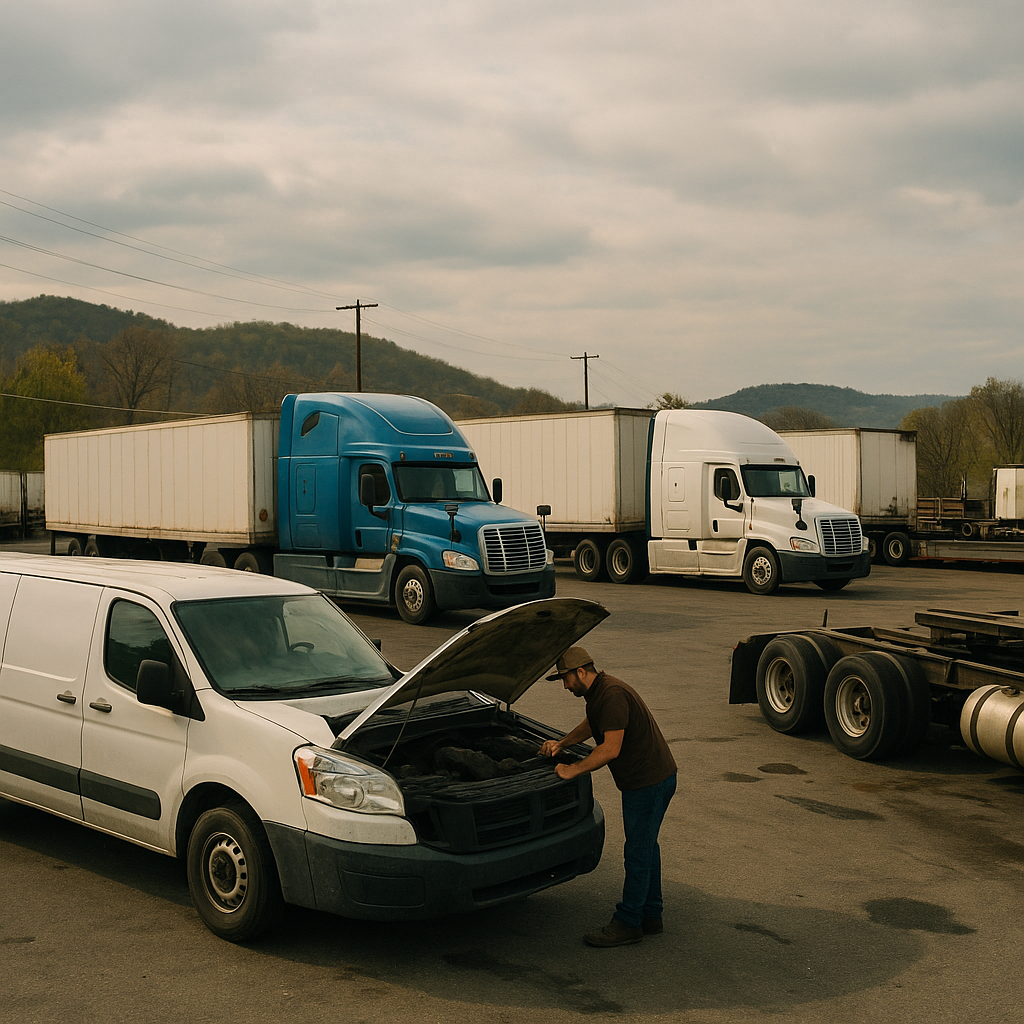

Cargo van truck insurance New York isn’t one simple product. What you need depends on how you use the van, whether you haul for hire, whether you run under a lease or your own authority, what cargo you carry, and whether your work stays in New York or crosses state lines.
Start With How Your Cargo Van Actually Operates#
If your cargo van is used to move goods for a business, you usually need commercial coverage rather than a personal auto policy. The key question isn’t just “Is it a cargo van?” It’s how the van is used, who pays you, what you haul, and where you operate.
A commercial auto policy is insurance written for business vehicle use, not ordinary personal driving. A personal policy may not fit regular delivery work, trade use, or hauling property for pay.
Personal errands versus business use#
If the van mainly handles family errands and occasional personal driving, that’s one risk. If it carries tools, inventory, packages, or freight as part of your business, that’s another.
A lot of operators get tripped up here. They assume a cargo van is “basically a car with space in back,” then find out the insurer cares far more about business use than body style.
For-hire delivery work versus carrying your own tools or goods#
If you’re paid to haul someone else’s property, that’s a different insurance setup than a contractor using a van to carry their own equipment. For-hire work can bring in cargo concerns, contract requirements, and authority questions that don’t apply the same way to a plumber, electrician, or bakery van.
That matters because vehicle type alone doesn’t decide every filing or coverage requirement. Your setup does.
New York City, statewide, and multistate operating radius#
Your operating radius is the area where the van regularly runs. Dense city routes, statewide work, and multistate runs create different loss patterns and different contract demands.
So start by sorting your operation into three buckets: only within New York, across state lines, or heavy city delivery with warehouse, broker, or shipper contracts. That one step makes the rest of the insurance decision much clearer.

Choose the Right Path: Permanent Lease or Your Own Authority#
A permanent lease can solve some insurance questions, but not all of them. You still need to know whose policy applies, when it applies, what the lease makes you responsible for, and whether gaps exist for cargo, deductibles, or off-dispatch use.
A permanent lease is an agreement where an owner-operator runs equipment under another carrier’s authority on an ongoing basis. Your USDOT number is a federal identifier for a carrier or operation subject to U.S. Department of Transportation rules, and an MC number is FMCSA operating authority used by certain for-hire interstate carriers.
Operating under another carrier’s authority#
If you run under a motor carrier’s authority, don’t assume the carrier’s insurance handles everything automatically. The lease, dispatch arrangement, and policy terms decide a lot.
Check who is named on the policy, whether you are an additional insured where needed, when coverage starts and stops, who pays the deductible after a loss, and whether cargo is covered while you’re under load, deadheading, or waiting on dispatch. If there’s a gap, you want to know before the first claim.
Running under your own USDOT or MC authority#
If you operate as an independent for-hire carrier under your own authority, the insurance picture changes. You may need commercial auto liability, cargo consideration, physical damage if you want the van protected, and in some cases federal filings tied to your authority.
An MCS-90 endorsement is a federally required endorsement used in certain motor carrier situations to show proof of financial responsibility. A BMC-91 or BMC-91X is an FMCSA liability insurance filing used to show required coverage is on file for certain for-hire interstate operations. FMCSA explains these filing requirements at FMCSA.
Questions to ask before relying on a carrier’s policy#
Before you trust a leased-on arrangement, verify the carrier’s public information through SAFER. SAFER is FMCSA’s public lookup system for carrier identification and safety-related information.
Ask plain questions: Are you covered while under dispatch only, or also during personal use? Is cargo covered, and for how much? Are there excluded commodities? Who handles certificates? If the answer is vague, treat that as a warning sign.
Match Each Cargo Van Exposure to the Coverage That Addresses It#
Cargo van insurance works best when each exposure is matched to the right coverage. Liability, cargo, physical damage, general liability, and non-trucking liability all do different jobs, and mixing them up is how operators end up uninsured for the loss that actually happens.
Commercial auto liability pays for covered third-party bodily injury or property damage claims caused by your truck or van operation. Motor truck cargo covers certain loss or damage to freight you’re hauling, subject to the policy form, exclusions, and conditions.
Commercial auto liability for injury and property damage claims#
Commercial auto liability is the backbone of a for-hire operation. If you rear-end a car, damage a loading area, or cause an accident that injures someone else, this is the coverage people usually mean when they say “truck liability.”
It does not insure the freight in the van. That’s where a lot of cargo-van operators get bad advice.
Motor truck cargo for freight in the van#
Motor truck cargo addresses covered damage to the customer’s property while you’re hauling it. Whether cargo coverage makes sense depends on what you haul, theft exposure, handling practices, contract language, and whether you’re responsible for the freight under your agreement.
High-theft freight, unattended stops, and vague commodity descriptions can create real problems. A policy with the wrong exclusions can leave you holding the loss anyway.
If you’re looking at a lease, broker packet, or shipper requirement and aren’t sure what the insurance wording actually means,
Physical damage and collision protection for the vehicle#
Physical damage is coverage for damage to your own vehicle. It usually includes collision, which covers damage from impact or overturn, and comprehensive, which covers things like theft, fire, vandalism, or certain weather losses.
For a financed or newer van, this often matters as much as liability. One theft or major crash can shut down the business if the van isn’t protected and you still owe money on it.
General liability for for-hire business exposures#
General liability covers certain non-auto business claims, such as some premises or operations exposures. It’s not a substitute for commercial auto liability.
Still, brokers, shippers, warehouse operators, and landlords may ask for it in a contract. That request is common enough that you should review every contract packet instead of assuming “auto covers everything.”
Non-trucking liability for qualifying off-dispatch use#
Non-trucking liability is coverage for certain personal or non-business use of a truck or van when you’re not under dispatch. It is not a replacement for primary trucking liability, and it does not cover paid hauling.
This usually comes up for leased operators. If you ever use the van off-dispatch, make sure the lease and policy both say how that exposure is handled.
Confirm New York, Interstate, and Contract Requirements Before You Quote#
Interstate and intrastate cargo van operations can fall under different rules. Before you compare quotes, confirm whether your operation triggers federal filings, New York-specific authority requirements, or contract language that changes what limits and endorsements you actually need.
Interstate for-hire operations and FMCSA financial responsibility#
If you cross state lines for regulated for-hire work, federal rules may apply. Under 49 CFR Part 387, financial-responsibility requirements depend on carrier type, vehicle weight, commodity, and the nature of the operation, not on a universal “cargo van rule.”
That matters because people often confuse a cargo van with a simple local delivery vehicle. Some operators with their own interstate for-hire authority may need to confirm whether FMCSA insurance filings apply to their setup, and FMCSA’s insurance filing guidance is the right place to start at FMCSA.
Intrastate New York operations#
If you stay entirely within New York, your compliance path may be different from federal interstate authority. New York intrastate operating authority, registration, and insurance administration can involve state-level requirements through the New York State Department of Transportation, while vehicle registration and related matters may also involve the New York State Department of Motor Vehicles.
Don’t assume interstate advice from a forum applies to your New York-only operation. Intrastate and interstate rules are not interchangeable.
Shipper, broker, warehouse, and lease requirements#
Contracts often drive the real insurance decision more than the vehicle itself. Review every packet for required liability limits, cargo limits, certificate holder details, additional insured wording, deductible restrictions, excluded commodities, and cancellation-notice requests.
This is where operators buy the wrong policy by accident. The quote looks fine until the broker rejects the certificate or the loss happens under an excluded condition.
If you have a lease, broker packet, or shipper agreement in front of you,
Checking authority and carrier information#
Before you rely on a carrier, verify what you can. SAFER can help you review company snapshot information and basic authority-related details at SAFER.
For New York-regulated questions, confirm with the right agency instead of guessing. If a contract and a verbal explanation conflict, trust the written insurance requirement and get it reviewed before binding coverage.
Understand What Drives a New York Cargo Van Insurance Quote#
There is no universal rate for cargo van truck insurance New York. Insurers price the whole operation: who drives, what the van hauls, where it runs, what contracts require, and how much risk the account shows on paper.
Driver and business history#
Expect questions about driving record, years of commercial experience, business history, prior claims, and who will be listed to drive. A clean record and a well-documented operation are easier to underwrite than a vague application with missing details.
Authority status matters too. A leased-on operator and a for-hire carrier under its own authority do not present the same exposure.
Vehicle value, garaging location, and operating radius#
The van’s value affects physical damage exposure. Garaging ZIP code matters because theft rates, traffic density, and repair costs vary a lot between locations.
Annual mileage and operating radius matter for the same reason. A van running dense city stops every day has a different risk profile than one doing lighter suburban routes.
Cargo type, cargo limit, and loss controls#
Cargo limit is the maximum amount the policy may pay for covered freight loss, subject to terms and conditions. Higher limits, theft-prone freight, specialized commodities, and weak security procedures can all change the quote.
If you handle high-value goods, unattended stops, or frequent overnight parking, expect closer underwriting review. Documented lock procedures, route discipline, and cargo-handling practices can help the underwriter understand the risk more clearly.
Coverage choices, deductibles, and contract limits#
Broader coverage and lower deductibles usually change the premium. So do contract-driven endorsements and higher required limits.
The best way to control avoidable cost drivers is simple: give accurate application details, don’t buy limits based on rumor, choose deductibles your business can actually absorb, and compare matching quote assumptions. A cheap-looking quote isn’t useful if it strips out cargo conditions, drivers, or territory you actually need.
Prepare a Complete Quote Package and Compare Policies Correctly#
A good quote starts with complete information. If you hand three providers three different versions of your operation, you’ll get three quotes that can’t be compared fairly.
Documents to gather before applying#
Have your driver’s license, VIN, purchase or value information, prior-loss details, estimated annual mileage, operating radius, cargo description, and garaging address ready. If applicable, gather your USDOT and MC details, lease agreement, and broker or shipper insurance requirements.
That speeds up the quote and cuts down on avoidable revisions. It also makes filing and certificate questions easier to sort out early.
Questions to ask every insurance provider#
Ask whether the quote assumptions match your actual operation. Confirm exclusions, deductibles, cargo sublimits, theft conditions, unattended-vehicle conditions, territory restrictions, filing responsibility, and certificate turnaround procedures.
If the policy has contract-sensitive wording, ask to see how those endorsements are handled before you compare price. That’s especially important when a broker packet asks for specific language.
How to compare more than one quote#
Quote comparison only works if the assumptions are the same. Match liability structure, cargo limit, physical damage selections, deductibles, listed drivers, authority status, commodity description, and any contract endorsements.
The right choice is not simply the lowest initial payment. It’s the policy that actually matches the operation you run and the contracts you signed.
Use This Final Coverage Check Before You Start Hauling#
Before you haul, run one last check. Confirm business use, lease versus own-authority status, interstate versus intrastate scope, the coverages tied to each exposure, and the exact contract wording your customer or carrier requires.
Operations check#
Make sure the application reflects what you really do. If you add a driver, change cargo, expand territory, replace the van, or move from leased work to your own authority, update the insurance.
Coverage check#
Verify that liability, cargo, physical damage, general liability, and any qualifying non-trucking liability fit the operation. Don’t assume a prior setup still works after the business changes.
Compliance and contract check#
Check filings, certificates, and contract language before the first load, not after a rejection or claim. LogRock specializes in trucking insurance for owner-operators and small fleets, and if you’re not sure what coverage fits your operation, LogRock can help you scope it.
FAQ#
How much is insurance on a cargo van?
Cargo van insurance can vary widely because insurers rate the full operation, not just the vehicle. The main factors include business use, for-hire versus business-use-only driving, driver history, years of commercial experience, claims history, garaging ZIP code, annual mileage, operating radius, vehicle value, cargo type, selected limits, deductibles, and whether the van runs under a lease or its own authority.
That’s why two similar vans can price very differently. A New York City delivery van hauling customer freight under contract is not rated the same way as a trade van carrying the owner’s tools. The useful comparison is between policies built on the same assumptions, not between random premium numbers.
What insurance do I need for a cargo van business?
Most cargo van businesses should start by determining whether they need commercial auto liability, because that’s the core coverage for third-party injury and property damage from vehicle operation. After that, the next question is whether you need motor truck cargo, physical damage, general liability, or qualifying non-trucking liability based on how the van is used.
If you’re paid to haul someone else’s property, cargo and contract requirements become more important. If you’re leased on, review the lease and carrier policy carefully. If you run under your own authority, confirm whether filings or endorsements apply. The right setup depends on for-hire status, cargo responsibility, authority, and customer requirements.
How much does $100,000 cargo insurance cost?
A $100,000 cargo limit does not have one standard price. The premium depends on what commodity you haul, how theft-prone it is, where you operate, whether freight is left unattended, your claims history, your deductible, your security procedures, and the exact cargo form being quoted.
That means limit alone is not enough for comparison. One policy may quote the same cargo limit but restrict key commodities, impose theft conditions, or use tighter exclusions. When you compare cargo options, line up the commodity description, exclusions, sublimits, deductible, and conditions for unattended vehicles or overnight parking before you judge the number.
How much is a $1,000,000 liability insurance policy?
A $1,000,000 commercial auto liability policy doesn’t come with a universal price tag. The cost depends on the cargo van operation itself, including the driver’s record, business history, garaging area, operating radius, annual mileage, authority status, prior losses, and whether any filings or endorsements are required.
A higher limit by itself doesn’t tell you enough. One operator may need that limit because a shipper requires it, while another may be looking at it because a lease or broker contract calls for it. To compare pricing meaningfully, keep the same drivers, territories, deductibles, and policy assumptions in place across every quote.
Does personal auto insurance cover a cargo van used for business?
Usually, regular personal auto insurance is not the right fit for a cargo van used in ongoing business operations. Once the van is used to deliver goods, carry business inventory, transport tools regularly, or haul property for pay, the insurer may treat that as commercial exposure rather than ordinary personal driving.
The exact answer depends on the policy language and the actual use of the vehicle. But relying on a personal policy for a business-use cargo van is a common mistake. It’s safer to classify the operation correctly upfront, especially if the van is tied to customer contracts, lease requirements, or regular delivery activity.





