
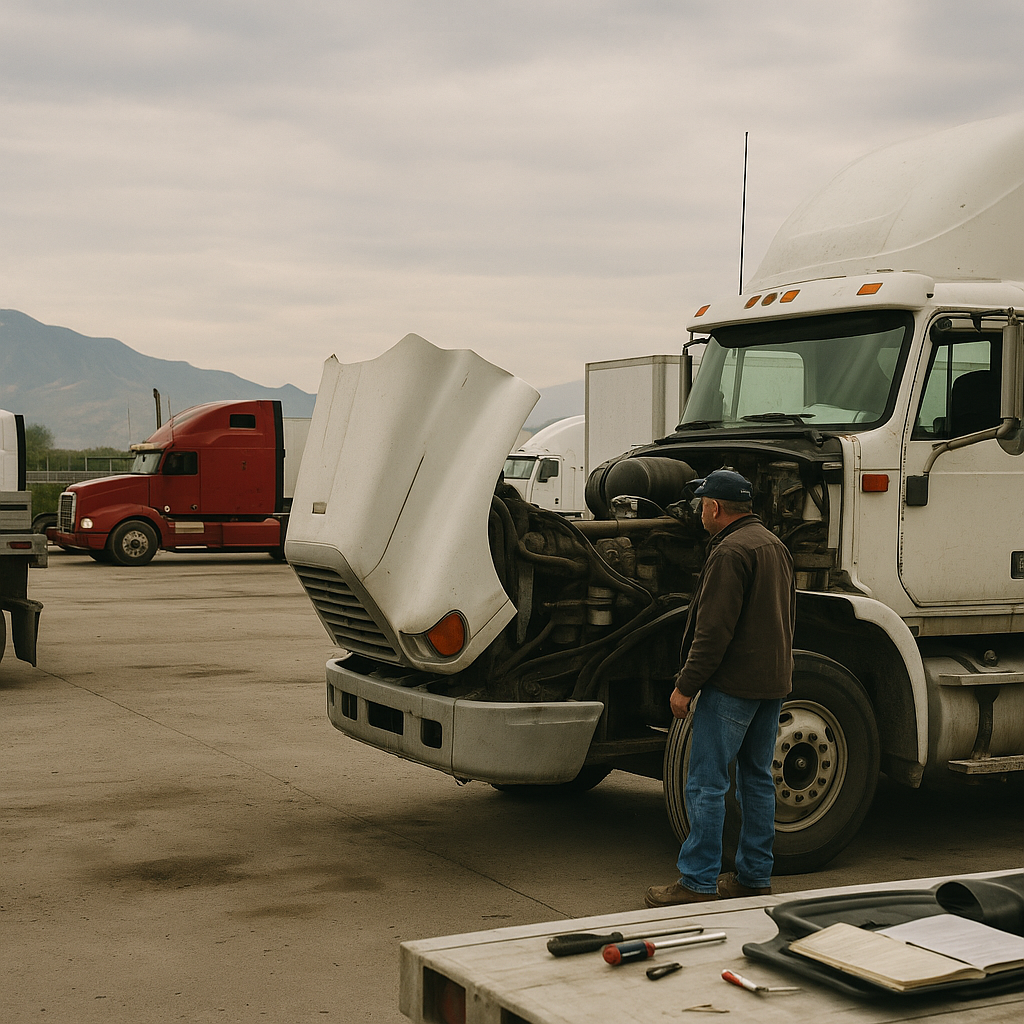

Salt Lake City truck insurance isn’t one thing. Your setup depends on how you run: for-hire or private, interstate or intrastate, what you haul, what truck you use, and what your contracts say. This guide breaks out Utah rules, FMCSA-related requirements, key coverages, cost drivers, and claim prep so you can ask better questions before you buy.
Salt Lake City Truck Insurance: Start With How You Operate#
Salt Lake City truck insurance starts with one basic question: are you using the truck to haul freight for a business? If the answer is yes, personal auto insurance usually isn’t built for that exposure. Most owner-operators need commercial trucking coverage matched to the way the truck actually runs.
A personal auto policy is insurance written for personal driving, not for hauling freight, running under authority, or doing commercial trucking work. A truck used in business can trigger exclusions or leave major gaps if the policy was never designed for freight hauling.
Why personal auto insurance usually does not fit commercial trucking#
If you’re hauling loads, moving under dispatch, or operating for a carrier, don’t assume your everyday vehicle policy follows you into trucking. That’s one of the fastest ways to find out too late that personal auto and commercial trucking insurance are not the same thing.
Salt Lake City operators run into this a lot when a pickup, hotshot unit, or work truck started as “personal use” and slowly turned into business use. Once the truck is part of a freight operation, the insurance review needs to match that reality.
The five details that determine your coverage and filing path#
Your coverage path usually comes down to a handful of operating facts:
- Whether you’re for-hire, meaning you get paid to haul property for others
- Truck weight and vehicle type
- Cargo type
- Where and how far you operate
- Whether contracts require extra limits or endorsements
A USDOT number is the identifier used by the Federal Motor Carrier Safety Administration for safety and operational tracking. An MC number is operating authority used for certain for-hire interstate carriers.
Salt Lake City operators: local work can still involve federal requirements#
Being based in Salt Lake City doesn’t automatically mean you only deal with Utah rules. If your operation crosses state lines, hauls interstate freight, or falls into a federally regulated setup, FMCSA-related requirements may apply even if a lot of your miles are local.
This is why the best first step isn’t shopping by price alone. It’s organizing how you operate so your quotes, filings, and coverage review line up with the real business.

Separate Utah Requirements, FMCSA Requirements, and Contract Requirements#
The cleanest way to sort Salt Lake City truck insurance is to separate three buckets: Utah operating requirements, FMCSA-related requirements, and contract requirements. Those buckets overlap, but they are not the same thing. A contract can demand more than the law, and legal minimums do not tell you every coverage you may still need.
Utah registration and intrastate operating questions#
Utah-specific registration and intrastate questions should be verified with the Utah Department of Transportation, especially through its Motor Carrier Division. If you operate only within Utah, your registration, intrastate authority questions, and state compliance steps may look different from a carrier running interstate freight.
That said, “intrastate” and “based in Utah” are not interchangeable with “simple.” Before binding coverage, confirm how the truck is titled, where it’s garaged, whether the operation is for-hire, and what state filings or registrations apply.
Federal financial responsibility rules for interstate for-hire carriers#
Federal minimum financial responsibility rules are set under 49 CFR Part 387 at the eCFR and apply based on carrier type, vehicle weight, and commodity. Under 49 CFR Part 387, for-hire interstate carriers hauling general freight in vehicles over 10,001 lbs must carry at least $750,000 in public liability. That’s not a universal rule for every trucker.
The Federal Motor Carrier Safety Administration, or FMCSA, is the federal agency that oversees motor carrier safety and certain operating authority and insurance filing requirements. If you’re a for-hire interstate carrier, review FMCSA guidance and verify your status through SAFER before assuming your filings are complete.
Shipper, broker, lender, and lease requirements#
Contracts often add another layer. A broker, shipper, lender, lease agreement, or trailer owner may require higher liability limits, cargo terms, trailer coverage, or specific endorsements that go beyond a legal minimum.
That matters because a contract requirement is not automatically a Utah rule or an FMCSA mandate. Before you bind a policy, confirm your authority status, USDOT and MC details, cargo classification, and any written customer or lease requirements so the policy is built for the work you actually booked.
Choose Coverage for Your Truck, Freight, and Trailer Responsibilities#
The right Salt Lake City truck insurance plan usually combines several coverages, not just one liability limit. The truck, the freight, and the trailer each create different exposures. If you mix those together, you can end up insured for one problem and exposed on the next.
Commercial auto liability and bodily injury/property damage#
Commercial Auto Liability covers certain third-party bodily injury and property damage claims caused by a covered truck operation, subject to the policy’s terms, conditions, and limits. This is the backbone coverage tied to truck operation on the road.
It does not pay for every kind of loss in the business. It generally addresses damage or injury claims made by others, not damage to your own truck or loss to the freight you’re hauling.
Motor truck cargo and general liability#
Motor Truck Cargo is coverage designed for covered freight loss or damage while you’re responsible for the load, subject to policy terms, exclusions, and deductibles. The cargo you haul matters here because limits, exclusions, and required terms can change with the commodity and the contract.
General Liability covers certain non-driving business liability exposures, such as some premises or operations claims, depending on the policy. It does not replace commercial auto liability, and it does not stand in for cargo coverage.
A lot of owner-operators find this out only after a broker packet or shipper contract lands in their inbox with coverage language they didn’t expect. If you’re trying to sort your authority, equipment, cargo, and current declarations page before renewing or switching,
Physical damage and combined additional coverages#
Physical Damage is coverage for damage to the scheduled truck itself, usually through collision and comprehensive, sometimes paired with fire and theft and combined additional coverages, subject to deductibles and policy terms. Collision generally pays for crash damage to your truck. Comprehensive typically addresses non-collision causes like theft, vandalism, or some weather losses.
For trucking, physical damage isn’t the same thing as liability. If your financed truck gets damaged and you only carried liability, you’re still left dealing with the truck loss out of pocket unless another coverage applies.
Non-trucking liability, trailer interchange, and non-owned trailer physical damage#
Non-Trucking Liability is coverage generally intended for qualifying non-business use when you’re not under dispatch. It is not a substitute for primary liability while hauling, bobtailing under dispatch, or otherwise doing covered business activity.
Trailer Interchange applies when you are responsible for a trailer you do not own under a signed trailer interchange agreement. Non-Owned Trailer Physical Damage applies when you’re responsible for a trailer you don’t own but may not have that signed interchange agreement. Many non-intermodal owner-operators need to review which of those actually matches how they pull trailers.
Reefer or refrigeration breakdown for temperature-controlled freight#
Reefer Breakdown is specialized coverage for certain loss tied to refrigeration unit breakdown on temperature-controlled freight, subject to policy terms and exclusions. If you haul refrigerated loads, this is a separate conversation from cargo alone because temperature claims often turn on records, equipment condition, and the cause of loss.
Build the Right Plan for a One-Truck Operation or a 2-5 Truck Fleet#
A one-truck Salt Lake City operation and a five-truck fleet don’t need the exact same insurance conversation. The core coverages may overlap, but the review changes as people, equipment, and contracts multiply.
Single-truck owner-operator priorities#
For a single-truck owner-operator, the key questions usually center on one power unit, one main driver, leased-on versus own-authority work, and exactly what the contract says about cargo or trailer responsibility. One mismatch in those details can affect both pricing and whether the policy actually fits the job.
What changes when you add drivers or trucks#
Once you add trucks or drivers, the review expands. Small fleets need to account for driver eligibility, vehicle schedules, prior losses, garaging locations, and whether operations are being run consistently across the business.
That doesn’t mean every small fleet needs identical limits or endorsements. It means each change in drivers, equipment, and operations should trigger a fresh look at the policy.
Keeping vehicle, driver, and contract information current#
Adding a truck, changing cargo, taking on trailer responsibility, or expanding territory can all change the coverage review. So can bringing on a new driver or switching from leased-on work to your own authority.
The safest habit is simple: when the business changes, update the insurance review before the change becomes a claim problem.
What Drives Truck Insurance Costs in Salt Lake City#
Salt Lake City truck insurance pricing is individually underwritten, so there is no standard price for every owner-operator or small fleet. Your actual premium depends on your operation, cargo, radius, driving history, equipment, limits, deductibles, and other factors. The only useful comparison is a like-for-like comparison of real coverage terms.
Operating details insurers evaluate#
Insurers commonly look at operating radius, interstate versus intrastate work, authority setup, truck type, truck value, business history, and payment structure. A local contractor-style unit, a for-hire power unit running under its own authority, and a reefer truck hauling temperature-sensitive freight do not present the same risk.
Equipment, cargo, drivers, and loss history#
Equipment value changes the physical damage side. Cargo changes both exposure and contract expectations. Driver records, years in business, prior losses, and the overall safety profile also matter.
How to compare quotes without comparing only the premium#
The NAIC recommends comparing policy terms, limits, deductibles, and exclusions, not just the quoted premium. That’s especially important in trucking, where two quotes that look close on price can be very different on what they actually cover.
Use this checklist when comparing proposals:
- Named insured
- Vehicle schedule
- Liability limits
- Cargo limit and deductible
- Physical damage valuation and deductible
- Trailer coverage
- Exclusions
- Required filings
- Payment schedule
- Endorsements
Accurate information won’t guarantee a lower premium, but it does help you compare meaningful options instead of chasing a number that leaves out something important. Always ask what change in your operation would require a policy update.
Prepare for a Truck Insurance Claim Before a Loss Happens#
A simple claims plan can save time after an accident, cargo problem, or equipment loss. It won’t determine coverage, but it does help keep a bad day from turning into a mess of missing information. The policy language and the facts of the loss still control, but preparation helps you report cleanly and fast.
Immediate steps after an accident or cargo loss#
First, protect people and call emergency services when needed. Then document the scene, exchange the required information, preserve freight and equipment evidence when safe, notify the right dispatch or business contacts, and report the claim promptly.
Don’t admit fault at the scene, and don’t promise that insurance will pay. Stick to facts and gather the information you’ll need later.
Documents to keep in the cab and office#
Keep these records easy to reach:
- Insurance identification
- Driver information
- Bill of lading
- Dispatch details
- Photos and video
- Police report information
- Tow and storage details
- Trailer interchange paperwork
- Temperature records for reefer loads
When to report changes before they become a coverage problem#
A good claims-readiness plan also means reporting business changes early, not just losses. New trucks, new drivers, a change in operating territory, a new cargo type, or new trailer obligations can all create coverage issues if the policy hasn’t been updated.
If you’ve gathered your authority, truck, driver, cargo, and contract details and want a practical review before renewal or a new quote,
FAQ#
Who is the cheapest truck insurance?
No insurer is the lowest-cost option for every trucker. Trucking insurance is underwritten based on your authority setup, cargo, truck type, operating radius, driver history, claims history, limits, deductibles, and where you run. A carrier that prices well for one owner-operator may not be competitive for another.
The better question is whether you’re comparing the same coverage. Check liability limits, cargo terms, physical damage deductibles, trailer coverage, exclusions, and filings side by side. A lower headline price can still be the worse deal if it leaves out coverage your operation actually needs.
How much is a $1,000,000 liability insurance policy?
A $1,000,000 liability policy does not have one standard price. The cost varies with the operation behind it, including whether you’re for-hire, what you haul, your truck and radius, your driving record, claims history, years in business, and whether there are additional required coverages or filings.
If you’re comparing quotes, use the same operating details each time. Make sure the proposals match on liability limit, filing needs, deductibles, exclusions, and related coverages like cargo or physical damage. Otherwise, you’re not really comparing the same policy.
Do I need an LLC to get commercial insurance?
No, you do not automatically need an LLC just to get commercial trucking insurance. What matters is that the named insured accurately matches the legal person or business operating the truck and signing transportation contracts.
If the truck runs under your personal name, sole proprietorship, or a business entity, the application should reflect that correctly. If you’re forming or changing an entity, confirm those details with your broker and the relevant agencies so the policy, authority, and contracts all line up.
Who has the cheapest insurance in Utah?
There is no single company that is cheapest for every Utah trucking risk. Rates change based on the truck, authority, cargo, garaging, territory, drivers, prior losses, and coverage choices. That is true in Salt Lake City just as much as anywhere else in the state.
Instead of looking for a universal lowest-price answer, compare equivalent proposals. Make sure each quote addresses Utah operating needs, any FMCSA-related requirements, and any contract-driven requirements. A quote only helps if it fits the actual operation.
Does personal auto insurance cover a truck used to haul freight?
Usually not in the way an owner-operator expects. Personal auto insurance is generally written for personal driving, and many policies exclude business or commercial use. Once a truck is being used to haul freight or support a trucking business, relying on a personal policy can create serious gaps.
The safe move is to review the policy language and disclose exactly how the truck is used. If the truck is part of a freight operation, get a commercial trucking review before assuming a personal policy will respond.
Do Salt Lake City truckers need cargo insurance?
Not every trucker needs the same cargo setup, but many for-hire operators do need to review it closely. Cargo insurance is separate from commercial auto liability and is designed for covered freight loss or damage while the carrier is responsible for the load.
Whether you need it, and how much, depends on your freight responsibility, contracts, cargo type, and operating arrangement. If a broker or shipper requires cargo coverage, check the written terms instead of guessing from another driver’s setup.





