
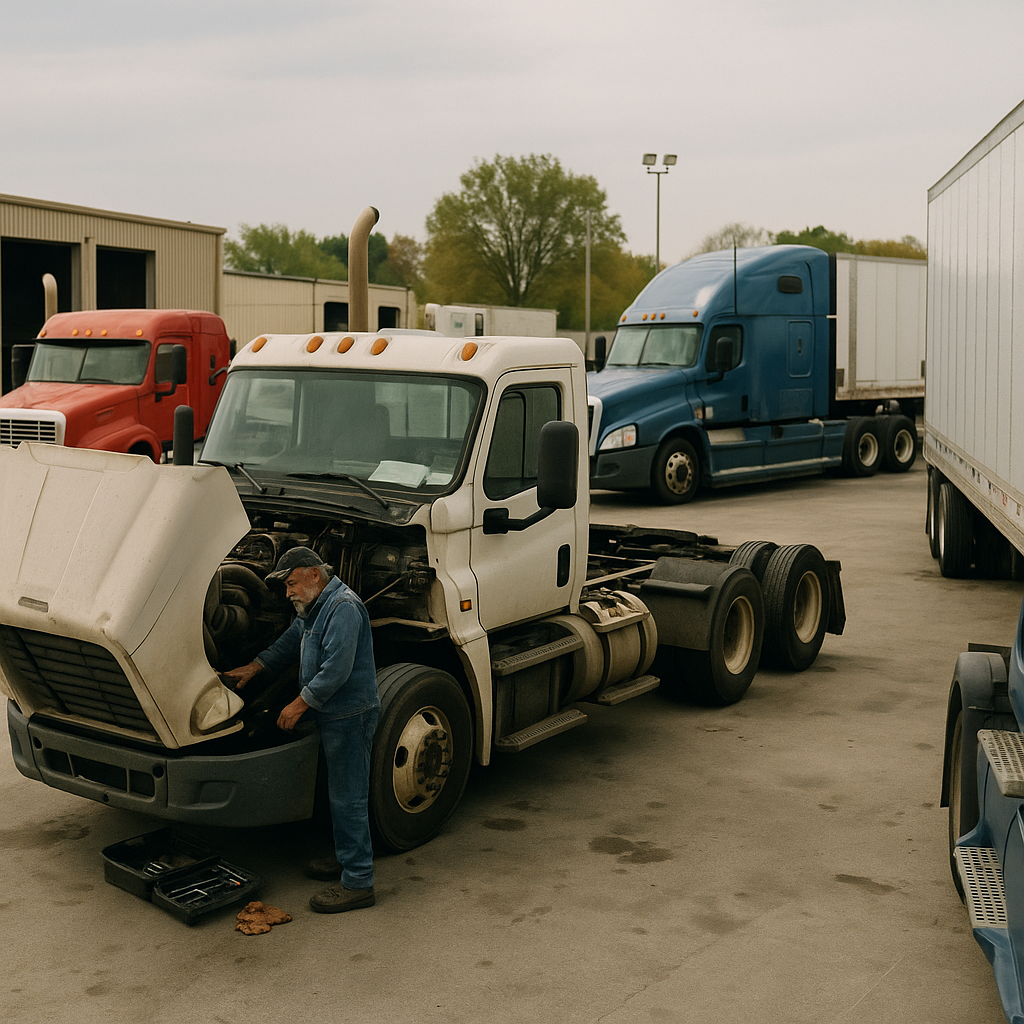

Tulsa truck insurance isn’t the same thing as insuring a personal pickup you drive on weekends. If you’re running freight, your authority, cargo, truck use, and contract setup usually matter more than your Tulsa ZIP code. This guide separates Oklahoma rules, FMCSA requirements, and contract demands so you can build the right coverage package and compare quotes correctly.
What Tulsa Owner-Operators Need to Know Before Shopping#
Tulsa truck insurance starts with one basic fact: a commercial trucking operation needs a different insurance conversation than a personal vehicle. Your authority status, cargo, operating radius, truck type, and lease setup usually drive the coverage decision more than the city where the truck is parked.
Your operation determines the coverage conversation#
A USDOT number is the identification number FMCSA uses to track a carrier’s safety and operating information. An MC number is a federal operating authority number used for certain for-hire interstate operations.
If you’re hauling under your own authority, leased on to another carrier, or staying strictly intrastate in Oklahoma, your insurance needs can look very different. The same goes for what you haul, how far you run, and whether you’re responsible for a trailer you don’t own.
Why a Tulsa address alone does not define your requirements#
A Tulsa garaging address affects underwriting, but it doesn’t decide the whole package. Oklahoma rules, federal filing requirements, and shipper or motor-carrier contracts can each add a different layer to what you need.
That’s where many owner-operators get tripped up. They hear a state minimum from one person, an FMCSA number from another, and a broker requirement from a customer, then assume all three mean the same thing.
Personal auto insurance is not a substitute for trucking coverage#
A personal auto policy is insurance built for personal driving, not a commercial freight operation. Once a truck is being used in business, especially for hauling for-hire, you should not assume a personal policy has the liability structure, vehicle-use intent, or endorsements needed for trucking.

Separate Oklahoma Rules, FMCSA Requirements, and Contract Demands#
Oklahoma rules, FMCSA requirements, and customer contract demands are three separate things. For many Tulsa owner-operators, the biggest mistake is treating a state minimum, a federal filing, and a shipper requirement as interchangeable when they often apply for different reasons.
When federal financial responsibility rules may apply#
Commercial Auto Liability is coverage for bodily injury and property damage you cause to others in a covered trucking accident. Under FMCSA rules and 49 CFR Part 387, certain for-hire interstate motor carriers must meet federal financial responsibility requirements based on their operation.
For example, under 49 CFR Part 387, for-hire interstate carriers hauling general freight in vehicles over 10,001 lbs must carry at least $750,000 in public liability. That doesn’t mean all truckers need that amount. Requirements vary by carrier type, vehicle weight, cargo, and whether you operate interstate or intrastate.
An MCS-90 is an endorsement tied to certain federally required liability filings for motor carriers. If you’re running under your own interstate authority, confirm your filing needs before you bind coverage.
What changes for Oklahoma intrastate operations#
Intrastate means you operate only within one state. If you stay inside Oklahoma, your insurance and filing requirements are separate from federal interstate rules and should be confirmed based on your classification, equipment, and authority status.
Don’t assume that because FMCSA requires one thing for an interstate for-hire carrier, the same rule automatically applies to an Oklahoma-only operation. The clean way to handle it is to verify your actual operating profile first, then match coverage and filings to that profile.
Why a broker, shipper, or motor-carrier contract can require more#
A contract can require more insurance than the law does. Brokers, shippers, and motor carriers may ask for higher liability limits, cargo coverage, general liability, additional insured wording, specific certificates, or other endorsements before they let you haul.
So think of it as three separate questions: what Oklahoma requires, what FMCSA requires, and what your contracts require. If you have your own authority, sort those out before binding a policy so you don’t end up insured one way on paper and operating another way in real life.
Build the Right Coverage Package for Your Tulsa Trucking Operation#
The right Tulsa truck insurance package depends on how you operate, not on a generic checklist. Own-authority carriers, leased-on owner-operators, reefer haulers, and operators pulling someone else’s trailer can all need different combinations of liability, cargo, truck, and trailer coverage.
If you operate under your own authority#
If you run under your own authority, your policy often needs to do more of the heavy lifting. You’re usually matching your insurance to your operating authority, freight profile, vehicle, radius, and any filing obligations tied to your operation.
That usually starts with commercial auto liability. Then you look at whether cargo, physical damage, general liability, trailer-related coverage, or reefer-related coverage belong in the package.
If you are leased on to a motor carrier#
If you’re leased on, your coverage depends heavily on the lease. The motor carrier may provide certain primary liability while requiring you to carry other coverages for your truck, non-dispatch use, trailer responsibility, or physical damage.
That doesn’t mean a leased-on setup is simple. Many coverage mistakes happen when an owner-operator assumes the carrier’s policy covers every gap, or buys non-trucking liability without checking how the lease defines dispatch and business use.
Coverage for the truck, freight, trailers, and business liability#
Motor Truck Cargo is coverage for covered freight while it’s in the carrier’s care, custody, or control, subject to policy terms and cargo type. If you haul higher-risk commodities, refrigerated freight, or contract freight with strict requirements, cargo terms matter just as much as the limit.
Physical Damage is coverage for damage to your truck, usually through collision and comprehensive, or fire and theft with combined additional coverage, depending on the policy structure. It protects the truck’s value, subject to deductibles, stated value, and policy terms.
General Liability is business liability coverage for certain non-auto claims, and it’s not a replacement for commercial auto liability. Some brokers or facilities require it by contract even though it doesn’t cover an at-fault road accident the way auto liability does.
Non-Trucking Liability is coverage designed for certain non-business use of a leased truck when you’re not under dispatch, subject to policy terms. Bobtail usually refers to operating a tractor without a trailer attached, but bobtail coverage and non-trucking liability are not interchangeable shortcuts.
Trailer Interchange is coverage used when you have a signed interchange agreement making you responsible for someone else’s trailer. Non-Owned Trailer Physical Damage applies when you’re responsible for a trailer you don’t own but don’t have a formal interchange arrangement.
Reefer Breakdown is coverage for certain loss tied to refrigeration unit breakdown on temperature-sensitive loads. If you haul refrigerated freight, this is a separate exposure, not something to assume standard cargo automatically handles.
How cargo, radius, and truck use change the package#
The package changes with your real-world operation. A local dry-van owner-operator, a long-haul reefer carrier, and a leased-on power-only operator may all need different limits, endorsements, and trailer coverage.
| Operating detail | Why it matters | Coverage often affected |
|---|---|---|
| Own authority | May trigger filings and broader policy needs | Auto liability, cargo, filings |
| Leased on | Lease can split insurance responsibility | NTL, physical damage, trailer |
| Higher-value truck | Increases equipment exposure | Physical damage, deductible choice |
| Refrigerated freight | Adds temperature-control exposure | Cargo, reefer breakdown |
| Non-owned trailers | Creates trailer responsibility issues | TI or NOTPD |
Your actual premium depends on your operation, cargo, radius, driving history, and other factors. If you’re not sure what coverage fits your operation, LogRock can help you scope it.
Know When Personal Auto, Bobtail, and Commercial Auto Do Not Overlap#
Personal auto, bobtail, and commercial auto are not interchangeable. For Tulsa owner-operators, one of the most expensive mistakes is assuming one policy will respond to a trucking claim that actually falls outside its intended use.
Commercial use changes the insurance question#
A personal auto policy is generally designed around personal driving, not hauling freight for a business. Once the truck is being used in a commercial operation, you shouldn’t assume that personal-auto liability, vehicle-use definitions, or exclusions line up with trucking exposure.
This gets especially risky when someone uses the truck for mixed purposes and assumes occasional business use doesn’t change the insurance question. In trucking, that assumption can go bad fast after a claim.
Bobtail coverage is not a universal substitute#
Non-trucking liability is not primary commercial auto liability. It generally applies only in certain non-business situations and may not respond while you’re under dispatch, operating in business use, or otherwise inside a policy exclusion.
That’s why “I have bobtail” is not the same as saying “I’m covered for trucking.” The dispatch status, lease wording, and the facts of the trip matter.
Read the lease and dispatch conditions#
Leased operators should read the motor-carrier lease and match it against the insurance application before buying coverage. That means checking who carries primary liability, when dispatch begins and ends, and who is responsible for trailers, cargo, and truck damage.
If your lease status and actual use don’t match the policy setup, the problem usually shows up only after a loss. If you want help mapping your authority, lease status, and dispatch use to the right coverage discussion,
What Drives Tulsa Truck Insurance Costs and What You Can Control#
Tulsa truck insurance costs depend on the operation being insured, not a universal price chart. Insurers commonly look at your drivers, losses, authority, cargo, radius, truck value, and requested coverages, then price the risk based on that full picture.
Operational details insurers evaluate#
Underwriters often review driving history, prior losses, CDL experience, years in business, authority status, operating radius, states traveled, freight type, and garaging location. They also look at whether the operation is new, whether drivers are scheduled correctly, and whether the application matches the actual work being done.
A new own-authority operation hauling broader freight into multiple states won’t be viewed the same as a leased-on operator with a narrower profile. That’s why two trucks that look similar on paper can get very different quotes.
Coverage choices that affect the quote#
Liability limits, cargo limits, physical damage values, deductibles, and specialized coverages all affect premium. So do trailer interchange needs, reefer exposures, and endorsement requests coming from customers or brokers.
A lower quote isn’t automatically a better quote. It may reflect different deductibles, lower physical damage values, tighter cargo terms, driver restrictions, omitted coverage, or exclusions that only become obvious after a claim.
Practical ways to improve quote accuracy and manage cost#
The practical way to manage cost is to make the submission accurate and compare equivalent terms. Keep driver and loss information current, report operational changes promptly, choose deductibles that fit your cash flow, and maintain safety practices that support a cleaner underwriting file.
Don’t build expectations around a generic monthly number. Your actual premium depends on your operation, cargo, radius, driving history, and other factors.
Use This Checklist to Get an Accurate Tulsa Truck Insurance Quote#
A good Tulsa truck insurance quote starts with complete, accurate information. The more complete your file is up front, the less likely your quote is to change after underwriting reviews your operation.
Business and authority details#
Bring your legal business name, business structure, and contact information. Include your USDOT number, MC number if applicable, whether you operate intrastate in Oklahoma or interstate, and whether you’re running under your own authority or leased to a motor carrier.
If you’re leased on, have the lease details ready. If you have contract insurance requirements from a broker, shipper, or carrier, bring those too.
Truck, driver, and route information#
Have the truck year, make, model, VIN, stated value, and primary garaging ZIP code ready. You’ll also want trailer details, including whether you own the trailer, borrow it, or operate under an interchange arrangement.
For drivers, gather names, CDL details, years of experience, and motor vehicle records if available. Prior claims, losses, and basic route information matter too, including your normal radius and the states you travel.
Cargo, trailer, and contract requirements#
List the freight types you haul and any commodities you do not haul. Note whether loads are refrigerated, whether customers require cargo limits or general liability, and whether certificate wording or additional insured requests are part of the job.
This is also where trailer responsibility matters. If you’re regularly pulling non-owned trailers, be clear about whether there’s a signed interchange agreement or just operational responsibility.
Current policy and loss-history documents#
Bring your current declarations page, recent loss runs if you have them, and any cancellation or non-renewal notices. That makes it easier to compare like-for-like terms instead of accidentally comparing one quote with cargo and broader coverage against another stripped-down option.
Complete information doesn’t just speed up quoting. It helps prevent a pleasant-looking number from changing once underwriting sees the real operation.
Compare Coverage Terms Before You Bind#
Before you bind Tulsa truck insurance, compare the actual policy terms line by line. Match liability and cargo limits, deductibles, physical damage values, scheduled drivers, radius, commodities, and endorsements so you’re comparing the same product instead of just the same invoice format.
Match limits and deductibles first#
Start with the basics. If one quote has different deductibles, a lower truck value, tighter cargo language, or omitted trailer coverage, it isn’t a true apples-to-apples comparison.
Check exclusions and truck-use conditions#
Then read the truck-use conditions and exclusions. This matters most for leased operators looking at non-trucking liability and for anyone assuming cargo, trailer, or reefer exposures are automatically included.
Confirm filings, certificates, and support#
If you have your own authority, confirm that needed filings can be made and review your status through FMCSA SAFER when applicable. SAFER is FMCSA’s public system for checking carrier identification, authority-related information, and safety records.
If you’re leased on, make sure the coverage lines up with the lease and the motor carrier’s requirements before you sign anything. For a final coverage review with a dedicated trucking insurance specialist,
FAQ#
Who is the cheapest truck insurance?
No insurer is universally the lowest-cost option for every trucking operation. A leased-on owner-operator in Tulsa hauling dry freight may fit one market, while a new own-authority carrier with broader radius, higher truck value, or specialized cargo may fit another. The useful comparison is not just price. Compare the same liability limits, cargo terms, deductibles, truck values, driver eligibility, endorsements, and exclusions. A cheaper quote can cost more later if it leaves out a filing, narrows cargo protection, or restricts how the truck can be used.
Who has the cheapest car insurance in Tulsa, Oklahoma?
That question usually points to personal auto insurance, which is a different product from commercial truck insurance. A low-cost personal car policy doesn’t tell you what the right or lowest-cost trucking policy will be for a commercial operation. If a vehicle is being used for hauling, business use, or for-hire work, personal-auto pricing and coverage assumptions can be misleading. For owner-operators, the better question is which insurer fits the operation correctly and offers comparable trucking coverage terms for the authority, cargo, radius, and truck use involved.
How much should I pay for truck insurance?
There isn’t one correct amount that every owner-operator should pay. An appropriate premium depends on your authority status, drivers, claims history, CDL experience, cargo, operating radius, truck value, garaging location, requested limits, deductibles, and any required endorsements. The better way to judge a quote is to compare matching coverage instead of aiming for a generic number. If one option includes broader cargo terms, different driver restrictions, or higher physical damage values, it may reasonably cost more than a thinner policy built around fewer exposures.
Do I need an LLC to get commercial insurance?
No, an LLC is not universally required to get commercial insurance. What matters is that the named insured, business structure, lease arrangement, and authority records match the actual operation being insured. Some owner-operators insure as sole proprietors, while others operate through an LLC or corporation. The key is consistency across the application, policy, registrations, and operating documents. If the truck, authority, and contracts are in one name but the policy is written for another without a clear match, that can create problems with filings, certificates, or claims handling.
What coverage does a Tulsa owner-operator usually need?
It depends on whether you’re running under your own authority or leased on to a motor carrier. Many owner-operators look at commercial auto liability first, then add motor truck cargo, physical damage, and sometimes general liability depending on contract demands. Leased operators may also need non-trucking liability and trailer-related coverage depending on the lease. If you haul refrigerated freight, reefer breakdown may matter too. Requirements vary by carrier type, vehicle weight, cargo, and whether you operate interstate or intrastate, so the right package has to match the real operation.





