
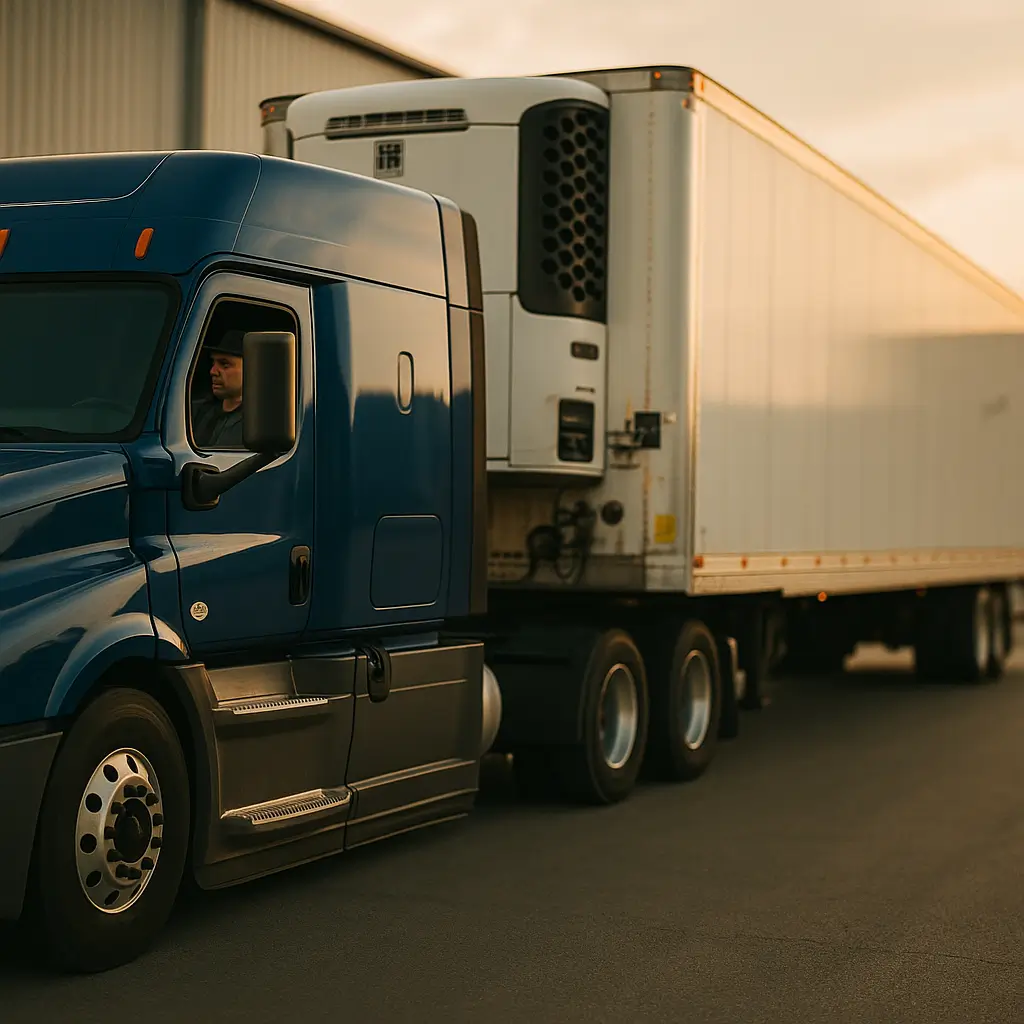
Food trailer insurance in 2026 often runs $500–$3,000/yr. See coverages required, trailer vs tow-vehicle rules, and savings tips to avoid shutdowns—get quotes.
Food trailer insurance in 2026 typically costs about $500–$3,000 per year for many owners, depending on whether you buy liability-only or add trailer/equipment (property) coverage and endorsements like spoilage or equipment breakdown. Location, annual sales, and cooking method (fryers/open flame) are usually the biggest price drivers.
If you’re new to commercial policies, start with small-business insurance basics so terms like GL, endorsements, and COIs don’t slow you down when a venue needs proof today.
Table of Contents
Reading time: 9 minutes
- Key takeaways
- What is food trailer insurance (and who needs it)?
- What does food trailer insurance cover? (7 core coverages + COI requirements)
- Do you need a separate policy for the trailer? (Decision flow + tow-vehicle reality)
- Food trailer insurance cost in 2026 (ranges + examples + ways to save)
- Frequently asked questions
- Conclusion
Key Takeaways
Many U.S. venues and permitting offices require a Certificate of Insurance (COI) showing $1,000,000 per occurrence / $2,000,000 aggregate general liability for food vendors — a common baseline described in small-business insurance guidance from the U.S. Small Business Administration, plus additional insured wording for the venue or city.
- Most food trailer setups need two things: (1) general/product liability for vending to the public, and (2) trailer + equipment/property coverage for your buildout and gear.
- Your tow vehicle is a separate risk: trailer insurance doesn’t automatically fix gaps in the truck/SUV policy, which is where commercial auto or hired/non-owned auto (HNOA) can matter.
- Venues and cities care about the COI, not opinions: limits, dates, and “additional insured” wording are what get you approved.
- Cost is controllable: safety controls, accurate equipment values, and smart limit choices can keep premiums down without leaving you exposed.
What Is Food Trailer Insurance (and Who Needs It)?
Food trailer insurance is usually a package of commercial coverages—most often general liability plus some form of property/equipment coverage—built to handle injuries to the public, food-related claims, and damage or theft to your trailer setup.
Running a food trailer is a cash-flow business. One fryer fire, one theft, or one “additional insured” request you can’t satisfy fast enough can wipe out a weekend’s profit—or cost you the whole event season.
Food trailer vs. food truck vs. concession trailer (plain English)
- Food trailer: a towed unit where the biggest risks are public liability, product liability, and your equipment value, plus towing logistics.
- Food truck: self-propelled, so it carries heavier auto exposure and often higher premiums. If you’re deciding between the two, compare food trailer coverage vs. food truck insurance vs trailer coverage before you commit to a build.
- Concession trailer: usually the same concept as a food trailer; naming varies by event and insurer. See food concession insurance for coverage specifics.
When you’re most likely required to carry it
You’ll typically be asked for insurance when you:
- Apply for city/county permits
- Book festivals, fairs, breweries, farmers markets, stadium/vendor lots
- Sign a commissary agreement
- Finance or lease the trailer (lenders want collateral protected)
If your operation spans multiple venue types, food vendor insurance covers the broader set of exposures that come with selling food to the public.
What Does Food Trailer Insurance Cover? (7 Core Coverages + COI Requirements)
A permit-ready food trailer insurance program commonly centers on $1M/$2M general liability plus optional property-style coverages for the trailer and equipment, with COIs issued to meet venue wording like additional insured and event dates.
Most real-world food trailer insurance programs revolve around these coverages (you might buy them as separate policies or packaged). For a plain-language overview of common commercial coverages and packaging, see the NAIC consumer resource: https://content.naic.org/consumer/commercial-insurance.
Coverage quick table (use this when a venue sends requirements)
| Coverage | What it protects | Who usually asks for it | Common limit examples* |
|---|---|---|---|
| General Liability (GL) | Customer injuries + property damage | Cities, venues, landlords | $1M / $2M |
| Product Liability | Foodborne illness/allergy claims | Venues, contracts | Often included in GL |
| Trailer + Equipment/Property | Trailer + buildout + gear | You, lenders | Based on replacement cost |
| Equipment Breakdown | Sudden electrical/mechanical breakdown | You | Add-on/endorsement |
| Spoilage/Refrigeration | Lost perishable inventory | You | Based on typical inventory |
| Commercial Auto / HNOA | Tow vehicle + borrowed/hired autos | Contracts, reality | Varies |
| Business Interruption | Lost income after covered loss | You | Based on revenue |
*Examples are common market benchmarks, not universal requirements. Always match your contract/permit language.
1) General liability (GL) — the permit/venue staple
General liability is what gets you through most permit and venue gates, and it typically responds when a third party alleges you caused bodily injury or property damage (like a slip-and-fall, a burn, or grease smoke damaging a wall).
If you want the “real” version—limits, additional insured, and common claim patterns—use this deeper guide to general liability insurance for food vendors.
2) Product liability (often included with GL) — foodborne illness & allergy claims
Product liability is the part that typically responds to allegations tied to the food itself, like undercooked product, cross-contamination, or allergen communication failures. For a closer look at food vendor liability exposure, see food vendor liability insurance.
3) Trailer + equipment/property coverage (property / inland marine)
Trailer and equipment coverage protects the expensive part of your business—your trailer buildout and gear such as grills, fryers, smokers, sinks, suppression systems, POS, generators, and refrigeration.
Pro tip: underinsuring is common; set limits based on replacement cost, not what you paid for a used trailer in year one.
4) Equipment breakdown (optional, but high-impact for trailers)
Property coverage often focuses on fire, theft, and vandalism, while sudden mechanical or electrical breakdowns may require an equipment breakdown endorsement to be covered.
If your generator dies the night before a two-day event, the real loss is often the missed sales—not just the repair bill.
5) Spoilage / refrigeration interruption (endorsement)
Spoilage coverage can reimburse perishable inventory losses when refrigeration fails due to covered causes, which matters most for meat, dairy, prepped meals, and frozen desserts.
- Set the limit to your reality: busiest-day inventory + travel time + event duration.
- Ask a simple question: “What would I throw away if the cooler died overnight?”
6) Commercial auto (tow vehicle) or hired/non-owned auto (HNOA)
If the tow vehicle is used for business (towing to paid events, wrapped/lettered, or employees drive it), the right policy may be commercial auto rather than personal auto.
The NAIC notes that personal auto policies may exclude certain business use, while commercial auto is designed for business operations: https://content.naic.org/consumer/commercial-auto-insurance.
If you’re unsure how to structure the tow-vehicle side, this overview of commercial auto insurance for business towing will save you time when you’re comparing quotes.
7) Business interruption / loss of income (optional)
Business interruption coverage can help replace income after a covered claim shuts you down, though waiting periods and definitions vary by policy.
COI requirements (what cities/venues actually want)
Most cities and venues want a clean COI that matches their checklist, including:
- Correct limits (often $1M/$2M for liability)
- Correct event dates (include setup/teardown days)
- Additional insured language (venue/city listed as required)
- Sometimes a waiver of subrogation endorsement
If you’re unsure how to think about your liability limits when a venue sends requirements, this breakdown covers the key questions:
Do You Need a Separate Policy for the Trailer? (Decision Flow + Tow Vehicle Reality)
Food trailer operations usually involve three separate insurance “buckets”—operations liability (GL/product), trailer/equipment value (property/inland marine), and tow-vehicle liability (auto)—because one policy rarely covers all three correctly.
The 3-policy question (simple version)
- Vending to the public → you need GL (and product liability).
- Owning expensive gear/trailer → you need trailer/equipment coverage.
- Towing for business → confirm tow-vehicle coverage is acceptable for business use (often commercial auto/HNOA).
Simple decision flow (copy/paste for your notes)
- Do you sell to the public?
→ Yes: GL + product liability is non-negotiable. - Would theft or fire destroy your business this month?
→ Yes: add trailer/equipment coverage. - Do you tow to paid events (especially interstate) or use employees/helpers to drive?
→ Yes: verify business-use acceptance; commercial auto/HNOA may be needed. - Do you rely on refrigeration or a generator?
→ Yes: consider spoilage + equipment breakdown.
Compliance sidebar: when DOT rules might apply
Insurance and compliance aren’t the same thing, but towing setups can cross into USDOT territory depending on weight and interstate commerce; FMCSA’s USDOT guidance is a practical starting point: https://www.fmcsa.dot.gov/registration/do-i-need-usdot-number.

If you’re crossing state lines to chase events, don’t guess—verify.
Food Trailer Insurance Cost in 2026 (Realistic Ranges + Examples + Ways to Save)
In 2026, many operators budget $500–$3,000 per year for food trailer insurance, with liability-only programs near the low end and packages including equipment/trailer coverage and endorsements trending higher.
Typical 2026 cost range (what many owners actually see)
For many food trailer businesses, $500–$3,000/year is a realistic range depending on:
- Whether it’s liability-only or includes equipment/trailer coverage
- Your revenue/sales volume
- Your cooking methods (open flame, fryers, heavy grease)
- Your location (theft/fire risk and claim environment)
- Prior claims and operating experience
Low end is usually: lower revenue, GL-only, lower limits.
High end is usually: higher limits + property coverage + endorsements (spoilage, equipment breakdown, business interruption).
Many of the same factors that move commercial truck insurance premiums apply to food trailers — this breakdown makes the logic easy to follow:
Example cost breakdown by coverage (illustrative ranges)
Quotes vary by underwriting, but these are the levers that typically move the price:
- GL + product liability: often the gatekeeper for permits and venues.
- Trailer + equipment/property: driven by insured value (replacement cost) and storage risk.
- Equipment breakdown / spoilage: usually incremental, but high ROI for refrigeration-heavy setups.
- Commercial auto (tow vehicle): varies widely based on vehicle type, drivers, radius, and usage.
Three sample pricing scenarios (case-study style)
Scenario A: Weekend coffee trailer (low revenue, light cooking)
Coverage: GL/product + modest equipment schedule.
Why it prices lower: lower grease/fire exposure, smaller insured values.
Scenario B: BBQ trailer with smokers + generator (higher equipment value)
Coverage: GL/product + higher property limit + equipment breakdown.
Why it prices higher: higher replacement cost and more heat/smoke/grease exposure.
Scenario C: Refrigerated dessert trailer (inventory risk)
Coverage: GL/product + property + spoilage + optional business interruption.
Why it prices higher: refrigeration dependency plus inventory loss potential.
7 ways to keep food trailer insurance affordable (without getting gutted on a claim)
Premium control usually comes down to reducing claim frequency/severity and presenting the risk clearly to underwriting.
- Match limits to contracts: don’t guess—mirror the permit/venue requirement.
- Use realistic replacement cost values: avoid overinsuring, and don’t underinsure your buildout.
- Choose a deductible you can actually pay: higher deductibles can reduce premium, but only if you have cash reserves.
- Control fire risk: maintain suppression systems, inspect propane, and clean hoods/filters.
- Control theft risk: locked storage, fenced lot, cameras, and GPS tracking where practical.
- Document the build: photos, receipts, serial numbers—this speeds claims and reduces disputes.
- Re-shop annually and after upgrades: new suppression, safer storage, or improved electrical can help pricing.
For a broader renewal checklist, see how to lower business insurance premiums.
Fast quote checklist (what to have ready)
- Trailer VIN/serial + year/make/model
- Trailer value + equipment list with estimated replacement costs
- Cooking methods (fryer, open flame, propane, wood/charcoal, etc.)
- Annual gross sales (best estimate)
- Storage address (often a rating factor)
- Event radius (local vs multi-state)
- Loss/claim history
Frequently Asked Questions
These answers reflect common 2026 U.S. vendor requirements such as $1M/$2M general liability and COI wording like additional insured, but your permit or contract language should always win.
In 2026, many food trailer owners pay $500–$3,000 per year for food trailer insurance, with the low end typically reflecting liability-only for small, low-revenue operations. Pricing rises when you add trailer/equipment coverage (based on replacement cost) and endorsements like equipment breakdown, spoilage, or business interruption. The biggest drivers are usually annual gross sales, cooking method (fryers/open flame and grease), where the trailer is stored, and local claim severity. If a venue requires $1M/$2M GL and additional insured wording, that requirement can also push cost upward.
Most food trailer insurance includes general liability (often including product liability) and can include trailer/equipment property coverage to protect your buildout and gear from covered losses like fire or theft. Many operators also add endorsements such as equipment breakdown for generators/electrical issues, spoilage for refrigeration failures, and loss of income after a covered shutdown. Your tow vehicle is typically insured separately, and you may need commercial auto or HNOA depending on business use, drivers, and travel radius.
Often, yes—because food trailers create two different exposures: (1) vending operations (handled by GL/product liability) and (2) the trailer and equipment value (handled by property/inland marine-style coverage). An auto policy may address certain liability while towing, but it typically won’t cover your food operations, your venue COI requirements, or your equipment loss the same way a trailer/equipment policy does. If you’ve invested heavily in your buildout (hood, suppression, refrigeration, POS, generator), scheduling those values at replacement cost is usually the difference between “covered” and “cash-flow disaster.”
It depends on whether you have trailer and equipment coverage — and whether your policy covers the storage location. General liability only protects against third-party claims; it won’t pay for theft of or damage to your own trailer. Trailer/equipment coverage (sometimes structured as inland marine or a property endorsement) is what responds to fire, theft, vandalism, and certain physical damage events. The storage address is often a rating factor and a coverage factor: a fenced, secured, or GPS-tracked storage spot is more favorable than a street-level location. Always confirm with your insurer that your listed storage address is covered.
Commercial auto isn’t always required, but it may be required when the tow vehicle is used for business, driven by employees, branded/wrapped, or used for regular paid event travel (including interstate). Personal auto policies may restrict or exclude certain business use, so the practical move is to confirm acceptance in writing and structure coverage correctly. If your contracts require auto liability limits, or your operation depends on frequent towing, a commercial auto policy (and sometimes HNOA) can prevent gaps that show up after an accident—exactly when venues and claim adjusters will review what the vehicle was used for.
General liability and property coverage don’t automatically cover employees for work-related injuries — that’s typically a workers’ compensation exposure. If you have paid employees (even part-time or seasonal event helpers), most states require workers’ comp, and some venues will ask for a certificate showing it. If your operation is owner-only right now, confirm that in writing with your insurer, since adding a helper can change your risk profile. Check your state’s workers’ comp requirements before your first hire.
Liability insurance cost depends on your limits, annual sales, cooking risk (especially fryers/open flame and heavy grease), and claims history, but many venues commonly require $1M per occurrence / $2M aggregate for general liability. Those limits are why “$1M/$2M” shows up so often in permits and quote proposals. Your exact price will also move based on the types of events you work (high-traffic festivals vs. small pop-ups), your loss history, and whether your policy needs frequent COI issuance with additional insured and special wording.
A festival or city permit COI typically must list your business as the named insured, show the required liability limits (often $1M/$2M), and include policy dates that cover the full event window (including setup and teardown). Many venues also require the venue/city to be listed as additional insured and may request a waiver of subrogation endorsement, which must match their contract wording. If you want a field-by-field explanation so you don’t lose a spot over paperwork, read certificate of insurance (COI) explained.
In most cases, yes — many commercial insurance programs issue COIs electronically and immediately after binding coverage, so if you apply and get approved on a Tuesday, your certificate can often be sent to a venue the same day. What slows the process is back-and-forth on wording: if the venue or city has non-standard additional insured language, a waiver of subrogation requirement, or specific endorsements they need, your insurer may need time to confirm those can be added. Having the venue’s exact COI requirements in hand before you apply — not after — is what keeps this process fast.
Most likely yes — even for a one-day pop-up, the venue or permit office will still want proof of general liability coverage, and the COI needs to show dates that include setup and teardown, not just the event hours. Some insurers offer short-term event policies that can cover a single day or weekend, which may cost less than an annual policy if you’re only doing a handful of events per year. If you’re planning to operate regularly, an annual policy usually costs less per event and gives you the flexibility to take bookings without going back for new coverage each time.
Conclusion: Build a trailer policy that passes permits and protects your income
A permit-ready food trailer insurance setup typically pairs $1M/$2M general liability with trailer/equipment values insured at replacement cost, plus tow-vehicle coverage written for business use when needed.
If you want to go deeper on the parts that cause last-minute problems, here are two helpful next reads: trailer insurance for business-owned trailers and business owners policy (BOP) breakdown.
Key Takeaways:
- Budget realistically: many owners land in the $500–$3,000/year range in 2026 based on limits, revenue, and equipment value.
- Separate the risks: GL/product, trailer/equipment coverage, and tow-vehicle auto coverage are different problems with different policies.
- Win with the COI: match limits, dates, and additional insured wording so you don’t get shut out of events.
When you’re ready, get your equipment list and event radius together so your quotes come back fast—and your COIs get issued without back-and-forth.
If you’re ready to get your food trailer properly covered — or you need a COI fast for an upcoming event — LogRock can help you review your coverage needs, compare options, and get quotes without the runaround. Talk to our team and get your insurance sorted before the next booking deadline.
Speak with LogRock and request a quote




