
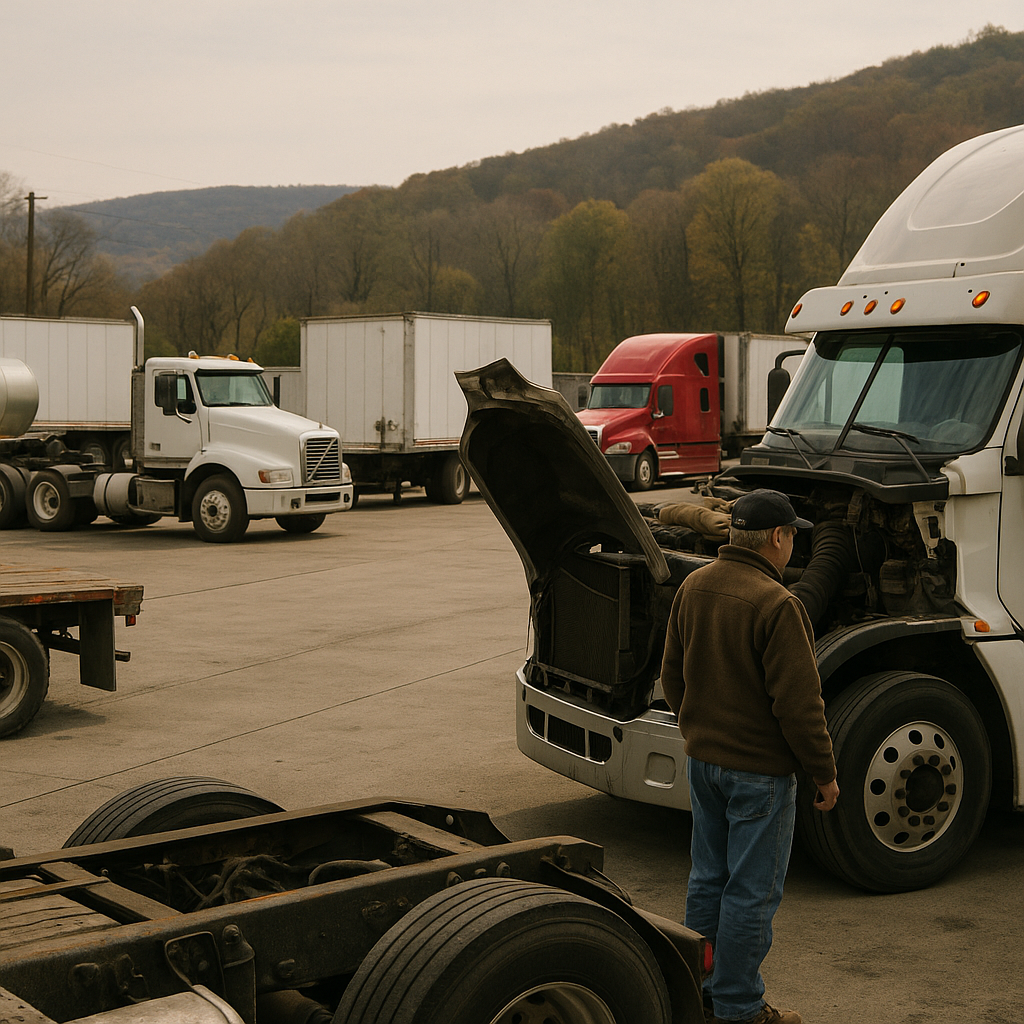

A Pennsylvania food truck needs more than basic restaurant coverage because it has two exposures at once: a vehicle on public roads and a food business serving the public. That mix affects what coverage you need, what can go wrong, and what underwriters look at when they price the policy.
If you’re shopping food truck insurance Pennsylvania operators actually use, the key is separating required coverage from smart coverage. This guide breaks down the common policy pieces, the Pennsylvania rules that can affect them, the real cost drivers, and the gaps that catch owners off guard.
What Pennsylvania Food Truck Insurance Usually Needs to Cover#
A Pennsylvania food truck insurance plan usually needs to cover both driving risk and food-service risk. That means commercial auto for the truck, liability for customer injuries or property damage, and often physical damage, workers’ compensation, and downtime-related protection depending on how the operation runs.
A food truck isn’t just a restaurant with wheels. It’s a mobile business that drives, parks, cooks, stores equipment, handles cash, and serves customers in changing locations. A restaurant-only package can miss important exposures because it assumes a fixed premises instead of a truck moving from one event, curb, or private lot to another.
Food truck risk is different from restaurant risk#
Commercial auto is insurance for a business-owned vehicle used in business operations. For a food truck, that usually means the truck itself needs a commercial auto policy because personal auto policies typically exclude business use or won’t fit the vehicle’s size and setup.
General liability is coverage for third-party bodily injury or property damage not caused by driving the vehicle. A practical example: a customer slips near your service window, or your setup damages a venue’s pavement or power connection.
A food truck also has kitchen risk that a standard vehicle policy won’t touch. If a fryer fire damages the cooking area, or smoke damages built-in equipment, that points to property-related coverage rather than a simple auto liability claim.
The core coverages most operators compare#
Physical damage covers damage to your insured vehicle from collision and other covered causes like fire, theft, or vandalism. If your truck gets sideswiped on the way to a festival or hit overnight while parked, this is the coverage owners usually expect to respond.
Workers’ compensation covers employee job-related injuries and lost wages under state rules. If you have staff helping prep, cook, or serve, this can become relevant fast.
Business interruption helps with lost income and continuing expenses after a covered loss shuts down operations. If a fire damages the service area and you miss a packed weekend run, that lost revenue can matter as much as the repair bill.
What changes when you drive, park, and serve in public#
Where and how you operate changes the policy. Driving across multiple counties, parking in dense urban areas, cooking with open flame, and serving at fairs or private venues all create different underwriting questions.
That matters when a problem gets expensive. A truck can be drivable after a minor accident, but if the generator mount, hood system, or cooking line is damaged, you’re still off the road for business purposes. If you’re not sure how to scope those exposures,
Pennsylvania Rules That Can Affect Food Truck Coverage#
Pennsylvania food truck coverage is shaped more by state, city, county, health, and event requirements than by federal trucking rules. Most standard food trucks are not being insured under the same federal financial responsibility framework that applies to for-hire interstate trucking under 49 CFR Part 387.
That distinction matters because operators sometimes hear commercial-vehicle advice that doesn’t fit a mobile food business. FMCSA rules generally apply in trucking contexts tied to regulated commercial motor vehicles, not to every business vehicle with a kitchen inside. If you run a normal food truck in Pennsylvania, your insurance conversation is usually about state driving laws, business operations, permits, venue contracts, and employee obligations.
State rules vs. local permits#
Pennsylvania’s food-service and public-health rules can affect what documents or insurance proof you need even when they don’t prescribe one exact policy form. The Pennsylvania Department of Health and the Pennsylvania Department of Agriculture are good starting points for understanding how food businesses and mobile vendors are regulated, especially when local jurisdictions layer on their own permit rules.
A certificate of insurance (COI) is a document that shows another party your policy exists and lists basic coverage information. Event organizers, private property owners, and municipalities often ask for one before they let you set up.
When workers’ compensation becomes relevant#
Pennsylvania workers’ compensation obligations can apply when a food truck has employees. The Pennsylvania Department of Labor & Industry is the authoritative source to confirm when coverage is required for your setup, employee count, and business structure.
This matters for more than payroll staff. If you hire someone to work the window, help with prep, or handle cleanup during events, you should verify whether they count as an employee for workers’ compensation purposes instead of assuming cash pay or part-time status changes the rule.
Why vehicle and operating location matter#
Operating in a city park, at a fair, or on private property can change what proof of insurance you need. One event may ask only for a COI, while another may require higher liability limits or request to be added as an additional insured.
A food truck that stays close to one hometown route can look different from one that travels longer distances across Pennsylvania for festivals and catering. The more varied the locations, the more important it is to match the policy to where you actually operate, not where you hope to park most of the time.
How Much Food Truck Insurance Costs in Pennsylvania#
Food truck insurance in Pennsylvania varies based on the truck, the menu, the driving exposure, and the people operating the business. The biggest cost drivers are usually vehicle value, driver history, radius of operation, employee count, claims history, cooking equipment, and whether you add protection for downtime, equipment, or spoilage.
There’s no honest flat number that fits every operation. A newer, higher-value truck with built-in equipment costs more to repair or replace than an older setup. A truck that travels farther, parks in crowded event spaces, or has multiple drivers can also bring more risk to the policy.
What drives the price up or down#
Underwriting is the insurer’s process for evaluating your risk before offering terms and pricing. For food trucks, underwriters usually care about who drives the truck, where it goes, how often it moves, how it’s stored, and what kind of cooking happens inside.
A clean driving record helps. So does accurate information about where the truck is garaged, whether it’s parked in a secured area overnight, and whether you have prior claims for collisions, fires, theft, or customer injuries.
Why menu and service style matter#
Your menu can change the risk more than many first-time owners expect. A truck selling prepped sandwiches, baked goods, or packaged drinks may present a different loss profile than a truck running deep fryers, griddles, propane, and open flame all day.
Take two examples. A taco truck that does most prep in a commissary and finishes food on a flat-top may look more manageable than a truck heavily dependent on fryers and hot oil service during late-night events. The second operation can create more severe fire, grease, and injury exposure even if both trucks have similar sales.
Examples of common cost differences#
Coverage choices change the total too. Higher liability limits, lower deductibles, extra drivers, more expensive scheduled equipment, and add-ons for interruption or spoilage can all push pricing upward.
The same goes for business style. A truck working weekday office lunches may look different from one doing festivals, beer gardens, sports events, and private catering. Weekend crowds, unfamiliar venues, late teardown, and longer travel days can all shape the premium because they change how often something can go wrong.
How to Lower Your Food Truck Insurance Cost Without Creating Gaps#
The best way to lower food truck insurance cost is to reduce avoidable risk and clean up the details underwriters care about. That usually means better driving controls, better maintenance records, stronger fire safety, secure storage, and a policy structure that matches your real operation instead of guessing.

The goal isn’t to strip the policy down until it fails in a claim. It’s to remove unnecessary exposure while keeping the coverages a mobile food business actually needs.
Reduce avoidable auto risk#
Start with drivers. If only one or two people should drive the truck, keep it that way and make sure your named-driver list is accurate.
Dash cams, scheduled maintenance, and documented inspections can help support a cleaner underwriting story. So can secure overnight parking and route planning that avoids unnecessary long-distance moves or high-congestion situations when possible.
Document kitchen and fire safety#
Food truck losses aren’t just about crashes. Fire suppression inspections, propane handling procedures, hood cleaning, and documented equipment maintenance all matter because they show you’re managing kitchen risk, not just vehicle risk.
Seasonal operators should document that too. If the truck is stored part of the year, tell the broker how and where it sits, whether batteries and propane are managed properly, and how the vehicle is protected from theft or vandalism in the off-season.
Choose coverage intentionally#
Don’t bundle blindly just because a package sounds simpler. One package might be fine for a fixed-location restaurant but miss a mobile exposure that matters to a food truck owner.
A better approach is to review each piece on purpose: auto, liability, physical damage, employee injury exposure, and downtime-related protection. If you need help sorting what’s essential versus optional,
Food Truck Coverage Gaps Owners Miss#
The most common food truck insurance gaps come from assuming one policy covers everything. Personal auto usually doesn’t replace commercial auto, general liability doesn’t cover vehicle collisions, and cargo-style coverage doesn’t automatically protect built-in kitchen equipment, spoilage, or downtime.
These gaps show up after a loss, when it’s too late to fix them. That’s why food truck owners should look at how each claim would actually happen, not just whether the policy name sounds familiar.
Vehicle damage versus liability#
A lot of owners assume liability means the truck itself is covered. It doesn’t. General liability is for third-party injury or property damage from business operations, while commercial auto liability handles covered driving-related damage you cause to others.
If you want coverage for your own truck after a crash, theft, vandalism, or fire, you’re usually talking about physical damage. Without it, a collision on the way to a paid event can leave you paying for repairs out of pocket even if you carried liability.
Downtime and spoilage#
Spoilage and shutdown losses are separate problems. Refrigeration breakdown or spoilage coverage addresses loss tied to cooling failure or temperature-sensitive stock, while business interruption addresses lost income after a covered event interrupts operations.
Picture a claim where the truck can still drive, but the cooking line is damaged by a small interior fire. You might be able to move the vehicle, but you can’t serve food for two weekends while repairs happen. That’s a downtime problem, not just an auto repair problem.
Equipment and trailer exposures#
Owners also mix up stock, equipment, and trailer-related exposure. Built-in equipment, portable cooking gear, generators, and attached or separate trailer setups may need to be scheduled and described correctly so there isn’t a fight later about what was actually insured.
That matters even more if your operation uses support equipment off-truck at events. The broader your setup, the more important it is to confirm what is on the vehicle, what is temporary event equipment, and what coverage applies to each.
How to Compare Quotes and Choose the Right Broker#
The best food truck insurance quote is not just the lowest-priced one. You should compare limits, deductibles, exclusions, vehicle and equipment schedules, turnaround time for certificates, and whether the broker actually understands mobile food service instead of forcing your business into a generic restaurant template.
That last part matters because food truck operators often need fast document changes. A venue may ask for a same-day COI, a city may want revised named-insured details, or an event organizer may require additional insured wording before setup.
Questions to ask before you bind#
Ask what the quote assumes about drivers, service area, and storage. Ask how the truck is classified, what equipment values are included, and whether the policy addresses downtime or spoilage if those exposures matter to your business.
Also ask what’s excluded. A cheap-looking quote can turn into an expensive mistake if it leaves out a key driver, undervalues the truck buildout, or assumes a tighter operating radius than the one you actually run.
What a good quote review should include#
A solid quote review should walk through the vehicle schedule, named drivers, garaging address, service territory, employee count, and major equipment values. It should also account for permits, event requirements, and whether you routinely need COIs for fairs, breweries, office parks, or private catering clients.
The NAIC is a useful source for plain-language insurance explanations if you want to understand how common policy types differ before you bind. That’s especially helpful when two quotes use similar labels but different limits, deductibles, or exclusions.
When speed matters and when detail matters#
Speed matters when you need proof of insurance to lock in an event or satisfy a permit deadline. Detail matters when you’re making sure the quote actually fits the truck, the menu, and the way you operate.
A good broker should do both: move quickly on certificates and endorsements, and still catch the details that can wreck a claim later. LogRock specializes in trucking insurance for owner-operators and small fleets, and if you’re trying to scope a commercial vehicle-based operation clearly, that practical review process matters.
FAQ#
Do Pennsylvania food trucks need commercial auto insurance?
Yes, most Pennsylvania food trucks need commercial auto insurance for the truck itself because the vehicle is being used for business, not personal driving. A food truck travels to events, parks in public places, carries cooking equipment, and serves customers as part of the business operation. Personal auto policies usually don’t fit that kind of use and may exclude it altogether. Commercial auto is the policy type built for a business vehicle exposure like this. It can also be important when venues or contract partners ask for proof that the truck is properly insured for business use.
What insurance do I need to start a food truck in Pennsylvania?
Most food truck owners start by looking at commercial auto, general liability, and physical damage for the truck. If you have employees, workers’ compensation may also be required under Pennsylvania rules. Many operators also consider business interruption, equipment-related protection, or spoilage-related coverage depending on how much they rely on refrigeration, built-in cooking equipment, and booked events. The right stack depends on how you operate, where you serve, what you cook with, and whether venues ask for certificates or additional insured status before allowing you on site.
Does Pennsylvania require workers’ compensation for a food truck with employees?
In many cases, yes, workers’ compensation becomes relevant when a Pennsylvania food truck has employees. The exact obligation should be confirmed through the Pennsylvania Department of Labor & Industry because requirements can depend on your business structure and employment setup. Don’t assume part-time, seasonal, or cash-paid help automatically falls outside the rule. If someone works the window, cooks, preps food, or helps with cleanup, that role can still create workers’ compensation exposure. It’s better to verify early than find out after an on-the-job burn, fall, or lifting injury.
How can I lower food truck insurance costs without losing coverage?
Start by cutting avoidable risk, not by stripping coverage at random. Clean driver records, accurate named-driver lists, scheduled maintenance, dash cams, secure overnight parking, and fire-suppression maintenance can all help your underwriting profile. Accurate equipment values matter too, because overinsuring or underinsuring creates different problems. Seasonal schedules and documented loss-control practices can also support a cleaner quote conversation. The smart move is to compare policy structure, deductibles, and optional coverages carefully so you’re keeping the protection that matters for a mobile operation while avoiding pieces that don’t fit your setup.
What is the difference between restaurant insurance and food truck insurance?
Restaurant insurance is usually built around a fixed location. Food truck insurance has to account for road exposure, vehicle damage, public parking, changing venues, and service interruptions tied to a mobile setup. A fixed restaurant doesn’t usually need its core policy to address collision risk on the way to a festival or overnight damage to a self-contained kitchen vehicle. Food trucks also tend to face more certificate requests from events and private property owners. In short, a food truck is both a vehicle and a food-service business, so its insurance needs are broader.
What should I compare in a food truck insurance quote?
Compare more than price. Look at liability limits, deductibles, exclusions, vehicle schedules, listed drivers, equipment values, service area, and whether the quote reflects your real menu and operating style. If one quote assumes short local routes and another accounts for festivals across Pennsylvania, they are not truly equal even if the premium looks similar. You should also ask how fast the broker handles certificates of insurance and endorsements, because food truck operators often need those on short notice. A good quote review should make the policy easier to understand, not harder.





