
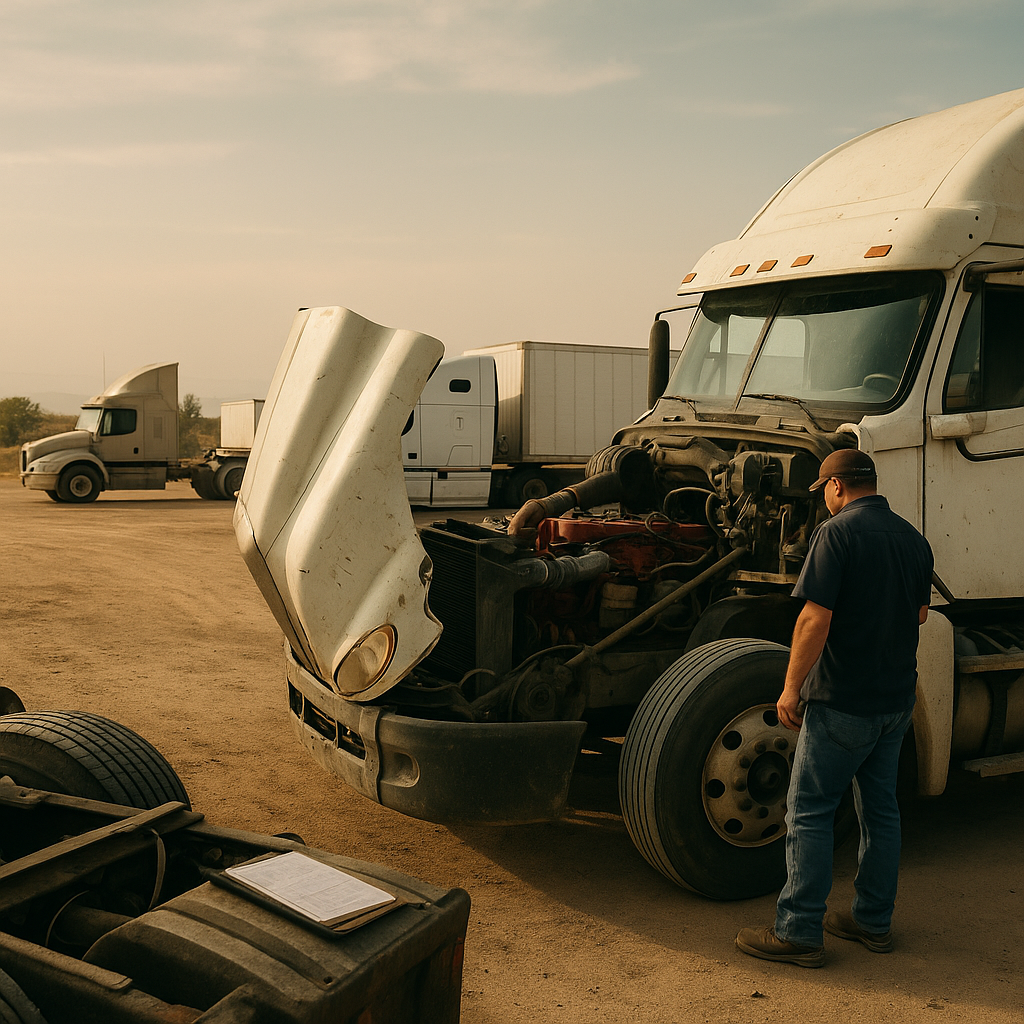
If you’re shopping for physical damage insurance for trucks in Texas, the biggest mistake is mixing it up with liability or assuming it means "full coverage." Physical damage protects the truck itself from covered damage like wrecks, theft, hail, and fire. It doesn’t replace liability, cargo, or every other trucking policy you may need.
For Texas owner-operators and small fleets, that difference matters. A truck can be legal to run from a liability standpoint but still leave you exposed if a deer strike, rollover, theft, or hailstorm puts your unit out of service.
What Physical Damage Insurance Covers on a Truck#
Physical damage insurance for a truck covers damage to the truck itself from covered causes like crashes, theft, fire, vandalism, and weather. It protects the value of your equipment, not injuries, not damage you cause to other people, and not the freight in the trailer.
Physical damage insurance is coverage for damage to your truck itself, not injuries or property damage you cause to others.
For most trucking policies, physical damage usually means two main parts: collision coverage and comprehensive coverage. Collision coverage pays for damage from an impact, like backing into a dock, hitting a guardrail, or sliding into another vehicle. Comprehensive coverage pays for non-collision losses, like hail, fire, vandalism, theft, or a deer strike.
Collision vs. comprehensive#
A simple way to think about it: if your truck hits something, or something hits your truck while you’re operating, that usually falls under collision. If a storm tears up the hood, someone steals the unit, or a fire starts in a parked truck, that’s usually comprehensive.
Take a Texas example. If you jackknife on a wet highway near Dallas and damage the bumper, hood, and fender, that’s a collision claim. If a hailstorm in Amarillo dents the cab and cracks lights while the truck is parked, that’s a comprehensive claim.
Common equipment and theft scenarios#
This coverage is about the tractor’s insured value. If someone steals the truck from a yard, physical damage may respond. If vandals break glass or damage body panels, it may respond. If a branch falls on the cab during a storm, this is the part of the policy you’d look to first.
It also helps to separate exposures clearly. Your tractor’s damage is one issue. Damage to a borrowed trailer is a different issue. Freight destroyed in transit is a cargo issue. Injury or property damage you cause to someone else is a liability issue.
What it does not cover#
Physical damage insurance does not cover everything that can go wrong with a truck. Deductible means the amount you pay out of pocket before the insurer pays a covered claim.
Wear and tear, rust, old tires, and most mechanical breakdowns are generally not covered. Cargo loss isn’t covered here. Neither is commercial auto liability, which is the coverage tied to injuries or property damage you cause in an accident. The Texas Department of Insurance is a good source for basic insurance definitions and consumer guidance on how vehicle coverages differ.
That gap catches people all the time. A driver says, "I have full coverage," then finds out the engine failure wasn’t covered, the cargo wasn’t covered, and the trailer wasn’t covered either.
If you’re not sure what protection fits your truck and operation,
Is Physical Damage Insurance Required in Texas?#
Physical damage insurance is usually not what Texas or FMCSA focuses on as a legal operating requirement. In most cases, the law focuses on liability and financial responsibility for the damage you may cause to others, while physical damage remains optional unless a lender, lessor, or contract requires it.
That distinction matters because truckers often hear "required insurance" and assume every policy on the quote is legally mandatory. Usually it isn’t. Commercial auto liability is the coverage that pays when your truck causes bodily injury or property damage to others.
Under 49 CFR Part 387, FMCSA financial responsibility rules deal with public liability for certain motor carriers, not physical damage on your own truck. For example, for-hire interstate carriers hauling general freight in vehicles over 10,001 pounds must carry at least $750,000 in public liability under federal rules. That’s a liability requirement, not a physical damage requirement. You can confirm carrier operating details through FMCSA and look up active carrier records on SAFER.
Texas rules versus lender requirements#
Texas insurance and trucking rules still don’t turn physical damage into a blanket legal requirement for every truck. What often makes it feel mandatory is financing. A lienholder is the lender that has a financial interest in the truck until you pay it off. A loss payee is the party listed to receive payment rights under the policy because of that financial interest.
If your truck is financed, the lender will commonly require physical damage coverage for the truck’s value. If you cancel it, that can trigger a contract problem even if the state never required the coverage in the first place.
When a lienholder or lessor can require it#
A financed tractor is the easiest example. Say you buy a newer sleeper with a loan. Texas may not require physical damage by statute for ownership alone, but your lender likely will. A leased-on operator may also find that the lease agreement requires certain coverages to protect the equipment arrangement.
If you’re leasing a truck from someone else, the lessor may require coverage because they still own the unit or still carry financial risk if it’s damaged.
Owner-operator decision points#
A paid-off older truck is different. You may be legally able to operate with liability only, depending on your operation and filing requirements, but that doesn’t answer whether you can afford to repair or replace the truck after a loss.
That’s the real decision. Legal requirement and business risk are not the same thing.

How Deductibles Change Your Cost and Claim Outcome#
Your deductible directly affects both your premium and your out-of-pocket cost when a covered claim happens. Lower deductibles usually mean a higher premium, while higher deductibles can reduce premium but leave you needing more cash at the worst possible time.
That tradeoff is easy to ignore when you’re comparing quotes. It gets real fast when the truck is down and the body shop wants approval while you’re also missing loads.
Choosing a deductible#
A deductible is your share of the loss before insurance pays the rest on a covered claim. If you choose a lower deductible, the insurer takes on more of the small and mid-sized loss. If you choose a higher one, you’re keeping more risk yourself.
For a driver with tight cash flow, a high deductible can backfire. Saving some premium each month doesn’t help much if you can’t come up with the deductible after a crash outside Houston.
How deductible size affects premium and cash flow#
Picture two drivers with similar trucks. One picks a lower deductible because he knows he doesn’t keep much reserve cash. The other picks a higher deductible to lower the premium. Both choices can be reasonable, but only if they match the bank account behind them.
Hail is a good Texas example. A truck parked in a storm may have multiple panels damaged at once. A fender-bender at a truck stop may be repairable, but the deductible still comes due before the policy helps with the rest.
Claims example: low vs high deductible#
Say the truck suffers covered body damage from backing into a post. With a lower deductible, more of that repair bill shifts to insurance sooner. With a higher deductible, more stays on you.
You may also see a combined deductible, which is a policy structure that applies one deductible to a combined physical damage loss rather than separate deductibles by coverage part in some situations. If you see that wording in a quote, make sure you understand exactly when it applies.
Texas Truck Insurance Costs: What Drives the Price#
Physical damage insurance for trucks in Texas costs more or less based on the truck, the operation, and the risk around both. The biggest drivers are usually truck value, age, driving and loss history, operating radius, garaging location, and the deductible you choose.
This is where apples-to-apples comparison matters. One quote may look lower simply because it’s insuring a lower stated value, using a higher deductible, or leaving out options like towing or equipment coverage.
Truck value and age#
A newer tractor with a high replacement cost usually costs more to insure for physical damage than an older paid-off unit with lower market value. A high-value sleeper with upgraded components creates a bigger potential claim than a basic day cab.
That doesn’t mean older always means cheap. Older units can still create concerns if parts are harder to source, prior condition is rough, or loss history suggests more claim risk.
Operation type and routes#
Your operation matters because exposure changes by how and where the truck runs. A truck doing long interstate runs faces different loss patterns than one staying closer to its home base. A unit parked regularly in an area with higher theft risk may quote differently than one kept in a more controlled yard.
A garaging location is the place where the truck is primarily kept when not in use. In Texas, that can matter more than people expect. A truck parked in a secured yard outside a smaller market is not the same risk profile as one street-parked in a high-theft area.
Deductible, garaging, and loss history#
The deductible choice moves the quote. Prior physical damage claims move it too. So does the condition and value of the truck you’re asking the insurer to protect.
This is also where truckers accidentally compare the wrong thing. Physical damage is separate from cargo, general liability, and auto liability. So when you’re comparing a "truck insurance" package, make sure the physical damage piece is being compared on the same value, same deductible, and same add-ons. Your actual premium depends on your operation, cargo, radius, driving history, and other factors.
Smart Add-Ons and Gaps to Watch For#
The base physical damage policy may not include every expense that hits you after a truck loss. Add-ons like towing, roadside help, rental reimbursement, and equipment coverage can matter because the cost problem is often bigger than the metal damage alone.
That’s especially true for owner-operators. A covered accident is bad enough. A covered accident plus a giant tow bill, a week of downtime, and uncovered accessories can turn into a much bigger hit.
Towing and roadside help#
Towing sounds small until you need a heavy-duty tow far from home. Some drivers assume a physical damage policy automatically handles recovery, towing, or roadside expenses. Sometimes it doesn’t, or it handles them with limits and conditions that matter.
A rollover recovery or long-distance tow in West Texas is not the same as a short local pull from a parking lot. Read the wording before you assume.
Rental reimbursement and downtime#
Rental reimbursement helps with the cost of a temporary replacement vehicle in certain covered situations if the endorsement is included. It does not mean your policy automatically replaces lost income.
That’s an important gap. Some endorsements help with substitute transportation, but they don’t erase the revenue loss from a truck being down. If the truck is your only income-producing unit, that downtime risk should be part of the buying decision.
Equipment floater and custom equipment#
An equipment floater is coverage designed for tools, added equipment, or certain movable items that may not be fully protected under the truck’s base physical damage coverage. This matters if you’ve added non-factory gear after purchase.
Think custom headache racks, upgraded electronics, added work gear, or specialized attachments. If a damaged bumper, installed accessory, or custom part wasn’t included the way you thought, you can end up with a claim dispute over value or whether the item was covered at all.
How to Quote the Right Physical Damage Coverage#
To quote physical damage insurance for trucks in Texas correctly, you need accurate truck details, financing information, and a clear picture of how the unit actually operates. The quote gets cleaner when the insurer knows the VIN, truck value, garaging location, use type, and whether a lienholder or loss payee must be listed.
Bad information here creates bad quotes. If the truck is really leased on, financed, or parked somewhere different than stated, the policy may not fit the risk the way you thought it did.
Information insurers usually ask for#
Have the basics ready before you start. That usually includes:
- VIN
- Year, make, and model
- Current truck value
- Primary garaging location
- Use type and operating radius
- Driver and loss history
- Lienholder or loss payee details if financed
The VIN is the vehicle identification number used to identify the exact truck. If you’re operating under your own authority, your DOT number and MC number may also be part of the broader quote process because they help show the carrier setup and operating context. You can verify carrier details on SAFER.
Truck value and financing details#
If the truck is financed, the lender usually needs to be listed correctly. That affects both paperwork and claim handling. A financed truck with the wrong lienholder information can create delays when there’s already enough stress after a loss.
This is also where truck value matters. If you understate value to chase a lower quote, you may create problems later. If you overstate it, you’re not doing yourself any favors either.
Matching coverage to your operation#
An owner-operator with one financed tractor has a different setup than a two-truck fleet with one paid-off spare unit. A leased operator may need to line up physical damage with lease terms. A small fleet may need each unit valued and scheduled correctly instead of using rough guesses.
Review physical damage next to liability and cargo, not by itself. The truck might be protected while the rest of the business isn’t. If you’re not sure how to scope that package, LogRock specializes in trucking insurance for owner-operators and small fleets.
When Physical Damage Makes Sense vs When to Reconsider#
Physical damage usually makes the most sense when a truck is financed, newer, expensive to replace, or central to your cash flow. It may deserve a harder look on an older paid-off unit if the premium, deductible, and likely payout no longer line up with the truck’s real value.
There’s no one-size-fits-all answer. The question is whether you could absorb the repair or replacement hit without putting the business in a hole.
Financed truck scenarios#
If the truck has a loan, this is usually the easiest call. The lender often requires coverage, and even if it didn’t, the financial exposure is still real. One major collision or theft loss can leave you with a damaged truck and a note still due.
That makes physical damage less of a luxury and more of an asset-protection decision.
Older paid-off truck scenarios#
A paid-off truck gives you more room to think. If the unit’s value is modest and you could replace it or retire it without wrecking the business, carrying physical damage may be less compelling.
But age alone doesn’t answer it. A paid-off truck that still produces steady revenue may be worth protecting if you’d struggle to cover a major repair, source another truck, or survive the downtime.
Balancing downtime risk and repair exposure#
This is the real gut-check. Ask yourself what happens if the truck takes a hard hit next week. Could you pay the deductible? Could you handle towing and storage? Could you sit for repairs without losing critical income?
If the honest answer is no, physical damage may make sense even when it’s technically optional. If you’d like help matching coverage to your actual operation,
FAQ#
What is physical damage insurance for trucks?
Physical damage insurance for trucks covers damage to the truck itself from covered causes like collision, theft, fire, vandalism, and weather. It is about the equipment value of the truck, not bodily injury, not damage you cause to someone else’s property, and not the cargo you’re hauling. In practice, it usually includes collision and comprehensive coverage. If your truck backs into a dock, gets hit by hail, or is stolen from a lot, this is the coverage you would look at first. It does not replace liability, cargo, or every other trucking policy.
Is physical damage insurance the same as full coverage?
Not really. "Full coverage" is an informal phrase, and it often causes confusion in trucking. Physical damage is only one part of a broader commercial trucking insurance setup. A driver may say he has full coverage, but that could still leave gaps for cargo, general liability, trailer damage, downtime-related expenses, or mechanical breakdown. In most cases, physical damage means protection for the truck itself through collision and comprehensive-type causes of loss. It does not mean every possible loss connected to your business is covered.
Is physical damage insurance required in Texas?
Usually, no, not by itself as a general legal rule for owning the truck. Texas and federal trucking rules are mainly focused on liability and financial responsibility for damage or injuries you may cause to others, not on protecting your own truck from physical loss. But in real life, physical damage often becomes necessary because of a lender, lease agreement, or business risk. If the truck is financed, the lienholder will commonly require it. Even on a paid-off truck, many owner-operators still choose it because one major loss could shut down the business.
What does physical damage insurance not cover?
Physical damage insurance does not cover every type of trucking loss. It generally does not cover commercial auto liability, so it won’t pay for injuries or property damage you cause to other people. It also does not cover cargo losses, normal wear and tear, rust, gradual deterioration, or most mechanical breakdowns. Trailer damage may also be separate depending on ownership and policy structure. Added equipment can be another gap if it was not scheduled or covered properly. That’s why it’s worth reviewing endorsements and exclusions instead of relying on the phrase full coverage.
How do deductibles affect physical damage coverage?
The deductible is the amount you pay out of pocket before insurance pays on a covered claim. A lower deductible usually means a higher premium, while a higher deductible can lower premium but leaves you with a bigger cash hit after a loss. That matters more than it sounds when the truck is already down and revenue has stopped. For example, a deductible that looked manageable during quoting may be tough to come up with after towing, storage, missed loads, and repair delays start stacking up. The right deductible should fit your real cash flow, not just your quote preference.
What information do I need to get a quote for truck physical damage insurance?
For most quotes, you should have the VIN, year, make, model, current truck value, garaging location, use type, and financing details ready. If the truck has a lender, you’ll also want the lienholder or loss payee information because that affects how the policy is issued. Insurers may also ask about driving history, prior claims, operating radius, and whether the truck runs under your own authority or is leased on. The cleaner and more accurate that information is, the more useful the quote will be for comparing your real options.





