
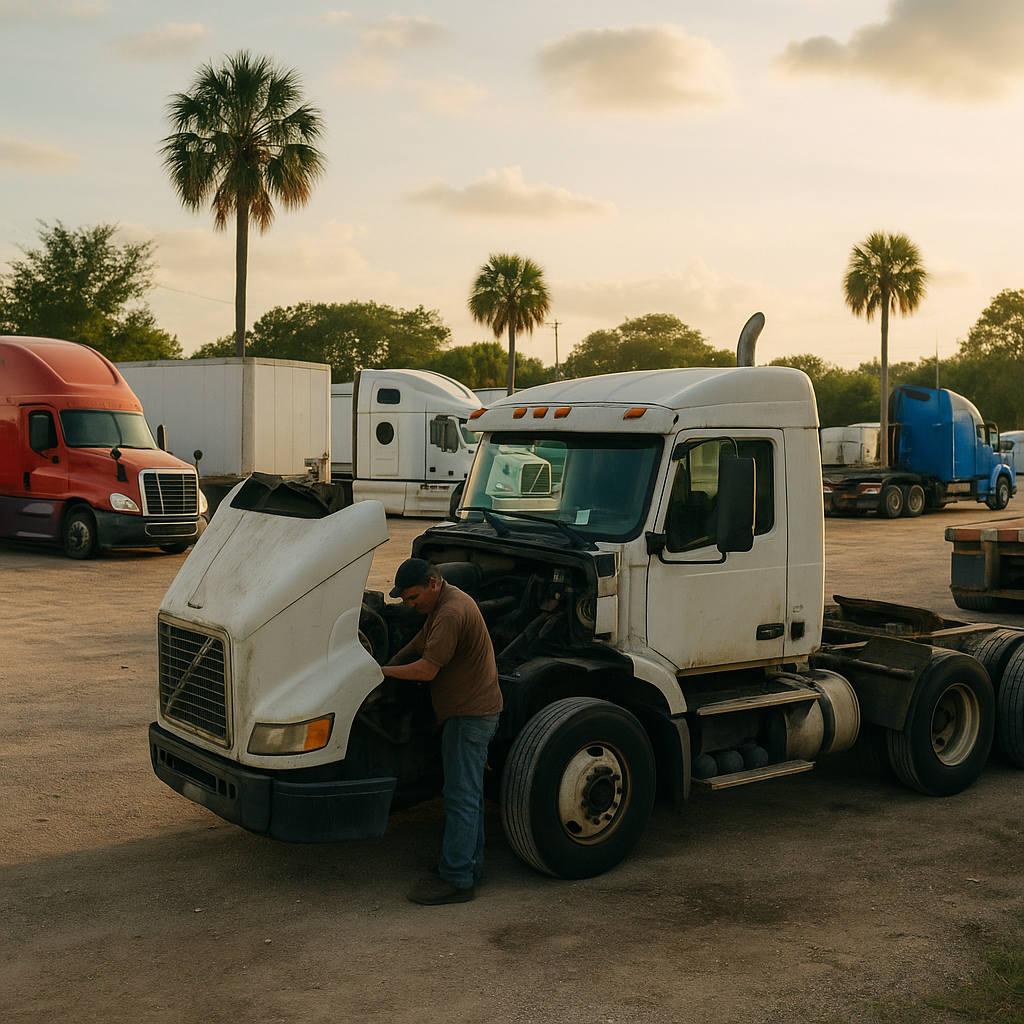

Florida tow truck insurance is commercial coverage built for towing risk, not a personal auto policy with a business name slapped on it. If you run roadside service, recover disabled vehicles, or store customer cars even overnight, the right policy depends on exactly what your truck does and what property your business touches.
A lot of Florida operators get tripped up in two places. First, they mix up state operating rules with federal FMCSA rules. Second, they assume “tow truck insurance” is one thing, when it’s really a package of coverages that can change a lot between a light-duty local operator and a heavier wrecker doing recovery work.
What Florida Tow Truck Insurance Covers#
Florida tow truck insurance usually means commercial insurance built around towing operations, including liability for the truck, damage to the truck, and protection for customer vehicles or stored vehicles when your business handles them. The right setup depends on whether the truck is used personally, used commercially, or used in a towing-and-storage operation.
Tow truck insurance is commercial coverage built around towing operations, not personal auto insurance. That distinction matters right away.
A personal-use tow truck is a truck someone owns for non-business use, like hauling a personal project car or moving their own equipment occasionally. A commercial towing operation uses the truck for pay, roadside service, repossession, recovery, municipal work, private-property towing, or customer transport, and that changes both underwriting and coverage needs.
Commercial towing vs. personal-use tow trucks#
If a truck ever tows for the general public or as part of a business, insurers usually treat it as commercial. That means a personal auto policy usually won’t fit the risk, and a generic business auto policy may still miss towing-specific exposures.
A simple example: if you hook up a disabled customer car on I-95, tow it to your lot, and leave it there overnight, your risk changed three times. You had road liability while driving, customer-vehicle exposure while towing, and custody exposure while storing the vehicle.
Core coverages most towing businesses consider#
Commercial auto liability pays for bodily injury or property damage you cause to others with the insured truck. This is the core liability coverage tied to operating the vehicle on public roads.
Physical damage covers damage to your tow truck itself from collision, fire, theft, weather, and similar losses, depending on the policy options selected.
On-hook towing coverage protects a customer’s vehicle while it is attached to or being transported by your tow truck. This is one of the biggest coverage gaps in wrongly written towing policies.
Garagekeepers legal liability covers damage to a customer’s vehicle while it is in your care, custody, or control at a covered location, such as a storage yard or shop. The NAIC offers plain-language insurance background that helps explain how policy terms and exclusions work.
Coverage add-ons that matter for towing and storage#
General liability covers non-driving business liability, like a customer slipping in your yard or damage tied to business operations away from the truck.
If your operation stores vehicles, handles impounds, or keeps cars overnight, garagekeepers can matter as much as auto liability. If you do quick roadside tows only, your mix may be lighter.
The mistake is thinking every towing business needs every endorsement. The real goal is matching coverage to the actual operation: what you tow, where you tow, whether you store vehicles, and whether you touch customer property beyond the hook.
If you’re not sure whether your current policy actually covers towing, storage, or customer vehicles,
What Is Required to Operate a Tow Truck in Florida?#
What’s required to operate a tow truck in Florida depends on whether you’re dealing with Florida state rules, federal motor carrier rules, or both. A local operator may mainly need state-level registration, licensing, and insurance that fits the business, while some heavier or interstate operations may also fall under FMCSA rules.
This is where a lot of bad advice starts. Florida requirements and FMCSA requirements are not the same thing.
State rules versus federal/FMCSA rules#
Florida operators should verify registration, title, plate, and operating requirements with the Florida Department of Highway Safety and Motor Vehicles. State or local requirements may also affect how a tow business operates, especially if it performs impounds, municipal towing, or storage.
FMCSA is the Federal Motor Carrier Safety Administration, the federal agency that regulates certain commercial motor vehicle operations. Federal rules can apply depending on vehicle type, weight, and whether the tow truck operates in interstate commerce.
When towing operations are commercial motor vehicles#
A commercial motor vehicle is a vehicle used in business that may fall under specific state or federal safety and insurance rules depending on how it operates. Not every Florida tow truck falls under the same federal standard.
If the tow operation crosses state lines or otherwise operates in interstate commerce, federal insurance and safety concepts can come into play. Under 49 CFR Part 387, for-hire interstate carriers in vehicles over 10,001 pounds hauling general freight must carry at least $750,000 in public liability, but towing operations have to be scoped carefully by use, weight, and operation before applying any FMCSA minimum.
A local light-duty roadside operator in one Florida metro may face mostly state and insurer requirements. A heavy wrecker doing broader commercial recovery work may face a different compliance picture, especially if the operation touches interstate commerce or needs federal registration. You can verify federal carrier status through SAFER when FMCSA registration is involved.
How insurance fits into operating authority and registration#
Insurance is part of legal operation, but the exact minimums and filings can vary by vehicle class and business setup. That’s why “what Florida requires” and “what your insurance should include” are related, but not identical questions.
In practice, the safe move is to confirm state operating requirements first, then make sure the insurance matches the real towing class. A policy written like ordinary commercial auto can still leave out on-hook, storage, or roadside exposures that matter day to day.
How Much Is Tow Truck Insurance per Month in Florida?#
Tow truck insurance per month in Florida varies with the truck, the drivers, the towing radius, the kind of jobs you take, and whether you’re covering customer vehicles or storage exposure. A light-duty local operator may look very different to underwriters than a heavier recovery unit with higher equipment value and broader liability risk.
There isn’t one honest flat monthly number for Florida towing. Your actual premium depends on your operation, cargo or customer-vehicle exposure, radius, driving history, and other factors.
Main cost drivers for Florida towing businesses#
Underwriting is the insurer’s process for evaluating risk and pricing a policy. For towing, underwriters usually care about truck class, value, garaging location, claims history, MVRs, years in business, and what kind of towing you actually perform.
They also look closely at whether you do private-property towing, roadside assistance, accident recovery, heavy-duty work, or storage. A truck that only does short local tows from repair shops is usually a different risk than one doing night calls, winch-outs, and police rotation work.
Why heavier trucks and higher-risk operations cost more#
Heavier trucks usually cost more to repair, carry more specialized equipment, and can cause larger losses. Broader operations can also mean more chances for claims involving customer vehicles, roadside scenes, or damage in storage.
Adding on-hook or garagekeepers-type protection can raise cost because the policy is covering more than the truck itself. Now the insurer is also looking at the value of customer vehicles in your custody and how those vehicles are handled.
Example cost scenarios by towing setup#
A single light-duty tow truck operating locally in Florida with one experienced driver, a limited radius, and no overnight storage often presents a narrower risk profile. That operation may still need strong liability and physical damage, but fewer moving parts can help.
A heavier wrecker with more expensive equipment, broader territory, recovery work, and overnight storage is different. The truck itself costs more, the jobs are riskier, and the business may need on-hook, garagekeepers, and higher limits.
Deductibles, claims history, and coverage limits are major levers. A cleaner loss record and a deductible you can realistically absorb may help the monthly number, while repeated claims or vague descriptions of the business can push it the other way.

How Much Is Insurance for a Tow Truck Business?#
Insurance for a tow truck business usually costs more than insuring one truck because the business may need protection for drivers, customer vehicles, storage exposure, and non-driving liability. Once you move from “a truck” to “an operation,” the policy often becomes a broader insurance design problem.
A one-truck owner-operator may mainly focus on the vehicle, driving exposure, and customer-vehicle handling. A two- to five-truck business can introduce additional drivers, different truck types, storage locations, dispatch practices, and more chances for claims.
What changes when you insure the business instead of one truck#
Business insurance can include more than commercial auto liability. If your company stores cars, has a yard, interacts with walk-in customers, or uses specialized towing gear, the coverage structure may need to account for those exposures.
A tow business that only performs quick roadside tows may need a simpler package than a company that stores vehicles overnight. That overnight storage piece can change the exposure in a big way.
Why multi-vehicle or mixed-operation fleets pay differently#
Mixed fleets are harder to price because not every truck does the same work. A light-duty rollback doing dealer transports is not the same risk as a recovery unit handling tougher roadside calls.
Adding drivers also changes the picture fast. One clean, experienced owner-driver is easier to underwrite than several drivers with mixed records and shifting schedules.
Common mistakes that inflate the wrong policy#
One common mistake is buying a generic commercial auto policy that lists the truck correctly but does not match the actual towing class of business. Another is skipping customer-vehicle or storage-related coverage because the quote looked lower without it.
That can create a bad surprise after a claim. If your business routinely tows, holds, or moves customer vehicles, the cheapest-looking policy on paper may be the wrong one in practice.
How to Pay Less Without Buying the Wrong Coverage#
The safest way to pay less for Florida tow truck insurance is to improve the risk you present, choose deductibles carefully, and only buy coverages that fit the actual towing operation. The goal isn’t the lowest number on a quote sheet; it’s avoiding expensive gaps while keeping the policy aligned to the work.
Start with the actual towing class. If you do local roadside service with no storage, say that clearly. If you also do impounds, recovery, or overnight holds, say that too.
Match coverage to your actual towing class#
Mismatched policies create hidden cost in two directions. You can underinsure by skipping on-hook or storage-related protection, or overinsure by adding forms that don’t fit the operation.
For example, a Florida operator who only handles short daytime roadside tows may not need the same structure as a business running a storage yard and police-rotation work. But if that same operator occasionally stores customer vehicles and never disclosed it, the “savings” may disappear when a claim hits.
Reduce risk with safety, maintenance, and storage controls#
Insurers care about whether your operation looks controlled. Clean driver hiring, documented vehicle inspections, secure parking, camera coverage, key control, and solid yard procedures can all support better underwriting over time.
A practical example: if a tow business tightens up after-hours parking, documents every vehicle condition at pickup, and improves driver training, it may become easier to explain the risk to underwriters at renewal. Results vary, but better controls usually help more than vague promises about “being careful.”
Compare quotes on the same coverage basis#
When you compare providers, keep the details identical: same truck value, same radius, same driver list, same deductibles, and the same towing-related coverages. Otherwise, one quote may look cheaper simply because it covers less.
Shopping only on price can backfire if the policy excludes the exact towing activity you perform. If the quote process feels generic, that’s usually a warning sign.
How to Get the Right Florida Tow Truck Insurance Quote#
A good Florida tow truck insurance quote starts with accurate operation details, not just the phrase “I need tow truck insurance.” The more clearly you describe the truck, drivers, towing work, storage exposure, and customer-vehicle handling, the more useful the quote will be.
Before you request quotes, gather the basic underwriting details. That helps avoid a fast but misleading number.
Information to gather before you request quotes#
Have your truck year, make, model, VIN, stated value, and equipment details ready. Include wheel-lift, rollback, winch, boom, or other specialized towing gear if it affects the operation.
Also be ready with your driving radius, where the truck is parked, driver history, loss history, and whether you store vehicles. If you tow for the general public, police rotation, motor clubs, repair shops, or a few dedicated accounts only, say that clearly.
Questions to ask before you bind coverage#
Ask whether the quote includes commercial auto liability, physical damage, on-hook coverage, and any storage-related protection your operation needs. Ask what exclusions apply to customer vehicles, unattended storage, recovery work, or specific towing classes.
Also ask whether the insurer understands your operation as roadside only, towing plus storage, or a mixed business. That one distinction can change the whole policy structure.
When to use a specialist broker#
A specialist broker is most useful when the operation has mixed exposures or unusual equipment. That includes heavier wreckers, multiple drivers, storage yards, or businesses that do more than simple point-A-to-point-B tows.
The right quote process should feel specific, not generic. If you’re not sure what coverage fits your operation, LogRock can help you scope it.
FAQ#
How much is tow truck insurance per month in Florida?
Tow truck insurance per month in Florida varies based on truck type, towing radius, driver history, vehicle value, claims history, and whether your business covers customer vehicles or stores them overnight. A light-duty local operator with one experienced driver usually presents a different risk than a heavier wrecker doing recovery work or broader service calls.
The main thing to watch is not just the truck, but everything around it. On-hook coverage, garagekeepers exposure, broader liability limits, and physical damage can all change the monthly cost. The most useful way to compare pricing is to quote the same operation details and coverages across providers.
What insurance does a tow truck need?
Most tow trucks used commercially need commercial auto liability at the core, because that covers injury or damage you cause to others while operating the truck. Many towing businesses also need physical damage for the truck itself, on-hook towing coverage for customer vehicles being towed, and garagekeepers legal liability if vehicles are stored in the business’s care.
Some operators may also need general liability for non-driving business risks, especially if customers come onto the property or the business has a yard. The exact mix depends on whether you do roadside only, recovery work, private-property towing, or overnight storage. Requirements vary by operation, not just by truck ownership.
How much is insurance for a tow truck business?
Insurance for a tow truck business usually costs more than insuring one truck because the policy may need to cover more than road liability. Once a business has multiple drivers, a yard, stored vehicles, or mixed towing services, the insurer is pricing a broader operation with more chances for claims.
A one-truck owner-operator doing local tows is usually a simpler risk than a small fleet handling impounds, recovery, and overnight storage. Total cost can change based on the number of trucks, driver records, type of towing, vehicle values, and whether the business needs customer-vehicle or storage-related protection. Your actual premium depends on your operation, radius, driving history, and other factors.
What is required to operate a tow truck in Florida?
To operate a tow truck in Florida legally, you need the registration, licensing, and insurance that fit your actual business setup, and you should verify those requirements with the Florida Department of Highway Safety and Motor Vehicles and any relevant local authority. State operating requirements are not the same thing as federal FMCSA rules.
Federal motor carrier rules may apply when the tow operation falls under FMCSA jurisdiction, which can depend on vehicle type, weight, and whether the business operates in interstate commerce. That’s why a local light-duty operator and a heavier wrecker can face different compliance checks. Insurance is part of legal operation, but the exact minimums and filings depend on the operation.
Can a personal-use tow truck be insured differently from a commercial tow truck?
Yes. A personal-use tow truck and a tow truck used in a towing business are usually insured differently because the risk is different. If the truck is only used for personal, non-business purposes, the policy approach may be narrower than a truck used to tow for hire, respond to roadside calls, or transport customer vehicles.
Once the truck is used commercially, insurers usually look at it as a towing operation, not just a truck. That can trigger a need for commercial auto liability and, depending on the business, on-hook, physical damage, garagekeepers, or general liability. Calling a commercial tow truck “personal use” when it actually earns income can create major claim problems later.





