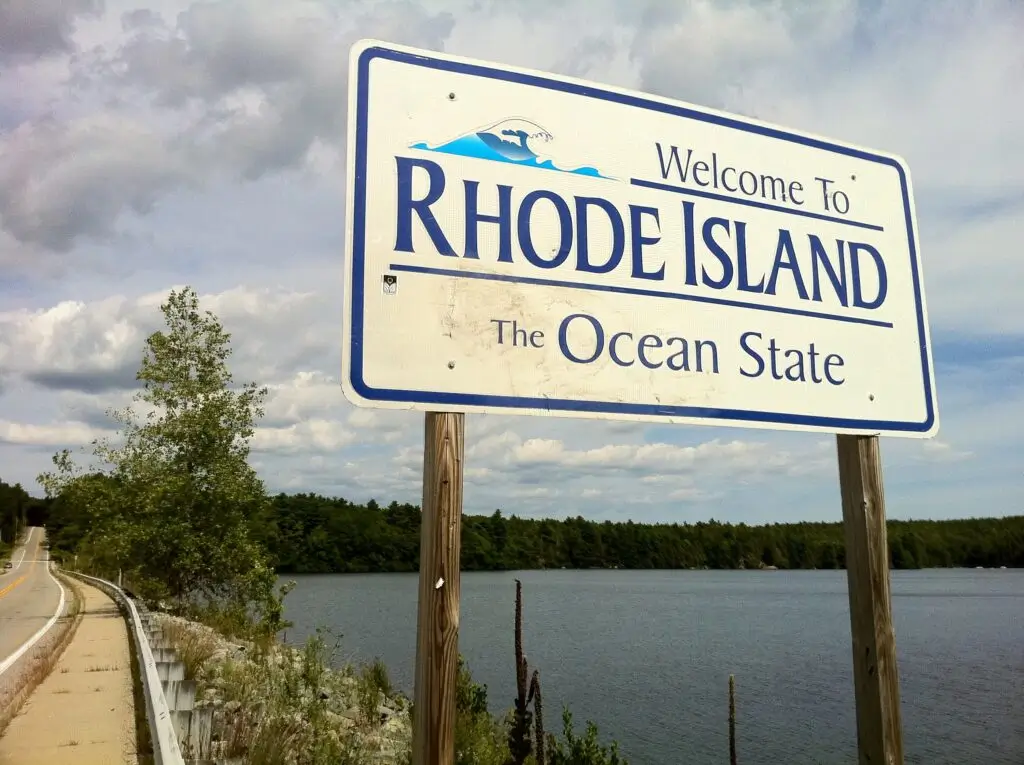

For regulatory purposes, the Rhode Island Division of Public Utilities and Carriers (DPUC) oversees intrastate trucking. If you haul goods for hire point-to-point within Rhode Island, you must obtain a Certificate of Public Convenience and Necessity (CPCN).
Unlike many states that only require insurance filings for passengers or movers, Rhode Island requires Form E (Liability) and often Form H (Cargo) for general freight carriers holding intrastate authority.
In Rhode Island, the average commercial truck insurance premium typically lands between $10,500 and $16,500 per year. This guide breaks down exactly what you need to pay to keep your DPUC authority active.
Key Takeaways: Rhode Island Truck Insurance Costs
- The Price Tag: Expect to pay around $13,200 annually for a Semi-Truck with a clean record. Rates are influenced by the high cost of living and repair in the Northeast.
- Monthly Breakdown: A typical owner-operator pays roughly $1,100/month for Liability and $250/month for Physical Damage.
- The DPUC Factor: Intrastate carriers must apply for a certificate from the DPUC ($250 fee) and maintain active Form E and Form H filings.
- Cargo Filing: Rhode Island is one of the few states that mandates Form H (Cargo Insurance) filings for general freight common carriers, not just household goods movers.

Real Numbers: Estimated Costs by Truck Type
Let’s look at the hard data. The following estimates represent the average annual cost for Auto Liability ($1M Limit) for a driver with a clean record in Rhode Island. Rhode Island is a “Tier 2” (Moderate/High) cost state due to population density and the frequency of accidents on I-95 and Route 146.
| Vehicle Type | Limit $300,000* | Limit $750,000 | Limit $1,000,000 (Standard) |
|---|---|---|---|
| Hotshot | $7,800 | $10,500 | $12,200 |
| Box Truck | $6,500 | $8,800 | $10,500 |
| Dump Truck | $8,800 | $11,500 | $13,800 |
| Semi Truck | $10,200 | $12,800 | $14,500 |
| Tow Truck | $9,500 | $12,200 | $14,200 |
Last updated: December 15, 2025.
LogRock Reality Check: While state law allows $300,000 liability for vehicles under 10,000 lbs, accessing the Port of Providence (ProvPort) or hauling for major distributors requires $1,000,000 Liability and General Liability coverage.
Not sure how auto liability and general liability fit together? This LogRock video breaks down the difference for truckers.
Liability Limits: Intrastate vs. Interstate
Rhode Island rules change depending on whether you cross state lines. We have broken this down into two tables to make it clear.
Table 1: Intrastate Requirements (RI DPUC)
For trucks that never leave Rhode Island (e.g., Warwick to Pawtucket).
| Vehicle Weight / Type | Minimum Liability Limit | Filing Required? |
|---|---|---|
| Freight < 10,000 lbs GVW | $300,000 CSL | Yes (Form E) |
| Freight > 10,001 lbs GVW | $750,000 CSL | Yes (Form E) |
| General Freight (Common Carrier) | $750,000 + Cargo | Yes (Form E + Form H) |
| Household Goods (Movers) | $300k – $750k + Cargo | Yes (Form E + Form H) |
| Passenger (16+ seats) | $5,000,000 CSL | Yes (Form E) |
Note: “CSL” means Combined Single Limit. Critical: To get your CPCN (Intrastate Authority), you must file Form E (Liability) AND Form H (Cargo) with the DPUC. Most states do not require Form H for general freight, but Rhode Island does.
Table 2: Interstate Requirements (FMCSA / Federal)
For trucks that cross state lines (e.g., Providence, RI to Boston, MA), the minimums follow the FMCSA financial responsibility requirements.
| Vehicle Weight / Type | Minimum Liability Limit | Filing Required? |
|---|---|---|
| Freight < 10,000 lbs | $300,000 CSL | No (Unless Hazmat) |
| Freight > 10,001 lbs | $750,000 CSL | Yes (BMC-91X) |
| Hazmat (Gas/Oil/Explosives) | $1,000,000 – $5,000,000 | Yes (MCS-90) |
| Passenger (16+ seats) | $5,000,000 CSL | Yes (BMC-91X) |
Rhode Island Requirements & Critical Filings
To operate legally, your insurance agent must submit specific forms to the DPUC.
- Form E: Mandatory for Intrastate for-hire carriers. It proves to the DPUC that you have valid liability insurance. Without this, your application for authority will be rejected.
- Form H (Cargo): Rhode Island regulations typically require Common Carriers of property to carry cargo insurance and file Form H as proof. The minimum cargo limit is usually $10,000, but commercially you need $100,000.
- CPCN Application: The application for authority costs $250. It requires a criminal background check (BCI) and financial statement review.
- UCR: Rhode Island participates in the Unified Carrier Registration system.
Setting up UCR for the first time? This follow-along video walks through the account setup step by step.
Your Questions Answered: “People Also Ask” FAQs
Yes. Rhode Island adopts federal safety regulations. All commercial vehicles over 10,001 lbs GVW must obtain a USDOT number.
The DPUC strictly regulates towing. Tow operators must maintain specific storage facility standards and insurance limits. The high risk of operating on narrow, busy highways like I-95 and I-195 drives up premiums.
Only if you are a “Contract Carrier” dedicated to specific customers, in some cases. However, if you are a “Common Carrier” (open to the public), the DPUC generally mandates the Form H filing to protect the public’s goods.
Federal rules set the floor once you cross state lines. For-hire carriers hauling non-hazardous freight in vehicles over 10,001 lbs GVW need at least $750,000 in liability, and hazmat loads carry higher minimums, up to $5,000,000. Many brokers and shippers ask for $1,000,000 regardless, so check your contracts before you bind a policy. You can review the full list in the FMCSA insurance requirements.
For interstate for-hire hauling, you typically need a USDOT number, MC authority, a BMC-91X liability filing, a BOC-3 process agent, and UCR registration. If you haul for hire only inside Rhode Island, you also need DPUC intrastate authority with the Form E and Form H filings described above. Confirm the current DPUC requirements before you apply so your authority is not delayed.
The biggest levers are a clean driving and claims record, a USDOT safety profile without violations, and limits and deductibles that match your contracts instead of overbuying. Compare quotes from markets that understand Northeast freight, and review your physical damage values each year as your truck depreciates.
No. Cargo insurance covers the freight in your care while it is in transit. Auto liability covers injury and property damage you cause to others in a truck accident. General liability covers business exposures that do not involve driving, such as premises or operations claims. In Rhode Island, intrastate general freight carriers may also need to file Form H, as described above.
The LogRock Difference: We Handle the DPUC Paperwork
Rhode Island is small but strict. If your agent forgets to file Form H for your cargo, your DPUC application will stall, and you won’t be able to put plates on your truck. At LogRock, we handle the compliance heavy lifting. We file Form E and Form H instantly with the DPUC in Warwick. We also help you find the right coverage for navigating the Northeast corridor without overpaying.
Conclusion & Get Your Rhode Island Quote
Don’t let a missing cargo filing stop your business in the Ocean State. Ready to get a solid number for your business? Contact LogRock today for a customized, no-obligation quote and keep your wheels turning.
If you’re running freight in or out of Rhode Island, LogRock can help you review your operation, coverage needs, and available options, including the DPUC filings your authority depends on. Talk to our team to ask questions, identify possible gaps, and request a quote based on your business.