
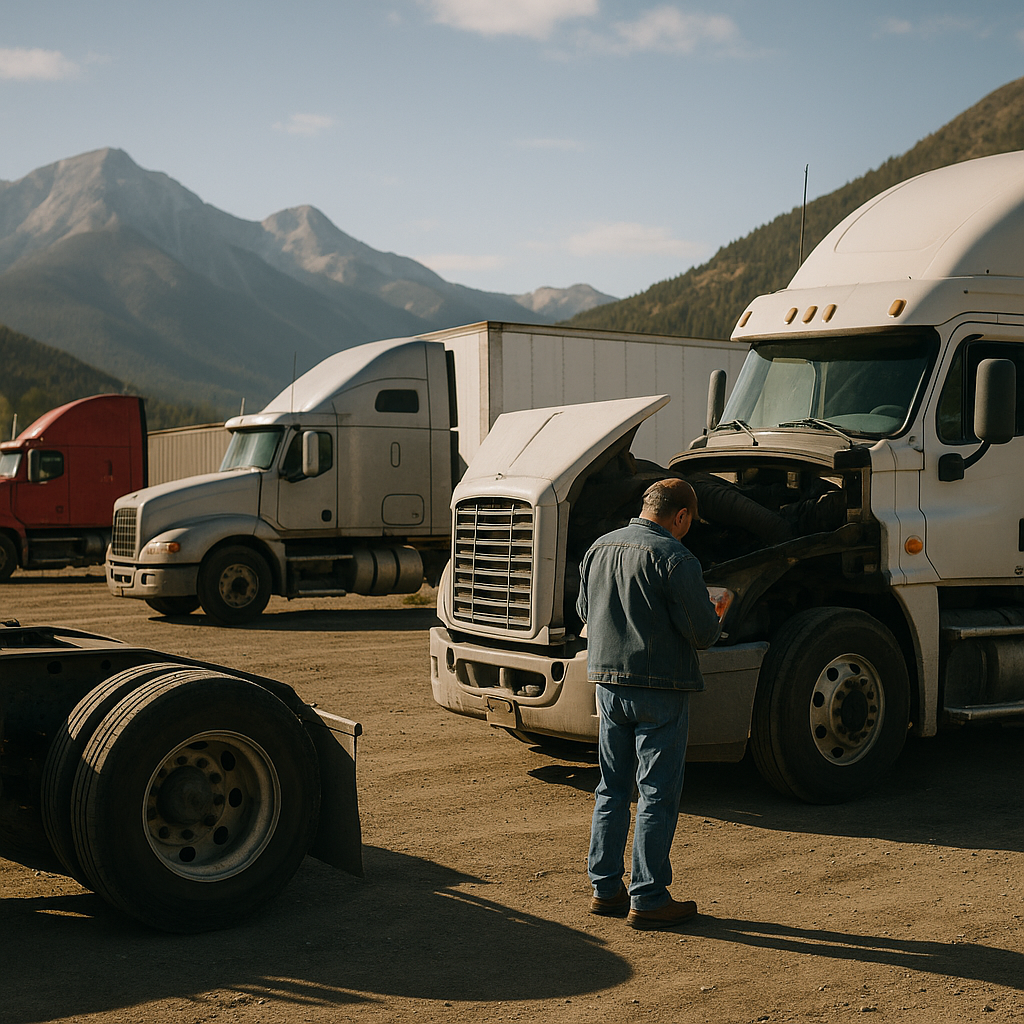
Tow truck insurance Colorado shoppers usually run into the same problem: one quote looks cheap because it leaves out tow-specific coverage, and another piles on protections that may not fit the way you actually operate. If you tow for a living in Colorado, you need commercial coverage built for towing work, plus the right state or federal compliance setup.
What Tow Truck Insurance Covers#
Tow truck insurance is commercial insurance built around towing operations, not personal auto coverage for a pickup you drive off duty. Most Colorado operators compare commercial auto liability, on-hook coverage, physical damage, and sometimes general liability or uninsured/underinsured motorist, but what’s actually included depends on the policy form, endorsements, and the work you do.
That last part matters. A rollback doing local private-property impounds doesn’t always need the same setup as a wrecker handling recoveries, storage, and longer-radius tows. Tow truck insurance should match the way you earn, not a generic commercial auto template.
Commercial auto liability#
Commercial auto liability pays for damage or injuries you cause to other people with an insured business vehicle. It’s the core coverage behind most tow truck policies, and it’s different from personal auto because the truck is being used for business, often with heavier equipment and higher-loss exposure.
If you’re comparing commercial auto liability, check the limit, who is insured to drive, and whether the quote is actually rated for towing use. A generic commercial vehicle policy that isn’t properly scoped for towing can create problems when a claim happens.
On-hook / cargo-in-tow coverage#
On-hook coverage, sometimes called cargo-in-tow, helps cover a customer’s vehicle while it’s attached to or being towed by your truck. It is not the same thing as cargo insurance for a freight carrier, and it is not automatic just because you bought liability.
That confusion burns a lot of operators. If a customer’s car is damaged during loading, transport, or unloading, the question is whether your policy specifically includes that exposure and under what conditions.
Physical damage and other add-ons#
Physical damage covers damage to your own truck from collision, fire, theft, weather, and similar losses, subject to your deductible. A deductible is the amount you pay out of pocket before insurance pays the covered remainder.
You may also see optional coverages such as uninsured/underinsured motorist, medical payments, or physical damage coverage choices tied to the truck’s value and usage. The NAIC is a good plain-language source for comparing basic insurance terms, but for tow operators the real job is checking what the policy actually endorses instead of assuming a standard package includes everything.

Colorado Rules for Tow Trucks: PUC, State Registration, and Federal Oversight#
Colorado tow truck insurance requirements can come from more than one place, and that’s where many operators get crossed up. You may need to deal with Colorado towing rules, registration issues, and possibly federal motor carrier rules depending on your operation, so don’t assume one quote built for "a truck business" covers all of it.
When Colorado PUC rules matter#
The Colorado Public Utilities Commission oversees certain regulated transportation activities in the state. If your towing business falls under Colorado PUC oversight, the insurance proof or filing requirements may be tied to that authority, not just to your regular vehicle registration.
That means you should verify your status directly with the Colorado Public Utilities Commission before you buy or renew coverage. If the policy is written for the wrong operating class, you can end up paying for the wrong thing or missing a filing you actually need.
When FMCSA rules matter#
The FMCSA is the Federal Motor Carrier Safety Administration, the agency that regulates many interstate motor carriers and related safety requirements. Federal rules can matter if your operation involves interstate authority, regulated motor carrier activity, or other facts that pull you into the federal system.
Under 49 CFR Part 387, federal financial responsibility requirements depend on carrier type, vehicle weight, and commodity. For example, for-hire interstate carriers hauling general freight in vehicles over 10,001 lbs must carry at least $750,000 in public liability. That’s a federal trucking rule, not a blanket rule for every Colorado tow operation, and not every tow operator falls into that exact box. You can verify federal carrier status through SAFER and review broader guidance from the FMCSA.
If you’re not sure whether your tow operation fits state-only oversight, federal oversight, or both,
What to verify before you quote#
Before you shop, confirm three things: what authority you operate under, how the truck is actually used, and whether any filing is required. An endorsement is a policy change that adds, limits, or clarifies coverage, and filings often depend on the right endorsements being attached.
If you skip that step, the quote can be wrong from the start. That’s how operators end up with a policy that looks fine on price but doesn’t line up with PUC oversight, FMCSA rules, storage exposure, or the type of towing they really do.
How Much Tow Truck Insurance Costs in Colorado#
Tow truck insurance costs in Colorado vary widely because the premium follows your risk, not just the fact that you own a tow truck. The biggest drivers are truck value, tow radius, driving history, claims history, number of units, type of towing, and which coverages and deductibles you choose.
A local owner-operator doing short, routine tows usually presents a different profile than a business handling recoveries, storage, roadside work, and multiple drivers. That’s why two tow companies in the same city can see very different pricing.
Main cost drivers#
Insurers usually look at the truck itself, what it’s equipped to do, where it runs, and who drives it. A heavier or more specialized unit, a wider operating radius, or a rough loss history can all push the premium higher.
Coverage selection matters too. On-hook, garagekeepers, physical damage, and higher liability limits all change the price, and your actual premium depends on your operation, cargo, radius, driving history, and other factors.
Why quotes vary#
Quotes often vary because they are not built on the same assumptions. One policy may include on-hook coverage with a certain deductible, while another leaves it out. One may rate your work as towing, while another quietly treats the truck more like a generic service vehicle.
That makes apples-to-apples comparison critical. Match the same limits, deductibles, truck values, and driver list across every quote before you decide one is cheaper.
Ways to keep coverage efficient#
The best way to control waste is to buy for your real operation. If you don’t store customer vehicles, garagekeepers may be less central than on-hook. If you do store them, that exposure needs closer attention.
It also helps to tighten driver screening, document safety habits, and keep loss runs clean over time. Good quoting starts with clean information, not just shopping harder.
Tow-Truck-Specific Coverages to Compare Before You Buy#
Tow-truck-specific coverages matter because the biggest losses often involve the customer’s vehicle, stored vehicles, or incidents away from the truck itself. Commercial auto liability protects against one set of problems, but towing operations usually need a closer look at on-hook, garagekeepers, general liability, and physical damage.
A lot of operators assume "cargo" means whatever they’re towing. That’s usually the wrong way to think about it.
On-hook coverage for customer vehicles#
On-hook coverage is the piece most directly tied to a customer’s vehicle while it’s in your care during a tow. It should be reviewed carefully for limit, deductible, and when coverage starts and stops.
Don’t confuse that with motor truck cargo insurance, which is designed around freight hauled by motor carriers. A towed vehicle is a different exposure from palletized freight in a trailer, and the policy language should reflect that.
Garagekeepers and storage exposure#
Garagekeepers legal liability helps cover customer vehicles kept at your lot, yard, or storage location when those vehicles are damaged under covered circumstances. This becomes important if your operation includes impounds, overnight holds, or post-accident storage.
If vehicles sit on your premises, ask exactly how that exposure is insured. On-hook may help while the vehicle is being towed, but storage creates a different risk.
General liability and physical damage#
General liability for trucking covers certain third-party bodily injury or property damage claims that aren’t caused by operating the truck itself. Physical damage covers your own tow truck when it is damaged by collision, theft, fire, hail, and similar causes.
Those coverages solve different problems, and neither replaces the other. General liability won’t rebuild your wrecker after a crash. Physical damage won’t stand in for a premises-type liability claim.
How to Compare Quotes Without Overbuying#
The cleanest way to compare tow truck insurance is to match the policy to the towing operation first, then compare limits and deductibles, then read exclusions and endorsements. If you skip straight to price, it’s easy to buy a quote that looks lean but leaves out the exact coverage your business relies on.
Start by defining the work. Are you doing roadside service, private-property impounds, accident recovery, transport, storage, or some mix? The more precise that answer is, the more accurate the quote will be.
Match coverage to the towing operation#
Tell the broker exactly how the truck is used and whether any customer vehicles are stored on your premises. A single-truck owner-operator doing local tows has a different profile from a small fleet with multiple drivers and a storage lot.
Also make clear that this is commercial towing use, not personal use and not generic service-truck use. Tow operators get into trouble when the application assumptions don’t match the job.
Check exclusions and endorsements#
Read for what’s missing, not just what’s listed. Ask whether on-hook is included, how storage exposure is handled, what deductibles apply, and whether any exclusions limit recoveries, unattended vehicles, or certain towing situations.
This is also where endorsements matter. A quote can look complete on the declarations page but still narrow coverage in the forms.
Ask for proof of filings and scope#
Before binding, ask whether the broker expects any state or federal filing and what operation the quote is built around. That includes vehicle list, driver list, operating radius, towing type, storage exposure, and any authority details.
A simple checklist helps:
- Trucks and VINs
- Driver names and histories
- Primary towing type
- Operating radius
- Storage or impound exposure
- Current authority or filing needs
LogRock specializes in trucking insurance for owner-operators and small fleets. If you’re not sure what coverage fits your operation,
Tow Truck Insurance FAQs for Colorado Operators#
FAQ#
Is tow truck insurance the same as personal auto insurance?
No. Tow truck insurance is commercial coverage built for business use, heavier vehicles, customer property exposure, and towing-specific claims. Personal auto insurance is generally meant for private driving, not paid towing work. If a truck is being used to tow for hire, assume you need a commercial policy rated for that operation and verify the coverage details rather than relying on a personal or generic business auto setup.
Do Colorado tow truck operators need PUC or FMCSA filings?
Sometimes, but not always. It depends on the type of towing operation, whether you’re under Colorado PUC oversight, whether you have any federal operating authority, and how the vehicle is used. State and federal rules are not interchangeable. Check your authority status first, then ask the broker what proof of insurance or filing the policy is intended to support before you bind coverage.
What information should I bring to get a tow truck insurance quote?
Bring your truck list, VINs, driver information, business details, operating radius, towing type, and any storage exposure. It also helps to have prior insurance, loss runs if available, and details about whether you need any state or federal filing. The more precise you are about what kind of towing you do, the easier it is to compare quotes built on the same assumptions.
Is on-hook coverage included automatically?
Usually, you should not assume it is. On-hook coverage is a tow-specific protection for a customer’s vehicle while it is being towed or handled in connection with the tow. Some quotes include it, some make it optional, and limits and deductibles can vary. Always ask whether it’s included, what the limit is, and whether there are exclusions that affect the type of towing you do.
How much do tow truck drivers make in Colorado?
Income varies a lot by employer, schedule, commission structure, overtime, and whether you’re an employee or running your own truck. A practical way to check current wage benchmarks is the BLS, which tracks occupational pay data, but owner-operator income can look very different from employee wages because it depends on expenses, utilization, and contracts. Insurance cost does not directly tell you what a driver should earn, so treat those as separate decisions.





