
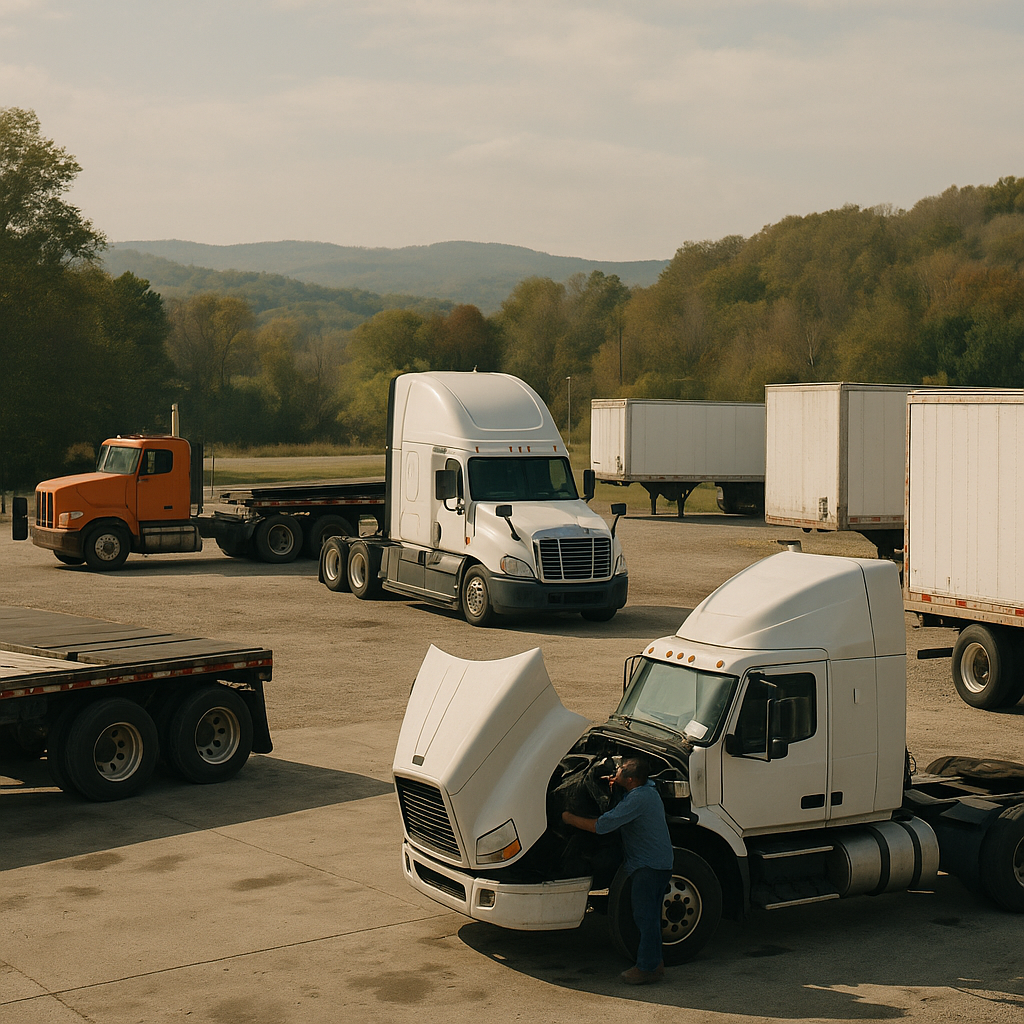
If you’re hauling cars in Tennessee, the big mistake is assuming one rule covers everything. Auto hauler trucking insurance in Tennessee usually involves both insurance basics and compliance basics, and those are not the same thing.
A lot of owner-operators hear "state minimums," "FMCSA filing," or "trailer coverage" and mash it all together. This guide separates what the law may require, what brokers and lenders may require, and what protects your truck, trailer, and the vehicles you’re hauling.
What Tennessee Auto Hauler Insurance Covers#
Auto hauler insurance is commercial trucking insurance built for hauling vehicles for business, not personal driving. It usually combines liability protection, cargo protection for the cars you haul, and optional coverage for your truck, trailer, and other operation-specific risks.
An auto hauler or car hauler operation means you’re transporting vehicles as freight for compensation. That can be a single-truck owner-operator with a wedge trailer, a pickup-and-trailer hotshot setup hauling cars, or a small fleet moving dealer inventory across state lines.
Who needs this coverage#
If you haul vehicles for pay, you’re in commercial territory. That usually means you need coverage designed for a business hauling exposure, not a personal policy built for commuting, errands, or occasional non-business towing.
This applies whether you’re moving one vehicle at a time or several. A one-car hauler may run a smaller setup than a 3-car hauler, but the core risk is still there: bodily injury or property damage from the truck, damage to customer vehicles, and loss to your equipment.
Commercial auto vs personal auto#
Commercial auto insurance is auto insurance written for vehicles used in business. Personal auto insurance is written for private, non-business use, and it usually doesn’t fit paid hauling operations.
That’s where a lot of Tennessee operators get tripped up. If the truck is being used to haul cars for money, the exposure is commercial, even if it’s a pickup-based hotshot setup and not a full semi. A personal policy usually isn’t built for that risk, and relying on one can leave major gaps once a claim involves cargo, a trailer, or business use.
If you need the basics on commercial auto insurance, start there before comparing policy options.
What changes for small fleets#
A small fleet usually needs the same categories of coverage as a one-truck owner-operator, but underwriting gets more detailed. More trucks means more drivers, more scheduling pressure, more maintenance exposure, and more chances for a loading, backing, or cargo-related loss.
Coverage needs can also change based on cargo value, route radius, where the truck is garaged, whether you cross state lines, and whether you operate under your own authority. So before you ask what policy you "need," separate two questions: what your operation is legally required to carry, and what it makes sense to insure so one claim doesn’t knock you out.

Tennessee Rules vs FMCSA Requirements#
Tennessee rules and FMCSA rules are not the same thing. Tennessee may control certain intrastate requirements and state-level business issues, while FMCSA rules apply to interstate for-hire trucking based on how you operate, what you haul, and what kind of vehicle you use.
This is the part most forum advice gets wrong. Your state minimum is not automatically your federal minimum, and federal rules don’t automatically apply just because you own a trailer.
What Tennessee regulates#
Tennessee can affect how you register, title, tax, and run an intrastate operation. State agencies like the Tennessee Department of Commerce and Insurance and the Tennessee Department of Revenue may matter depending on how your business is set up and whether you’re operating only inside Tennessee.
That said, "required in Tennessee" can mean different things. It might mean state law. It might mean a lender’s requirement on financed equipment. It might mean what a shipper, broker, or dealer demands before they load you.
What FMCSA regulates#
FMCSA is the Federal Motor Carrier Safety Administration. It regulates interstate motor carriers and sets federal financial responsibility rules for covered operations.
Under FMCSA rules and 49 CFR Part 387, for-hire interstate carriers hauling property in vehicles over 10,001 lbs often need federal public liability at specific minimums based on the operation. For auto haulers, that matters because a car hauler is not scoped the same way as every other trucking class. Under 49 CFR Part 387, interstate auto haulers are commonly associated with a $1,000,000 public liability requirement, while general freight over 10,001 lbs is commonly tied to $750,000. The point is the same: don’t assume "all truckers need" one universal number.
You can also verify how a carrier is showing up federally through SAFER, which helps confirm USDOT and operating status.
If you’re trying to sort out truck insurance requirements, start with whether you’re for-hire or private, interstate or intrastate, over or under the common weight thresholds, and what commodity you’re hauling.
When state and federal rules overlap#
The overlap happens when a Tennessee-based carrier runs interstate or otherwise falls under FMCSA authority. That’s when state context still matters, but federal insurance rules can trump the simpler answer you heard from another driver.
Trailer insurance is a good example. FMCSA public liability rules are not the same thing as physical damage on your trailer. Tennessee law is not the same thing as what your finance company requires. And neither is the same thing as whether you can absorb a trailer loss out of pocket.
If you’re not sure which rule set applies, that’s the moment to stop guessing.
Core Coverages Auto Haulers Usually Need#
Most auto haulers need a core insurance stack, not just one policy. That usually includes auto liability for the truck, cargo coverage for the vehicles being hauled, optional physical damage for the truck itself, and sometimes general liability or trailer-related coverage depending on how the operation is set up.
The NAIC is useful for plain-language insurance definitions, but trucking adds business-use details that matter a lot more once you’re hauling cars for hire.
Auto liability#
Auto liability pays for bodily injury or property damage you cause to others with the insured truck. This is the coverage tied most directly to legal and FMCSA financial responsibility requirements.
For a car hauler, this is the "keep you from being financially wrecked by a highway claim" coverage. It does not pay for damage to the cars you’re hauling, and it does not repair your own truck.
Motor truck cargo#
Motor truck cargo covers damage to the freight you’re hauling, subject to the policy terms and exclusions. For an auto hauler, the freight is the vehicles on your trailer.
That’s a bigger issue in car hauling than many new operators expect. One scrape, tie-down issue, loading problem, weather event, or theft loss can involve a high-value vehicle. If you want a deeper breakdown of motor truck cargo, look at how limits and exclusions affect vehicle loads specifically.
Physical damage#
Physical damage covers your insured truck for losses like collision and other covered non-collision damage. In trucking, that usually means protection for the tractor or pickup used in the hauling operation, separate from liability and separate from cargo.
If your truck gets hit, rolls, burns, or takes storm damage, this is the bucket that typically responds. Physical damage coverage matters most when you couldn’t easily replace the equipment yourself and get back on the road.
General liability#
General liability covers certain non-driving business liability exposures. For trucking operations, it’s not a substitute for auto liability, but it can matter if a contract or shipper asks for it.
Owner-operators sometimes don’t need the same general liability setup a larger small fleet needs. But if you deal with facilities, dealers, or contracts that expect broader business insurance, it can come into play.
Trailer-related coverages#
Trailer-related coverage is not one thing. Trailer interchange usually applies when you have a signed interchange agreement for a non-owned trailer, while non-owned trailer physical damage is often the better fit when you use a trailer you don’t own but do not have that signed interchange setup.
Most non-intermodal owner-operators are really trying to answer a simpler question: "If that trailer is damaged, who pays?" That’s a business-risk question, not always a legal requirement question. And for auto haulers, trailer value can change the whole quote.
Do Car Haulers Need Insurance?#
Yes, car haulers need insurance because hauling vehicles for business creates liability, cargo, and equipment risk even when you’re a one-truck owner-operator. The insurance need is not just about staying legal. It’s also about protecting your ability to keep operating after a claim.
A lot of new car haulers ask this as if insurance is optional unless a state form says otherwise. In real life, you may need proper coverage to activate authority, satisfy contract requirements, protect financed equipment, or haul for brokers and dealers that won’t load an uninsured carrier.
Why insurance is tied to business risk#
When you’re hauling somebody else’s vehicles, you’re taking on more than highway liability. You’re also taking on cargo exposure, loading and unloading exposure, and the risk that one truck or trailer loss sidelines your entire business.
That’s true even if you’re only moving one car at a time. Capacity changes the size of the exposure, not the fact that the exposure exists.
What can happen without it#
Without the right policy structure, the problem isn’t just a ticket or a filing issue. It’s finding out after a loss that the policy didn’t match the business use, didn’t include cargo, or didn’t cover the trailer setup you were actually using.
That kind of mismatch is how a "cheap" quote becomes the most expensive option on the page. If you’re trying to sort out your setup before binding,
One-truck vs small-fleet realities#
A one-car hauler may need the same coverage categories as a 3-car hauler: liability, cargo, and often physical damage. What changes is the likely cargo value, trailer value, driver count, route pattern, and how much loss one unit can create.
For small fleets, consistency matters just as much as limits. If one truck, one driver, or one trailer is scheduled wrong, that gap can affect the whole operation.
How Much Does Insurance Cost for a Car Hauler?#
Car hauler insurance cost depends on the operation, not just the truck. The biggest drivers are usually your driving history, authority status, cargo exposure, route radius, equipment values, and claims record, which is why two Tennessee auto haulers with similar trailers can see very different quotes.
That answer frustrates people because they want one clean number. But with car hauling, the risk profile changes fast.
Main cost drivers#
Underwriters usually look first at who is driving and what is being hauled. Clean driving history, fewer claims, and accurate business details generally help the quote make more sense.
Then they look at the operation itself:
- Truck value
- Trailer value
- Type of vehicles hauled
- Average load value
- Interstate or intrastate use
- Radius and lanes
- New authority or established authority
- Prior insurance history
- Garaging location
A Tennessee-based operator running short, repeatable lanes can profile differently than one taking irregular interstate runs with higher-value vehicles.
1-car vs 2-car vs 3-car haulers#
A 1-car hauler isn’t automatically "cheap," and a 3-car hauler isn’t automatically uninsurable. The reason size matters is that equipment type, gross weight, cargo concentration, and handling complexity can all change with capacity.
A smaller setup may still have serious exposure if it’s hauling valuable units under a new authority. A larger multi-car trailer may carry more total cargo value and may create higher backing, loading, tie-down, and claim severity exposure. That’s why "1 car hauler insurance cost" and "3 car hauler insurance cost" don’t have a universal answer.
What insurers look at#
Insurers want the real picture, not the optimistic one. If the quote says local hauling but the truck is running interstate, or if the trailer listed isn’t the one actually used, that’s where trouble starts.
They also care whether you’re hauling standard vehicles or something more specialized, whether drivers have CDL or non-CDL exposure depending on the setup, and whether the business has stable prior coverage. New ventures can still get coverage, but clean and complete information matters more.
Ways to get a workable quote#
The best way to improve the quote process is to show underwriters a clean, well-defined operation. That means accurate VINs, current driver information, realistic mileage and radius, correct garaging, and honest cargo details.
It also means comparing matching coverage structures. One quote may look lower simply because it leaves out cargo, strips down physical damage, or ignores trailer-related exposures you actually have. Your actual premium depends on your operation, cargo, radius, driving history, and other factors.
Do I Need Commercial Auto Insurance for Hotshot Trucking?#
Yes, if you’re using a truck for hotshot trucking as a business, you usually need commercial auto insurance rather than a personal auto policy. The real question is how the operation is classified and what coverages fit the cargo, radius, authority, and vehicle use.
Hotshot trucking overlaps with auto hauling when operators use pickups and trailers to move vehicles for pay. The equipment may look closer to personal-use hardware, but once it’s used in a for-hire hauling business, that personal-policy assumption usually falls apart.
Where hotshot overlaps with auto hauling#
A lot of hotshot operators haul cars, pickups, or small equipment on gooseneck or wedge-style trailers. That means the risk profile can start looking a lot like a small auto hauler even if the power unit isn’t a semi.
When commercial auto applies#
If the truck is being used for business hauling, commercial auto usually applies. The exact insurance structure still depends on whether you’re hauling interstate, whether you have your own authority, what weight class you’re in, and what cargo you’re moving.
What to clarify before buying#
Before buying anything, pin down four things: business use, cargo type, operating radius, and authority status. Those details matter more than the label "hotshot" by itself.
How to Get a Quote for Tennessee Auto Hauler Insurance#
A good Tennessee auto hauler quote starts with complete, accurate information. Gather your truck and trailer details, driver information, route patterns, cargo details, prior coverage, and authority status before you shop, because missing or guessed details usually lead to bad comparisons.
The faster path is not rushing. It’s preparing the file once so the quote reflects the operation you actually run.
Information to gather first#
Have these ready before requesting quotes:
- VINs for truck and trailer
- Year, make, model, and stated values
- Driver’s license details and driving records
- Business name and garaging address
- Operating radius and typical lanes
- Interstate or intrastate use
- Cargo type and typical vehicle values
- Prior insurance information
- USDOT and MC number status, if applicable
What underwriting usually asks#
Expect questions about who owns the equipment, whether it’s financed, who will drive, how long the business has been operating, and whether there have been losses or coverage lapses. If you’re under your own authority, that usually becomes part of the risk picture too.
How to compare quotes the right way#
Compare quotes side by side by coverage type and limit, not by the bottom-line number alone. If one quote leaves out cargo, trims physical damage, or doesn’t address your trailer setup, it may not be the same quote at all.
FAQ#
How much does insurance cost for a car hauler?
Car hauler insurance cost varies with the operation more than the trailer alone. Insurers usually price around driving history, truck and trailer values, cargo exposure, route radius, claims history, business experience, prior coverage, and whether you’re running under your own authority. A one-car setup can still price high if it hauls valuable vehicles or runs interstate under a new venture. The best way to get a usable number is to quote the real operation with matching coverages instead of comparing stripped-down estimates.
Is trailer insurance required in Tennessee?
Sometimes the answer is no in the legal sense, but yes in the practical sense. Tennessee law, FMCSA financial responsibility rules, lender requirements, and shipper contracts are all different issues. Liability coverage is not the same thing as trailer physical damage, and trailer interchange is not the same thing as non-owned trailer physical damage. If you own the trailer, finance it, borrow one, or haul under contracts that require trailer protection, the business need may exist even where a simple legal rule does not.
Do car haulers need insurance?
Yes. If you’re hauling vehicles for business, you need insurance that matches commercial use. That usually starts with auto liability and often includes cargo and optional physical damage depending on the operation. Personal auto policies usually are not built for paid hauling exposure. Even when a driver is owner-operated and only hauls one vehicle at a time, the business still faces liability, cargo, equipment, lender, and contract risk. The real question is not whether you need insurance, but which coverages fit the operation.
Do I need commercial auto insurance for Hotshot trucking?
If the truck is used in a hotshot business, commercial auto insurance is usually the right starting point. That’s especially true if you’re hauling cars or other freight for compensation. Whether the setup is a pickup with a trailer or a larger unit, the business use matters more than how casual the equipment looks. Make sure the policy matches your actual cargo, routes, authority status, and equipment. Assuming a personal auto policy is enough is one of the most common and most expensive mistakes.





