
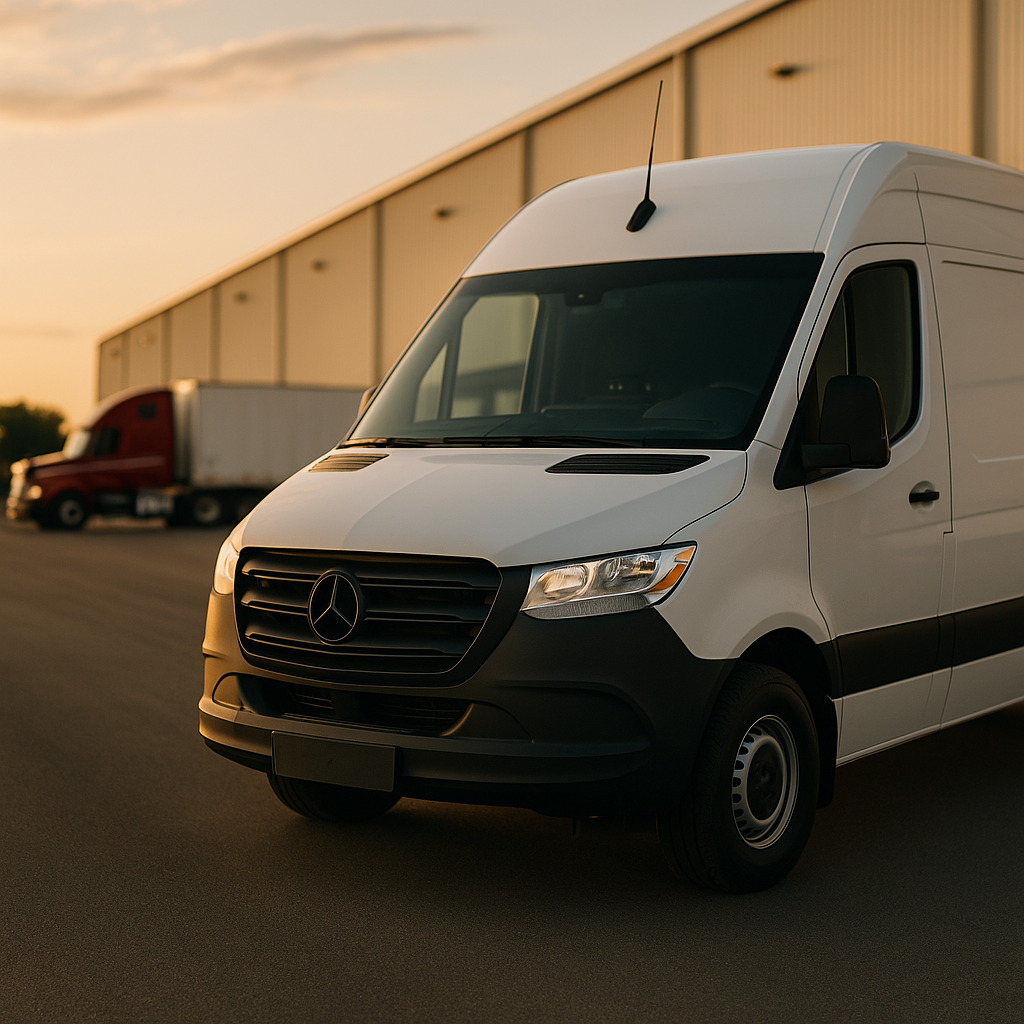

Sprinter van insurance can cost $1.8K–$5K/year. See required coverages, cargo options, savings tips for 2026, and quotes.
Sprinter van insurance for commercial delivery in 2026 commonly costs $1,800–$5,000 per year for many operators, with pricing driven by miles, garaging ZIP, driver history, cargo value, and whether you’re for-hire. If you want a fast “best answer,” it’s this: buy the policy that matches your real operation (delivery/for-hire vs personal use), then set limits to meet your contracts—because the most expensive policy is the one that denies a claim.
If you’re unsure whether your use fits personal or commercial, read commercial vs personal auto insurance rules before you quote anything; using the wrong policy type is one of the most common denied-claim triggers for delivery vans.
Table of Contents
Reading time: 8 minutes
- Introduction
- Key takeaways
- Personal vs commercial Sprinter van insurance (and when FMCSA comes into play)
- What coverage is required for a Sprinter van? (commercial policies that survive real contracts)
- Do you need cargo insurance for a Sprinter van? (and when per-load makes more sense)
- Sprinter van insurance cost in 2026: benchmarks, cost drivers, and how to lower your premium
- Frequently Asked Questions
- Next steps: get the right Sprinter coverage (without overpaying)
- Conclusion: Build coverage that won’t break at claim time

Introduction
Sprinter van insurance pricing in 2026 is heavily influenced by underwriting inputs like operating radius, annual mileage, garaging ZIP, and for-hire use, not the van badge alone. For many courier and final-mile setups, the headline range is still around $1,800–$5,000/year, but it can jump quickly if you’re in a high-theft metro area, running long hours, carrying higher-value cargo, or adding multiple drivers.
The “real cost” isn’t just the premium. It’s what happens when a claim gets denied because the policy doesn’t match how you actually operate.
Key takeaways
Most denied claims for delivery vans come from misclassified use (personal policy used for paid work) or missing contract-required coverages like cargo, additional insured, or waiver of subrogation. Use these as your quick checklist.
- If you get paid to move goods/people, assume you need commercial Sprinter van insurance: many personal policies exclude deliveries and for-hire use, especially for Sprinter van insurance for owner-operators.
- Liability is the foundation: but many brokers/platforms also require cargo and physical damage (especially if the van is financed or upfitted).
- Rates are driven by use case + ZIP + miles + loss history: a cheap policy that doesn’t match operations can be the most expensive one.
- You can lower premiums in 2026: higher deductibles (if you can fund them), theft controls, dashcams/telematics, strict driver standards, and apples-to-apples shopping usually move the needle.
Personal vs commercial Sprinter van insurance (and when FMCSA comes into play)
Commercial Sprinter van insurance is a business auto policy rated for business driving exposure (delivery schedules, docks, multiple drivers, higher miles), while personal auto is rated for non-business use and commonly excludes paid delivery or for-hire work. The van itself doesn’t decide the policy type—your operation does.
Personal vs commercial quick view (fast scan)
| How you use the Sprinter | Typical policy type | What usually triggers “you need commercial” |
|---|---|---|
| Personal errands / family / non-paid use | Personal auto | Any paid delivery, business branding, business ownership |
| Business use (tools, service calls, local work) | Commercial auto | Employees driving, multiple drivers, jobsite exposure |
| For-hire delivery/hauling for customers | Commercial auto (often higher limits) | Broker/shipper contracts, COI requirements, multi-state work |
Who usually needs commercial Sprinter van insurance
Most operators are in commercial territory if any of these are true:
- You do paid courier/delivery (medical, pharmacy, auto parts, final mile, route work).
- The van is titled to an LLC/corporation.
- You have employees or multiple drivers.
- You have signage/wrap and the van is clearly operating as a business.
- You haul other people’s property for money (for-hire).
When FMCSA authority matters (it’s about the operation)
FMCSA insurance rules and filings can apply to for-hire interstate operations regardless of whether you drive a semi, a box truck, or a Sprinter. If you’re unclear on whether you’re operating under your own authority, leased-on, or strictly intrastate, read how to prep your FMCSA authority application before you buy a “state minimum” policy and hope it’s enough.
- FMCSA insurance filing requirements: https://www.fmcsa.dot.gov/registration/insurance-filing-requirements
- Federal financial responsibility rules (49 CFR Part 387): https://www.ecfr.gov/current/title-49/subtitle-B/chapter-III/subchapter-B/part-387
What coverage is required for a Sprinter van? (commercial policies that survive real contracts)
Commercial Sprinter van insurance requirements come from three places—state law, lender/lease terms, and shipper/broker contracts—and many delivery contracts commonly ask for $1,000,000 in auto liability even when state minimums are lower. Treat “required coverage” as a contract question, not a guess.
Common coverages you’ll see on a commercial Sprinter policy
For a state-by-state breakdown of filing and coverage requirements, see Sprinter van insurance requirements.
| Coverage | What it pays for | Who typically needs it |
|---|---|---|
| Auto liability | Injuries/property damage you cause | Everyone running commercial (this is the core) |
| Physical damage (comp + collision) | Damage to your Sprinter (wreck, theft, hail, etc.) | Financed vans, newer Sprinters, expensive upfits |
| Medical payments / PIP | Injury-related costs for you/occupants (state-dependent) | Common in no-fault/PIP states |
| UM/UIM | If a driver hits you and has no/low insurance | Urban routes; high exposure |
| Hired & non-owned auto | Liability when you rent/borrow vehicles or employees drive personal cars for work | Businesses with multiple drivers or occasional rentals |
Endorsements that get overlooked (and lose accounts)
Brokers and shippers often care as much about paperwork and endorsements as they do about the premium.
- Additional insured / waiver of subrogation: common contract requirements for brokers/shippers.
- Towing & labor: useful if you run outside metro areas.
- Rental reimbursement / downtime options: availability varies by carrier and state.
- Inland marine / scheduled equipment: for tools, removable shelves, scanners, and equipment that “cargo” usually doesn’t cover.
If you want the broader framework (limits, filings, add-ons) that carriers use across vans, box trucks, and tractors, read trucking insurance 101: coverages, limits, and filings.
For plain-English coverage explainers from a neutral source, the NAIC consumer resources can help clarify policy terms.
If auto liability is new territory, this short breaks down exactly what it covers — and what it doesn’t:
Do you need cargo insurance for a Sprinter van? (and when per-load makes more sense)
Cargo insurance for a Sprinter van is coverage for customer-owned goods in your care, custody, and control, and common limits for van operators range from $10,000 to $100,000+ depending on commodity and contracts. The most common claim problems come from exclusions like unattended vehicle theft rules and high-value sublimits.
What “cargo” does (and doesn’t) cover
- Cargo insurance: usually covers the shipper/customer’s goods you’re hauling, subject to policy terms.
- Not usually included: your tools, shelves, straps, scanners, and removable equipment (often needs inland marine or scheduled equipment).
Who typically needs cargo coverage
- Medical/pharmacy couriers
- Retail/warehouse final-mile
- Auto parts runs
- Expedited “Sprinter hotshot-style” moves (contract pressure tends to be similar even if the setup differs)
Exclusions and conditions that hurt the most
- Unattended vehicle/theft rules: locked doors, alarm requirements, time limits, and parking conditions can matter.
- Improper packing/securement: can be a denial trigger.
- Temperature controls: require proper equipment and the right endorsement.
- High-value items: may be limited (electronics, jewelry, etc.).
- Territory/radius limitations: don’t assume nationwide coverage if your policy is regional.
For a full list of common cargo claim triggers, see what cargo insurance covers and excludes.
For a practical breakdown of limits, exclusions, and claims triggers, read cargo insurance for Sprinter vans.
When per-load cargo insurance can be the better buy
Per-load cargo can be cost-effective when you usually haul lower-value freight but occasionally take a high-value job, because you’re not paying for the higher limit 365 days a year. Most per-load requests require declared value, commodity, origin/destination, and security rules (like no overnight parking or specific lock requirements).
Sprinter van insurance cost in 2026: benchmarks, cost drivers, and how to lower your premium
Commercial Sprinter van insurance cost in 2026 frequently falls around $1,800–$5,000 per year for many delivery and courier operations, but it can increase with for-hire exposure, dense metro routes, high annual mileage, multiple drivers, expensive upfits, or higher cargo limits. The only accurate number is a quote built on your exact use, drivers, and contract requirements.
Benchmarks (what you’ll actually see)
That $1.8K–$5K range is broad on purpose: it captures a lot of “normal” commercial van use. Expect pricing to rise when you stack risk factors like new venture/no prior commercial history, high theft ZIPs, frequent stops/backing, or higher liability and cargo limits.
What underwriters care about (the real cost drivers)
- Vehicle factors: repair cost, parts availability, insured value, and upfits.
- Operational factors: use case (courier vs passenger vs service), radius (local vs multi-state), annual mileage, and stop frequency.
- Driver/business factors: MVR, claims history, and years of commercial driving experience.
External industry benchmark: ATRI’s Operational Costs of Trucking research can help you sanity-check insurance as a major operating cost bucket: https://truckingresearch.org/
How to lower your premium (without “gaming” the application)
- Shop apples-to-apples: same limits, same deductibles, same listed drivers, same radius.
- Raise deductibles only if you can fund them: if you move from $1,000 to $2,500, set the cash aside.
- Reduce theft exposure: secure parking, GPS tracking, and theft-deterrent devices can matter.
- Use dashcams/telematics when credits are available: it can help both pricing and claim outcomes.
- Avoid coverage lapses: lapses often trigger higher re-rating.
- Provide clean underwriting info: loss runs, clear description of operations, and accurate garaging/radius prevent worst-case assumptions.
For a step-by-step premium-lowering playbook, read how to save on trucking insurance.
Five moves that regularly move the needle on commercial van and truck premiums:
Frequently Asked Questions
The FAQs below give citation-ready answers to the most common 2026 questions about Sprinter van liability, cargo, pricing, and when FMCSA rules may apply.
For commercial use, auto liability is the core required coverage, and many delivery contracts commonly require $1,000,000 liability even when state minimums are lower. After liability, what’s “required” depends on (1) your state’s rules, (2) your lender if the van is financed (often requiring comprehensive and collision), and (3) broker/shipper or platform contracts (often requiring cargo and specific endorsements). The fastest way to avoid surprises is to match your policy to how you’re paid (for-hire vs business use) and confirm the exact COI wording and limits your customers demand.
Sprinter van insurance for many commercial delivery/courier operations in 2026 commonly prices around $1,800–$5,000 per year, but it can be higher with for-hire exposure, high annual miles, dense metro ZIP codes, multiple drivers, passenger use, expensive upfits, or higher liability and cargo limits. Underwriters price the risk based on your garaging ZIP, operating radius, annual mileage, driver MVRs, and loss history. The only accurate number is a quote built from your true operations and the limits your contracts require.
If you haul customer-owned goods, many brokers, shippers, and courier platforms require cargo insurance even when your state does not, and common limits for van operators range from $10,000 to $100,000+ depending on commodity and contract. Choose a cargo limit that matches your worst-case load value, then read exclusions carefully—especially theft and unattended-vehicle requirements, high-value sublimits, and secure-parking conditions. If you need a deeper breakdown of common claim triggers and exclusions, review cargo insurance for Sprinter vans.
You may need FMCSA authority and insurance filings if you operate for-hire interstate under your own authority, because the requirement is based on the operation, not the vehicle model. If you’re leased on to a motor carrier, the carrier’s authority and filings may apply instead, and strictly intrastate operations can follow different state rules. If a broker is asking for a COI with specific wording (additional insured, waiver of subrogation, or specific limits), confirm the paperwork basics and broker requirements before binding coverage. FMCSA reference: https://www.fmcsa.dot.gov/registration/insurance-filing-requirements
Generally no — most personal auto policies exclude commercial delivery, for-hire hauling, and paid rideshare use, and platform agreements often require a commercial or business auto policy with specific limits and endorsements. “Gig” delivery work is for-hire use in the eyes of most underwriters, and a denied claim on a personal policy during a delivery run is a common real-world outcome. Some platforms offer their own coverage during active delivery windows, but that coverage often has gaps during pickup and drop-off. The safest move is to match your policy to your actual use before your first delivery, not after a claim.
Cargo insurance covers customer-owned goods you’re transporting — it applies while those goods are in your care, custody, and control during transit. Inland marine is broader and covers your own equipment that moves between locations — tools, removable shelving, scanners, load bars, and upfit equipment. Most cargo policies don’t cover your own van equipment, and most commercial auto policies don’t cover cargo. If you have an upfitted Sprinter and haul customer goods, you may need both policies to cover your total exposure.
Standard commercial auto policies typically cover the base vehicle value as defined in the policy, and custom upfits — refrigeration units, removable shelving, electronics, specialized equipment — may only be covered up to a sub-limit or may require a scheduled equipment endorsement or inland marine policy to be fully covered. If your Sprinter is upfitted for pharmaceutical delivery, mobile service work, or specialty cargo, confirm the insured value includes the upfit cost, not just the bare van. Lenders with liens on upfit equipment may also have their own coverage requirements.
Yes — passenger transport (shuttle, charter, medical transport, non-emergency medical transport, or transport network work) is typically rated as a higher-risk commercial use than delivery because the exposure includes bodily injury to paying passengers. Most standard delivery/courier commercial auto policies exclude passenger-for-hire use, and you’ll generally need a policy rated specifically for passenger transport. State PUC and FMCSA rules, insurance minimums, and filing requirements can also differ significantly from freight-only commercial auto policies.
Next steps: get the right Sprinter coverage (without overpaying)
A bindable commercial Sprinter van insurance quote usually requires your garaging ZIP, operating radius, annual mileage, listed drivers (MVRs), and the exact liability/cargo limits your broker, shipper, or platform requires on the COI. If any of that is “unknown,” underwriters tend to price for worst-case assumptions.
- Be honest about use: delivery/for-hire/passenger is where policies break.
- Choose limits for the work you want: not just what’s cheapest today.
- Add cargo when you’re responsible for customer goods: match limits to load value.
- Compare quotes correctly: same limits and deductibles so you can actually compare.
If your priority is cost control, keep reading: Affordable trucking insurance guide (cost control + shopping process).
If you’re moving up from a Sprinter into one-ton + trailer work, see: Hotshot insurance basics (for operators moving up from vans).
Conclusion: Build coverage that won’t break at claim time
A properly written commercial Sprinter van insurance program usually starts with auto liability and then adds physical damage and cargo based on financing and contracts, and many operators still land around $1,800–$5,000/year in 2026 for typical delivery use. The win is not “cheapest premium”—it’s accurate classification, contract-ready limits, and clean paperwork.
Key Takeaways:
- Use the right policy type: personal-vs-commercial mistakes are a top reason claims get denied.
- Set limits based on contracts: $1,000,000 liability is a common ask in delivery/courier agreements.
- Match cargo limits to load value and read theft/unattended-vehicle exclusions twice.
If you want quotes that actually reflect your real operation, gather your radius, miles, drivers, and COI requirements first—then shop apples-to-apples.





