
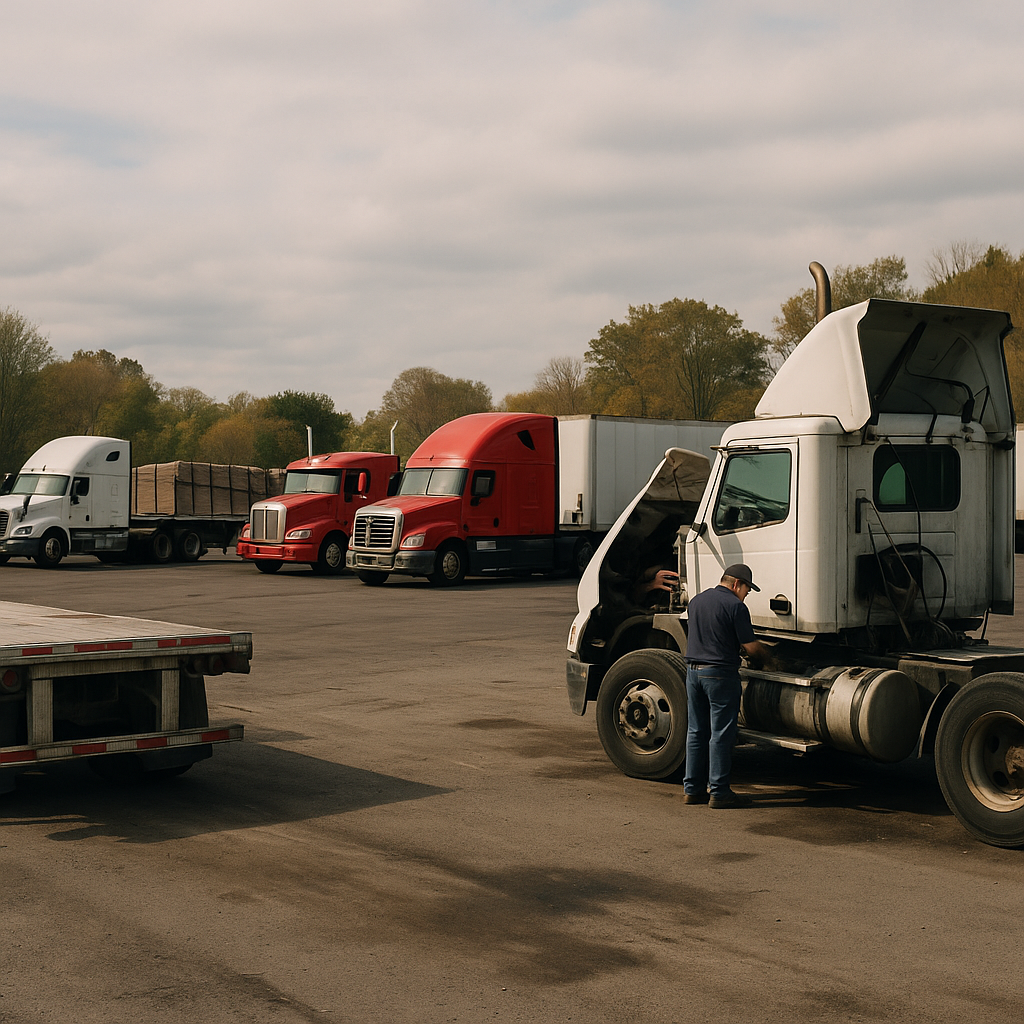

Flatbed trucking insurance in New Jersey usually means commercial coverage built for business hauling, not a personal auto policy with a bigger limit. The hard part is sorting out what FMCSA requires, what New Jersey controls, and which coverages actually matter for a flatbed operation.
If you run under your own authority or you’re getting ready to, bad assumptions get expensive fast. A quote can look fine until you realize the filings are wrong, the cargo class is off, or the policy was built for a generic truck instead of open-deck freight.
This guide breaks down the coverages, the compliance split between New Jersey and FMCSA, what drives cost, and the flatbed-specific gaps owner-operators miss most often.
What Flatbed Trucking Insurance Covers in New Jersey#
Flatbed trucking insurance in New Jersey usually includes commercial auto liability plus a mix of cargo, truck, and business coverages based on how you operate. A flatbed setup needs commercial insurance when the truck is used for business hauling, because personal auto coverage usually doesn’t fit for-hire trucking risk.
A flatbed operation has exposures a lot of generic truck pages skip. Open-deck freight faces weather, shifting, securement problems, and higher damage risk from tarps, straps, chains, and loading practices. That doesn’t always mean you need every coverage available, but it does mean the policy should match what the truck actually does.
Why flatbed operations need a commercial policy#
Direct answer: If you haul freight for business on a flatbed, you usually need commercial trucking insurance rather than personal auto insurance. The reason is simple: the truck is being used in a business operation with commercial liability, cargo, and equipment exposures that personal auto policies generally aren’t built to cover.
Commercial use changes the whole risk profile. You’re not just driving to the store or commuting. You’re moving freight, dealing with shippers and brokers, and taking on legal and contract obligations that go beyond a personal vehicle policy.
That matters even more with flatbeds. Open cargo, tiedowns, tarps, coils, lumber, steel, machinery, and other exposed loads create risks that underwriters treat differently from enclosed van freight.
Core coverages for flatbed owner-operators#
Direct answer: The core coverages for most flatbed owner-operators are auto liability, cargo, and physical damage, with general liability, trailer-related coverage, and non-business-use coverage added when the operation calls for them. Which ones you need depends on your authority, contracts, cargo, trailer setup, and whether you’re leased on or operating under your own MC number.
Auto liability is coverage for bodily injury and property damage you cause to others in a truck accident. This is the main coverage tied to FMCSA financial responsibility rules for regulated interstate for-hire carriers.
Motor Truck Cargo is coverage for the freight you’re hauling when that freight is damaged or lost under covered circumstances. Flatbed operators should pay close attention here because exposed cargo often creates different underwriting questions than dry van freight. For a deeper breakdown, see motor truck cargo insurance.
Physical Damage is coverage for damage to your truck, usually through collision and comprehensive or fire and theft with combined additional coverage. It protects the truck, not the freight.
General Liability is coverage for non-driving business liability, such as some premises or operations-related claims. Non-Trucking Liability is coverage for non-business use of the truck and does not apply while hauling for pay.
What is often optional vs operationally important#
Direct answer: Not every flatbed coverage is legally required for every New Jersey operation, but several "optional" coverages become practically necessary once you look at contracts, equipment value, and cargo exposure. The real test is not whether a forum says you need it, but whether your authority, lease, trailer use, and freight profile make it necessary.
Trailer Interchange is coverage that can apply when you use a trailer you don’t own under a written trailer interchange agreement. Non-Owned Trailer Physical Damage is coverage for damage to a trailer you don’t own when no signed interchange agreement applies.
That distinction matters because many owner-operators assume one trailer coverage handles every borrowed or pulled trailer. It doesn’t. Flatbed operators also miss the gap between "I can legally run" and "I can satisfy the broker, shipper, or lease agreement."

New Jersey Requirements vs FMCSA Requirements#
New Jersey and FMCSA do not control the same parts of your insurance setup. In plain terms, New Jersey may control state registration and insurance oversight, while FMCSA controls federal financial responsibility for certain interstate motor carriers, so you need to check both before you bind coverage.
What New Jersey controls#
Direct answer: New Jersey controls state-level insurance and vehicle oversight, but that does not replace federal rules for interstate for-hire trucking. A flatbed operator in New Jersey may still need to satisfy state registration and insurance expectations even when federal filings also apply.
The New Jersey Department of Banking and Insurance oversees insurance regulation in the state. The New Jersey MVC handles vehicle and registration functions that matter to truck operators.
For many readers, the key point is this: state minimums and state processes are not the whole picture. If you’re researching truck insurance requirements, you need to separate state rules from federal authority-based filings.
What FMCSA controls#
Direct answer: FMCSA controls federal registration and financial responsibility rules for regulated interstate carriers, including when liability coverage and filings are required. Whether those rules apply depends on your carrier type, vehicle weight, cargo, and whether you operate interstate or intrastate.
The FMCSA is the Federal Motor Carrier Safety Administration, the agency that regulates interstate commercial motor carriers. A USDOT number is your federal registration identifier for safety monitoring, and an MC number is operating authority for certain for-hire interstate operations.
Under FMCSA rules and 49 CFR Part 387, for-hire interstate carriers hauling general freight in vehicles over 10,001 pounds must carry at least $750,000 in public liability. Some operations require different minimums, including higher limits for certain cargo types such as hazmat. BIPD means bodily injury and property damage liability, the core public liability protection addressed in these rules.
The MCS-90 is an endorsement tied to federal financial responsibility that helps prove required public liability is in place for certain regulated carriers.
Why state minimums are not the whole answer#
Direct answer: State minimums are not the whole answer because federal rules can override the simple "state minimum" idea for interstate for-hire flatbed operations. On top of that, brokers, shippers, and lease agreements often require limits or coverages beyond what the law alone requires.
This is where owner-operators get tripped up. Someone says "New Jersey requires X," someone else says "all truckers need Y," and neither statement is complete without the operating details.
The practical way to scope it is to confirm four things first: are you for-hire or private, interstate or intrastate, over the common federal weight threshold, and hauling any restricted commodity type. Then check your shipper, broker, and trailer agreements before you shop quotes.
What Drives Flatbed Insurance Cost in NJ#
Flatbed insurance cost in New Jersey depends on the truck, the freight, where and how you run, and how underwriters view your loss potential. There isn’t one universal price because the same tractor can quote very differently based on cargo, radius, authority history, and driver profile.
Truck and trailer value#
Direct answer: Higher truck and trailer values usually mean higher physical damage premiums because there’s more equipment value at risk. Newer equipment, financed equipment, and specialized flatbed setups can all push the quote in a different direction than an older paid-off unit.
A late-model tractor with expensive add-ons is a different exposure than an older unit with lower stated value. The same goes for the trailer. Aluminum trailers, specialized flatbed configurations, and added equipment can change both replacement cost and repair cost.
If the lender requires physical damage, that also shapes how the policy is built. Deductible choices matter too, but only after the truck value and usage are scoped correctly.
Cargo type and load exposure#
Direct answer: Cargo type is one of the biggest flatbed pricing variables because not all freight carries the same damage, theft, or securement exposure. Open-deck hauling often gets closer underwriting review because weather, shifting, loading methods, and securement all affect loss potential.
Steel, machinery, lumber, building materials, and other flatbed commodities don’t present the same risk. Some cargo is heavier, easier to shift, more damage-prone, or more attractive for theft. Some loads need tarping or special tiedown practices that can increase claims frequency.
That doesn’t mean flatbed always costs more than every other class. It means the freight profile matters a lot, and vague descriptions like "general freight" can create quoting mistakes if the real operation is more specific.
Driving record and operating radius#
Direct answer: Driving history and operating radius heavily influence pricing because they change both accident probability and severity. Longer radius operations, tougher lanes, and recent violations or claims can all make a New Jersey flatbed risk look different to an underwriter.
A driver with a clean record running a predictable regional route can profile very differently from a driver with recent losses running broader interstate lanes. The policy isn’t priced only on the truck. It’s priced on how, where, and by whom that truck is used.
New Jersey territory also matters. Garaging near dense traffic, congested metro areas, or higher-loss ZIP codes can affect rating.
Experience, garaging, and ZIP code#
Direct answer: Underwriters usually care about time in business, commercial driving experience, garaging location, and operating consistency because those details help predict claim patterns. A stable operation with clear records is easier to underwrite than one with changing details and thin history.
A garaging address is the primary place the truck is kept when not in use. If that address differs from where the truck really lives, the quote can be inaccurate or even create problems later.
This is one place where owner-operators hurt themselves by rushing. If the truck is based in one New Jersey location but regularly staged elsewhere, say so up front.
New venture vs established carrier#
Direct answer: New ventures often pay more or face tighter underwriting because they have less operating history for insurers to evaluate. Established carriers with clean prior insurance, authority history, and consistent operations may present fewer unknowns.
A new authority with no prior commercial coverage is simply harder to predict than a carrier with documented loss history and stable operations. Even if both are honest and careful, the underwriting view won’t be identical.
Two operators with the same tractor can therefore get very different results. One might haul local building materials under a stable profile, while another runs wider interstate lanes with newer authority and recent losses.
How Flatbed Coverages Work in a Real Operation#
Each trucking policy solves a different problem, and flatbed operators get into trouble when they assume one coverage does the job of another. Auto liability covers damage you cause to others, cargo covers the freight, physical damage covers the truck, and trailer or non-business-use coverages only apply in their own lanes.
Auto liability in transit#
Direct answer: Auto liability responds when your truck causes bodily injury or property damage to someone else in a covered accident. For many interstate for-hire flatbed carriers, this is the core legal coverage tied to FMCSA filings and public liability requirements.
If you rear-end a vehicle, damage another driver’s property, or cause an accident on the road, auto liability is the coverage that comes into play. It does not repair your tractor and it does not pay for damaged cargo on your deck.
This is the first major misunderstanding to clear up. "Liability" sounds broad, but in trucking it has a specific job.
Cargo coverage while hauling open-deck freight#
Direct answer: Cargo coverage protects the freight you’re hauling, not the truck itself, and flatbed cargo needs careful review because open-deck loads face weather, securement, and handling exposures. The commodity, route, and load method all matter to how this coverage is written.
If a covered cargo loss happens to a load of building materials or machinery, cargo is the policy you’re looking to first. But terms, exclusions, commodity restrictions, and securement expectations matter more than many operators realize.
A vague cargo description can cause serious problems later. If you’re hauling exposed freight, your cargo setup should reflect that actual exposure rather than a generic class.
Physical damage for the truck and attached equipment#
Direct answer: Physical damage covers your truck when it is damaged by collision or by non-collision causes such as theft, fire, or certain weather events, depending on how the policy is written. It protects the equipment value in the truck, not your liability to others and not the freight itself.
If you jackknife, hit a barrier, or suffer a covered theft loss, this is the coverage designed for your tractor. For more detail on physical damage coverage, it helps to think of it as protection for your owned equipment investment.
One common gotcha: collision is not written as a standalone solution for the truck in this context. Flatbed operators should also ask how permanently attached equipment or accessories are handled.
General liability when the truck is parked or at a jobsite#
Direct answer: General liability can matter when a claim arises from your business operations rather than from a road accident involving the truck. For flatbed operations, that can include some premises or operations exposures around yards, job sites, or loading areas.
This is why general liability for truckers can matter even though it is not the same thing as auto liability. A road accident is one issue. A separate business-related claim tied to operations off the roadway may be another.
Not every owner-operator needs the same GL setup. But if contracts require it, or if your operation creates that exposure, it belongs in the conversation.
Non-trucking liability and trailer coverages#
Direct answer: Non-trucking liability and trailer-related coverage matter mainly when you use a truck outside business hauling or when you pull trailers you do not own. They are specialized coverages, and using the wrong one is a common flatbed mistake.
Non-trucking liability covers non-business use only. It does not apply while you’re under dispatch or hauling for pay, which is where many operators misunderstand it.
Trailer Interchange usually requires a signed interchange agreement. Non-Owned Trailer Physical Damage is often the more relevant coverage for owner-operators pulling a trailer they don’t own without that signed interchange setup. This is a big one to clarify before a loss, not after.
If you’re not sure which coverage actually fits your flatbed setup,
How to Get a Flatbed Truck Insurance Quote in New Jersey#
A good flatbed truck insurance quote in New Jersey starts with accurate operating details, not just a truck VIN and a target premium. The more precisely you describe your authority, freight, radius, equipment, and trailer use, the more useful the quote will be.
What information to gather first#
Direct answer: Before you request quotes, gather the basic operating facts underwriters actually need: truck VIN, garaging address, driver details, authority status, cargo type, operating radius, equipment value, trailer use, and prior insurance history. Missing or vague details often lead to mismatched quotes.
Have your USDOT number if you have one, and your MC authority status if you’re operating for-hire interstate. Be ready to describe the real freight you haul, not just "general freight."
A practical starting point is a commercial truck insurance quote checklist. You can also verify carrier registration and operating status through FMCSA SAFER.
Why accurate operating details matter#
Direct answer: Accurate operating details matter because underwriters price flatbed risk based on what you actually do, not what sounds close enough. If the operation is misclassified, the quote may look cheaper up front but fit poorly when a filing, contract review, or claim exposes the mismatch.
Say whether you run intrastate or interstate. Say whether you haul steel, lumber, machinery, or mixed loads. Say whether you pull your own trailer or a non-owned trailer.
Those details affect liability scoping, cargo setup, trailer exposure, and sometimes whether filings are needed.
What to compare beyond price#
Direct answer: The best quote comparison is not just premium; it is premium plus limits, deductibles, exclusions, filings, and whether the policy actually matches the operation. A lower price is not useful if the cargo class is wrong or the needed filing is missing.
Compare coverage limits, cargo terms, deductibles, listed equipment value, and any contract-driven requirements. Make sure the policy reflects flatbed use rather than a generic tractor profile.
This is also where you confirm the boring but important details: garaging, named insured, radius, drivers, and trailer setup.
How to Reduce Cost Without Undersuring the Operation#
The safest way to reduce flatbed insurance cost is to tighten the quote, not gut the protection. Better underwriting data, cleaner records, and smart deductible choices can help make the policy more efficient without leaving the operation exposed.
Choosing the right deductible#
Direct answer: A higher deductible can lower premium, but only if you can realistically absorb that out-of-pocket cost after a loss. The right deductible should fit your cash flow, not just make the quote look better on paper.
This matters most on physical damage and cargo. A deductible that’s too aggressive can create a problem the first time you need to use the policy.
Tightening operating details#
Direct answer: Clear, consistent operating details can help avoid unnecessary pricing friction because underwriters do better with stable facts than vague descriptions. Accurate commodity descriptions, radius, garaging, and trailer use all help the quote reflect the real risk.
If you want more practical ideas on how to lower truck insurance costs, start by fixing classification errors before cutting coverage.
Maintaining clean records#
Direct answer: Cleaner driving and claims records usually matter more over time than small quote tweaks. Safer operation supports better underwriting outcomes and makes renewals easier to defend.
That means fewer violations, better maintenance habits, and fewer preventable claims. It’s not flashy, but it works better than quote-shopping with bad data.
Matching coverage to the actual hauling setup#
Direct answer: The goal is to match coverage to the real hauling setup so you’re not paying for the wrong thing or dropping something the operation actually depends on. Cutting liability or cargo just to shrink premium can backfire fast if the work still requires it.
A cheaper quote isn’t a better quote if it leaves out the coverages your contracts, freight, or equipment exposure clearly call for.
Common Flatbed Insurance Mistakes in New Jersey#
Most flatbed insurance mistakes in New Jersey come from mixing up personal and commercial rules, or mixing up state requirements with FMCSA compliance. The result is usually a quote that looks usable until real-world hauling, filings, or a claim show the gap.
Using personal auto for commercial hauling#
Direct answer: Personal auto coverage usually does not fit a truck being used for business hauling, especially for for-hire flatbed work. Once the truck is part of a commercial freight operation, you need insurance built for that exposure.
This is still one of the most common misunderstandings because the truck may also be a personal asset. But personal ownership and personal-use insurance are not the same thing.
Confusing state minimums with federal compliance#
Direct answer: State minimums do not automatically satisfy federal requirements for interstate for-hire trucking. If FMCSA rules apply, your carrier type, weight, cargo, and authority status control the liability requirement, not a forum shortcut.
That confusion leads to bad assumptions about BIPD limits and filings. New Jersey rules matter, but they are not the whole answer for interstate authority.
Skipping cargo or physical damage gap analysis#
Direct answer: Cargo and physical damage solve different problems, and skipping that gap analysis is a common flatbed error. Cargo does not protect your truck, and physical damage does not protect the freight you’re hauling.
Flatbed operators should also think through tarps, tiedowns, weather exposure, and trailer responsibility instead of treating all truck setups the same.
Quoting before explaining the exact operation#
Direct answer: A rushed quote often turns into a bad quote when the actual operation wasn’t explained clearly at the start. Flatbed is not just "a truck"; it is a hauling profile with its own commodity, securement, trailer, and contract issues.
The more exact you are up front, the fewer surprises you’ll have later.
Frequently Asked Questions#
Short answers for quick decision-making
Direct answer: The fastest way to make sense of flatbed trucking insurance is to answer the practical questions owner-operators actually ask: what it costs, whether commercial coverage is required, and what changes the price of liability and cargo. The short version is that your operation details drive both requirements and premium.
How much is flatbed insurance?
Flatbed insurance does not have one standard price. Your actual premium depends on the truck value, cargo type, operating radius, New Jersey garaging location, driving record, authority history, prior insurance, and whether you’re a new venture or an established carrier.
Flatbed work can also draw more underwriting attention because open-deck freight creates cargo and securement exposure. A quote for one owner-operator hauling local building materials may look very different from a quote for another running broader interstate lanes with higher-value loads.
Do you need commercial insurance for a flatbed truck?
Yes, if the flatbed truck is used for business hauling, you typically need commercial insurance rather than personal auto coverage. That’s because business use creates commercial liability, cargo, contract, and equipment exposures that personal auto policies usually are not designed to handle.
The exact coverages needed depend on whether you operate under your own authority, what you haul, whether you run interstate, and whether you use owned or non-owned trailers. If you’re hauling freight for pay, start with a commercial trucking insurance conversation, not a personal auto one.
How much does a $1,000,000 liability insurance policy cost?
A $1,000,000 liability policy does not have a universal price because the limit is only one part of the quote. Underwriters also look at your operating authority, commodity type, operating radius, garaging location, driver history, loss history, and whether the operation is new or established.
In other words, two carriers can both ask for the same liability limit and still get very different premiums. The useful question is not just the limit amount, but how that limit fits your hauling profile and whether your filings and contracts require it.
How much does $100,000 cargo insurance cost?
The cost of $100,000 cargo insurance depends on what you haul, how exposed that freight is to theft or damage, your routes, your claims history, your deductible, and how the load is handled. The limit alone does not determine the premium.
For flatbed operators, cargo pricing can be especially sensitive to commodity descriptions and open-deck exposure. Machinery, steel, lumber, and other freight classes do not underwrite the same way. If you’re comparing quotes, make sure the cargo class and exclusions are being matched fairly.
Where can you check your authority and registration status?
You can check federal registration and operating status through FMCSA SAFER, which is useful when you’re confirming basic carrier information before quoting or binding coverage. That helps you verify whether the public-facing registration details line up with how the operation is being presented to insurers.
If you’re new to trucking insurance basics, LogRock’s trucking insurance FAQ is a good next step for broader definitions and common coverage questions.





