Dump truck insurance Mississippi owners buy isn’t one-size-fits-all. The right setup depends on what your truck does, whether you haul for hire, whether you cross state lines, and which coverages actually fit dump work instead of generic trucking assumptions.
Why dump truck insurance in Mississippi is not one-size-fits-all#
Dump truck insurance in Mississippi depends on how you use the truck, what you haul, where you run, and whether your operation is intrastate or interstate. Mississippi rules and FMCSA rules are not the same thing, and a lot of owner-operators get tripped up by mixing them together. This guide focuses on the practical coverage decisions that matter most for single-truck owners and small fleets.
A dump truck isn’t priced or insured exactly like a dry van, reefer, or local service pickup. A truck hauling gravel to a jobsite, asphalt for paving, or dirt from an excavation site has a different risk profile than a tractor pulling palletized freight over long highway lanes.
Dump truck operations versus general trucking#
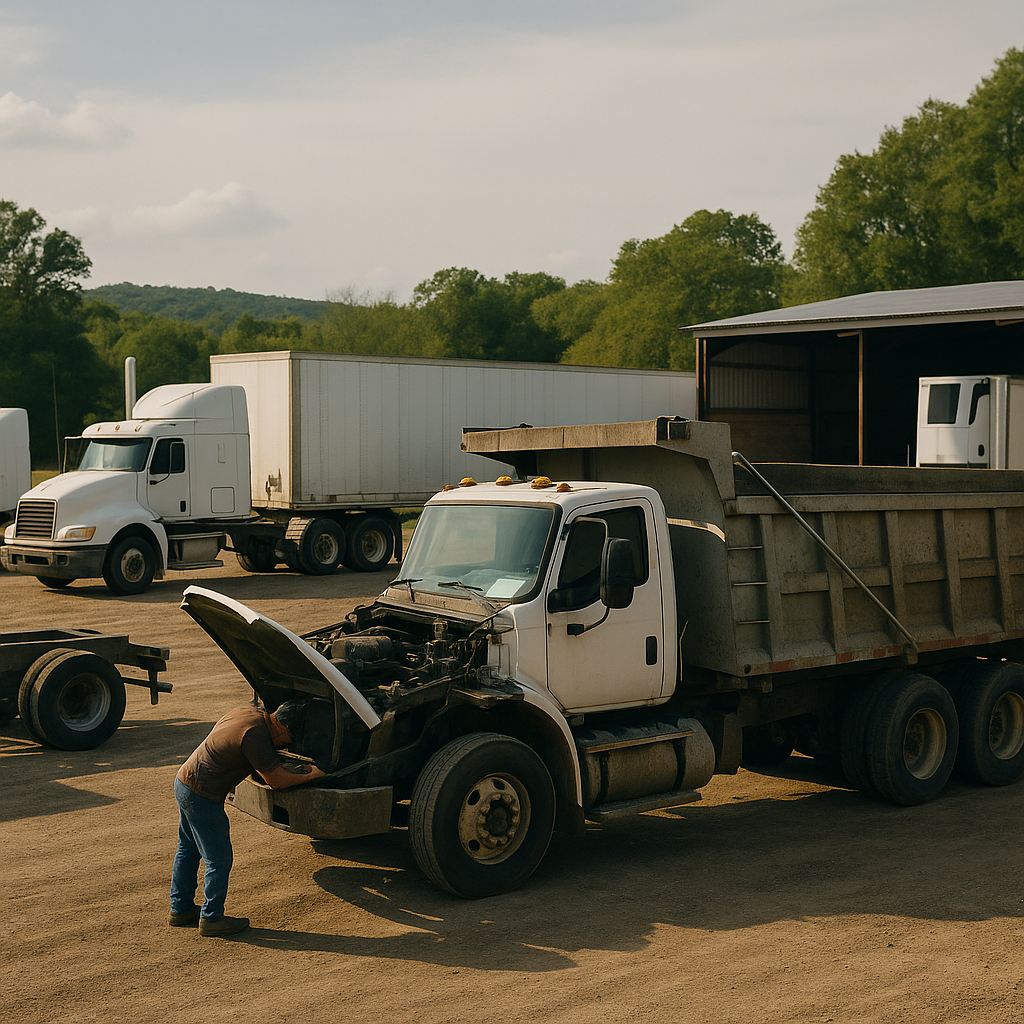
The big difference is exposure. Dump trucks often deal with jobsite traffic, backing, tipping, uneven ground, cracked windshields, tailgate issues, and damage from heavy material use. Even when the truck itself is similar to another commercial vehicle, the way it works changes the insurance conversation.
That also affects which optional coverages make sense. Some dump truck owners need trailer-related protection, some need physical damage to protect the truck’s value, and some don’t need the same cargo setup a van carrier would carry.
👉 Prefer watching a quick video about dump truck insurance?
Watch the video below for a quick overview of dump truck insurance rules, how much it costs, and practical ways to save. Or give us a call: (704) 290-3630
Intrastate and interstate differences#
Intrastate means you operate only within Mississippi. Interstate means your operation crosses state lines or falls under federal interstate commerce rules.
That distinction matters because FMCSA rules can apply when you operate interstate, and those federal rules can override the simple idea of “my state minimum is enough.” Under FMCSA rules and 49 CFR Part 387, required liability limits depend on carrier type, vehicle weight, and commodity.
What Mississippi does and does not require#
Mississippi regulates insurance at the state level through the Mississippi Department of Insurance. But state oversight doesn’t automatically answer whether you also need federal filings, an MC number, or FMCSA-level liability limits.
Owning a dump truck by itself doesn’t decide the policy. Your actual operation does.
What kind of insurance do you need for a dump truck?#
Most dump truck operators need auto liability as the foundation, then add other coverages based on how the truck is used, what materials move in it, whether the truck is financed, and whether trailers or off-road jobsite exposures are part of the operation. The right policy is usually built in layers, not bought as a generic package.
Auto liability covers bodily injury and property damage you cause to others with the truck. This is the foundation of a commercial trucking policy and the starting point for most dump truck operations.
For many Mississippi dump truck owners, liability is the part that satisfies legal operating requirements. But legal minimums and smart protection are not always the same thing. If the truck is heavily used, financed, or central to your income, liability alone leaves a lot exposed.
The NAIC is a good plain-language source on how insurance terms work, but trucking policies still need operation-specific scoping. A dump truck hauling loose stone around Jackson is not the same risk as a pickup used by a landscaper, even if both are “commercial vehicles.”
Required liability coverage#
If you’re for-hire, private, intrastate, or interstate, the required limit can change. Under 49 CFR Part 387, for-hire interstate carriers hauling general freight in vehicles over 10,001 pounds must carry at least $750,000 in public liability. That does not mean all truckers need the same limit.
If your operation involves a different commodity or a different carrier classification, the requirement may be different. That’s why dump truck insurance has to be scoped around what you haul and how you operate.
Physical damage for the truck itself#
Physical damage covers your truck itself, usually through collision and comprehensive or fire-and-theft-plus-CAC coverage. Collision pays for damage from impact or overturn. Comprehensive covers things like theft, vandalism, weather, or some non-collision losses.
This matters a lot for dump trucks because the unit is expensive, works in rough conditions, and often takes more abuse than linehaul highway equipment. A low-premium quote that leaves physical damage off may not be a bargain if one rollover, backing loss, or storm claim puts the truck out of service.
Material, trailer, and liability add-ons#
Motor truck cargo covers damage to freight you’re responsible for hauling. For dump trucks, this gets tricky because loose material like sand, gravel, dirt, or demolition debris doesn’t always fit the same cargo conversation as palletized freight, and policy terms matter.
General liability covers certain non-driving business liability, separate from auto claims. It can matter if customers, contractors, or jobsite requirements ask for it.
Non-trucking liability, often called bobtail insurance, covers certain non-business use of the truck when you’re not under dispatch and not hauling. It does not cover paid hauling.
Trailer interchange covers a trailer in your care when there’s a signed interchange agreement. Non-owned trailer physical damage covers a trailer you use but don’t own, and usually fits better for many non-intermodal owner-operators who don’t have a formal interchange agreement.

Mississippi dump truck insurance requirements and filings#
Mississippi dump truck insurance requirements depend on whether you’re intrastate or interstate, for-hire or private, and what kind of vehicle and material are involved. Filings and proof requirements follow carrier status and authority, not just truck ownership. That’s the piece many dump truck owners miss.
State minimums versus federal minimums#
Mississippi can have its own state insurance requirements for vehicles operating only inside the state. But once your operation falls under federal interstate rules, FMCSA standards can control the minimum liability requirement instead.
Under 49 CFR Part 387, liability minimums are tied to operation type. For-hire interstate general freight over 10,001 pounds typically means at least $750,000 in public liability. Under 10,000 pounds is different. Auto haulers are different. Hazmat is different.
So if someone tells you, “Mississippi only requires X,” that’s incomplete unless they also ask whether you’re for-hire, interstate, over the weight threshold, and what commodity you’re hauling.
When filings may be required#
An MC number is a federal operating authority number used by certain for-hire interstate carriers. A DOT number is a carrier identification number tied to safety and regulatory oversight.
If you need federal operating authority, insurance filings may be required as part of that setup. Those filings aren’t based on owning a truck alone. They’re tied to your carrier status, authority type, and operating pattern through FMCSA.
Why carrier classification matters#
A private carrier hauling its own materials is different from a for-hire carrier hauling for someone else. An intrastate construction hauler is different from an interstate carrier crossing into Louisiana, Alabama, Arkansas, or Tennessee.
That classification drives both compliance and underwriting. Get the classification wrong, and your quote can be wrong too.
How much is commercial truck insurance in Mississippi?#
Commercial truck insurance in Mississippi varies based on your operation, not a flat statewide price. For dump trucks, the biggest cost drivers are usually driving history, territory, radius, truck value, use type, claims history, and how much coverage you want. Your actual premium depends on your operation, cargo or material exposure, radius, driving record, and other factors.
What drives the price#
Underwriters look at who is driving, what they drive, and how the truck earns money. That usually includes:
- Driver age and experience
- MVRs and loss history
- Truck year, make, value, and condition
- Operating radius
- Where the truck is garaged
- Whether the work is local, regional, or interstate
- Prior insurance history
- Requested deductibles and limits
Underwriting is the insurer’s process for evaluating risk and deciding how to price and structure a policy. A clean local account with stable work may price differently than a new venture with no prior coverage and rough driver history.
Why dump trucks can price differently#
Dump truck work often means more jobsite exposure, backing losses, rollover potential, cracked glass, loader damage, and frequent wear. Even if annual mileage is lower than over-the-road trucking, the severity and type of claims can be different.
That’s why comparing dump truck insurance to generic “commercial auto” numbers you see online usually leads nowhere. A policy for a contractor’s pickup doesn’t tell you much about a tri-axle dump truck hauling aggregate.
A vague quote can look fine until you realize it left out the coverages that usually matter most. If you’re not sure how to scope the operation,
Ways to prepare for a quote#
Bring clean information. That speeds up the quote process and reduces surprises.
Have these ready:
- VINs and truck details
- Driver license information and driving history
- Garaging address
- Operating radius
- Materials hauled
- Whether you are for-hire or private
- Prior insurance loss runs, if available
- Requested effective date
- Any authority details, including DOT or MC information if applicable
How much is monthly insurance on a dump truck?#
Monthly dump truck insurance cost is usually the annual premium broken into installments, sometimes with finance or installment fees added. A lower monthly payment does not automatically mean better value. It can simply mean higher deductibles, thinner coverage, or key protections left off the policy.
Monthly billing versus annual policy cost#
A lot of owners search for monthly insurance because that’s how cash flow feels in the real world. That’s fair. But insurers rate the policy based on annual exposure first, then apply a billing plan.
So the better question is not just, “What’s the monthly number?” It’s, “What does that payment actually buy me?”
Budgeting for coverage layers#
A liability-only policy will usually bill differently than a policy that also includes physical damage, trailer-related coverage, or other layers. If the truck has a loan, lease, or high replacement value, cutting those layers may create a serious problem after a loss.
When a lower payment can hide a gap#
The cheapest-looking monthly option may come with:
- Higher deductibles
- Lower limits
- No physical damage
- No trailer-related protection
- Restrictions that don’t fit your operation
Compare the policy structure, not just the payment.
Do you need an LLC to get commercial insurance?#
No, you generally do not need an LLC to get commercial insurance for a dump truck. An LLC is a business structure choice, not an insurance requirement. What matters most is whether the applicant, truck, drivers, and operation meet the insurer’s underwriting rules.
Insurance versus business entity formation#
An LLC is a limited liability company, a legal business structure formed under state law. You can often buy commercial truck insurance as an individual, a sole proprietor, or a business entity if the operation is set up correctly.
The policy just needs to match the real operator and ownership details. If the truck title, lease, authority, or named insured don’t line up, that creates problems.
Why many owners form an LLC anyway#
Many owners choose an LLC for tax, legal, or business-banking reasons. That’s a conversation for your lawyer and tax advisor, not your insurance card alone.
From an insurance standpoint, the key issue is accuracy. The named insured should reflect how the truck actually operates.
What underwriters actually look at#
Underwriters care more about the truck, drivers, operating history, and claims background than whether the business ends with “LLC.” A strong application with clear operations matters more than a business structure by itself.
How to request a Mississippi dump truck quote#
The fastest way to get a useful Mississippi dump truck quote is to gather complete operating details before you apply. A good quote process should separate required coverage from optional protection, check whether Mississippi or FMCSA rules apply, and help you compare policy terms instead of chasing the lowest-looking number.
Information to gather first#
Before you request quotes, have:
- VINs and unit details
- Driver information and MVR basics
- Garaging location
- Operating radius
- States traveled, if any
- Materials hauled
- Current or prior insurance details
- Loss history
- DOT number or MC number, if applicable
You can also review your carrier record through SAFER if you operate in a way that triggers federal oversight. That helps confirm how your operation appears in the compliance system.
What to expect in the quote process#
A solid quote conversation should ask whether you’re hauling for hire or privately, whether you’re intrastate or interstate, and whether your truck ever runs without a trailer or load in ways that affect optional coverages.
It should also separate what’s legally required from what protects your truck and business income.
Choosing the right next step#
The goal is a clean comparison between policies that actually fit dump truck work in Mississippi. If the quote conversation stays vague, that’s a red flag.
FAQ#
What kind of insurance do I need for a dump truck?
Most Mississippi dump truck operators start with auto liability, because that’s the base coverage tied to legal operation. Many also consider physical damage to protect the truck itself, especially if it’s financed or hard to replace. Depending on the operation, general liability, non-trucking liability, trailer-related coverage, or motor truck cargo may also matter.
The right mix depends on whether you’re for-hire or private, intrastate or interstate, and what material you haul. Dump trucks often move loose material, so the cargo conversation is not always the same as van freight.
How much is monthly insurance on a dump truck?
Monthly insurance on a dump truck is usually an installment of the total annual premium, not a separate pricing system. The payment can also include billing or finance fees, depending on how the policy is set up.
A lower monthly payment can mean higher deductibles or fewer coverages. That’s why it helps to compare liability limits, physical damage, deductibles, and exclusions before focusing on the payment amount alone.
How much is commercial truck insurance in Mississippi?
Commercial truck insurance in Mississippi varies depending on the truck, drivers, garaging location, operating radius, claims history, materials hauled, and whether the operation is new or established. Dump truck work can price differently from other trucking because jobsite use and heavy-material exposure create a different loss profile.
Your actual premium depends on your operation, cargo or material exposure, radius, driving record, and other factors. The best comparison comes from quotes built on accurate operating details.
Do I need an LLC to get commercial insurance?
No. You can generally get commercial insurance without forming an LLC if the truck, drivers, and business setup meet underwriting requirements. An LLC can help with business structure, but it is not a universal prerequisite for coverage.
What matters is that the named insured, truck ownership, operating authority, and actual business use all match. If those details are inconsistent, the quote can be delayed or issued incorrectly.
Is dump truck insurance different from regular commercial truck insurance?
Yes, often in practical terms. The core policy pieces may look familiar, but dump truck operations usually bring different risks than general freight hauling. Backing claims, rollover exposure, jobsite damage, cracked glass, and heavy-material use all affect how underwriters view the account.
That means the coverages, deductibles, and pricing logic may differ from a standard box truck, pickup, or highway tractor doing dry van work. The truck class matters, but the work matters more.