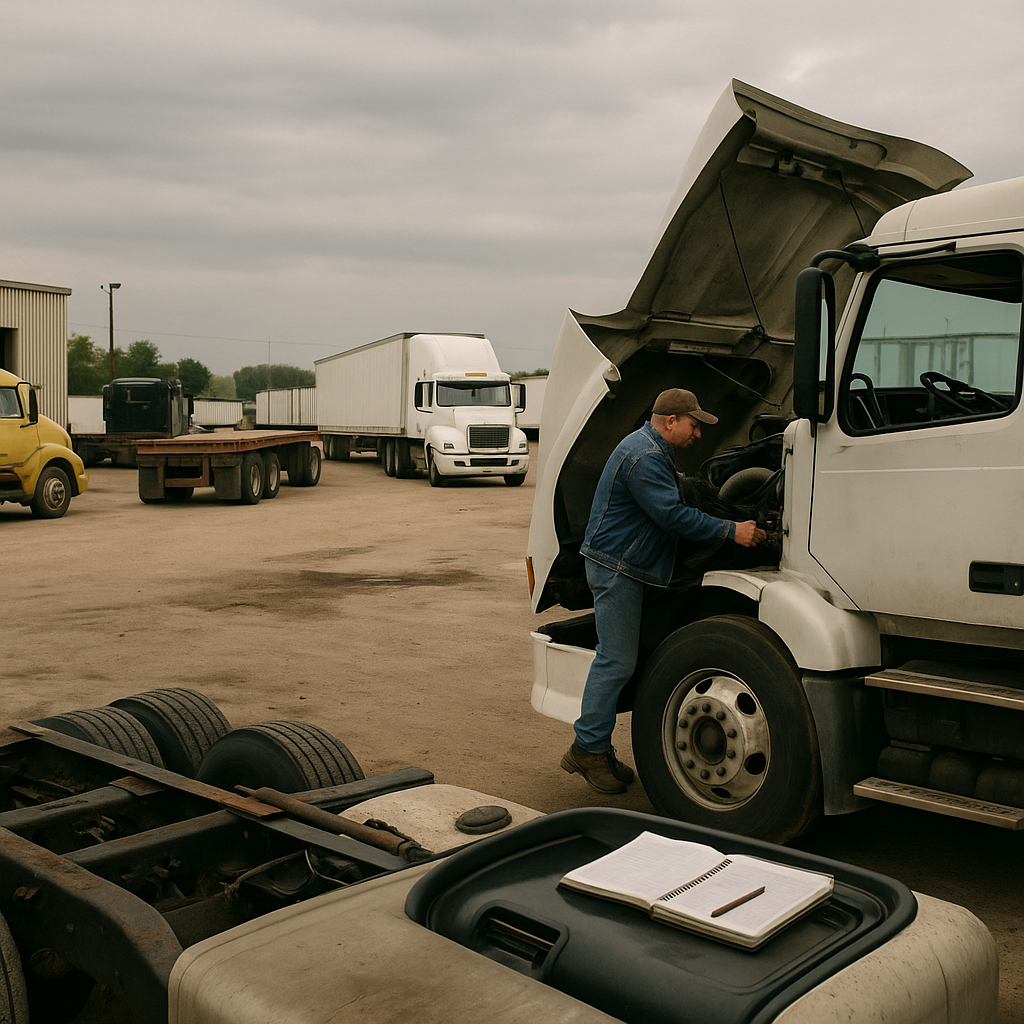
A commercial truck damage claim usually means one of two things: you’re trying to get paid for damage to your own truck, or someone is claiming your truck damaged their vehicle or property. Those are not the same claim, and mixing them up is one of the fastest ways to lose time after a loss.
This guide breaks down what a commercial truck damage claim is, what coverage may apply, what to document, how filing works, and how fault decisions affect repairs and payment. The focus here is practical: what an owner-operator needs to do from the cab when the truck is down and the clock is running.
What a Commercial Truck Damage Claim Is#
A commercial truck damage claim is a request for payment under an insurance policy after a covered loss involving a work truck. The first question is simple but critical: is the damage to your own truck, or did your truck damage someone else’s vehicle or property? That answer decides which coverage and claim path apply.
FMCSA rules govern parts of commercial trucking operations and insurance requirements for certain carrier types and operations, especially when you run interstate for-hire under federal authority. You can verify operating status and carrier information through FMCSA and related federal systems, but the damage claim itself still turns on the policy you bought and the facts of the loss.
First-party damage vs. third-party liability#
First-party damage means damage to property you own and insure under your own policy. Third-party liability means a claim by someone else who says you caused damage to their vehicle, trailer, building, fence, or other property.
If your hood, bumper, sleeper, fairings, or windshield get torn up in a crash, that’s usually a first-party truck damage question. If you rear-end a pickup or back into a loading dock, that’s a third-party liability question.
When the damaged vehicle is your truck#
If your truck is the damaged vehicle, the coverage that usually matters most is physical damage coverage, which is insurance for damage to your own truck. That can include collision, which covers damage from impact with another vehicle or object, and comprehensive, which usually covers non-collision losses like theft, vandalism, hail, or a fallen tree.
A lot of drivers confuse truck damage with cargo loss. Cargo coverage is for the freight, not for fixing your hood, frame, or cab.
When another driver or company may be involved#
If another driver caused the crash, you may file through your own policy if you carry the right coverage, through the other party’s liability policy, or both depending on the situation. If your truck caused the damage, your liability coverage may handle damage to others, while your own truck repairs still depend on whether you carry physical damage coverage.
What Commercial Truck Insurance Typically Covers in a Damage Claim#
Commercial truck insurance may cover damage to your truck, damage you cause to others, or both, but each part of the policy does a different job. Coverage depends on the policy terms, the kind of truck operation, how the loss happened, and whether the damaged property was yours or someone else’s.
A commercial auto policy is an insurance policy built for business vehicle use rather than personal driving. For trucking, the big split is between damage to your own unit and liability for damage or injury you cause while operating.
Physical damage coverage basics#
Physical damage coverage pays for direct damage to your truck if the loss falls within the policy terms. Most owner-operators think of this as the coverage that responds when the tractor itself gets hit, stolen, vandalized, or damaged by weather.
Collision covers damage from impact, like hitting another vehicle, jackknifing into a barrier, or backing into a pole. Comprehensive covers many non-collision losses, like hail, fire, break-ins, theft, or a tree limb crashing onto the cab. A deductible is the amount you pay out of pocket before insurance pays the covered balance.
Liability coverage for damage to others#
Liability coverage pays when your trucking operation is legally responsible for damage to someone else or their property. Under 49 CFR Part 387, federal financial responsibility rules apply based on carrier type, vehicle weight, commodity, and operation, which is why trucking liability requirements are not one-size-fits-all.
That federal liability requirement is not the same thing as coverage for your own truck. Liability may pay for the other driver’s car, a guardrail, a building, or another damaged party. It does not fix your tractor unless you also bought physical damage coverage.
Common loss types: collision, theft, vandalism, weather, glass#
Common truck damage scenarios include:
- A collision with another vehicle or fixed object
- Hail, wind, or a fallen tree
- Vandalism or a break-in
- Theft of the truck
- Broken glass, depending on how the policy handles it
Glass damage is a common point of confusion. Some policies treat glass under comprehensive when the loss is non-collision, while crash-related glass damage may fall under collision with the rest of the truck repair. The exact handling depends on policy wording and the facts of the event.
What to Do Right After the Damage Happens#
Right after truck damage happens, protect people first, then protect evidence. The best first moves are to secure the scene, call for help if anyone may be hurt, and document the truck before it gets moved, towed, or repaired.
A bad first hour can create a bad claim file. If key photos are missing or the truck gets repaired before inspection, you can end up fighting over fault, damage scope, or whether all the repairs relate to this loss.
Make the scene safe first#
If there’s a crash, check for injuries and call emergency services when needed. Move only if safety or law enforcement requires it, and use warning devices if the truck is disabled in a dangerous spot.
If the truck is drivable but damaged, don’t assume that means it’s safe to keep running. Steering, tires, lights, underride components, body panels, and fluid leaks can turn a repairable claim into a much worse one.
Collect photos, videos, and witness details#
Take wide shots first, then close-ups. Get all sides of the truck, the point of impact, skid marks, debris, road conditions, lane position, nearby signs, trailer condition if involved, and any damage to the other vehicle or property.
Take photos of the VIN plate, unit number, trailer number if relevant, license plates, and the other party’s insurance and registration if available. Get witness names and contact details before they leave. If police respond, note the agency, officer name, and report number.
Preserve documents and do not move too fast on repairs#
Save dispatch details, bill of lading if relevant to the trip facts, towing invoices, roadside service records, and any messages about where and when the loss happened. If the truck was parked, note exactly how and where it was parked. If weather played a role, note the conditions while they’re fresh.
Don’t tear into repairs before the insurer or adjuster has a chance to inspect, unless emergency work is needed to protect the truck from more damage. An adjuster is the insurance professional who reviews the loss, damage, coverage, and payment decision.
When a claim gets messy because the truck was fixed too early or the scene wasn’t documented well, a lot of time gets burned sorting out what happened. If you’re not sure how to set up the claim cleanly,
How to File the Claim Step by Step#
Filing a commercial truck damage claim goes faster when you have the basic facts ready before you call. The usual flow is straightforward: gather key information, report the loss, get a claim number, send supporting evidence, and stay on top of repair approval and follow-up.
Owner-operators don’t have time for a messy back-and-forth. A clean first report can help the adjuster set up the file correctly and reduce avoidable delays.
Gather the right information before you call#
Have these details ready:
- Policy number if you have it handy
- Named insured and contact information
- Truck year, make, model, VIN, and unit number
- Date, time, and exact location of loss
- Short description of what happened
- Photos and video
- Driver information
- Other party information, if anyone else was involved
- Police report details, if available
- Towing location and current truck location
If the damage involves a trailer, say whether it’s yours, leased, or non-owned. That matters because trailer claims can follow a different path than tractor damage.
Report the loss and get a claim number#
Call the carrier or claims reporting line and give the facts as clearly as possible. Stick to what you know. Don’t guess about speed, distances, or fault if you aren’t sure.
The claim intake team usually creates the file, confirms basic coverage, and issues a claim number. Save that number immediately. You’ll use it for towing bills, shop communications, estimate uploads, and status checks.
Submit photos, estimates, and supporting records#
Once the file is open, the insurer usually asks for damage photos, a description of the loss, and sometimes an estimate or inspection appointment. Some carriers want the truck inspected at the yard, tow lot, or repair shop before approving major work.
Send records in one organized batch if you can. Label photos clearly. If there was prior damage, disclose it early so the adjuster doesn’t discover it later and question the whole repair bill.
Track the claim until repair approval#
Stay in touch with the adjuster and the shop. Ask what is still needed, whether an inspection is scheduled, and whether any supplements are pending. A supplement is an added repair amount requested after teardown reveals more damage than the first estimate showed.
Claims often slow down when the adjuster is waiting on photos, tear-down notes, police reports, or proof of ownership. Keep a running note in your phone with dates, names, and what each person said.
How Insurers Decide Fault and Liability#
Insurers decide fault by comparing the physical evidence, statements, documents, and traffic facts tied to the loss. They look for a version of events that matches the damage pattern, the scene, and any independent evidence instead of relying on one driver’s story alone.

Claims handling rules also vary by state, and policy terms still matter, which is why fault fights don’t always resolve the same way everywhere. State insurance regulation shapes claim practices, and NAIC is a good starting point for understanding that state-based insurance framework.
What adjusters look at#
Adjusters review photos, videos, witness statements, the police report, recorded statements, vehicle damage patterns, tow records, and sometimes telematics or dash cam footage. They also look at whether the story fits the truck’s damage and the scene layout.
If another insurer is involved, each side may run its own investigation. That doesn’t automatically mean someone is acting in bad faith. It means each company is trying to decide what it owes under its policy.
How police reports and photos help#
Police reports can be important, but they usually don’t decide coverage by themselves. Photos often do more heavy lifting than people think because they lock in lane position, contact points, debris spread, and conditions before the scene changes.
Clear photos also help separate crash damage from old wear, rust, or unrelated damage. That’s a big deal when the repair estimate starts climbing.
Why fault and repair approval are related but not identical#
If you carry physical damage coverage, your insurer may move ahead on inspecting and approving repairs to your truck before fault is fully decided. Later, it may try to recover from the at-fault party through subrogation, which is the insurer’s effort to recover money from the party that legally caused the loss.
So yes, fault matters. But repair timing and fault timing are not always the same thing.
Repair Coordination, Downtime, and Settlement#
After the claim is opened, the practical question is how to get the truck inspected, approved, repaired, and paid without wasting more downtime than necessary. Most claims move through estimate review first, then repair authorization, then supplements if hidden damage shows up during teardown.
For an owner-operator, the pain isn’t just the damage bill. It’s the truck sitting still while the file crawls.
Repair shop choice and estimate review#
Most carriers let you use a repair shop, but they still review the estimate and may inspect the unit before approving major work. That review is about damage scope, labor, parts, and whether the proposed repairs match the covered loss.
If the shop finds more damage later, it sends a supplement. That’s normal on heavy equipment and truck claims, especially after panels come off.
Network shops vs. independent repair facilities#
Some insurers have preferred or network shops that know their process well and can help move paperwork faster. Independent shops may still be fine, especially if they know commercial truck repair and can document damage clearly.
The key question isn’t just “network or not.” It’s whether the shop can communicate fast, support supplements, and handle commercial truck parts delays without the file going dark.
Total loss, settlement, and final payment#
A total loss means the truck is treated as not economical to repair under the policy’s valuation and claims rules. Actual cash value is the truck’s market-based value at the time of loss, adjusted for factors like age, condition, and mileage.
If the truck is totaled, the insurer values it, applies the deductible if applicable, and handles payoff details based on ownership and any lienholder interest. If it’s repairable, payment may go to you, the shop, or both depending on the claim setup and financing.
Common Claim Mistakes That Slow or Hurt Payment#
The most common claim mistakes are reporting late, skipping documentation, repairing too soon, and assuming every trucking loss falls under one coverage bucket. Truck damage, liability damage, cargo issues, and trailer issues often overlap in conversation, but they do not get adjusted the same way.
That’s where a lot of owner-operators get burned. They know something happened, but the file gets delayed because the insurer still doesn’t know exactly what kind of claim it is.
Waiting too long to report the loss#
Late reporting can make the insurer question what changed after the event, whether damage got worse, or whether key evidence was lost. Even if you’re trying to keep moving, report the loss quickly.
Repairing before documenting#
Emergency protection is one thing. Full repair before inspection is another. If the adjuster can’t see the original damage, you may end up arguing over what this loss actually caused.
Mixing cargo, truck damage, and liability issues#
If your freight was damaged, that’s not the same as truck body damage. If another driver’s car was hit, that’s a different exposure from fixing your tractor. Separate the facts early so the claim gets routed right.
Missing policy details or proof of ownership/use#
If the insurer has to chase basic facts like who owns the unit, who was driving, what vehicle was involved, or how it was being used, the file slows down. Coverage scope matters in commercial trucking because policy terms often depend on the vehicle, operation, and loss scenario.
When a Truck Company May Be Legally Responsible for Car Damage#
Yes, a truck company may be legally responsible for car damage if the evidence shows its driver or operation caused the loss. But a liability claim and a lawsuit are not the same thing, and most people start with the insurance claim before deciding whether a legal case is necessary.
If the truck that hit the car was part of a commercial operation, details about the carrier and authority can matter. You can look up carrier information through SAFER, which shows operating and identification data that can help identify the right entity involved.
Insurance claim vs. lawsuit#
An insurance claim asks the insurer to pay under the policy. A lawsuit asks a court to decide legal responsibility and damages. Many vehicle damage disputes get resolved at the claim stage without ever becoming a lawsuit.
If fault is clear and the damage is straightforward, a liability claim may be enough. If fault is disputed, the damage is serious, or the claim is denied or underpaid, legal advice may make sense.
Evidence that supports a liability claim#
The same evidence that helps any claim also helps a case against a truck company: scene photos, witness names, repair estimates, police report details, video, and proof of who owned or operated the truck. If there are business markings, unit numbers, or USDOT numbers on the truck, document them.
When to talk to a lawyer or state agency#
If the loss involves major damage, injuries, a disputed story, multiple companies, or a denial you don’t understand, talk to a lawyer in your state. You can also check with your state insurance department if the issue is claims handling rather than legal fault.
Quick Checklist for Owner-Operators Before Filing#
Before filing a commercial truck damage claim, have the basics in one place: truck identification, policy information, damage photos, location details, and a short timeline of what happened. Organized records help the adjuster set up the file correctly and can speed up inspection, repair approval, and payment.
Think of this as your in-cab claims checklist. When the truck is down, you don’t want to rebuild the story from memory.
Information to keep in the cab#
Keep these ready at all times:
- Insurance ID and policy contact information
- Truck VIN and unit number
- Registration and ownership or lease documents
- Driver information
- A simple note template for crash facts
- A charged phone for photos and video
Documents to save after the loss#
Save every photo, tow receipt, shop estimate, inspection note, police report detail, roadside invoice, and message about the event. If the truck gets moved, note when, where, and by whom.
What to send the adjuster first#
Send the core facts first: who, what, when, where, and clear damage photos. Then send supporting records in an organized set instead of dribbling them out across multiple days unless the adjuster asks otherwise.
If you’re not sure what coverage fits your operation or how a damage claim would be handled under your setup,
FAQ#
Can I sue a truck company for damaging my car?
Yes, you may be able to sue a truck company for damaging your car if the facts show the truck driver or company was legally responsible. In practice, most people start by filing a liability claim with the trucking company’s insurer and gathering evidence like photos, witness information, repair estimates, and police report details. If fault is disputed, the insurer denies the claim, or the damage is serious, a lawsuit may become the next step. State law controls deadlines and legal standards, so local legal advice matters.
What does commercial truck insurance cover?
Commercial truck insurance can cover different things depending on the policy section involved. Physical damage coverage may pay for damage to the truck itself from collision, theft, vandalism, weather, or similar covered causes. Liability coverage may pay when the trucking operation is legally responsible for damage to someone else’s car, building, or other property. Other coverages, like cargo, handle different types of loss. What actually applies depends on policy terms, vehicle use, ownership, and how the loss happened.
How do insurers determine who was at fault?
Insurers usually decide fault by reviewing scene photos, vehicle damage, witness statements, police reports, driver statements, and any available video or electronic data. They compare each version of the event against the physical evidence to see what matches. In a trucking claim, they may also review unit information, trailer involvement, and operational details. One important point: a fault decision can take time, and it may not stop the insurer from inspecting your truck or moving toward repair review if your own physical damage coverage applies.
How to claim vehicle damage?
Start by documenting the damage before the truck is moved or repaired if it’s safe to do so. Then notify the insurer, open the claim, and get the claim number. Be ready to provide the truck details, date and location of loss, a short description of what happened, photos, and other party information if anyone else was involved. After that, send estimates or inspection details, respond quickly to adjuster requests, and track the file until repair approval or settlement is issued.
Does commercial truck insurance cover hail, vandalism, or broken glass?
It often can, but only if the right coverage is on the policy and the loss fits the policy terms. Hail, vandalism, theft, break-ins, and many glass-only events are commonly handled under comprehensive rather than collision. Crash-related glass damage may be wrapped into a collision claim if it happened as part of an impact loss. The exact handling depends on the cause of loss, the deductible, and the wording in the policy. Don’t assume any weather or glass claim is automatic without checking how your coverage is set up.