
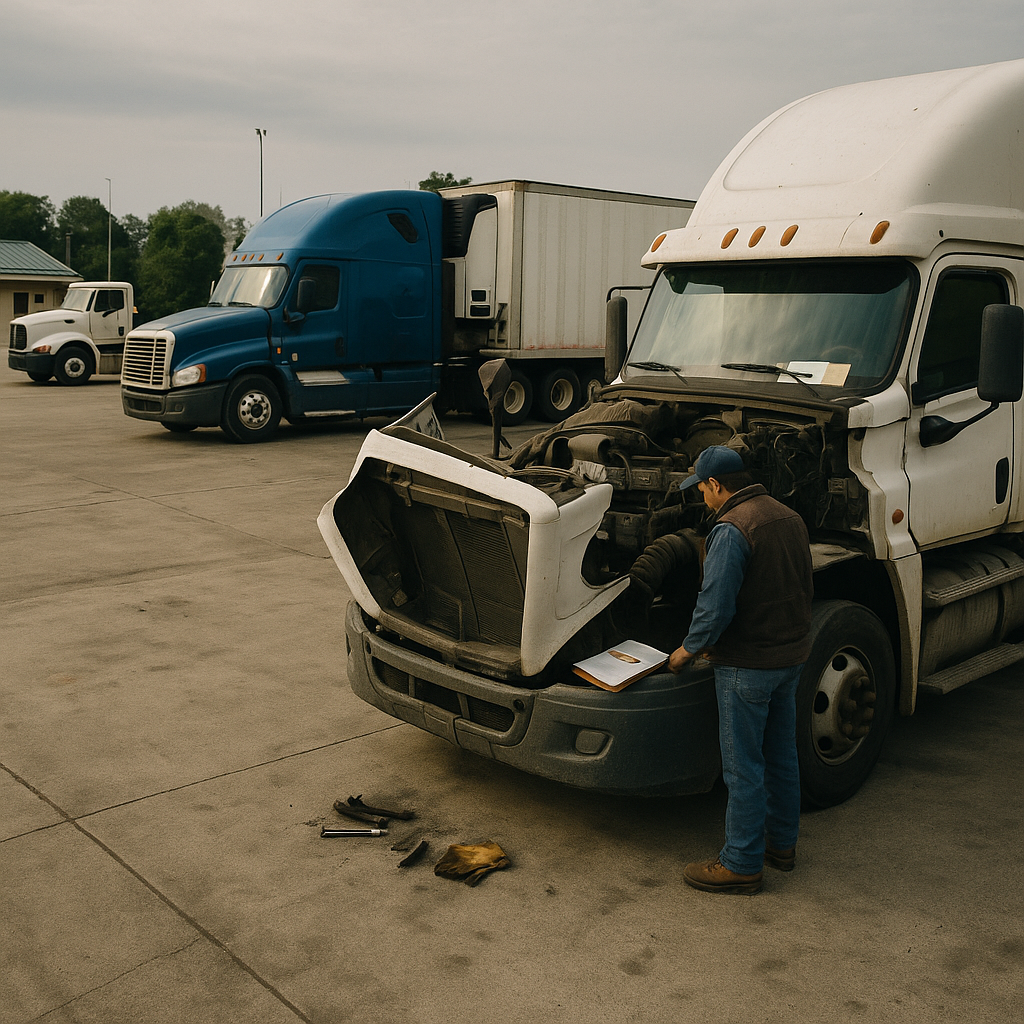
Truck insurance liability coverage is the part of a commercial auto policy that helps pay for injury or damage you cause to other people in a covered trucking accident. If you run under your own authority or lease on to a motor carrier, this is usually the first coverage people ask about — but it’s not the whole insurance picture.
A lot of owner-operators get tripped up here. They hear state minimums, personal auto limits, bobtail, and “$1M coverage” thrown around like they all mean the same thing. They don’t.
What Truck Liability Coverage Is#
Truck insurance liability coverage pays for third-party bodily injury and property damage when your truck causes a covered accident during insured business use. In plain English, it protects you against claims from other people, not damage to your own truck, and it has to match how your trucking operation actually runs.
Commercial auto liability is the liability portion of a commercial vehicle policy built for business driving. For trucking, that usually means a tractor or other commercial unit being used in for-hire or business operations, not a pickup on a personal auto policy.
Commercial auto liability vs personal auto#
Personal auto insurance is written for personal driving, not hauling freight for money. Once the truck is being used in a commercial trucking operation, personal auto coverage usually isn’t the right tool and may not respond the way a driver expects.
That’s why truck insurance liability coverage gets tied so closely to compliance. A for-hire carrier, owner-operator, or small fleet has to think about the truck’s weight, the cargo, whether the operation is interstate or intrastate, and whether the business is running under its own authority or leased-on.
Who this coverage is for#
Owner-operators, leased-on drivers, and fleets with a few trucks all need to review liability through the lens of operation type. A leased-on owner-operator may rely partly on a motor carrier’s primary coverage while still needing separate protection for non-dispatch situations, while an authority holder may need its own liability policy and filings.
Liability is the starting point because it’s the coverage most directly tied to crash claims and financial responsibility. But it doesn’t replace cargo insurance, physical damage, general liability, or non-trucking liability.
What It Covers and What It Does Not#
Truck insurance liability coverage usually pays third-party claims for bodily injury and property damage caused by a covered trucking accident, and it may also include defense and claim handling under the policy terms. It does not mean “everything related to the truck is covered,” which is where many expensive mistakes start.
The NAIC uses liability in the plain insurance sense: coverage for damage or injury you cause to others. That simple definition helps cut through a lot of trucking forum confusion.
Bodily injury liability#
Bodily injury liability is the part that helps pay when another person gets hurt and claims your truck caused it. That can include medical bills, lost wages, pain-and-suffering claims, and lawsuits brought by injured third parties after a covered accident.
If you rear-end a car and the other driver needs treatment and misses work, bodily injury liability is the bucket people usually mean. If several people are hurt, those claims can add up fast.
Property damage liability#
Property damage liability pays for damage your truck causes to someone else’s property. That can include another vehicle, a guardrail, a building, a fence, a loading dock, or other physical property involved in the crash.
This is where people sometimes over-assume. Property damage liability may respond to property you damage that belongs to others, but that doesn’t make it the same thing as cargo insurance, trailer coverage, or physical damage for your own equipment.
Defense costs and claim handling#
Defense costs are the legal expenses involved in defending a covered claim. Many liability policies include claim investigation, settlement handling, and legal defense, but how those costs apply depends on the policy wording and limit structure.
So don’t assume every policy handles legal fees the same way. The declarations page and policy form matter.
Common exclusions and coverage gaps#
Truck insurance liability coverage does not usually pay for:
- Damage to your own truck
- Damage to your own trailer in many situations
- Damage to freight you haul for others
- Your own injuries
- Losses outside the policy’s covered use
- Non-business or off-dispatch situations that belong under another coverage type
Physical damage covers your own equipment, usually through collision and comprehensive or fire and theft with combined additional coverage. Cargo insurance covers freight you’re hauling. Non-trucking liability covers certain non-business use. General liability covers non-driving business exposures, not road accidents caused by operating the truck.
When these are mixed up, drivers can buy the wrong thing and only find out after a claim. If you’re not sure which coverage applies to your operation,
How Liability Limits Work#
Liability limits are the maximum amounts the policy can pay for covered claims, subject to the policy terms and exclusions. A limit tells you the cap available for certain losses, but it does not mean every claim gets paid in full or that every trucking situation is covered.
What 250/500/100 means#
A split limit like 250/500/100 breaks liability into three separate caps. Usually, that means bodily injury per person, bodily injury per accident, and property damage per accident.
So in plain language, the policy may pay up to one amount for any one injured person, up to a higher total amount for all injured people in that same accident, and up to another amount for property damage. If one person has a very large injury claim, the per-person cap matters. If several people are hurt, the per-accident cap matters.
How a $1,000,000 limit works#
A $1,000,000 liability limit is usually a single limit cap for covered liability claims under that policy structure. It can sound like a huge number, but it’s still a cap, and it’s still governed by exclusions, conditions, and what the policy actually covers.
If a crash injures multiple people and also damages expensive property, that limit can be used up faster than a driver expects. It is not the same thing as “fully covered no matter what.”
Why higher limits are not the same as being fully covered#
Higher limits give you more room before you hit the policy cap, but they don’t fix a coverage mismatch. If the policy is written for the wrong operation, wrong radius, wrong use, or missing the right filings, a bigger number on the dec page won’t solve that.
The right limit depends on your operation type, contract requirements, freight profile, and compliance needs. A leased-on owner-operator, a new authority, and an intrastate-only fleet may all be looking at the liability question differently.
FMCSA Rules, State Minimums, and Filings#
State minimum auto insurance and FMCSA-related trucking requirements are not the same thing, and mixing them up causes real compliance problems. Your required liability can depend on whether you’re for-hire or private, whether you operate interstate or intrastate, your vehicle weight, and what commodity you haul.
For interstate for-hire trucking, the federal framework sits under 49 CFR Part 387. FMCSA also publishes financial responsibility guidance at fmcsa.dot.gov.
Federal requirements vs state minimums#
Here’s the mistake that catches a lot of new operators: your state minimum isn’t automatically your federal minimum. Under 49 CFR Part 387, for-hire interstate carriers hauling general freight in vehicles over 10,001 lbs must carry at least $750,000 in public liability. Other operations can have different requirements.
For example, federal minimums can vary by carrier type, weight, and commodity. Common federal scopes include:
- Under 10,000 lbs: $300,000
- Over 10,001 lbs for-hire interstate general freight: $750,000
- Auto haulers: $1,000,000
- Hazmat: $5,000,000
That doesn’t mean every trucker needs the same number. It means you have to match the rule to the operation.
Why filings matter#
Insurance filings are the proof regulators use to confirm financial responsibility for certain trucking operations. If you’re applying for authority tied to an MC number, filings can matter just as much as the policy itself because the regulator is looking for proof in the right format, not just a certificate someone emailed you.

A USDOT number is the identifier used for safety and operational records. An MC number is operating authority for certain for-hire interstate carriers. You can verify carrier status and authority context through SAFER.
Carrier-type scoping for trucking operations#
Before trusting any liability number, scope the operation correctly:
- For-hire or private
- Interstate or intrastate
- Over or under the applicable weight threshold
- General freight, autos, hazmat, or another commodity class
- Operating under your own authority or leased-on
If you skip that step, it’s easy to assume a personal auto minimum or generic state rule solves a trucking problem when it doesn’t.
What Changes the Cost of Truck Liability Insurance#
Truck insurance liability coverage cost depends on exposure, not just the limit printed on the declarations page. Your actual premium depends on your operation, cargo, radius, driving history, claims history, truck details, territory, and whether the policy has to support filings or special contract requirements.
Operation type and usage#
A truck running long-haul interstate freight presents a different risk than one staying local or intrastate. For-hire trucking, leased-on arrangements, and owner-operators with their own authority can all be rated differently because the exposure isn’t the same.
Cargo type matters too. The kind of freight hauled, how often the truck runs, and where it operates all affect how underwriters view the risk.
Driver and loss history#
Driving record and prior losses matter because insurers are pricing the chance and severity of future claims. Serious violations, recent accidents, and gaps in commercial experience can change pricing quickly.
For a small fleet, the mix of drivers matters as much as the truck. One problem unit can affect the account.
Vehicle and route factors#
The truck itself, where it’s garaged, the states it runs through, and the operating radius all influence premium. Heavier units, denser traffic corridors, higher-mileage operations, and more claim-prone routes usually create more exposure.
Why quotes vary#
This is why two owner-operators can ask, “How much is liability insurance for a truck?” and get very different answers. One may be leased-on and running in a narrower scope, while another may be a new venture hauling interstate under its own authority.
There is no universal price for truck insurance liability coverage. If you’re comparing quotes, make sure you’re comparing the same operation, same filings, and same assumptions before you judge the number.
How to Choose the Right Liability Setup#
The right liability setup depends on when you’re under dispatch, when you’re not, who provides primary coverage, and what the truck is doing when a loss happens. That’s why trucking liability, non-trucking liability, and general liability should be treated as separate tools, not interchangeable labels.
Leased-on owner-operator scenarios#
A leased-on owner-operator is a driver or trucking business operating under contract with a motor carrier rather than under its own authority. In many leased-on setups, the motor carrier’s policy may provide primary liability when you’re operating in that carrier’s business.
But that doesn’t automatically mean you’re covered in every other situation. Off-dispatch use, contract language, and the carrier’s requirements all matter.
Deadhead, bobtail, and unloaded travel#
Bobtail means driving a tractor without a trailer attached. Deadhead usually means traveling with an empty trailer in business use, often between loads or after a delivery.
Those aren’t the same exposure. Non-trucking liability usually applies to non-business use only and does not cover paid hauling. Bobtail is often used casually by drivers to describe any no-trailer situation, but the insurance answer depends on whether you’re in business use, under dispatch, or purely personal use.
When you may need additional coverages#
Liability covers what you do to others in a covered road accident. It doesn’t replace general liability for non-driving business exposures, cargo for freight, or physical damage for your own truck.
If your truck hauls freight for others, drives under lease, operates off-dispatch at times, or uses non-owned trailers, match the coverage to those real situations instead of forum shorthand.
How to Review a Quote Before You Buy#
Before you bind truck insurance liability coverage, review the quote like a compliance document, not just a price sheet. Confirm that the policy describes the right business, the right truck, the right operating type, and the right filings for how you actually run.
Check the covered operation#
Make sure the named insured is correct and matches the business that needs coverage. Confirm whether the policy is written for for-hire use, leased-on use, interstate use, or intrastate use.
Check the limit and exclusions#
Look at the liability limit structure and ask whether it’s split limit or single limit. Then review exclusions, covered auto symbols, and any wording that narrows when the policy responds.
Check filings and endorsements#
If the policy is supposed to support authority or another compliance requirement, verify the filing plan. Confirm any endorsements that expand or restrict coverage, and don’t assume a certificate alone proves the policy fits the operation.
That last review step can save a lot of pain later, especially when the truck’s real use doesn’t match the way the quote was submitted.
FAQ#
What does liability truck insurance cover?
Liability truck insurance covers third-party bodily injury and property damage from a covered trucking accident. In practical terms, that means it can help pay claims when another person is hurt or someone else’s property is damaged and your insured truck is legally responsible.
It usually does not pay to repair your own truck. It also does not replace cargo insurance, physical damage, general liability, or non-trucking liability. The exact claim handling, including legal defense, depends on the policy terms, the covered use, and the facts of the loss.
How much does a $1,000,000 liability insurance policy cost?
A $1,000,000 liability insurance policy does not have one universal price for all truckers. Your actual premium depends on the operation type, whether you’re for-hire or leased-on, your territory, driving history, claims history, cargo, truck details, and whether the policy needs to support federal or state filings.
That’s why two policies with the same limit can price very differently. A new authority running interstate freight may be rated much differently than an owner-operator leased-on to a carrier or an intrastate-only operation. Compare quotes only after confirming the same coverage setup.
What does 250/500/100 liability limit mean?
A 250/500/100 liability limit is a split-limit structure. In plain language, it usually means one cap for bodily injury to any one person, a second cap for total bodily injury in the whole accident, and a third cap for property damage from that accident.
So if one person is badly hurt, the per-person amount controls that claim. If several people are injured, the per-accident bodily injury cap controls the total available for those injury claims. The property damage number is separate and applies to damaged vehicles, buildings, fences, or other property.
How much is liability insurance for a truck?
Liability insurance for a truck varies depending on the operation and risk, not just the truck itself. Common cost drivers include whether the truck runs interstate or intrastate, whether it’s for-hire or leased-on, the cargo hauled, operating radius, route territory, truck type, and the driver’s record and claim history.
That’s why there is no flat answer that fits every owner-operator or small fleet. Before comparing numbers, make sure the quote reflects the right limit, the right business use, and any required filings. Otherwise, a lower price may simply mean you’re looking at a different coverage setup.
Is truck liability coverage the same as non-trucking liability or bobtail insurance?
No. Truck liability coverage is the commercial auto liability that applies to covered business driving exposures. Non-trucking liability is separate coverage meant for certain non-business use, and it does not cover paid hauling or normal under-dispatch trucking work.
Bobtail is often used loosely to mean driving without a trailer, but insurance coverage depends on what the truck is doing at that moment. A tractor without a trailer can still be in business use, which is different from personal use. That’s why the label drivers use in conversation isn’t always the same as the coverage that actually applies.





