
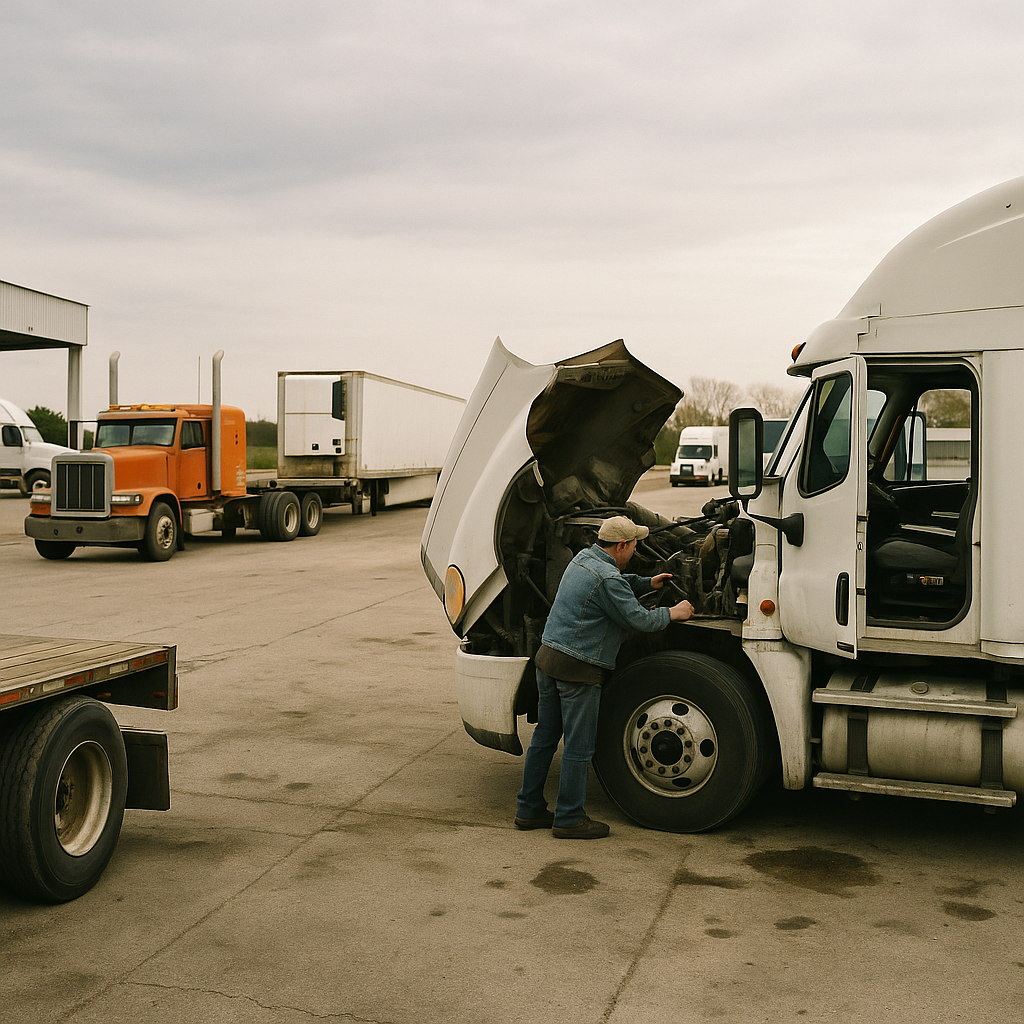
A commercial truck accident claim is usually more complicated than a regular car wreck claim because more people, more evidence, and more insurance policies may be involved. If you’re dealing with a crash involving a semi, box truck, or other business-use vehicle, the right next steps can affect liability, claim value, and how long the process drags on.
Why commercial truck accident claims are different#
A commercial truck accident claim is different from a normal auto claim because the vehicle is tied to a business operation, not just a personal driver. That usually means bigger losses, more records to review, and more than one party or insurer involved before anyone agrees on fault or payment.
Truck crashes don’t get handled like a simple fender-bender. A motor carrier is the company or business responsible for operating commercial vehicles in its business, and that can be different from the person behind the wheel. In trucking, a claim may involve the driver, the carrier, the truck owner, a trailer owner, a maintenance vendor, or a cargo-related party.
Commercial vs. personal auto claims#
Commercial auto liability is insurance that pays for bodily injury and property damage the insured commercial vehicle causes to others. That’s different from personal auto coverage, which is built around private driving, not for-hire trucking, business use, or federal filing requirements.
This is where a lot of confusion starts. A crash in a work truck or semi usually doesn’t fit the same coverage logic as a personal pickup used for errands. If the truck was operating under a carrier’s authority, the insurance analysis gets tied to that operation.
Why truck crashes involve more parties#
Truck claims also involve more evidence. Beyond photos and witness statements, there may be logbooks, ELD records, dispatch messages, maintenance files, inspection reports, and black box data. An ELD is an electronic logging device that records driving time and duty status. Black box is the common term for onboard event data that may show speed, braking, and other vehicle activity.
Federal oversight can matter too. The FMCSA regulates many interstate motor carriers, and that adds another layer to how responsibility gets analyzed.
What carrier type and operation type change#
Carrier type and operation type can change both liability and insurance scope. Requirements vary based on whether the operation is for-hire or private, interstate or intrastate, and what kind of cargo the truck was hauling.
That matters because claim handling often starts with a basic question: what operation was this truck performing at the time of the crash? The answer can affect which policy responds, what limits apply, and why the claim may move slower than expected.
Step 1 – Get safe, document the scene, and preserve evidence#
Right after a crash, the first priorities are safety, medical care, police response, and preserving evidence before it disappears. In a commercial truck accident claim, early documentation matters more than most people realize because trucking records, vehicle data, and witness memories can change fast.
Immediate safety and police response#
If you can move safely, get out of traffic and call 911. Accept medical evaluation if you’re hurt or think you might be. A lot of injuries show up worse a few hours later, and that first medical record can become part of the claim timeline.
Ask for law enforcement to respond and make sure the report identifies the vehicles, drivers, and any business names shown on the truck. If possible, collect the driver’s license, insurance information, USDOT number, and MC number. A USDOT number is the federal identification number for many commercial carriers, and an MC number is a federal operating authority number used for certain for-hire carriers.
Photos, video, and witness information#
Take wide and close photos of everything you can safely capture:
- Vehicle positions
- Damage to all vehicles
- Skid marks, debris, and road conditions
- License plates, door markings, and trailer numbers
- Traffic signs, weather, and lighting
- Visible injuries
If there is dashcam footage, preserve it immediately. Get names and contact information for witnesses before they leave. Small details that seem unimportant at the scene can become the point insurers argue about later.
When the facts are messy and the carrier’s insurer starts asking questions fast, getting clear guidance early can keep a bad claim from getting worse. If you’re not sure what coverage or reporting issues may be in play,
Driver logs, ELD data, and vehicle damage#
Trucking evidence can disappear quickly, so preservation matters. Keep your own notes about what happened, when it happened, who you spoke with, and what was said. Save texts, dispatch communications, load details, tow bills, and repair estimates.
Later, investigators may look at logbooks, ELD records, maintenance records, inspection history, and black box data. Those records can help show fatigue, speed, braking, vehicle condition, or whether the truck was being operated properly before impact.
Step 2 – Figure out who may be liable#
In a commercial truck accident claim, fault may fall on more than the truck driver. Depending on what caused the crash, the liable party could include the motor carrier, a maintenance company, a cargo loader, a shipper, or even another driver who set the chain of events in motion.
Driver negligence#
Driver negligence is still a common starting point. That can include speeding, distraction, unsafe lane changes, following too closely, fatigue, or driving beyond safe conditions.
But truck claims rarely stop at the driver’s actions alone. If a driver was pressured by dispatch, operating a poorly maintained truck, or hauling a badly loaded trailer, other people may share responsibility too.
Carrier responsibility#
A carrier may be responsible if it failed to maintain equipment, hired poorly, ignored safety problems, or allowed unsafe operations. In some claims, the carrier’s role becomes central because it controls the business operation, training, maintenance, and insurance structure.
If you need to identify the carrier tied to the truck, a SAFER Company Snapshot can help verify operating status and basic carrier information. SAFER is FMCSA’s public system for checking registered carrier records.
Third-party liability#
Third-party liability can come into play when someone outside the driver-carrier relationship contributed to the crash. A maintenance shop might have done poor brake work. A cargo loader might have created a load shift risk. Another motorist may have triggered the wreck even if the truck took the worst hit.
Comparative negligence is a rule that can reduce recovery if the injured person shares some fault for the crash. The exact rule depends on state law, but the practical point is simple: multiple parties can share blame, and multiple insurers may spend months arguing over percentages.
Step 3 – Understand what insurance may apply#
The insurance that matters after a truck crash depends on the truck’s operation, who was responsible, and what policies were in force at the time. Commercial trucking claims often involve different coverage than personal auto claims, and broader incident losses may touch more than one policy.
Commercial auto liability#
Commercial auto liability is usually the main policy for injury and property damage claims against a business-use truck. For interstate for-hire carriers, federal financial responsibility rules can apply under 49 CFR Part 387, which is one reason trucking insurance doesn’t line up with personal auto assumptions.
Under 49 CFR Part 387, for-hire interstate carriers hauling general freight in vehicles over 10,001 lbs must carry at least $750,000 in public liability. But that’s not a universal rule for all truckers. Requirements vary by carrier type, vehicle weight, cargo, and whether the operation is interstate or intrastate.
The NAIC is also useful for plain-language insurance definitions when you’re sorting out policy terms and claim roles.
Cargo and physical damage coverage#
Not every trucking policy pays the same kind of loss. Physical damage coverage pays for damage to the insured truck, usually through collision and comprehensive-type coverage. Motor truck cargo coverage protects freight being hauled, subject to the policy terms and exclusions.
Those coverages may matter in the overall claim even if they do not pay an injury claim directly. A crash can trigger separate disputes over truck repairs, trailer damage, cargo loss, downtime, and liability to others.
Why personal auto insurance usually does not fit#
Personal auto insurance usually does not fit a commercial trucking loss because the vehicle use, business purpose, and regulatory framework are different. If a truck is operating under a carrier, hauling for-hire freight, or being used in a business operation, the claim analysis usually moves into commercial territory quickly.
That’s why drivers get tripped up when they assume a personal policy works the same way as commercial truck coverage. It usually doesn’t.
When policy limits affect settlement value#
Liability limits are the maximum amount a policy may pay for covered liability losses. Those limits can shape negotiations, especially where injuries are severe or more than one claimant is involved.

Settlement value is not just about damages on paper. It’s also affected by which policies apply, whether more than one insurer may contribute, and whether the available coverage is enough to cover the full loss.
Step 4 – Calculate what the claim may be worth#
A commercial truck accident claim is worth what the facts, damages, and available coverage support, not what someone online says they got. Claim value depends on the injuries, medical treatment, lost income, future impact, fault allocation, and the insurance available to pay the loss.
Economic damages#
Economic damages are the direct financial losses tied to the crash. These often include medical bills, rehabilitation, medication, lost wages, reduced earning ability, future treatment, and property damage.
If the injury keeps someone off the road or out of work, that lost income becomes part of the picture. The more serious and long-lasting the injury, the more attention the claim gets from adjusters, lawyers, and medical reviewers.
Non-economic damages#
Non-economic damages are losses that don’t come with a simple receipt. Pain, suffering, loss of normal function, and long-term lifestyle impact often fall into this category.
These damages are one reason truck accident settlement stories vary so wildly online. Two people may have the same medical bill total and end up with very different outcomes because pain, recovery time, fault disputes, and future limitations are not identical.
Wrongful death claims#
If a truck crash causes a death, surviving family members may have a wrongful death claim under state law. Those claims can involve lost financial support, funeral expenses, and the broader loss tied to the death itself.
Because state law controls much of this area, the exact damage categories and who can bring the claim vary by jurisdiction.
Why settlement numbers vary#
There is no standard truck accident settlement amount. A case with clear liability, modest treatment, and full recovery may resolve very differently from a case involving surgery, permanent impairment, or disputed fault.
The common question, “How much will I get from a $50,000 settlement?” doesn’t have one honest answer. If medical bills are low and fault is clear, that amount may go much further than in a case with heavy treatment, missed work, future care needs, or shared fault. Anecdotal settlement numbers without context usually create more confusion than clarity.
Step 5 – Know how long a commercial accident settlement can take#
A commercial accident settlement can take weeks, months, or much longer depending on the injuries, the investigation, and how many parties are fighting over fault. Truck claims usually move slower than ordinary car claims because medical issues, carrier records, and insurance layers all take time to sort out.
What slows a claim down#
Claims slow down when liability is disputed, records are incomplete, or multiple insurers are involved. If the crash involved a driver, carrier, maintenance issue, and another motorist, each insurer may try to shift blame to someone else.
Serious injuries also lengthen the timeline. The more money at stake, the more closely the claim gets reviewed.
Medical treatment and future prognosis#
A settlement is harder to value before doctors understand the long-term outcome. If someone is still treating, may need surgery, or has not reached a stable recovery point, it is difficult to know the full cost of the loss.
That’s one reason early offers can be risky. An insurer may offer money before the future impact is fully clear.
Negotiation, denial, and litigation#
Some claims settle through negotiation once treatment and investigation are far enough along. Others drag out because an insurer denies fault, challenges treatment, or argues that the claimant shares blame.
If the case goes into litigation, the timeline usually gets longer. That doesn’t mean every case should go to trial, but it does mean truck claims often take patience.
Why deadlines matter#
A statute of limitations is the legal deadline to file a lawsuit. That deadline depends on state law, and missing it can destroy an otherwise valid claim.
Even if settlement talks seem active, don’t assume the deadline will take care of itself. Delay is common in truck claims, which is exactly why deadline tracking matters.
Step 6 – Decide when to involve a lawyer#
You may want legal help when injuries are serious, fault is disputed, multiple parties are involved, or an insurer wants a quick statement before the facts are clear. A commercial truck accident claim gets harder fast when the case involves competing stories, large damages, or trucking records that need to be preserved.
When the claim is straightforward#
Some claims are relatively straightforward. Minor property damage, clear fault, and no real injury dispute may not require heavy legal involvement.
But straightforward is not the same as harmless. Even a claim that looks simple on day one can become more complicated once medical issues or coverage disputes show up.
When fault or injuries are disputed#
Legal help becomes more useful when the other side disputes how the crash happened, how badly someone was hurt, or which policy applies. That is especially true when several parties may share liability.
Recorded statements and early offers#
A recorded statement is a formal statement an insurer takes and may later use to evaluate or challenge a claim. Be careful here. If you don’t yet understand the injuries, timeline, or liability picture, a rushed statement can lock you into details before all facts are known.
The same goes for early offers. Fast money can look appealing, especially when bills are piling up, but an early offer may come before the full claim value is clear.
What legal help changes#
A lawyer can help preserve evidence, value damages, deal with insurers, and push the case forward when fault or payment is being delayed. Practical help matters most when the claim is no longer a simple exchange of estimates and bills.
Commercial truck accident claim checklist#
A commercial truck accident claim usually goes better when you treat it like a documentation job from the first day. The checklist below helps keep the basics from slipping through the cracks while treatment, repairs, and insurer calls start piling up.
What to do in the first 24 hours#
- Get medical care and follow the discharge instructions
- Call law enforcement and get the report information
- Photograph vehicles, the scene, truck markings, and injuries
- Collect witness names, insurance details, USDOT number, and MC number
- Preserve dashcam footage, texts, and dispatch messages
What to keep during treatment#
- Medical records, bills, work-loss records, and mileage logs
- Repair estimates, tow invoices, and cargo-related paperwork
- Notes about pain, limits, missed work, and daily impact
What to avoid while the claim is open#
- Guessing about fault
- Giving broad recorded statements too early
- Accepting a quick settlement before treatment is clearer
- Missing deadlines or losing track of who contacted you
If you’re not sure what coverage fits your operation or what should have been in place before a loss,
FAQ#
How much will I get from a $50,000 settlement?
A $50,000 settlement can feel large or small depending on what the crash actually cost you. The real answer depends on medical bills, lost wages, future treatment, property damage, and whether fault is shared. If the injuries were limited and recovery was quick, that amount may cover the loss reasonably well. If treatment was extensive or future care is still needed, the same number may be far too low. What matters is not the headline amount alone, but what you keep after expenses and whether it truly covers the long-term impact.
How much are most truck accident settlements?
There is no normal or standard truck accident settlement amount. Commercial truck claims vary too much for that. A case involving minor injuries, clear liability, and limited treatment may settle very differently from a crash involving surgery, permanent disability, or multiple liable parties. Insurance limits also matter, along with how strong the evidence is and whether the insurer disputes fault. Be careful with online averages or stories from other people. Without context about injuries, coverage, and comparative fault, those numbers don’t tell you much about your own claim.
Does an accident in a commercial vehicle affect insurance?
Yes, an accident in a commercial vehicle can affect insurance, and it may involve more than one policy. The main policy is often commercial auto liability, but physical damage, cargo, trailer-related, or other business coverages may also come into play depending on the loss. Personal auto insurance usually does not match the operation of a truck used for business or for-hire freight. The effect on insurance also depends on who was at fault, what vehicle was involved, and whether the truck was operating under a motor carrier’s authority at the time of the crash.
How long does a commercial accident settlement take?
A commercial accident settlement can take anywhere from a relatively short period to many months or longer. The biggest factors are injury severity, medical treatment length, whether future care is still unknown, how many parties may be liable, and whether insurers dispute fault. Truck claims also tend to involve more records than ordinary car crashes, including ELD data, maintenance files, and carrier information. If the claim settles in negotiation, it may move faster. If liability is denied or the case goes into litigation, the process usually takes much longer.
What evidence matters most in a commercial truck accident claim?
The strongest evidence usually includes scene photos, witness statements, the police report, medical records, vehicle damage, and any video footage. In trucking cases, you may also need ELD records, driver logs, inspection and maintenance files, dispatch messages, and black box data. These records can help show speed, braking, fatigue, vehicle condition, and what the truck was doing before impact. The key is timing. Trucking evidence can be overwritten, lost, or become harder to get if nobody acts early, which is why documentation and preservation matter right away.





