
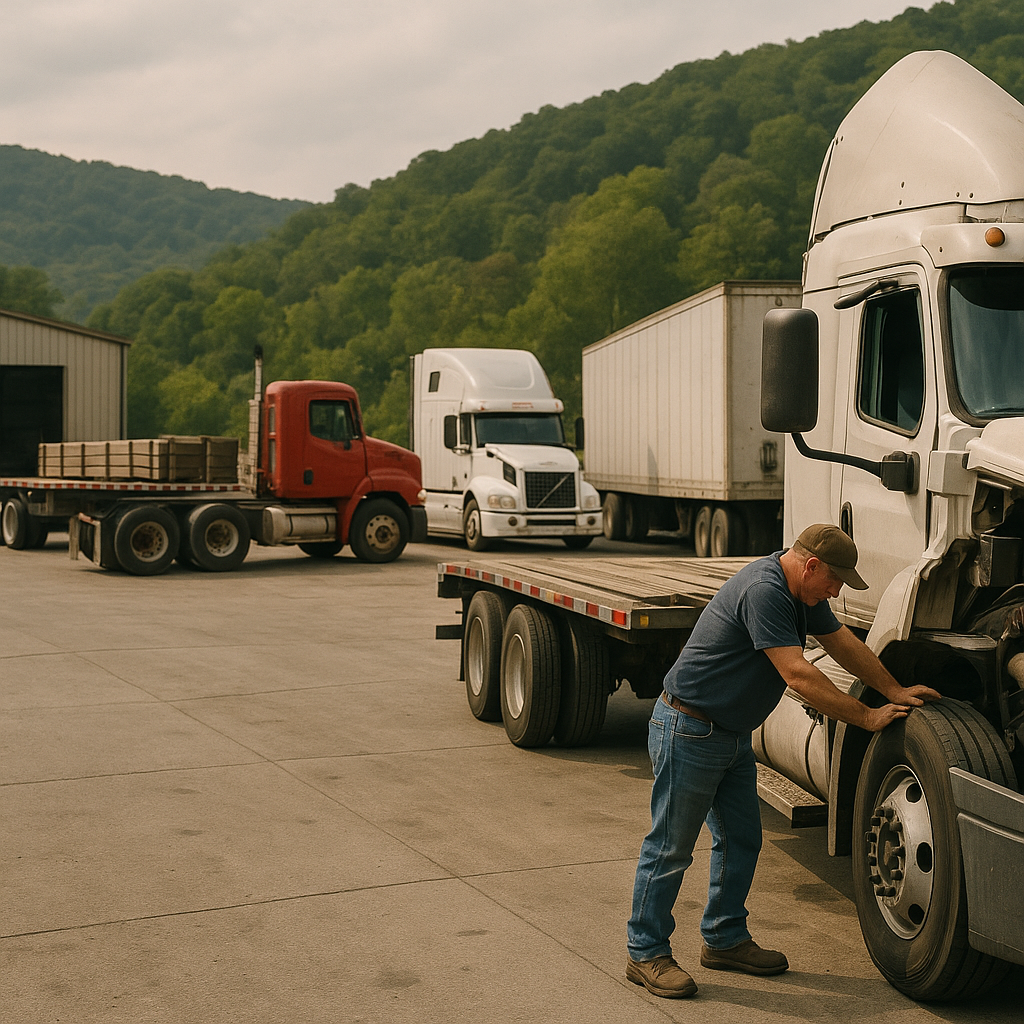

Flatbed trucking insurance in Kentucky isn’t one policy. It’s a stack of commercial coverages that protect different parts of the job: liability on the road, cargo on the deck, the truck itself, and the loading risks that come with open-deck freight. If you’re hauling steel, lumber, machinery, or tarped freight, the details matter more than the label on the quote.
What Kentucky Flatbed Trucking Insurance Covers#
Flatbed trucking insurance in Kentucky usually means a package of commercial policies built around how you run, what you haul, and whether you’re leased on or running your own authority. For most owner-operators and small fleets, the main pieces are primary auto liability, motor truck cargo, physical damage, and sometimes general liability.
Flatbed trucking insurance is a package of commercial policies for hauling freight on an open-deck trailer, not one single policy. That matters because one claim can involve the truck, the trailer, the cargo, and a job-site injury issue all at once.
Primary auto liability is the coverage tied to injuries or property damage you cause with the truck in an accident. Motor truck cargo covers damage to freight you’re hauling, subject to the policy terms and exclusions. Physical damage covers your truck or trailer for direct loss such as collision, fire, theft, or other covered causes. General liability covers certain non-driving business risks, such as a third-party injury claim at a loading site.
The NAIC consumer resources are useful for plain-language insurance terms like deductible, exclusion, and coverage limit. A deductible is the amount you pay out of pocket before the insurer pays a covered physical damage or cargo loss. An exclusion is a type of loss the policy does not cover.
The core policies flatbed operators usually review#
A Kentucky flatbed operator hauling steel coils on I-65 has a different risk profile than someone driving a pickup for personal errands. The truck may need auto liability for the road, cargo coverage for the freight, physical damage for the tractor, and general liability if the operation involves job-site exposure.
If you’re hauling lumber into a muddy construction site, the claim risk isn’t just a highway crash. It could be shifting freight, broken securement gear, tarp damage, or a third-party injury during loading or unloading.
Why flatbed risk is different from dry van or personal auto#
Flatbed work is exposed freight work. Open-deck loads face weather, road debris, securement problems, and handling damage in ways dry van freight often doesn’t.
Personal auto insurance is written for personal driving, not for-hire trucking. If a truck is being used in commercial hauling, personal auto coverage is not a substitute for a trucking policy. That’s one of the biggest mistakes new operators make.
A steel load that takes rain on a multi-stop route may raise rust or dampness questions. A machinery load can be damaged by improper chain placement. A tarp can tear, flap loose, or allow water intrusion if it was installed badly.
Kentucky state rules vs. FMCSA requirements#
Kentucky requirements and federal requirements are not the same thing. Your state minimum isn’t automatically your trucking minimum, especially if you’re a for-hire carrier running interstate freight.
The rule set depends on whether you’re for-hire or private, whether the truck is over the common weight thresholds, what commodity you’re hauling, and whether you’re operating interstate or intrastate. That is why a flatbed quote should always be reviewed against the actual operation, not just the truck year and driver age.

Kentucky Requirements and Where Federal Rules Take Over#
Kentucky flatbed operators may answer to state rules, FMCSA rules, or both, depending on how they operate. If you haul for-hire freight across state lines in vehicles over the federal weight threshold, federal financial responsibility rules apply under 49 CFR Part 387, and those are often higher than what drivers assume from state minimum talk.
FMCSA is the Federal Motor Carrier Safety Administration, the agency that regulates interstate commercial motor carriers. BIPD means bodily injury and property damage liability, the core public liability coverage required for certain trucking operations.
Interstate vs. intrastate operations#
Under 49 CFR Part 387 at eCFR, for-hire interstate carriers hauling general freight in vehicles over 10,001 lbs must carry at least $750,000 in public liability. Auto haulers and hazmat operations can face higher minimums. That’s why “all truckers need $750K” is wrong shorthand.
The FMCSA also ties operating authority and insurance filings together for interstate for-hire carriers. An MCS-90 is the endorsement attached to certain liability policies that supports federal financial responsibility requirements. A USDOT number identifies a commercial carrier, and an MC number is the operating authority number used for certain for-hire interstate operations.
If you’re hauling only inside Kentucky, state rules may control more of the picture. But once the operation becomes interstate, or the freight arrangement triggers federal authority rules, the federal side can take over quickly.
Why state minimum auto insurance is not enough for trucking use#
Personal auto insurance is not built for flatbed hauling. A personal policy won’t replace commercial auto liability just because the truck sometimes gets used off the clock.
A leased-on owner-operator may rely on the motor carrier’s primary liability filing while under dispatch, but still need separate protection for their own truck and certain non-dispatch situations. A new-authority carrier usually needs its own liability policy, filings, and supporting coverages lined up before the first load.
When this gets misread, the damage is usually expensive: a driver buys the truck, books the load, then finds out the broker won’t accept the limits or the filing isn’t active yet. If you’re not sure how your setup should be insured,
How contracts can demand limits above the minimum#
Legal minimums are only part of the real-world requirement. Brokers, shippers, and motor carriers often require higher liability or cargo limits in their contracts than the law itself requires.
A steel shipper may want a higher cargo limit than a basic flatbed policy offers. A broker may refuse to tender a load unless the certificate shows the right liability limit, cargo amount, and sometimes specific wording. Always check the operation against the authority type, truck weight, and commodity hauled before assuming the quote is enough.
Flatbed-Specific Coverage Risks That Change the Quote#
Flatbed insurance is often priced differently because the freight is exposed, securement is hands-on, and cargo claims can involve weather, handling, or loading damage instead of a simple crash. For underwriters, open-deck work creates more ways for a loss to happen and more room for argument over what exactly caused it.
GVWR means gross vehicle weight rating, the manufacturer’s maximum loaded weight for the vehicle. MVR means motor vehicle record, the driving history insurers review when they price the policy.
Open-deck securement and cargo handling#
A flatbed load is only as good as the securement. If chains, straps, edge protection, blocking, or tie-down methods are wrong, a rough Kentucky backroad or a hard stop on the interstate can turn a routine haul into a cargo claim.
Think about three common examples:
- Steel shifts because the securement pattern wasn’t adequate for the shape and weight.
- Lumber loosens after miles of vibration and weather exposure.
- Equipment gets gouged because a chain contacted the wrong surface during transit.
These are the kinds of facts underwriters think about before they price a flatbed risk.
Tarps, weather, rust, and dampness issues#
Flatbed freight sits out in the open, so tarping matters. But not every wet load becomes a covered cargo claim.
Many cargo forms treat rust, dampness, marring, or gradual damage carefully, and some losses may be excluded depending on how the policy is written and what actually caused the damage. If steel arrives with surface rust after a rainy run, the claim may turn on the bill of lading, the pre-trip photos, whether the cargo was properly tarped, and whether the damage came from a covered cause or an excluded condition.
A low deductible can help on smaller covered losses, but it usually raises the premium. A higher deductible can lower the quote, but it means more cash out of pocket when a claim happens.
Job-site loading and unloading exposures#
Flatbed work often includes job-site loading and unloading exposure that dry van operators may see less often. Forklifts, cranes, uneven ground, and third-party crews all add risk.
Picture a machine being offloaded at a Kentucky construction site. If it tips because the site was uneven or the handoff was sloppy, the claim may involve cargo facts, job-site liability facts, or both. That’s why documentation matters: clear load photos, securement checks, bills of lading, pickup condition notes, and delivery exceptions can all reduce claim friction later.
How Kentucky Flatbed Insurance Costs Are Usually Built#
Flatbed trucking insurance in Kentucky is priced from a mix of operation details, equipment details, and claim history. There is no universal price because the same truck can be a very different risk depending on authority age, radius, cargo, driver record, trailer setup, and the coverages attached to the quote.
Authority age is how long your motor carrier authority has been active. Loss runs are the claim history reports underwriters use to see past accidents, cargo losses, and payment patterns.
What insurers look at first#
Underwriters usually start with the basics: who is driving, what the truck is, what it hauls, and how far it runs. A clean MVR, stable operating history, and clear cargo description usually help more than vague answers on an application.
They also look at:
- Operating radius
- Commodity type
- Garaging location
- Unit value
- Trailer type
- Prior losses
- Years of CDL and commercial experience
A local or regional Kentucky flatbed running consistent lanes may be easier to underwrite than a brand-new interstate operation chasing mixed freight in multiple states.
Why new authority, new equipment, and route profile matter#
New authority usually gets more scrutiny than an established carrier. The issue isn’t just inexperience. It’s that the insurer has less operating history to judge.
A driver buying a brand-new truck and flatbed may face a different quote than a driver with an older paid-off truck, even if both have clean records. The newer unit has more insured value, so physical damage exposure is higher. But an older truck with a rough maintenance history or prior claims can worry underwriters too.
Route profile matters as well. Hauling machinery on long interstate runs is not rated the same way as hauling building materials on shorter Kentucky routes. Different roads, distances, customer types, and cargo values all change the picture.
Deductibles, limits, and coverage mix#
Higher limits and broader coverage usually increase the quote. More cargo limit, lower physical damage deductibles, and extra add-ons generally mean more premium because the insurer is taking on more exposure.
A practical example: one owner-operator runs mostly inside Kentucky, has a clean record, keeps the truck in good shape, hauls lower-theft building materials, and chooses a deductible he can realistically afford. Another has brand-new authority, a higher-value tractor, longer interstate runs, and mixed open-deck freight with tighter contract requirements. Those two operations should not expect the same quote.
The same goes for leased-on versus independent authority. Leased-on operators may be rated differently because the liability arrangement is different, while new-authority carriers often need a fuller policy structure from day one.
Common Coverage Choices for Owner-Operators and Small Fleets#
Most Kentucky flatbed owner-operators do not need every coverage on every quote, but they do need the right mix for how they actually work. The big split is usually leased-on versus running your own authority, then single-truck versus small fleet.
Non-trucking liability, often called bobtail by drivers, covers certain non-business use when you’re not under dispatch. Trailer interchange applies when you have a signed interchange agreement for a trailer you don’t own. Non-owned trailer physical damage is usually the better fit when you’re pulling a trailer you don’t own but do not have a formal interchange agreement.
Leased-on vs. new authority#
A leased-on owner-operator may have the motor carrier provide primary liability while under load, but that does not mean all other insurance questions disappear. You may still need physical damage on your tractor, a cargo review depending on the arrangement, and the right off-dispatch protection.
A new-authority flatbed carrier usually has to build the full insurance stack more deliberately. That includes the liability filing, equipment coverage, cargo structure, and any certificate requirements brokers or shippers will ask for.
Single-truck vs. 2-5 truck fleet#
A one-truck operation can often work with a simpler certificate and trailer setup. A 2-5 truck fleet usually needs more consistency across driver files, limits, scheduled equipment, and proof of insurance for customers.
More trucks also means more chances for mismatch. One driver may be assigned a different trailer type, one customer may require higher cargo, and one unit may have a higher stated value. Small fleet insurance works best when those details are lined up early.
When bobtail or trailer coverage may come up#
Not every flatbed operator needs bobtail, trailer interchange, or non-owned trailer physical damage. The need depends on the lease, dispatch arrangement, and who owns the trailer.
If you’re pulling someone else’s trailer and there is no signed interchange agreement, non-owned trailer physical damage is often the more relevant conversation. If there is a signed interchange agreement, trailer interchange becomes the issue.
How to Lower Flatbed Insurance Costs Without Cutting the Wrong Coverage#
You can often improve a flatbed quote by tightening the operation, not by stripping out coverage you still need. The safest way to control cost is to present clean, complete information, choose deductibles you can actually carry, and remove only the coverages that truly don’t fit the job.
Quote-review checklist before you bind#
A good quote review starts with accuracy. If the application says one thing and the real operation looks different after binding, premiums can change or claims can become harder to sort out.
Before you bind, confirm:
- Who is driving
- Where the truck runs
- What commodities you haul
- Whether the trailer is owned, hired, or borrowed
- What limits your contracts require
- Whether the policy matches leased-on or new-authority status
That matters because flatbed work has more moving parts than many drivers expect. If you’d like someone to review the setup before you commit,
Ways to improve the risk profile#
Insurers like organized operations. Clean MVRs, securement procedures, documented inspections, and consistent driver habits can all help the underwriting story.
Simple habits matter:
- Pre-trip and post-trip photos
- Written securement checks
- Tarp condition checks
- Clear maintenance records
- Driver training on loading and load protection
Those won’t erase every claim, but they can reduce preventable losses and make a better case when a disputed cargo claim shows up.
What not to trim on a flatbed operation#
Don’t cut cargo, liability, or physical damage just to hit a target budget if the operation still depends on them. A cheaper quote that leaves a steel load underinsured or the tractor exposed to a major collision loss can cost more later.
A higher deductible is a real lever, but only if you can absorb it after a claim. The right move is balance: enough coverage for the real exposure, without paying for add-ons that don’t match the job.
What to Bring When You Request a Kentucky Flatbed Quote#
A good Kentucky flatbed quote moves faster when the truck, freight, and operating details are clear up front. Underwriters want specifics, and vague answers usually create delays, follow-up questions, or a quote that changes later.
Have these ready:
- VIN
- GVWR
- Tractor and trailer value
- Trailer type
- Base state
- Operating radius
- Cargo hauled
- Driver history and MVR details
- USDOT number
- MC number, if applicable
You should also have certificates, loss runs, and lease agreements ready if they apply. You can verify carrier status and filings through FMCSA’s SAFER system, which is especially useful when you’re sorting out authority status and documentation before the first load.
FAQ#
How much is flatbed insurance?
Flatbed insurance varies a lot because flatbed work varies a lot. The quote depends on whether you’re leased on or running new authority, what cargo you haul, how far you run, your driving history, the truck and trailer values, the limits you need, and the deductibles you choose. Open-deck freight can also change cargo underwriting because securement, weather exposure, and handling risk are bigger issues than they are for enclosed freight. The best way to think about price is by operation type, not by a single average number.
How much does a $1,000,000 liability insurance policy cost?
A $1,000,000 liability policy does not have one fixed price for every Kentucky flatbed operator. The premium depends on the carrier profile behind the limit: authority age, interstate or intrastate operation, truck weight, commodity, radius, driver MVRs, prior losses, and whether the policy is supporting a new authority or an established one. Two operators can carry the same liability limit and still get very different quotes because the risk of a loss is different. The limit is only one part of pricing; the operation itself drives the rest.
How much does $100,000 cargo insurance cost?
$100,000 in cargo coverage can price very differently depending on what sits on the trailer. Steel, lumber, machinery, and other open-deck freight do not all underwrite the same way. Insurers look at cargo type, theft and damage potential, securement exposure, weather sensitivity, prior cargo claims, radius, and the deductible selected. Flatbed operations may also run into policy wording issues around rust, dampness, marring, or improper securement, so the form matters as much as the limit. A cargo quote only makes sense when tied to the actual freight mix.
Which company offers the cheapest liability insurance in Kentucky?
There is no single company that is cheapest for every Kentucky flatbed operator. One carrier may like a leased-on owner-operator with a clean record and local routes, while another may price better for an established small fleet with stronger documentation. The lowest premium also isn’t always the best fit if the policy misses a needed filing, excludes important freight exposure, or doesn’t match the trailer arrangement. Compare quotes based on the real operation, the coverage structure, and the insurer’s appetite for flatbed work, not just the top-line number.
Do leased-on flatbed owner-operators need their own insurance?
Usually, yes, but not always in the same way as a new-authority carrier. A leased-on owner-operator may have the motor carrier’s primary liability in place while under dispatch, but still need physical damage on the tractor, possible cargo review depending on the lease, and non-trucking liability for certain non-business use. The exact answer depends on the lease agreement, who provides filings, who owns the trailer, and what contracts require. The cleanest approach is to line up the lease paperwork first, then match the insurance to the real arrangement rather than assuming the carrier covers everything.





