
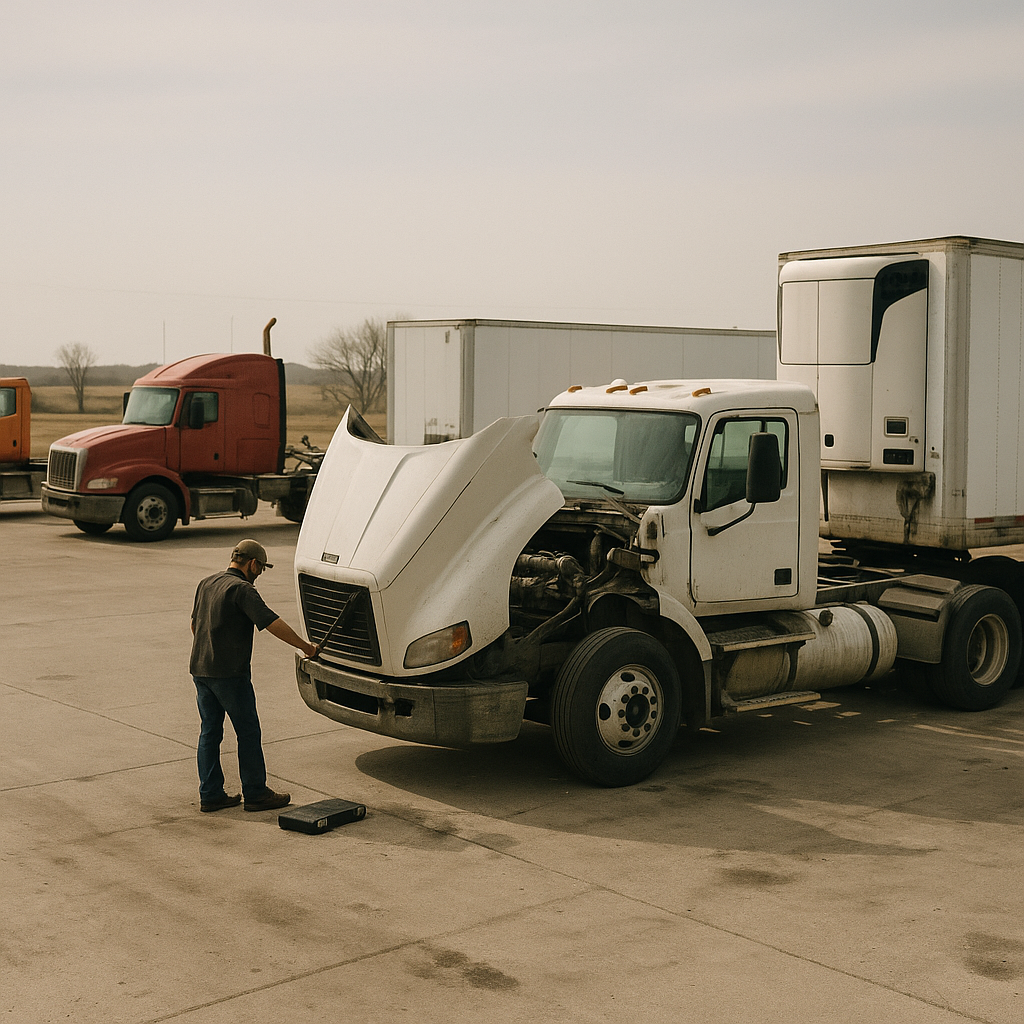

If you’re running refrigerated freight in Iowa, reefer truck insurance isn’t one single policy. It’s a mix of commercial coverages that protect your truck, your cargo, and your authority, and the right setup depends on what you haul, how you run, and whether you operate interstate or intrastate.
What Iowa Reefer Truck Insurance Covers#
Iowa reefer truck insurance usually means a package of coverages, not a special standalone policy. Most owner-operators need to think separately about commercial auto liability, motor truck cargo, physical damage, and reefer breakdown coverage because each one handles a different kind of loss.
A commercial auto liability policy pays for bodily injury and property damage you cause to others in a covered truck accident. Motor truck cargo covers the freight you’re hauling when a covered loss damages it. Physical damage covers your truck and usually the trailer or attached equipment for covered damage such as collision, theft, fire, or other listed causes. Reefer breakdown coverage is an endorsement that helps with certain cargo losses tied to refrigeration unit failure.
Core coverages for refrigerated trucking#
Reefer work adds one big exposure that dry van operators don’t deal with as often: temperature-sensitive cargo. If the refrigeration unit fails and the load spoils, your liability filing with FMCSA won’t fix that, and your physical damage coverage on the truck usually won’t either.
That’s why reefer operators often review four buckets together:
- commercial auto liability
- motor truck cargo
- physical damage
- reefer breakdown coverage
Each bucket solves a different problem. That’s the main thing many new owner-operators miss when they compare quotes.
What changes for single trucks vs. small fleets#
A single-truck owner-operator usually needs a tighter, more operation-specific setup. If you haul one lane, one cargo type, and one trailer type, the quote should reflect that instead of carrying every add-on under the sun.
A 2-5 truck small fleet has a different problem: one truck may run a different radius, driver, or customer mix than another. Fleet quotes need cleaner driver scheduling, equipment values, and cargo descriptions so the policy matches the real operation.
Where reefer work differs from standard dry van trucking#
Reefer trucking can bring more claim pressure because spoilage losses, temperature disputes, and equipment issues create more moving parts. Your policy should reflect carrier type, vehicle weight, cargo, and whether you run interstate or intrastate.
If you haul produce, frozen foods, dairy, or other perishable freight, brokers and shippers may also ask for coverages that aren’t federally required but still matter to keep the load and the contract.

FMCSA and Iowa Rules: What Is Mandatory and What Is Not#
For Iowa reefer operators, the mandatory piece usually starts with commercial auto liability, but the exact requirement depends on carrier type, weight, cargo, and whether you operate interstate. Reefer status alone does not create one universal insurance rule, and federal filings are different from cargo or spoilage protection.
The FMCSA is the Federal Motor Carrier Safety Administration, the agency that oversees interstate motor carrier registration and safety rules. BIPD means bodily injury and property damage liability, the public liability coverage federal law requires at certain minimums for covered interstate carriers. An MCS-90 is a federal endorsement tied to public liability filings for motor carriers.
Federal requirements for for-hire trucking#
Under FMCSA rules and 49 CFR Part 387, for-hire interstate carriers hauling general freight in vehicles over 10,001 lbs must carry at least $750,000 in public liability. Some operations need different minimums, including higher limits for certain cargo types like hazardous materials.
That means the question isn’t “Is it a reefer?” The question is whether you’re for-hire or private, interstate or intrastate, what the vehicle weighs, and what commodity you’re hauling.
Iowa rules versus federal rules#
Iowa state rules and federal FMCSA rules are not the same thing. If you operate interstate under a USDOT number and MC number, federal requirements can control the liability side even if Iowa personal or state minimum auto numbers look lower on paper.
A USDOT number identifies a carrier in federal safety systems. An MC number is operating authority for certain for-hire interstate carriers. You can verify carrier status in SAFER.
The Iowa Department of Insurance is a useful state source for Iowa insurance consumer guidance, but it doesn’t replace federal trucking compliance rules.
Why cargo protection is not the same as liability compliance#
Cargo coverage and reefer breakdown coverage are often business-required even when federal law doesn’t mandate them. A shipper, broker, or contract may require cargo limits, temperature-related protection, or specific endorsements before they’ll tender the load.
This is where people get burned. Personal auto insurance is not a substitute for commercial trucking insurance, and federal liability compliance is not the same thing as being protected for spoiled refrigerated freight.
If you’re not sure whether your quote reflects your authority, cargo, and reefer exposure,
How Reefer Breakdown Coverage Works#
Reefer breakdown coverage helps with certain cargo losses caused by mechanical or electrical failure of the refrigeration unit. It does not cover every spoiled load, and that’s where a lot of claim disputes start.
A reefer unit is the refrigeration equipment that keeps a trailer at the required temperature. A coverage endorsement is a policy add-on that changes what the base policy includes or excludes.
What equipment failure losses can trigger a claim#
A claim may start when the refrigeration unit stops maintaining temperature because of a covered breakdown. That could involve a failed compressor, mechanical component failure, electrical failure, or another covered issue that causes the cargo to warm up or freeze improperly.
Some policies may also respond to certain power-related failures if the wording allows it. The exact trigger matters, because spoilage by itself is not enough. The carrier usually has to show the loss ties back to a covered equipment failure.
What is usually not covered#
Reefer breakdown coverage usually does not pay for every reason cargo goes bad. Poor packing, improper loading, door left open, delay in transit, wrong temperature settings, gradual wear, maintenance neglect, or excluded commodities can all create problems.
That’s why reading exclusions matters more than the sales summary. If you haul temperature-sensitive freight but don’t know whether the policy covers calibration errors, operator mistakes, or only named breakdown causes, you don’t really know what you bought.
How cargo spoilage and mechanical failure interact#
Cargo spoilage claims often sit at the overlap of cargo coverage and reefer breakdown wording. Cargo may be covered for certain direct losses, but spoilage tied to refrigeration failure may need the reefer endorsement to respond.
Brokers and shippers ask about cargo type for a reason. Ice cream, meat, produce, pharmaceuticals, and frozen foods don’t all create the same claim profile, and the tighter the temperature tolerance, the more important the wording becomes.
Motor Truck Cargo and Physical Damage: What a Quote Should Include#
A good reefer quote should separately address the freight and the equipment. Motor truck cargo protects the load, while physical damage protects the truck and usually the trailer or scheduled equipment when a covered event damages it.
Deductible means the amount you pay out of pocket before insurance pays a covered loss. A limit is the maximum the insurer will pay for a covered claim.
Cargo coverage for refrigerated freight#
Cargo coverage matters because the shipper’s product may be worth more than the truck payment you’re worried about this month. If a refrigerated load is damaged in a covered event, cargo coverage is the part of the policy that responds, not your FMCSA liability filing.
For reefer operators, quote review should include the kind of freight hauled, the expected load values, and whether spoilage tied to refrigeration failure is handled by endorsement. Contract requirements from brokers and shippers can push needed limits higher than your personal comfort level.
Physical damage for the truck and reefer unit#
Physical damage protects the truck itself for covered collision and non-collision losses. On reefer setups, it’s smart to confirm how the refrigeration unit is treated, because expensive equipment can fall into a gray area if the quote is vague.
Don’t assume “full coverage” means every attached component is automatically valued the way you expect. The truck, trailer, and reefer unit may each need correct stated values or scheduled treatment depending on the policy.
How deductibles and limits affect protection#
Higher deductibles can lower premium, but they also mean more cash out of your pocket when something breaks or gets hit. Higher limits can help satisfy contracts, but buying extra limits you don’t need just because someone said “that’s what truckers carry” isn’t a strategy.
A solid quote should show where the cargo limit ends, where reefer breakdown begins, and what property values were used for the truck and equipment. One coverage does not replace the other.
What Affects Reefer Insurance Cost in Iowa#
Reefer insurance cost in Iowa depends on the operation more than the ZIP code alone. The biggest drivers are usually your driving history, loss history, truck value, cargo type, operating radius, authority setup, and how hard the refrigerated freight is to insure.
Your actual premium depends on your operation, cargo, radius, driving history, and other factors. That’s why two reefer operators in Iowa can see very different quotes even with similar trucks.
Driver profile and loss history#
Underwriters look closely at CDL experience, recent violations, preventable losses, and how long the authority has been active. A cleaner file usually gives you more market access, while recent claims or a rough MVR can make reefer business harder to place.
Reefer losses also get attention because one temperature claim can be expensive fast. If you’ve had prior cargo spoilage, late-reporting issues, or maintenance-related losses, expect more scrutiny.
Truck value, age, and equipment condition#
Older equipment isn’t automatically uninsurable, but condition matters. A well-kept truck and reefer unit with clear maintenance records tells a different story than aging equipment with no paper trail.
The insured value of the tractor, trailer, and refrigeration equipment also affects cost. More value at risk usually means more premium, especially when repair parts and downtime are a concern.
Cargo type, routes, and operating radius#
Fresh produce, frozen food, dairy, and higher-value perishable loads don’t all rate the same way. Neither do local Iowa routes versus multistate interstate lanes with longer transit times and more transfer points.
Underwriters care about where the truck goes, how far it runs, and how often the load is exposed to delays. Tight delivery windows and temperature-sensitive cargo can make reefer work price differently than standard dry freight.
Why reefer work can price differently than dry freight#
Dry van claims are often simpler. Reefer claims can involve product value, temperature records, equipment function, loading practices, and contract terms all at once.
That doesn’t mean reefer coverage is always out of reach. It means the quote has to match the operation. A cheap-looking quote that skips spoilage-related exposures can be expensive later.
How to Read a Reefer Truck Insurance Quote Without Overbuying#
The best way to read a reefer truck insurance quote is to verify the operation details first, then compare limits, deductibles, exclusions, and endorsements. Price matters, but the faster way to waste money is buying the wrong coverage or missing the one endorsement your freight actually needs.
The NAIC is a good plain-language source for understanding basic insurance terms and policy structure. Use that mindset when you review a trucking quote: definitions first, then exclusions, then premium.
Match coverages to your actual operation#
Start with the facts of the business, not the quote total. Confirm the policy reflects whether you’re for-hire, what your USDOT and MC setup is, whether you run interstate, what trailer type you use, and the real cargo you haul.
If you’re a single-truck owner-operator hauling refrigerated food products, the quote should say that in substance. If it reads like a generic trucking account, ask questions.
Check limits, exclusions, and endorsements#
Use this quick checklist before you compare price:
- Confirm the liability setup matches your authority and operation.
- Check the cargo limit against your usual load values and contract requirements.
- Verify physical damage values for truck, trailer, and reefer equipment.
- Read reefer breakdown wording for triggers, exclusions, and commodity limits.
- Review deductibles and make sure you could actually absorb them.
- Check for endorsements that change who is covered, what is excluded, or when a claim applies.
A quote can look fine on page one and fall apart in the endorsements.
When a shipper requirement matters more than a generic recommendation#
A lot of operators buy or skip coverages based on what another driver said online. That’s risky. The better question is what your actual shipper or broker requires and whether that requirement fits the freight you plan to haul.
If you’re staring at two quotes and don’t know which one actually fits your reefer lanes,
Common Gaps and Claim Problems for Reefer Operators#
The most common reefer claim problems come from coverage gaps, not bad luck alone. Usually the issue is that the policy covered one part of the loss, but not the part the driver assumed it covered.
Spoilage that happens outside a covered breakdown#
If cargo spoils because it was loaded wrong, packed poorly, delayed too long, or held at the wrong setting without a covered equipment failure, reefer breakdown coverage may not pay. Operators often discover this only after a claim.
Temperature-sensitive freight needs cleaner procedures than “it should be covered.” Records, settings, and maintenance matter.
Coverage mismatches in contract hauling#
A shipper may require a cargo limit, a reefer endorsement, or other proof of coverage before you can haul the load. If your policy doesn’t include that requirement, the claim or the load offer can both go sideways.
This is common with new authorities that bought a bare-bones policy to get moving. Compliance and contract readiness are not the same thing.
Misunderstanding state minimums and commercial requirements#
A personal auto card or a state minimum number is not the same thing as commercial trucking insurance. Federal filings for interstate for-hire trucking follow different rules, and refrigerated cargo protection sits in a separate lane from basic liability compliance.
Prevention is simple: match the policy to the operation before the first load, not after the first loss.
How to Get the Right Iowa Reefer Truck Insurance Quote#
To get the right Iowa reefer truck insurance quote, have your truck, cargo, route, authority, and driver details ready before you shop. The more accurate the submission, the better your odds of getting a quote that matches your reefer exposure instead of a generic trucking package.
For owner-operators and small fleets, the goal is right-sized coverage. You want protection that matches the freight you haul and the contracts you sign, without paying for coverages that don’t fit your operation.
What information to have ready#
Have these details ready before you request quotes:
- tractor year, make, model, and value
- trailer type and whether you own it
- reefer unit details and equipment value
- cargo type and typical load value
- operating radius and main states run
- interstate or intrastate operation
- USDOT number and MC number, if applicable
- driver history and prior loss history
Good information up front helps avoid bad assumptions on the back end.
What to ask before binding coverage#
Ask whether the quote reflects refrigerated freight specifically. Ask how spoilage is handled, what triggers reefer breakdown coverage, what exclusions apply, and whether shipper or broker requirements are already reflected in the limits.
Also ask whether the truck, trailer, and reefer unit values are listed correctly. Small errors there can become big problems during a claim.
When a single-truck operator needs a different setup than a small fleet#
A solo owner-operator often needs a simpler, tighter policy built around one truck, one driver, and a defined freight mix. A small fleet may need broader scheduling, multiple drivers, and more attention to consistency across units.
Either way, generic advice like “just carry what everybody else carries” usually leads to overbuying in one area and underinsuring another.
FAQ#
How much is commercial hauling insurance?
Commercial hauling insurance doesn’t have one standard price because the risk changes from one trucking operation to the next. A reefer owner-operator hauling perishable interstate freight will usually be rated differently than a local dry-freight truck because cargo sensitivity, route length, equipment, and claim severity all change the picture.
The main drivers are vehicle type, truck value, cargo, operating radius, authority type, driving history, and prior losses. New ventures can also see different pricing and fewer market options than established operations. The best way to judge a quote is not by comparing it to a random number online, but by checking whether the coverage matches the freight and contracts you actually run.
Who has the cheapest auto insurance in Iowa?
For a reefer truck, that’s usually the wrong question because personal auto pricing isn’t the right comparison. Refrigerated trucking needs commercial coverage built around truck use, authority, cargo, and liability requirements, and the lowest personal auto rate in Iowa won’t solve that problem.
Even among commercial policies, the cheapest quote isn’t always the most usable one. A lower premium can come from lower limits, missing endorsements, higher deductibles, or exclusions that leave refrigerated cargo exposed. For trucking, the better question is which quote fits your operation without adding coverages you don’t need or skipping ones your loads and contracts require.
What insurance does a trucking company need?
Most trucking companies start by reviewing commercial auto liability, cargo, and physical damage. Those are the core pieces for many owner-operators and small fleets, but the exact setup depends on carrier type, weight, cargo, and whether the operation is interstate or intrastate.
Reefer operators often need to go one step further and review reefer breakdown coverage because ordinary liability does not protect spoiled refrigerated freight. Some operations also look at general liability, trailer-related coverage, or other contract-driven protections depending on how they work. The right answer is always tied to the actual business, not a one-size-fits-all checklist.
What kind of insurance for hotshot trucking?
Hotshot trucking usually starts with the same foundation as other commercial trucking: commercial auto liability, cargo if you’re hauling freight for others, and physical damage if you want protection for the truck and trailer. The exact requirement depends on whether the operation is for-hire or private, interstate or intrastate, and what kind of freight and equipment are involved.
If the hotshot operation hauls temperature-sensitive freight, then the reefer discussion comes into play too. Refrigerated hotshot work may need cargo wording and reefer breakdown protection that standard non-temperature-sensitive freight wouldn’t. The equipment may be smaller, but the insurance logic is still based on operation, cargo, and compliance scope.
Does reefer breakdown coverage pay for every spoiled load?
No. Reefer breakdown coverage usually applies when cargo spoils because of a covered mechanical or electrical failure of the refrigeration unit, subject to the policy wording. It does not automatically pay just because the load arrived warm, thawed, or otherwise damaged.
Claims can be limited or denied if the spoilage came from poor loading, delay, wrong settings, maintenance issues, excluded causes, or commodities outside the policy terms. That’s why reefer operators should review triggers, exclusions, commodity descriptions, and deductibles before binding coverage. For temperature-sensitive freight, the details matter more than the label on the quote.





