
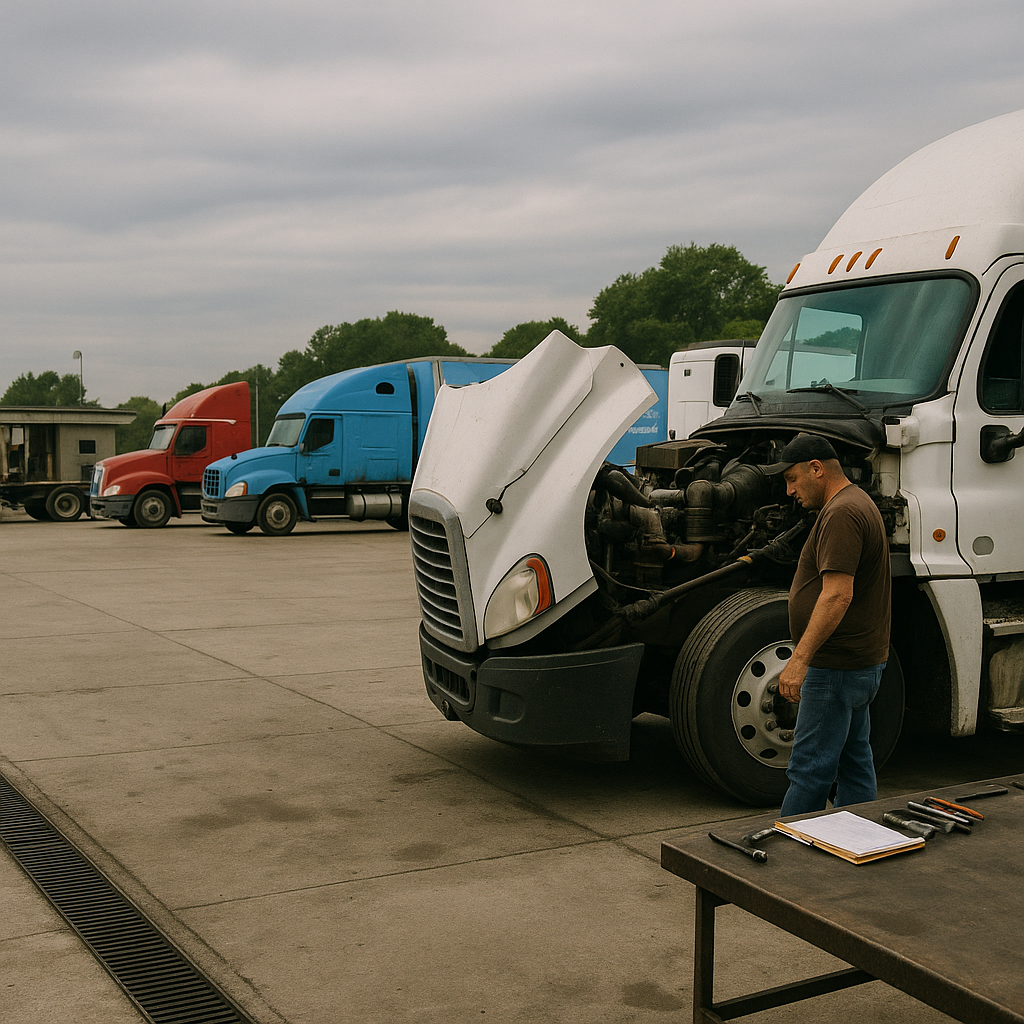

Amazon Relay freight gets a lot of attention because it looks like a direct path to steady loads. For owner-operators and small fleets, though, the real question isn’t just how to sign up. It’s whether your truck, authority, insurance, and day-to-day operation actually fit the work.
This guide breaks down what Amazon Relay is, how it differs from Amazon Freight and Amazon Freight Partner, what equipment may qualify, how booking works, and what compliance issues to check before onboarding.
What Amazon Relay Is and Who It Is For#
Amazon Relay is a carrier-facing platform where eligible trucking companies can view and book certain Amazon loads. It’s built for carriers, not casual drivers, so equipment, authority, insurance, and compliance usually matter before you ever see useful load options.
Amazon Relay is a digital load platform tied to Amazon’s freight network. In plain terms, it’s a place where approved carriers can manage account access, view available freight, accept loads, and work through pickup and delivery steps.
Amazon Relay vs. Amazon Freight vs. Amazon Freight Partner#
Amazon Freight is Amazon’s broader freight operation. Amazon Relay is one tool inside that ecosystem, mainly used by carriers to access and run available loads.
Amazon Freight Partner is different. It generally refers to a business model where a company operates trucks in partnership with Amazon’s network under a more structured arrangement, instead of simply logging into a load board and booking freight as an independent carrier.
That difference matters because people often lump all three together. If you’re a one-truck owner-operator or a 2-5 truck fleet, you’re usually trying to figure out the carrier side first: can you qualify, can you book, and can you run the work profitably?
Why small carriers care#
Small carriers care about Amazon Relay because it suggests freight access, route density, and less time chasing brokers. But access to freight only helps if your operation is ready to run it consistently.
A lot of owner-operators waste time here by assuming "Amazon load" means "easy money." Before you count on it, check your carrier status through FMCSA SAFER and make sure your authority and operating profile actually support the kind of work you’re pursuing.
What this guide will help you decide#
This guide is for carriers trying to answer a practical question: is Amazon Relay a fit for my setup right now? That means looking at your truck type, trailer, operating authority, insurance, compliance habits, and ability to handle pickup and delivery requirements without drama.

Truck and Trailer Requirements#
The truck needed for Amazon Relay depends on the load, lane, and how your carrier operation is set up. Wanting Amazon loads isn’t enough by itself. Your equipment type, cargo capacity, operating authority, and compliance profile affect what work you may be eligible to book.
The biggest mistake here is assuming one equipment type opens every door. It doesn’t. Different freight moves on different vehicle classes, and a mismatch can stall onboarding or leave you approved but unable to run the loads you expected.
What kind of truck is needed#
A box truck is a straight truck with an enclosed cargo area attached to the chassis. A tractor-trailer setup uses a separate power unit and trailer, which usually opens a different category of freight than a box truck operation.
Readers usually search this topic with one question in mind: "Can my truck haul for Amazon Relay?" The honest answer is that it depends on the freight category and how Amazon classifies the work available in your market.
Some carriers may be set up around dry van freight with a standard tractor and trailer. Others may be looking at box truck work. The issue isn’t just wheel count or body style. It’s whether your equipment matches the loads offered and whether your business is authorized and insured for that work.
Box truck considerations#
Box truck operators usually need to be extra careful about assumptions. Some searches around Amazon Relay blur together parcel-style work, middle-mile freight, and broader Amazon programs that don’t all operate the same way.
If you run a box truck, confirm the actual equipment expectations before spending time on account setup, certificates, or admin work. The wrong assumption here can cost days of onboarding only to find out your local freight mix doesn’t fit your truck.
If you’re already worried that your current setup may not meet carrier requirements, or that your policy may not match the work,
Trailer and equipment fit#
Trailer fit matters because freight isn’t interchangeable just because it moves under the same network. A dry van lane, a drop-and-hook setup, and a straight truck move can each come with different operational expectations.
Also think beyond the vehicle itself. Cargo securement, trailer condition, maintenance discipline, and pickup timing all affect whether a small fleet can run the work smoothly.
Why vehicle type affects load access#
Vehicle type affects load access because load boards filter work by what the carrier can legally and practically run. If your authority, truck class, or operating profile doesn’t line up, you may see limited opportunities or none that make sense.
For a one-truck business, that matters a lot. You don’t need broad eligibility across every lane. You need realistic eligibility for the specific freight your truck can run profitably.
How to Haul for Amazon Relay#
To haul for Amazon Relay, first confirm that your equipment and carrier setup fit the type of freight you want to run. Then create or verify your carrier account, complete onboarding and compliance checks, review available loads, and build a reliable process for pickup, delivery, and proof of service.
The short version is simple: eligibility first, paperwork second, booking third. Most frustration comes from doing those in the wrong order.
Create and verify your carrier account#
Start by setting up the carrier-facing account Amazon uses for Relay access. Expect identity, business, and operating information to matter during this step.
Your USDOT number is the federal identifier used to track a motor carrier’s safety and regulatory profile. Your MC number is your motor carrier operating authority reference when authority is required for for-hire interstate freight.
If your authority is new, inactive, or still being finalized, that can slow things down. A lot of small carriers jump ahead to load hunting before the basics are fully in place.
Complete onboarding steps#
Onboarding usually means more than creating a login. It often includes document review, compliance checks, business verification, and insurance confirmation.
Operating authority is the legal permission a for-hire carrier needs to transport regulated freight in interstate commerce. If you’re still sorting that out, FMCSA’s authority process is worth understanding before you treat Relay as your next immediate load source.
Review loads and accept work#
Once access is active, the load workflow is straightforward in concept. You search available loads, compare the lane and timing to your equipment and schedule, then accept work that fits.
The practical part is harder. You need to know your deadhead tolerance, delivery discipline, driver availability, and whether the lane works for your home time and maintenance schedule.
Plan for pickup, delivery, and proof of service#
Booking a load is the easy part. Running it cleanly is what keeps a small carrier from burning time and money.
Build a repeatable process for appointment times, check-in instructions, trailer readiness, communication, and proof of delivery. The carriers who handle those basics well are usually in a better position than carriers who only focus on the posted rate.
Amazon Relay Load Board, Login, and Contact Basics#
The Amazon Relay load board is the working screen where approved carriers view and book available freight. Login access isn’t just for seeing loads. It’s also how carriers manage account activity, workflow, and support issues tied to operations.
Think of the load board as the dispatch side of the platform. If your account isn’t set up right, the problem usually shows up there first.
Where loads are viewed and booked#
A load board is a digital marketplace where carriers can review and accept freight opportunities. In Amazon Relay, that’s where eligible carriers look at load options, timing, and basic trip details.
For a small fleet, the value isn’t just seeing freight. It’s seeing enough relevant freight for your specific equipment and area to make the platform worth using.
What login access is used for#
Your login controls far more than load browsing. It’s typically tied to account setup, compliance status, operational updates, and whatever carrier-side workflow Amazon requires.
That means login problems can become revenue problems fast. If access is limited, loads may not even be the first issue to solve.
When to use support channels#
Support matters when you hit account verification issues, missing documents, workflow confusion, or access problems that stop you from booking or running loads. Contact questions aren’t always about rates or freight availability.
Common access problems#
The usual problems are boring but expensive: account mismatches, missing documents, insurance certificates that don’t line up, and incomplete setup steps. For a time-pressed owner-operator, those admin issues can waste more time than a bad lane.
Amazon Relay Requirements and Compliance#
Amazon Relay requirements sit on top of normal trucking compliance, not in place of it. If you haul freight as a carrier, you still need the right authority, the right insurance, and a setup that matches your operation. A personal auto policy or bare state minimum usually doesn’t solve that problem.
This is where a lot of small carriers get tripped up. "I have insurance" doesn’t mean "I have the right commercial trucking insurance for this work."
Carrier compliance basics#
FMCSA is the Federal Motor Carrier Safety Administration, the agency that oversees interstate motor carrier safety and registration. If you’re hauling regulated freight as a for-hire carrier, your business still has to meet FMCSA rules whether the load comes from Amazon Relay or anywhere else.
That includes basics like active operating status, proper registration, safety compliance, and accurate carrier information. You can review federal carrier guidance at FMCSA.
A carrier’s public status also matters when platforms and shippers evaluate whether that operation is ready for work. That’s one reason keeping your filings, business information, and insurance records straight matters before onboarding.
Insurance matters before onboarding#
Commercial auto liability is the coverage that pays for bodily injury and property damage you cause while operating a commercial truck. Motor truck cargo covers damage to freight you’re legally responsible for while it’s being transported.
Physical damage covers damage to your truck from collision and other listed causes such as comprehensive losses. General liability covers certain non-driving business liability exposures, and for-hire carriers may need to review whether it’s expected in their contracts or shipper relationships.
For owner-operators and small fleets, those are the coverages most often reviewed before onboarding. Not every operation needs the exact same package, but almost none should assume a personal auto policy handles commercial freight work.
NAIC explains the difference between personal and commercial insurance in plain language at NAIC. That’s worth reviewing if you’re still comparing a personal vehicle policy to a trucking policy.
Commercial coverage versus state minimums#
State minimums are the minimum liability limits required by a state for vehicle operation. They are not the same thing as federal financial responsibility rules for for-hire interstate trucking.
Under 49 CFR Part 387, for-hire interstate carriers hauling general freight in vehicles over 10,001 lbs must carry at least $750,000 in public liability. Under 10,000 lbs, the federal minimum is $300,000. Auto haulers require $1,000,000, and certain hazmat operations require $5,000,000.
That’s why "my state minimum is enough" is a dangerous shortcut. Requirements vary by carrier type, vehicle weight, cargo, and whether you operate interstate or intrastate.
Why FMCSA rules still matter#
Amazon Relay doesn’t erase your underlying compliance responsibilities. Your USDOT profile, authority status, safety practices, and insurance all still matter in the background.
For small carriers, the practical takeaway is simple: make sure the work you’re pursuing matches your legal setup. If you’re not sure whether your current commercial auto liability, cargo, physical damage, or general liability fits your operation, LogRock can help you scope it.
How Much Amazon Relay and Amazon Freight Partner Work Can Pay#
Amazon Relay and Amazon Freight Partner earnings vary too much for a one-size-fits-all number to mean much. What matters more is your equipment type, route density, utilization, operating costs, and whether the available work fits your business model well enough to leave real net profit.
Gross revenue headlines sound good. They don’t pay for tires, fuel, downtime, insurance, and empty miles.
Why earnings vary#
Revenue swings based on lane consistency, how often your truck is loaded, how far you deadhead, and how tightly you manage costs. A carrier with steady utilization and disciplined dispatch may see very different results than a carrier with the same truck but weaker planning.
That’s why "What do Amazon Relay loads pay?" is only half the question. The other half is what it costs you to run them.
Box truck revenue questions#
Box truck operators should be especially careful with online claims. Box truck revenue depends on freight access, local demand, contract structure, cargo capacity, and how many workable loads are actually available to that equipment class.
Two carriers can run similar-looking trucks and get completely different outcomes. Focus on booked work, unpaid repositioning, fuel burn, maintenance, and insurance instead of social media screenshots.
Freight partner income expectations#
Amazon Freight Partner questions usually point to a different operating model than a single owner-operator booking one load at a time. Income in that setup can depend on route structure, labor, fleet utilization, maintenance planning, insurance, and management overhead.
So the better question isn’t "How much can you make?" It’s "What does the business keep after the operation is fully staffed and fully costed?"
What to watch instead of hype#
Watch net revenue per loaded mile, deadhead percentage, dwell time, claims exposure, and how often the work fits your equipment without forcing bad decisions. That’s a better filter than chasing the loudest earnings claim online.
Is Amazon Relay a Good Fit for a Small Fleet?#
Amazon Relay can be a good fit for a small fleet if your equipment matches the available work, your compliance is clean, and your operation can handle consistent appointment-driven execution. It tends to fit disciplined carriers better than carriers still patching together authority, insurance, maintenance, and dispatch as they go.
For a one-truck owner-operator, the biggest question is whether the platform gives you enough relevant freight to justify the admin and operating demands. For a 2-5 truck fleet, the question expands to whether you can run repeatable processes across drivers and equipment.
1-truck versus 2-5 truck operations#
A one-truck operation needs simplicity and dependable fit. A small fleet needs that plus internal control: dispatch discipline, maintenance planning, and document management.
Operational discipline required#
If your check-ins are sloppy, your maintenance is reactive, or your paperwork is always late, platform freight can expose those weaknesses fast. The model rewards consistency.
When the model makes sense#
It may make sense if you have the right equipment, active authority, commercial coverage that fits the work, and a realistic plan for running appointments cleanly.
When to keep looking#
If you’re still unsure what your policy covers, whether your truck class qualifies, or whether your authority is ready for the lanes you want, slow down and sort that out first.
FAQ#
How much do Amazon Relay box trucks make?
Amazon Relay box truck earnings vary widely, and that’s the only honest way to frame it. What a box truck can bring in depends on lane availability, route density, utilization, deadhead, fuel costs, maintenance, and what kind of freight that specific truck can actually access. A headline gross number without those details doesn’t tell you much.
The better way to judge the opportunity is by net income after operating costs. Look at how consistently you can book loads, how much unpaid repositioning you do, and whether the work fits your local market. A box truck that stays moving on workable lanes may perform well, while the same truck in the wrong market may struggle.
How to haul for Amazon Relay?
To haul for Amazon Relay, start by confirming that your equipment and business setup match the kind of freight you’re trying to run. Then create or verify your carrier account, complete onboarding, provide any required business and insurance information, and wait for account approval before expecting to book loads.
After that, the workflow is practical: review available loads, accept work that fits your truck and schedule, then execute pickup and delivery cleanly with solid proof of service. Before you apply, make sure your authority, insurance, and compliance basics are in order. That’s usually what separates a smooth start from a frustrating one.
What kind of truck is needed for an Amazon Relay?
The truck needed for Amazon Relay depends on the load type and the carrier category, not just on whether the vehicle is commercial. Box trucks, dry vans, and tractor-trailer setups can each fit different kinds of work, but they don’t all access the same freight in the same way.
That’s why small carriers should verify equipment fit before investing time in onboarding. Vehicle class, cargo capacity, trailer type, and your operating authority all influence what loads may be available to you. The smart move is to match your actual truck and business setup to the freight you’re likely to see, not to assume every Amazon-related load is open to every equipment type.
How much can you make as an Amazon freight partner?
Amazon Freight Partner income depends on the structure of the business, not just the amount of freight available. Route design, fleet size, driver payroll, utilization, maintenance, insurance, and admin overhead all affect what the business keeps. Gross revenue can sound strong while net profit stays thin if costs aren’t controlled.
That matters because Freight Partner usually points to a more managed fleet model than a single truck booking occasional loads. If you’re evaluating it, focus on margin, staffing, equipment uptime, and how much management work the operation requires. The real question is whether the model produces durable profit after full operating costs, not whether a top-line number looks attractive.
Do I need commercial trucking insurance for Amazon Relay work?
If you’re hauling freight as a carrier, you generally need commercial trucking insurance that matches the operation. A personal auto policy is built for personal driving, not for-hire freight work. Depending on your setup, small carriers often review commercial auto liability, motor truck cargo, physical damage, and sometimes general liability before onboarding.
Requirements vary by carrier type, vehicle weight, cargo, and whether you operate interstate or intrastate. State minimums may also fall short of federal requirements for for-hire interstate carriers. If you’re pursuing Amazon Relay loads, check your coverage before you apply so you don’t end up approved on one side and blocked on the insurance side.





