If you’re researching auto hauler trucking insurance in Pennsylvania, the first thing to clear up is simple: this isn’t just "truck insurance." A car-hauling setup creates separate risks for the truck, the trailer, and the vehicles you’re transporting. If you mix those together, it’s easy to buy a policy that looks fine on paper and still leaves a real gap.
What auto hauler trucking insurance covers in Pennsylvania#
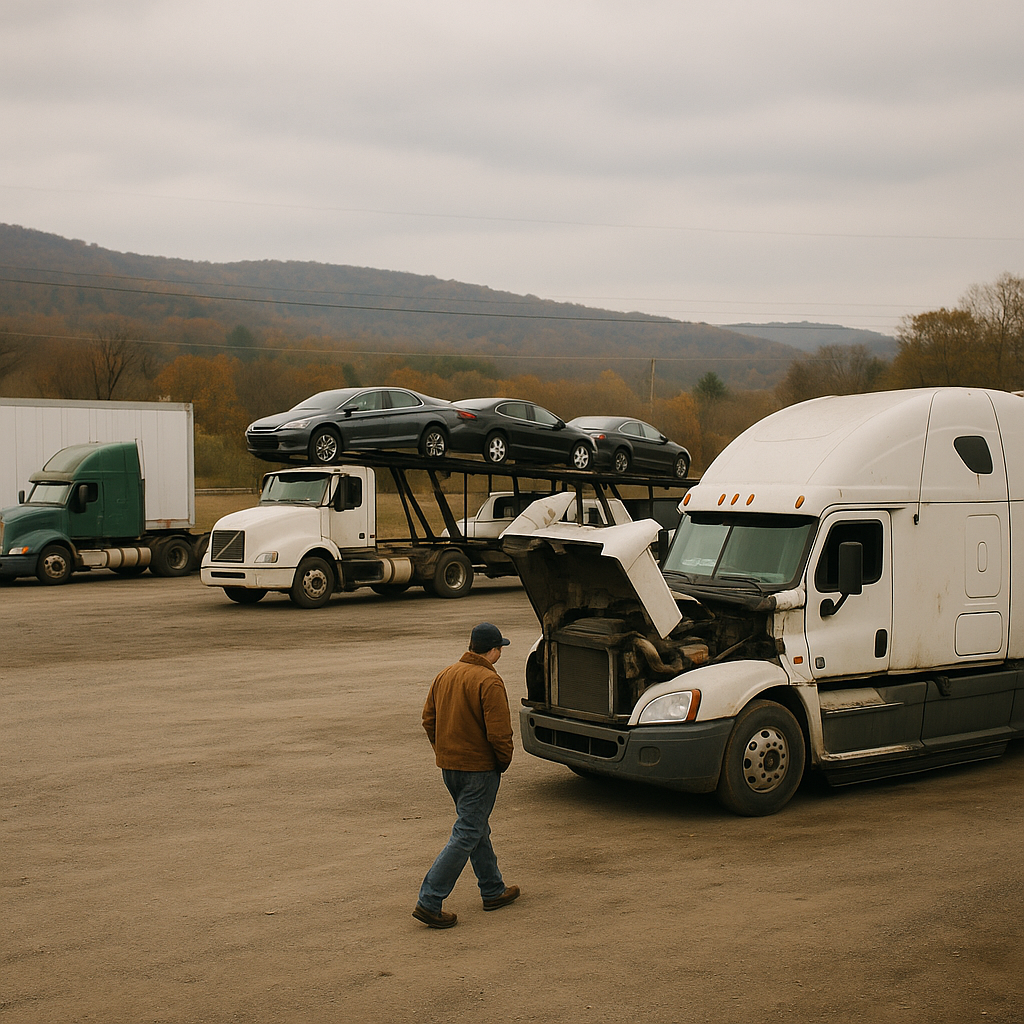
Auto hauler trucking insurance in Pennsylvania is commercial insurance built for a car-hauling operation, not personal auto insurance. In plain terms, it usually needs to account for three separate exposures: the power unit, the trailer, and the cars being hauled. That’s the piece many small operators miss.
Truck versus trailer versus hauled vehicles#
A power unit is the tractor or truck doing the pulling. A trailer is the equipment attached behind it to carry cargo. Hauled vehicles are the customer cars, pickups, or other autos loaded for transport.
Your truck’s liability coverage handles damage or injury you cause to others while operating. Your truck’s physical damage coverage handles damage to your own truck from collision, theft, fire, weather, and similar losses, depending on how the policy is built.
The trailer is a separate issue. If you own it, its value may need to be specifically scheduled for physical damage. If you don’t own it, a different coverage conversation applies. The cars on the trailer are another bucket again, because damage to customer vehicles usually isn’t covered just because you insured the truck.
A one-car hauler using a pickup and wedge trailer may have a simpler setup than a three-car hotshot-style operation, but the same rule applies: ask what covers the truck, what covers the trailer, and what covers the loaded vehicles.
Core coverages most operators review first#
The main coverages usually start with
physical damage, and cargo-related protection. Commercial auto liability pays for bodily injury and property damage you cause to other people in a covered crash. Physical damage pays for damage to your own insured truck or trailer, subject to deductibles and policy terms.
For a small Pennsylvania auto hauler, that often means looking at the tractor policy first, then confirming whether the trailer is listed and how hauled vehicles are treated. If you financed the truck or trailer, the lender may also require physical damage.
Common coverage gaps for small car haulers#
The biggest gaps are usually the loaded vehicles, trailer damage, and non-owned trailer use. A non-owned trailer is a trailer you use but don’t own. If you borrow, lease, or temporarily pull someone else’s trailer, assuming your main policy automatically covers it can get expensive fast.
Picture a two-car hauler who has liability on the truck and physical damage on the pickup, but nothing properly addressing customer vehicles on the trailer. One bad loading incident, one strap failure, or one backing claim can turn into a problem that the operator thought was covered.
If you’re staring at quotes that all look similar but don’t clearly address your trailer and loaded vehicles, that’s where mistakes usually start. If you’re not sure what actually fits your operation,
Pennsylvania requirements: state rules, filings, and FMCSA basics#
Pennsylvania auto haulers need to separate Pennsylvania rules from FMCSA federal rules. What applies depends on whether you run intrastate or interstate, whether you’re for-hire, your vehicle weight, and what you haul. That’s why a small car hauler running only inside Pennsylvania may face a different compliance setup than one crossing into Ohio, New Jersey, or Maryland.
When state rules matter#
Intrastate means you operate only within one state. If your operation is truly intrastate in Pennsylvania, state-level rules, registrations, and Pennsylvania PUC requirements may matter more than FMCSA financial responsibility rules tied to interstate for-hire carriers.
Pennsylvania-specific compliance can involve state authority, filings, and operating rules depending on how the business is structured and what service you’re providing. The Pennsylvania PUC is the right place to confirm state-side carrier requirements for operators working in the Commonwealth.
When FMCSA rules matter#
Interstate means your operation crosses state lines or is part of interstate commerce. If you’re a for-hire interstate carrier, FMCSA rules can apply even if most of your loads stay close to home.
Under 49 CFR Part 387, for-hire interstate carriers hauling property in vehicles over 10,001 pounds GVW generally must carry at least $750,000 in public liability, while auto haulers fall into a higher minimum category of $1,000,000. That federal minimum is not the same thing as a Pennsylvania state minimum, and mixing those two up is one of the most common mistakes in trucking insurance.
A Pennsylvania operator hauling cars from Harrisburg to Pittsburgh only may be dealing with a different rule set than an operator moving dealer units from Pennsylvania into New York. The route, authority type, and equipment all change the answer.
Why filings and authority status matter#
Proof of financial responsibility means documented evidence that the required insurance is in place. A filing is the insurer’s formal notice to the regulator showing required coverage for a carrier’s authority. Your authority is your legal permission to operate as a for-hire carrier in the lanes and scope that apply to you.
If a required filing cancels or a policy lapses, the compliance problem can start before any accident happens. A carrier can end up unable to operate legally, renew authority cleanly, or satisfy a shipper or broker check. For interstate carriers, check operating status through FMCSA SAFER.
How much auto hauler insurance costs and what drives the quote#
Auto hauler trucking insurance in Pennsylvania doesn’t have one standard price because the quote depends on the operation. The fastest way to understand cost is to break it into variables: driver risk, operating radius, truck and trailer values, loaded vehicle exposure, and whether the carrier runs interstate. For most small auto haulers, the trailer and hauled cars change the quote more than expected.
Cost factors for small fleets and owner-operators#
Underwriters usually look at who is driving, what they’re driving, where they go, and what could be damaged in the process. Driving history, years of CDL experience, loss history, garaging, MC or DOT status, and load type all matter.
For car haulers, the hauled cargo adds another layer because customer vehicles can be high-value, easily damaged, and harder to standardize than general freight. A one-truck owner-operator with a clean record and a tight operating radius is a different risk than a two-truck fleet running longer interstate lanes with rotating drivers.
How truck size and trailer type affect price#
A small one-car hauler setup may use lighter equipment, lower stated values, and a narrower lane pattern. A two-car or three-car setup often means more trailer value, more loaded-vehicle exposure, and more questions about securement, loading practices, and parking.
The trailer’s insurance cost is usually not a standalone answer because it depends on whether you’re insuring physical damage to an owned trailer, covering a borrowed trailer, or trying to protect against damage involving the loaded autos. That’s why "how much is the trailer?" and "how much is the truck policy?" are related but not identical questions.
Practical quote examples by operation size#
A one-car operator hauling a few dealer transfers inside Pennsylvania might mainly need the truck correctly rated, the trailer properly listed, and the hauled-vehicle exposure clearly addressed. A two-car setup running Pennsylvania to nearby states may trigger more scrutiny around interstate operation, authority, and limits.
A three-car hauler can look like a much larger exposure even if it’s still a one-truck business. More loaded units usually means more total potential loss in one event. That can affect not just premium, but which carriers are willing to quote and what documentation they want first.
That matters because chasing the lowest number can backfire if one quote quietly leaves out loaded vehicle exposure or trailer issues. Your actual premium depends on your operation, cargo, radius, driving history, equipment, and other underwriting factors.
Recommended coverages for car haulers and when to add them#
The best coverage setup for a Pennsylvania car hauler usually starts with liability on the road, physical damage for owned equipment, and a separate look at protection for the vehicles being transported. After that, add coverage only where it matches a real exposure. That’s the practical way to build a policy instead of stacking endorsements you may not need.
Auto liability and physical damage#
Commercial auto liability covers injury or property damage you cause to others with the insured truck. Physical damage covers damage to your own truck or trailer from collision, fire, theft, weather, and similar causes, depending on the form. The NAIC’s plain-language insurance resources at naic.org are useful if you want a simple refresher on deductibles and policy terms.
If your tractor is financed, physical damage is usually part of the conversation immediately. The same goes for an owned trailer with real replacement value. The key is not assuming your truck coverage automatically handles every piece of equipment attached to it.
Cargo-related protection for hauled vehicles#
Motor truck cargo is insurance for covered property you’re hauling for others. For car haulers, this is the part that often needs close review because the customer’s vehicles are the exposure that worries most operators and shippers.
Not every cargo form works the same way for every type of auto-hauling operation, so you need to confirm how loaded vehicles are treated, what exclusions apply, and whether claims like loading damage or securement-related damage are handled the way you expect. If your operation involves picking up, moving, and delivering customer vehicles, this is not a detail to gloss over.
On-hook coverage is commonly used in towing to cover a customer’s vehicle while attached to your truck. Some auto haulers hear that term and assume it applies the same way to their operation. Sometimes the better fit is cargo-style protection, not a towing form, so this needs careful scoping.
Trailer and equipment-related options#
Trailer interchange covers physical damage to a non-owned trailer when you’re responsible for it under a written interchange agreement. Non-owned trailer physical damage covers a trailer you don’t own without relying on an interchange agreement, which is often more relevant for non-intermodal owner-operators who occasionally pull someone else’s trailer.
A small car hauler may also hear about garagekeepers, which covers customer autos while in your care, custody, or control at a covered premises. That may matter more if you store vehicles, stage them on a lot, or operate with a yard component beyond pure transport.
How to get a commercial truck insurance quote for an auto hauler#
Getting a good auto hauler trucking insurance quote in Pennsylvania starts with accurate operation details. The cleaner your information, the more usable the quote. If the underwriter has to guess about your trailer, radius, or haul type, the result is usually a slower process or a quote that doesn’t really match your operation.
Information an underwriter will ask for#
Expect questions about your DOT number, MC number if applicable, business name, driver history, VINs, truck year/make/model, trailer details, territory, and whether you operate intrastate or interstate. They’ll also want to know what kinds of vehicles you haul and how often.
What to have ready before requesting quotes#
Have your driver’s license details, current or prior declarations page, loss runs if you have them, equipment schedule, and authority details ready. If you’re just starting out, having your setup clearly written down helps: one-car, two-car, or three-car trailer; owned or non-owned trailer; and typical routes.
A simple process works best:
- Gather truck, trailer, driver, and authority records.
- Request comparable coverage terms from each quote source.
- Confirm any required filings before binding.
- Review exclusions for loaded vehicles, trailers, and non-owned equipment.
How to compare quotes without missing gaps#
Don’t compare only total premium. Compare what is actually insured, what deductible applies, whether the trailer is scheduled, and how the policy treats hauled vehicles. A cheaper quote that skips a real exposure isn’t cheaper when something goes wrong.
For a busy owner-operator in the cab, the checklist is simple: truck listed, trailer listed, cargo addressed, radius right, filings confirmed, exclusions reviewed.
How to reduce cost without buying the wrong policy#
The safest way to lower auto hauler trucking insurance costs in Pennsylvania is to improve the risk before you shop. Clean records, accurate equipment values, disciplined maintenance, and a clear description of your operation can help quote quality. That usually works better than cutting coverages you actually need.
Choose coverage that fits the operation#
If you haul customer vehicles, make sure the policy addresses that exposure. If you sometimes pull a borrowed trailer, deal with that directly. Paying less doesn’t help if the missing coverage is exactly what your operation depends on.
Reduce risk before you shop#
Keep MVRs clean, document maintenance, store equipment securely, and present a consistent operating radius. If you tell one market you’re local and another you’re multi-state, you’ll get inconsistent quotes and extra underwriting friction.
Avoid common mistakes that create gaps#
The most common mistakes are assuming personal auto is enough, assuming "generic truck insurance" automatically covers hauled vehicles, and forgetting non-owned trailer use. Another one is buying for today’s load but not for the lanes you actually plan to run next month.
If any of those sound familiar,
What to review before you bind coverage#
Before you bind coverage, make sure the policy matches how you actually haul cars. Confirm which truck is insured, whether the trailer is specifically covered, how loaded vehicles are handled, and what exclusions apply. Then check that any required filings and authority details are lined up correctly.
Final coverage check#
Review the insured vehicles, deductibles, and physical damage values. Make sure the trailer isn’t an afterthought if it has real value or if you’re using a non-owned unit.
Compliance check#
Confirm whether you need state-side Pennsylvania compliance, FMCSA filings, or both. Verify interstate versus intrastate status and make sure your authority and insurance line up before you dispatch.
Operational check#
Double-check your haul radius, typical routes, and the kinds of vehicles you transport. If the policy doesn’t match the way you really operate, fix it before binding, not after a claim.
FAQ#
What insurance do I need for car hauling?
For car hauling, most operators start with commercial auto liability, which covers injury or property damage you cause to others while operating the truck. Then review physical damage for your own truck and trailer, because that protects your equipment rather than the other party. After that, look closely at cargo-related protection for the vehicles you’re transporting, since customer autos are a separate exposure from the truck itself.
The exact mix depends on whether you’re interstate or intrastate, whether you’re for-hire, your equipment size, and whether you own or borrow the trailer. Requirements vary by carrier type, vehicle weight, cargo, and where you operate.
How much is insurance on a car hauler trailer?
Insurance on a car hauler trailer depends on what you’re trying to insure. If you’re covering physical damage on an owned trailer, the quote usually depends on the trailer’s value, type, condition, usage, and deductible. If the exposure involves a borrowed or leased trailer, the coverage conversation shifts toward non-owned trailer physical damage or trailer interchange, depending on the arrangement.
What confuses people is that trailer insurance and hauled-vehicle exposure are not the same thing. Insuring the trailer itself does not automatically mean the customer vehicles loaded on it are covered. That’s why the trailer cost can’t be answered with one blanket number.
How much is insurance for a hauling company?
Insurance for a hauling company varies based on fleet size, driver history, operating radius, interstate versus intrastate operation, truck and trailer values, and what is being hauled. A one-truck owner-operator moving cars inside Pennsylvania presents a different underwriting picture than a small fleet crossing several states with multiple trailers and drivers.
Coverage choices matter too. Liability, physical damage, cargo-related protection, trailer coverage, and any special endorsements all change the quote. The right question is not just "what does it cost?" but "what exposures are actually covered?" Your actual premium depends on your operation, cargo, radius, driving history, and other factors.
Do auto haulers in Pennsylvania need FMCSA insurance filings?
Some do, and some don’t. It depends mainly on whether the operation is for-hire and interstate. A Pennsylvania auto hauler crossing state lines under interstate authority may need FMCSA-related proof of financial responsibility and active authority support, while a purely intrastate operator may be dealing more with Pennsylvania-specific rules and filings instead.
That’s why you shouldn’t assume a state registration answer covers a federal authority question. Check the scope of your operation first: for-hire or private, interstate or intrastate, equipment size, and cargo type. Then confirm whether the policy includes the filings needed for your authority to stay active.
Does truck insurance cover the cars I’m hauling?
Not automatically. Liability on the truck covers damage or injury you cause to others, not necessarily the customer vehicles loaded on your trailer. Physical damage covers your own insured truck and, if scheduled, your trailer. The hauled vehicles are usually a separate issue that needs cargo-style review or another form suited to the operation.
This is one of the easiest mistakes for new auto haulers to make because the entire setup looks like one unit on the road. In insurance terms, though, the truck, trailer, and loaded vehicles can each need separate attention. Always ask specifically how customer vehicles are covered, not just whether the truck is insured.