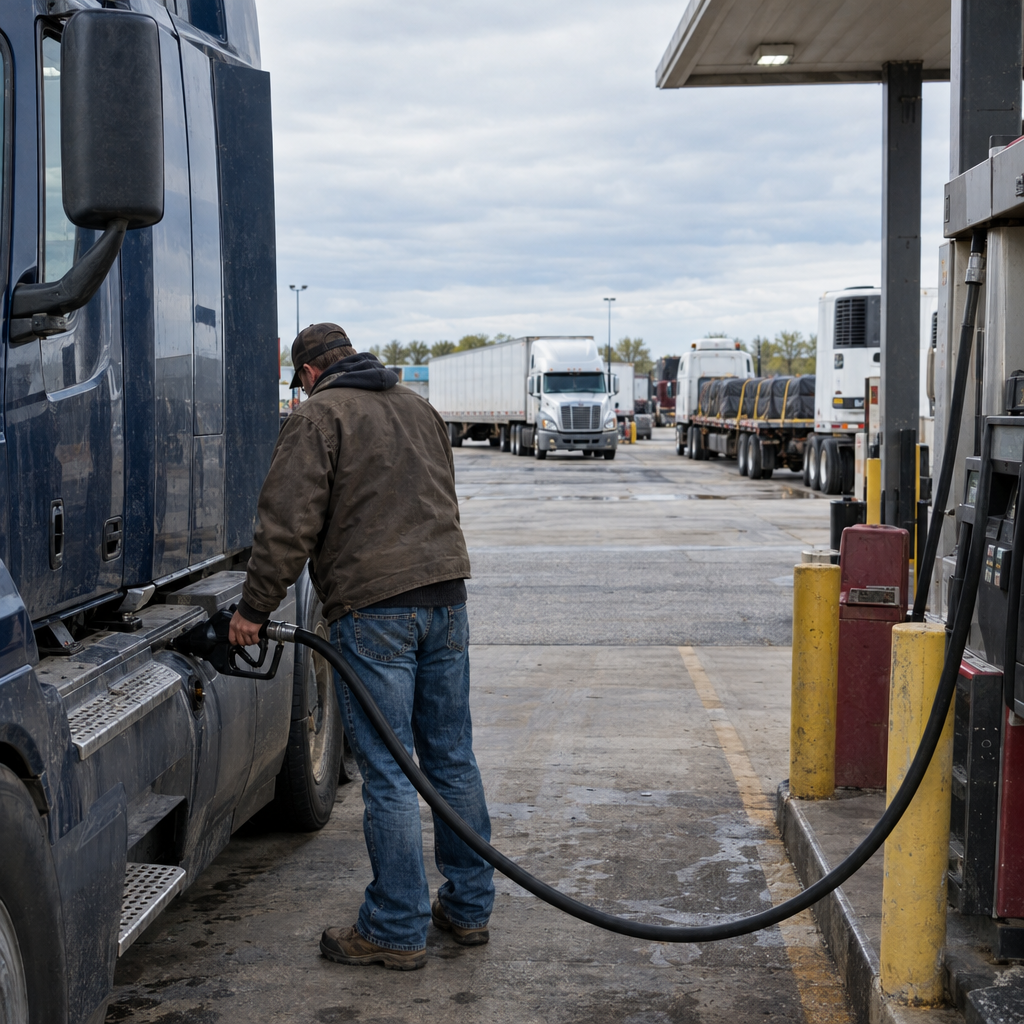

Diesel prices trucking businesses pay can change a load’s profit fast. A $6.28-per-gallon snapshot shows why owner-operators need to track fuel cost per mile, compare actual stop costs, and protect cash flow before a high pump price turns into a business problem.
What a $6.28 Diesel Price Means for a Trucking Business#
A $6.28 diesel price is a high-price snapshot, not a claim about today’s nationwide pump price. For an owner-operator or small fleet, a jump like that matters because fuel gets paid for now, while load revenue may not arrive until later. The useful question is what your actual fuel price does to each mile and load.
Why a posted price matters more to small carriers#
A large carrier may have purchasing programs, dedicated fuel teams, and more cash reserves. A one-truck operation often has to make the same fuel decision from the cab while covering maintenance, truck payments, permits, and other bills.
Fuel is not a distant accounting number. It comes out of the account before the customer, broker, or factoring company pays the invoice.
The difference between a headline average and your actual fuel bill#
A national or state diesel average is useful context, but it is not your fuel bill. Your real number depends on the truck stop, state taxes, cash price, fuel-card discount, card fees, gallons purchased, and where your route takes you.
A lower sign price can also be less useful if getting there adds empty miles, waiting time, tolls, or forces you to buy more fuel than you need.
Why this is a cost story, not a prediction#
Diesel fuel prices move for reasons outside one driver’s control. This guide helps turn a price move into dispatch and operating decisions without pretending anyone can guarantee where diesel will be next week.

Turn the Pump Price Into Fuel Cost Per Mile#
The basic fuel-cost calculation is simple: divide your net diesel price per gallon by your actual miles per gallon. At $6.28 per gallon and 6.5 MPG, fuel costs about $0.97 per mile before idling, reefer fuel, tolls, maintenance, or other operating expenses. That number makes a price headline useful.
The formula: diesel price divided by real-world MPG#
Use this formula:
Fuel cost per mile = net diesel price ÷ actual MPG
Your net diesel price is what you actually pay after a valid fuel-card discount and any applicable fees. Your actual MPG is what the truck delivers on the routes and loads you run, not its advertised rating or its best result on a flat, empty trip.
Example at $6.28 per gallon#
At $6.28 per gallon and 6.5 MPG:
$6.28 ÷ 6.5 = about $0.97 per mile
That means a 500-mile run uses roughly $485 in diesel at that efficiency, before considering any extra fuel burned while idling or detouring. If you run a reefer, track its fuel separately so the tractor’s MPG calculation does not hide the full fuel expense.
Use loaded and empty miles when reviewing your actual results. Terrain, weather, speed, detention, idling, load weight, and traffic can all move real-world MPG.
How much a 10-cent price move changes the math#
To calculate the effect of a diesel price change, use:
Price change per gallon ÷ MPG = change in fuel cost per mile
At 6.5 MPG, a $0.10-per-gallon increase adds about $0.015 per mile, or roughly 1.5 cents. That may look small until it applies across hundreds or thousands of miles.
Compare Fuel Stops by Net Cost, Not the Sign Price#
The lowest diesel sign price does not always create the lowest trip cost. Compare the net price you can actually buy, the gallons you need, detour miles, fuel burned getting there, and the time cost of the stop. A practical comparison keeps a “deal” from quietly costing more than it saves.
Calculate the full cost of buying at each stop#
Start with the per-gallon price you can actually access. Then multiply it by the gallons you expect to buy, rather than comparing a large posted number from the highway.
Next, consider what the stop requires. A cheaper location may add miles, push you into traffic, create a long wait, or leave you short on fuel for a better purchase opportunity later in the route.
Factor in route miles, extra idling, and required gallons#
When choosing between two feasible stops, run this quick check:
- What is the net per-gallon price at each location?
- How many gallons do you need now?
- How many detour miles does each stop add?
- How much diesel will the detour burn?
- Will one stop add meaningful waiting, idling, tolls, or schedule risk?
The goal is not to chase every low sign price. It is to make the fuel purchase fit the route, delivery appointment, and load economics.
Use discounts carefully when evaluating the real price#
A fuel card can help with tracking and network pricing, but confirm the price at the specific location before you count it as savings. Check whether the discount is active there, whether transaction fees apply, and whether the posted price is the same price your card will use.
Reviewing fuel-card pricing and fees can help you compare the number on the sign with the number that reaches your fuel ledger. If high fuel costs are exposing other weak spots in your operation,
and review whether your coverage still fits the business you run.
How Higher Diesel Prices Squeeze Load Margins and Cash Flow#
Higher diesel prices can shrink a load’s margin even when the gross revenue has not changed. Before dispatch, separate linehaul from fuel-related compensation, estimate all loaded and empty miles, and calculate the fuel cost using current net prices and realistic MPG. Then check whether the remaining revenue still supports the trip.
Separate linehaul revenue from fuel-related pay#
Linehaul is the base pay for moving freight, separate from fuel-related pay or accessorial charges. A fuel surcharge is additional compensation intended to help address fuel-price changes, but its terms differ by broker, shipper, or contract.
Do not assume a fuel surcharge covers every mile or every price change. It may use a benchmark price, update on a delay, apply only to loaded miles, or follow a schedule that does not match the price you pay at the pump.
Check fuel-surcharge terms before accepting a load#
Review the load’s total revenue, loaded miles, empty miles, expected MPG, tolls, and fuel-related compensation. A load that looked workable at one diesel price may need a second look after a sharp increase.
The key is not whether a surcharge exists. The key is whether the complete revenue package still covers the real cost of doing the work.
Plan for the gap between buying fuel and receiving payment#
Fuel is commonly purchased before an invoice is paid, which can turn a profitable load into a cash-flow strain. The U.S. Small Business Administration advises small businesses to manage the timing of money coming in and expenses going out; that timing matters when fuel purchases rise.
Track your cash balance alongside fuel spending, not just revenue per mile. A small fleet can stay busy and still get squeezed if fuel, repairs, and other bills come due before payment arrives.
Check Today’s Diesel Price Without Mistaking It for Tomorrow’s#
To see what diesel is doing today, check live route-specific pricing in your fuel-card app, preferred truck-stop network, or a reliable local price source before fueling. State and national averages provide useful context, but your dispatch decision should rely on the net price available where and when you can buy.
Use local prices for dispatch decisions#
“Diesel prices near me” can mean different things depending on the route, truck-stop network, and discounts available to you. A price across town or across a state line may not be practical once you count the miles and time required to reach it.
Check the local price before committing to a fuel stop, especially when the truck is low enough that your options are limited.
Track state and national trends separately#
Diesel prices by state and nationwide can help you spot a broad direction, but they cannot replace local information. Taxes, local supply conditions, rack pricing, and individual truck-stop decisions can create a meaningful gap between an average and your receipt.
Keep records that support your business expenses. The Internal Revenue Service explains in Publication 535 that businesses should maintain records substantiating ordinary and necessary expenses, including fuel purchases where applicable.
Keep a simple weekly fuel log#
Track these numbers week over week:
- Net price paid per gallon
- Gallons purchased
- Actual MPG
- Fuel cost per mile
- Revenue per mile
- Empty miles
- Available cash balance
Use owner-operator fuel and profit apps if they help you keep the numbers in one place. Your own paid price and cost per mile are more actionable than reacting to one national headline.
Can You Tell Whether Diesel Will Be Higher Next Week?#
No single diesel price, state average, or market headline can reliably predict next week’s local pump price. You can watch direction and volatility, but you should not accept or reject a load based on an assumed future price. Use a conservative planning number and update it as real prices become available.
What a current diesel-price move can signal#
A rising or falling trend may tell you that fuel costs deserve closer attention. It can be a reason to review fuel stops more often, protect cash reserves, and recheck the economics of longer loads.
What it cannot reliably predict#
A current price does not guarantee another increase or decline next week. Local prices can change differently from national or state averages, and a price forecast does not pay the difference if it misses.
Set a planning range instead of betting on one price#
When prices move quickly, build a cautious fuel assumption into the load calculation. Revisit it at the next dispatch cycle, fuel stop, or weekly business review instead of locking your plan to one headline.
A Practical Response Plan When Diesel Jumps#
When diesel jumps, respond with repeatable operating controls instead of guessing where prices will go. Calculate fuel cost per mile from your real MPG, compare net fuel-stop costs, review every load’s full economics, watch payment timing, and update assumptions as conditions change. That creates a usable plan from a difficult price move.
Run the cost-per-mile calculation every week#
Make fuel cost per mile part of your weekly review, not a calculation you do only during a price spike. Compare the result with your revenue per mile and look for changes in empty miles, MPG, or net fuel price.
Review loads before committing capacity#
Before accepting a load, estimate the total trip cost using current fuel information and realistic miles. Include deadhead, tolls, expected fuel-related compensation, and any delivery timing that could create detention or additional idle time.
Dispatch discipline does not guarantee every load will work. It does help you avoid relying on gross revenue while the real operating costs are climbing.
Protect the business beyond the next fuel stop#
Route planning, fuel-purchase discipline, speed management, maintenance, and clean records are longer-term controls that matter in any fuel market. Review longer-term fuel-saving controls as part of a broader operating plan.
Fuel is only one major cost of running authority. Owner-operators and small fleets that want to review commercial trucking insurance alongside their wider business plan can get practical help from LogRock.
Frequently Asked Questions#
Are diesel prices affecting truck drivers?
Yes. Diesel prices affect truck drivers who own, lease, or manage trucks because higher fuel costs raise the cost per mile before the load is paid. The exact impact depends on your net fuel price, actual MPG, loaded and empty miles, idling, and whether the load includes fuel-related compensation. Company drivers may not buy fuel directly, but high diesel costs can still affect freight demand, routing decisions, and carrier operating plans. Owner-operators should calculate the impact on each load rather than relying only on a price headline.
Are diesel truck prices dropping?
“Diesel truck prices” can mean two different things: diesel fuel prices or the purchase price of diesel-powered trucks. A report that fuel prices are dropping does not necessarily mean truck purchase prices are falling, and the reverse is also true. If you mean diesel fuel, check live local prices through your fuel-card network or preferred truck-stop app. A current decline can help your cost per mile, but it does not guarantee that prices will continue falling next week.
What is the price of diesel doing today?
The most useful answer comes from live, route-specific pricing where you can realistically fuel today. Check your fuel-card app, truck-stop network, or local price source, then confirm the net price after discounts and fees. Convert that number into fuel cost per mile by dividing it by your actual MPG. State and national diesel averages are helpful for broader context, but they may not match the cash or card price at the truck stop on your route.
What is the expected price of diesel next week?
No one can know next week’s local diesel price with certainty. National and state trends may show direction, but truck-stop pricing can move differently based on location, taxes, supply conditions, and local competition. Instead of betting on a forecast, use a conservative fuel-cost assumption when evaluating loads during a volatile period. Recheck the calculation as you dispatch, fuel, and receive updated prices. That approach keeps a load decision tied to numbers you can actually verify.