
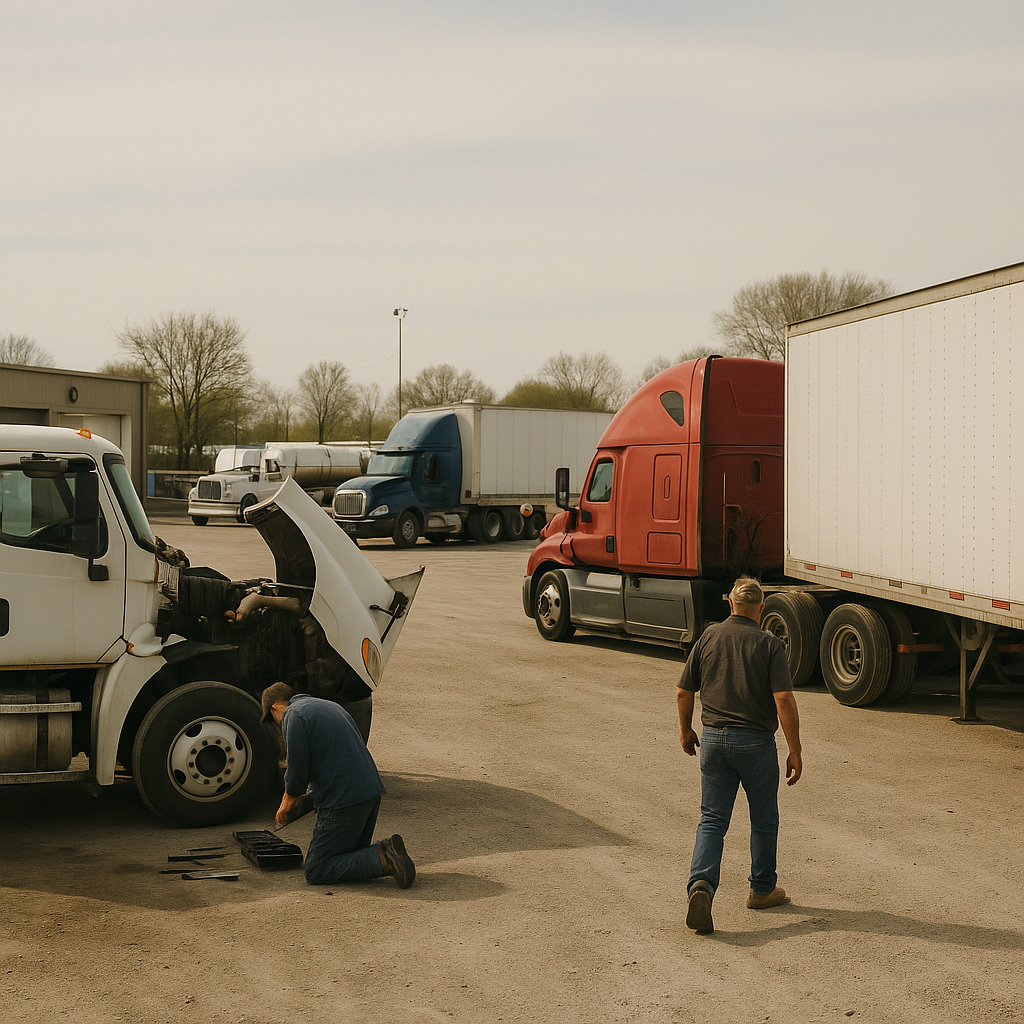

Dry van truck insurance Indiana owner-operators buy usually isn’t one single policy. It’s a commercial insurance setup built around the tractor, the trailer, the freight, and how the truck actually runs. That’s where a lot of confusion starts: Indiana state minimums, FMCSA filings, lease requirements, and broker contracts don’t always ask for the same thing.
If you’re hauling dry van freight out of Indiana, the real question isn’t just “how much does insurance cost?” It’s “what coverage does this operation actually need?” A one-truck new authority pulling its own trailer has a different insurance setup than a leased-on driver using a carrier’s trailer or a small fleet hauling higher-value loads across state lines.
What dry van truck insurance covers in Indiana#
Dry van trucking insurance is a commercial insurance package built around a freight-hauling operation, not a personal vehicle. For Indiana truckers, that usually means matching protection to the tractor, the trailer, the cargo, and the liability exposure created by how and where the truck runs.
Indiana matters because your garaging location, routes, and local operating pattern affect underwriting. But the bigger issue is whether you’re running intrastate or interstate, under your own authority or leased on, and what contracts require.
Tractor coverage#
Commercial auto liability is the part that pays when your truck causes bodily injury or property damage to others in a covered crash. Physical damage is coverage for your own truck, usually including collision and comprehensive or fire and theft with combined additional coverage, depending on how the policy is built.
For a leased-on owner-operator hauling general freight, the motor carrier may carry primary liability while the owner-operator insures the truck itself and any gaps that still belong to them. For a one-truck Indiana authority, the tractor usually needs its own liability filing plus physical damage if the truck’s value would be hard to replace out of pocket.
Trailer coverage#
Trailer protection depends on who owns the trailer and who is responsible for it. If you own your dry van trailer, you may need physical damage on the trailer itself. If you’re pulling someone else’s trailer, the question becomes whether you need trailer interchange or non-owned trailer physical damage.
A lot of drivers assume the tractor policy automatically protects every trailer hooked to it. Sometimes it doesn’t. That’s one of the most common dry van coverage gaps.
Cargo and liability coverage#
Motor truck cargo is insurance for the freight you’re hauling, subject to the policy terms, commodity rules, exclusions, and limits. BIPD means bodily injury and property damage liability, the public liability side tied to legal and regulatory requirements.
A small fleet hauling packaged consumer goods may need a very different cargo setup than a leased-on owner-operator hauling lower-value general freight under a carrier’s umbrella. The policy has to fit the load, the contracts, and the actual risk, not just the words “dry van.”

Indiana rules versus FMCSA requirements#
Indiana truckers should separate state auto rules from federal trucking rules right away. If you’re a for-hire motor carrier, your insurance requirement can change based on vehicle weight, cargo, and whether you operate interstate, and federal rules can override the shorthand advice you hear in forums.
Indiana’s insurance oversight and consumer guidance run through the Indiana Department of Insurance. But once a dry van operation involves federal authority, USDOT registration, and interstate for-hire trucking, FMCSA rules become a major part of the picture.
State minimums#
State minimums are the baseline auto insurance requirements under state law. They are not the same thing as commercial trucking requirements for a dry van carrier hauling freight for hire.
An Indiana trucker running only intrastate may still face requirements shaped by state law, vehicle class, and business use. The Indiana Bureau of Motor Vehicles matters for vehicle registration and titling, but that doesn’t replace checking what insurance your actual trucking operation requires.
Federal operating requirements#
FMCSA sets federal financial responsibility rules for certain motor carriers. Under 49 CFR Part 387, for-hire interstate carriers hauling general freight in vehicles over 10,001 lbs must carry at least $750,000 in public liability. That doesn’t mean all truckers need $750,000, and it doesn’t mean every dry van operation is scoped the same way.
If an Indiana dry van operator crosses state lines under their own authority, the federal requirement may control the filing requirement. You can verify operating status, authority context, and registration details through SAFER before assuming what filing applies.
When contracts add more coverage#
Legal minimums are only part of the picture. A broker, shipper, lease agreement, or lender may require higher liability limits, motor truck cargo, physical damage, or trailer-specific coverage even when the law doesn’t.
A practical example: an Indiana carrier running interstate general freight might meet FMCSA minimum liability but still lose loads because a shipper wants a higher limit or specific cargo terms. That mismatch is where a lot of “but I’m already legal” frustration comes from.
If you’re not sure whether your current setup matches your operation,
How dry van insurance cost is usually estimated#
Dry van insurance cost is usually priced from the ground up based on the operation, not from a universal Indiana number. Underwriters look at the truck, trailer, cargo, radius, driving history, authority status, garaging, prior coverage, and losses, then decide how much risk your profile brings.
That means two Indiana dry van operators can ask for the same liability limit and get very different quotes. The request might look similar on paper, but the operation behind it usually isn’t.
What changes the quote#
Your premium is shaped by the kind of freight you haul, how far you run, where the truck is garaged, and whether you’re a new authority or an established operation. Prior lapses in insurance, recent losses, and driver experience also matter.
Equipment value changes the physical damage side. A newer tractor with a higher stated value costs more to insure than an older paid-off unit. Cargo limits can also rise when the loads are more valuable or contract language is stricter.
Why liability limits matter#
A $1,000,000 liability limit is a higher public liability limit than the federal minimum many general freight interstate carriers start from. It’s commonly requested by brokers and shippers, but the cost difference between $750,000 and $1,000,000 isn’t identical for every carrier because the underlying risk profile still drives pricing.
The MCS-90 is a federal endorsement attached to certain motor carrier liability policies to show financial responsibility for public liability. It doesn’t turn every policy into blanket protection for every loss, and it doesn’t replace checking the rest of the policy structure.
A newer Indiana authority with one truck, no prior commercial insurance history, and broad interstate radius may see a much different liability price than a leased-on driver with a clean record who isn’t carrying the same primary filing burden. A small fleet with mixed driver experience may price differently again because every additional unit and driver changes the risk.
Examples of common cost drivers#
A one-truck new authority usually gets more scrutiny because the insurer has less history to work with. If the driver has a recent CDL, a long radius, and wants higher cargo and physical damage, that pushes the quote differently than a veteran operator with years of prior coverage.
A leased-on driver with a clean MVR and a clear lease structure may need a narrower insurance package, which can change cost even if the truck itself is similar. A two-to-five truck Indiana fleet can benefit from consistency, but one bad loss history or one inexperienced driver can affect the entire account.
Do dry van trailers need separate insurance?#
Yes, dry van trailers often need their own insurance treatment, but not always in the same way. The answer depends on whether you own the trailer, lease it, borrow it, or haul under an agreement that makes you responsible for physical damage to someone else’s trailer.
This is where owner-operators often get bad advice. A trailer hooked to an insured tractor is not automatically covered for every kind of loss.
When the tractor policy is enough#
Liability from the truck’s operation may already be handled through the auto liability setup, depending on the claim and policy structure. But that doesn’t mean the trailer itself has physical damage protection.
If you’re leased on and always pulling a carrier-owned trailer, the carrier may already insure that trailer. Even then, you need to confirm who is responsible if the trailer is damaged, stolen, or destroyed while in your care.
When trailer-specific coverage matters#
If you own your dry van trailer, you usually need physical damage on that trailer if you want it protected against collision, theft, fire, or similar covered loss. If you don’t schedule it properly, damage to the trailer may become your problem alone.
Non-owned trailer physical damage is coverage for a trailer you don’t own when you’re responsible for physical damage to it, usually without a signed interchange agreement. Many non-intermodal dry van owner-operators care more about this than trailer interchange.
Leased trailers and trailer interchange#
Trailer interchange is coverage used when you’re responsible for a non-owned trailer under a written trailer interchange agreement. If there is no signed interchange agreement, that may point instead toward non-owned trailer physical damage.
Practical example: if you own your own dry van trailer, you insure that trailer’s value directly. If a shipper, carrier, or another party provides the trailer and you’re responsible for damage while using it, you need to know whether the contract creates a trailer interchange exposure or a non-owned trailer physical damage exposure.
What owner-operators and small fleets should prioritize#
The right dry van insurance mix depends heavily on whether you’re leased on, running under your own authority, or managing a small fleet. Most Indiana operators should prioritize the pieces that match how money is actually lost: liability claims, cargo claims, truck damage, and trailer responsibility.
Trying to buy coverage by rumor usually leads to one of two bad outcomes: overbuying things you don’t need or finding out after a loss that the important piece was missing.
Leased-on owner-operators#
Leased-on means you operate under another motor carrier’s authority rather than your own. In that setup, the carrier may provide primary liability for dispatched loads, but the owner-operator still needs to understand what remains their responsibility.
A leased-on dry van owner-operator often focuses on physical damage for the tractor, possible trailer responsibility, and any non-business-use coverage needed outside dispatch. The exact setup depends on the lease and the carrier’s insurance structure.
Authority-holding owner-operators#
An authority-holding owner-operator runs under their own motor carrier authority. That usually means more responsibility for liability filings, cargo, and making sure the policy matches broker and shipper requirements.
A one-truck Indiana authority pulling its own dry van trailer may need to line up auto liability, motor truck cargo, physical damage on the tractor, and physical damage on the trailer. That’s a broader package than many leased-on drivers carry.
1-5 truck fleets#
Small fleets often need more attention to driver consistency, replacement cost exposure, and account-wide loss trends. One claim or one weak driver can affect renewals across multiple units.
A two-truck fleet with experienced drivers and stable freight may present differently than a five-truck fleet growing quickly with mixed hiring standards. The fleet question isn’t just “how many trucks?” It’s how controlled the operation is.
Ways to lower cost without cutting needed protection#
You can lower dry van insurance cost by improving the risk profile and tightening the coverage structure, not by stripping out key protection blindly. The smartest approach is to remove waste, choose deductibles carefully, and present clean underwriting information.
That matters most when money is tight. Cutting the wrong coverage can look smart until a cargo claim, trailer loss, or truck wreck turns into a business-ending bill.
Choose the right deductibles#
Higher deductibles can lower premium, but only if you can actually absorb that out-of-pocket cost after a claim. A deductible should fit your cash flow, not just the quote screen.
For example, a stable fleet with reserves may take a higher physical damage deductible to control premium. A new authority with thin cash might need a lower deductible because one loss would hit harder.
Match limits to the load and contract#
Don’t buy higher limits just because someone in a forum said everyone carries them. But don’t assume legal minimums are enough if your contracts require more.
Cargo and liability should match the freight and the agreements you’re signing. If you regularly haul higher-value dry van loads, underinsuring cargo just to trim premium can backfire fast.
Reduce avoidable risk factors#
Clean MVRs, stable garaging, solid driver screening, and clear maintenance habits all help the account. Prior coverage continuity matters too, since lapses can make an operation look riskier.
A newer authority can help itself by organizing records, keeping safety clean, and avoiding preventable application mistakes. A stable fleet usually gets the most traction by tightening driver quality and loss control rather than chasing the lowest headline premium.
How to compare quotes and get the right fit#
The best dry van insurance quote isn’t always the lowest premium line item. Indiana truckers should compare what each quote actually covers, how filings are handled, what deductibles apply, and whether the policy matches the tractor, trailer, cargo, and authority setup.
This is where specialized trucking support matters. Dry van freight is not personal auto, and generic business insurance language can miss trucking-specific gaps.
What to compare beyond price#
Compare liability limits, cargo terms, trailer treatment, physical damage deductibles, and exclusions. Ask whether the quote assumes owned trailers, borrowed trailers, or no trailer exposure at all.
Also confirm filings and authority details. The FMCSA sets the broader compliance framework for interstate motor carriers, and quote details should line up with that reality.
Questions to ask before binding#
Before you bind, gather your USDOT number, MC number if applicable, VINs, garaging address, operating radius, cargo type, prior loss runs, and any broker or shipper insurance requirements. That gives you a much cleaner comparison.
Ask directly: who covers the trailer, what cargo is excluded, what deductibles apply, and what changes if the truck runs interstate instead of intrastate. Those answers matter more than a vague promise about price.
Next steps for Indiana truckers#
If you’re comparing dry van truck insurance in Indiana, start by mapping your operation honestly: leased on or own authority, owned or non-owned trailer, interstate or intrastate, and basic freight profile. Then compare quotes on coverage fit, not just premium.
If you’re not sure what coverage fits your operation, LogRock can help you scope it.
FAQ#
How much is dry van insurance?
Dry van insurance doesn’t have one fixed price in Indiana because the quote depends on how the truck operates. Insurers usually price from factors like authority status, driving history, operating radius, cargo type, garaging, prior coverage, losses, and whether you’re insuring just the tractor or also the trailer and cargo.
A leased-on owner-operator with a clean record may need a narrower package than a new one-truck authority hauling interstate freight under its own MC number. That’s why broad online averages often mislead drivers. The better question is what your specific operation needs and how each quote treats liability, cargo, physical damage, and trailer exposure.
How much does a $1,000,000 liability insurance policy cost?
A $1,000,000 liability policy is priced based on the carrier profile, not from a single standard rate. The insurer will look at whether you’re a new authority or established carrier, your driving record, loss history, operating radius, unit type, and whether the policy also needs federal filings tied to for-hire interstate operation.
That’s why two Indiana dry van carriers asking for the same $1,000,000 limit can get very different pricing. One may be a clean leased-on operator with less filing complexity, while the other is a newer authority with broad interstate exposure. Your actual premium depends on your operation, cargo, radius, driving history, and other factors.
Do dry van trailers need insurance?
Yes, many dry van trailers need their own insurance treatment, but the exact coverage depends on ownership and responsibility. If you own the trailer, you may want physical damage on that trailer. If you’re using someone else’s trailer, the issue becomes whether you’re responsible for damage under a lease, dispatch arrangement, or written interchange agreement.
That distinction matters because trailer interchange and non-owned trailer physical damage are not the same thing. An owner-operator pulling a borrowed trailer without checking the contract can easily assume the tractor policy covers everything when it doesn’t. The safest move is to confirm who owns the trailer and who pays if it’s damaged.
What type of insurance do you need to run a cargo van business?
A cargo van business needs commercial auto coverage, not personal auto coverage, because it’s being used for business. Beyond that, the right setup depends on whether the van is used for local delivery, courier work, or for-hire freight, and whether contracts require extra liability or cargo protection.
This is also where people mix up cargo van insurance with semi-truck dry van insurance. A cargo van operation may have a different weight class, different regulatory scope, and different filing requirements than a tractor-trailer running under FMCSA authority. The needed coverage still depends on carrier type, vehicle weight, cargo, and whether you operate interstate or intrastate.
Do I need cargo insurance for dry van freight?
Cargo insurance isn’t always required by law in the same way liability filings may be, but many dry van operators effectively need it because brokers, shippers, and contracts expect it. Motor truck cargo helps cover the freight you’re hauling, subject to exclusions, conditions, and the policy limit.
For a dry van operator, that matters because “general freight” can still include loads with very different values and handling requirements. If you skip cargo just to reduce premium, you may limit your load options or take on a loss you can’t afford. The right cargo limit should reflect what you actually haul, not just the minimum needed to move paperwork.





