A lot of dump truck operators hear “you need your own authority” and assume that means every truck needs an MC number. That’s not how it works. Dump truck authority depends on what kind of work you do, whether you haul for others, and whether your operation falls under interstate or state-only rules.
This guide breaks down what operating authority means for dump trucks, when you need it, how to get it, what affects the cost, and when it may make more sense to stay under another setup.
What Dump Truck Authority Means#
Dump truck authority means FMCSA permission to operate as a for-hire motor carrier in interstate commerce. A for-hire motor carrier is a business that hauls property for someone else in exchange for payment. It is separate from your truck, your plate, and your CDL, and FMCSA explains the authority framework at FMCSA.
MC Number vs. Operating Authority#
An MC number is the identifier commonly tied to FMCSA operating authority. In everyday trucking talk, people say “get your MC,” but the real issue is whether your business needs federal operating authority at all.
A USDOT number is a federal identifier used to track safety and compliance. Some dump truck operators need a USDOT number but not operating authority. That’s why “Do I need an MC number?” and “Do I need authority?” are close questions, but not always the same one.
Why Dump Truck Operators Get Confused#
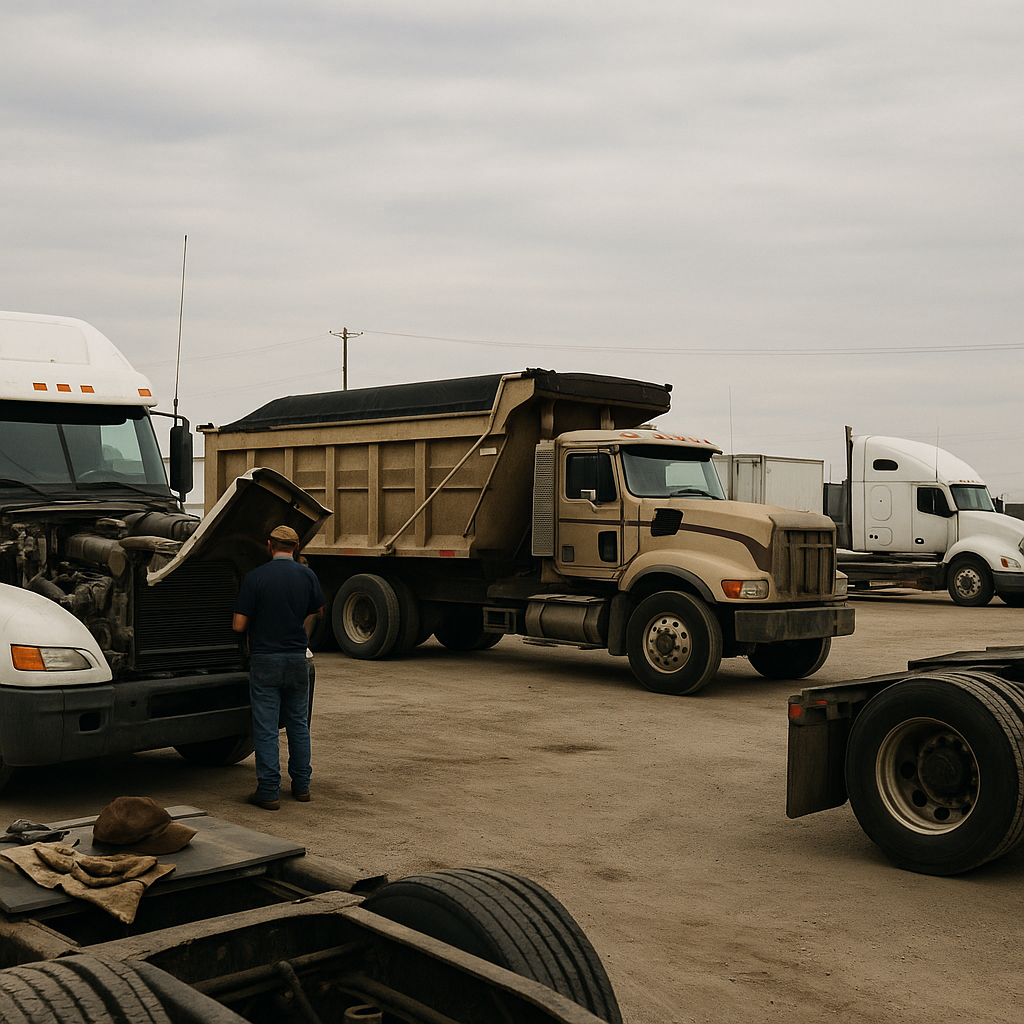
Dump truck operators get confused because the truck body doesn’t decide the rule. The setup does. A local contractor hauling its own material may fall under a different set of rules than an owner-operator hauling aggregate, dirt, asphalt, or debris for other people across state lines.
This is also where interstate and intrastate get mixed up. Interstate commerce means transportation that crosses state lines or is part of a broader interstate movement. Intrastate commerce means transportation that starts and ends within one state and stays under that state’s rules.
Where Insurance Fits#
Insurance is part of authority setup, but it doesn’t create authority by itself. If your operation requires federal authority, the insurance side usually includes filings tied to your authority and financial responsibility rules under 49 CFR Part 387 at eCFR.
An MCS-90 is an endorsement attached to certain motor carrier liability policies that helps satisfy federal financial responsibility requirements. State minimums, state dump-truck rules, and FMCSA requirements are not the same thing, so don’t assume one policy or one state filing covers all of it.
When a Dump Truck Needs Authority#
A dump truck needs authority mainly when it operates as a for-hire carrier in interstate commerce. The trigger is usually the business model and operating scope, not the fact that the truck is a dump truck. If you stay intrastate or haul your own material, the answer may be different.
Interstate For-Hire Work#
If you haul material for other people for payment and the work is interstate, you should assume authority may be required and verify the setup before you run. That includes obvious state-line moves and some loads that are part of a longer interstate shipment, even if your leg feels local.
This is where forum advice goes bad fast. One operator says, “I’ve got a dump truck and never needed authority,” while another says the exact opposite. Both could be right based on how their businesses are set up.
If you’re running jobs for compensation and you’re not sure whether your setup calls for authority or federal filings,
Intrastate-Only Work#
If your dump truck operation stays entirely within one state, you may be under state-only rules instead of FMCSA operating authority. That’s common in dump work tied to paving, site prep, construction, quarry runs, municipal contracts, and seasonal local hauling.
But “stays in one state” doesn’t end the analysis. Your state DOT, DMV, or department of insurance may still have registration, insurance, plate, weight, and carrier requirements for intrastate commercial trucking. Intrastate doesn’t mean unregulated. It usually means regulated differently.
Local Jobs, State Rules, and Edge Cases#
Local work is where many operators get tripped up. A short-haul dump truck job can still create authority questions if you’re hauling for hire and the job connects to interstate commerce. On the other hand, a contractor using its own dump truck to move its own material may not need the same authority setup as a carrier hauling for the public.
Edge cases matter:
- You haul only your own company’s material
- You lease on to another carrier instead of using your own authority
- You run mostly intrastate but occasionally cross state lines
- You work under contracts that change who is legally acting as the carrier
The cleanest way to think about it is this: ask whether you are for-hire or private, interstate or intrastate, and hauling under whose operating authority.

How to Get Operating Authority#
Getting operating authority starts with matching your business to the right FMCSA setup, then completing the filings needed for activation. It is not just one online form. You need the right carrier type, registration details, insurance filings, and active status before you haul under your own authority.
Confirm Your Carrier Type#
Start by figuring out what you are legally setting up. Are you a for-hire motor carrier? Are you staying intrastate only? Will you ever cross state lines? Are you hauling your own material or hauling for others for compensation?
Those answers drive whether you need operating authority, a USDOT number, both, or a state-only setup. They also affect your insurance structure, because requirements vary by carrier type, vehicle weight, cargo, and whether you operate interstate or intrastate.
Apply with FMCSA#
FMCSA handles federal operating authority registration. The agency lays out the registration and authority process at FMCSA. Before you start, gather your business name, entity details, address, ownership information, and a clear description of the type of hauling you plan to do.
This is worth slowing down for. If you apply under the wrong scope, you can create cleanup work later with insurance, filings, and activation timing.
Complete Required Filings and Registrations#
After the application, the next step is making sure the rest of the setup matches. For many carriers, authority activation depends on insurance-related filings and other registration items being completed properly.
Under 49 CFR Part 387 at eCFR, for-hire interstate carriers have federal financial responsibility requirements. For example, for-hire interstate carriers hauling general freight in vehicles over 10,001 pounds must carry at least $750,000 in public liability. That does not mean all truckers need $750,000. Requirements vary by carrier type, vehicle weight, cargo, and operating scope.
If your dump truck setup needs authority, your policy may also need the right filing support. This is where a lot of owner-operators get burned by assuming personal auto, a local business auto policy, or a state minimum limit is enough.
Wait for Processing and Activation#
Don’t book freight under your own authority just because you submitted paperwork. Authority has to move through processing and become active before you operate under it.
Practical tip: line up your business details, intended radius, cargo type, truck information, and insurance plan before you file. That makes the process smoother and cuts down on mistakes that stall activation.
What It Costs and What Affects the Bill#
The cost of MC authority is not one flat number. There are government filing fees, but the bigger budget question is usually the total setup cost, including insurance, any filing support, and ongoing compliance needs. A dump truck operation may spend far more on getting the business ready than on the authority application itself.
Government Fees vs. Business Costs#
The government side is the application and registration piece. That’s the part people usually mean when they ask, “How much is authority?”
But the real-world cost includes more than that. You may also need entity setup, apportioned registration depending on your operation, tax registrations, permits, and compliance support, depending on where and how you run.
Insurance and Filing-Related Costs#
Insurance is often the biggest moving part. Your premium depends on your operation, cargo, radius, driving history, equipment, and other factors. If your authority setup requires federal filings, your policy has to support that structure.
That matters for dump trucks because one operator may be doing local contractor work with a state-only setup, while another may be set up as a for-hire interstate carrier. Same truck style, very different insurance picture.
What Makes Costs Change#
Costs usually change based on:
- Interstate versus intrastate operations
- For-hire versus private carriage
- Whether you already have a truck and insurance-ready setup
- Cargo type and operating radius
- Whether you’re building a new authority from scratch or changing an existing business
Can You Get Authority Before Buying a Truck?#
Yes, you can start parts of the authority process before buying a truck, but that doesn’t mean you’re ready to operate. You can begin business setup and some paperwork early, but actual use of authority still depends on a compliant operation, including the right insurance and a real plan for how the business will run.
Starting the Process Without Equipment#
Some operators want to secure the business structure first, then shop for equipment. That can make sense if you want your company formed and your paperwork moving before the truck is in the yard.
It can also help if you’re trying to understand whether your future operation will be state-only or interstate before you commit to a truck and policy structure.
What You Still Need to Know#
You can’t dispatch loads legally under your own authority just because you applied for it. The operation still has to be fully set up, and the insurance side has to match the authority side.
That’s the part many new operators underestimate. Authority on paper and authority ready to use are not the same thing.
When Waiting Makes More Sense#
Waiting may make more sense if you still haven’t decided what work you’ll do, where you’ll run, or whether you’ll lease on instead. If your plan is still fuzzy, early paperwork can lock you into a setup that doesn’t fit the jobs you actually land.
Is Getting Your Own Authority Worth It?#
Getting your own authority is worth it for some dump truck operators, but not all. The upside is more control over your customers, lanes, and business decisions. The tradeoff is that you take on the insurance, compliance, paperwork, and administrative burden that another carrier would otherwise handle.
Pros for Small Operators#
If you want to build direct relationships with shippers, contractors, brokers, or project owners, your own authority can give you more control. You decide what work to accept, how to price your service, and whether to stay local or expand.
That control matters to operators who want to grow beyond being a truck under someone else’s umbrella.
Tradeoffs to Consider#
The tradeoff is that you become responsible for a lot more than driving. You need to manage compliance, insurance structure, filings, recordkeeping, and the business side of the operation.
For a single-truck dump operator, that can either feel like freedom or like one more unpaid job after the workday ends. The right answer depends on the work available in your market and how much back-office responsibility you want.
When a Contracting Setup May Be Better#
Sometimes it makes more sense to lease on to another carrier or work through a contractor arrangement instead of getting your own authority right away. That can be especially true if your work is highly local, seasonal, or already flows through established construction relationships.
If you’re trying to decide whether your dump truck operation should stay under another setup or move to its own authority,
Dump Truck Authority Checklist#
Use this checklist to sanity-check your setup before you spend time or money in the wrong place. The goal is to confirm whether you actually need dump truck authority, and if you do, whether your registration and insurance match the operation.
Before You Apply#
Ask yourself:
- Are you hauling for others for compensation or hauling your own material?
- Will you operate interstate or intrastate only?
- Do you need federal operating authority, a USDOT number, or a state-only setup?
- Does your insurance need federal filings tied to authority?
Before You Haul#
Make sure your business name, carrier type, insurance, and registration all line up. If you’re relying on your own authority, verify your public carrier status before running by checking SAFER.
Before You Assume You Need Authority#
A dump truck does not automatically mean an MC number. Start with the business model, operating territory, and who you haul for. Then match the insurance and regulatory setup to that answer.
FAQ#
How much does a MC authority cost?
The cost of MC authority is not just one number. There is the FMCSA application side, and then there is the bigger business setup side, which may include insurance, filings, registrations, and compliance support. For many new operators, the authority application itself is only one piece of the budget.
Your total cost depends on whether you are operating interstate or intrastate, for-hire or private, and whether you already have your business and insurance structure in place. A dump truck operation should budget for more than the application alone, especially if federal insurance filings are required.
Can I get MC authority without a truck?
Yes, you can start parts of the process without owning the truck yet. You can form the business, think through your operating scope, and begin some registration steps before equipment is purchased. That said, applying is different from being ready to run loads.
To actually use authority, you need a compliant operating setup. That usually means the truck, the right insurance structure, and all required filings have to line up before you dispatch under your authority. If your equipment plan is still uncertain, it may be smarter to sort that out first.
How do I get my operating authority?
Start by confirming whether your dump truck business actually needs federal operating authority. The big questions are whether you are for-hire or private, and whether you operate interstate or intrastate. Once that’s clear, apply through FMCSA using the business and carrier information that matches your operation.
After that, complete the required insurance and registration pieces tied to activation. Authority is a process, not just a form submission. Don’t haul under your own authority until the status is active and your insurance and filings fully match the business you’re running.
Is it worth getting your own trucking authority?
It can be worth it if you want more control over customers, rates, and the kind of work you accept. For some dump truck owner-operators, authority creates a path to building a real business instead of staying under another carrier or contractor forever.
The downside is that you take on more compliance, admin work, and insurance responsibility. If your work is mostly local, seasonal, or already available through another setup, your own authority may not be the best first move. It’s worth it when the independence outweighs the extra burden.