
If you’re shopping for flatbed truck insurance in Texas, the biggest mistake is assuming any “truck policy” will do. Flatbed work changes your cargo risk, trailer risk, and compliance needs fast, especially if you cross state lines or haul under your own authority.
This guide breaks down what flatbed truck insurance usually covers, when commercial coverage is required, how Texas rules differ from FMCSA requirements, and what actually moves the price.
What Flatbed Truck Insurance Covers in Texas#
Flatbed truck insurance in Texas is commercial insurance built for a truck that hauls freight for business, not just personal driving. For most owner-operators, that means a mix of liability for damage you cause, cargo protection for freight, and separate coverage for your truck, trailer, and off-dispatch use.
A working flatbed usually needs more than one policy piece because the truck, the freight, and the trailer are not the same exposure. That matters a lot when you’re hauling open-deck loads like steel, lumber, pipe, machinery, or building materials.
Core coverages flatbed operators usually need#
Auto liability pays for injury or property damage you cause to others in an at-fault crash. BIPD means bodily injury and property damage liability, the core public liability coverage tied to trucking requirements.
Motor truck cargo covers the freight you’re hauling, subject to policy terms, limits, and exclusions. Physical damage covers your own truck for things like collision and comprehensive losses such as theft, fire, vandalism, or weather damage.
Non-trucking liability covers the truck during non-business use only, not while you’re under dispatch or hauling for pay. General liability covers certain third-party business risks outside the actual operation of the truck, which can matter if a shipper, receiver, or contract asks for it.
What makes flatbed hauling different#
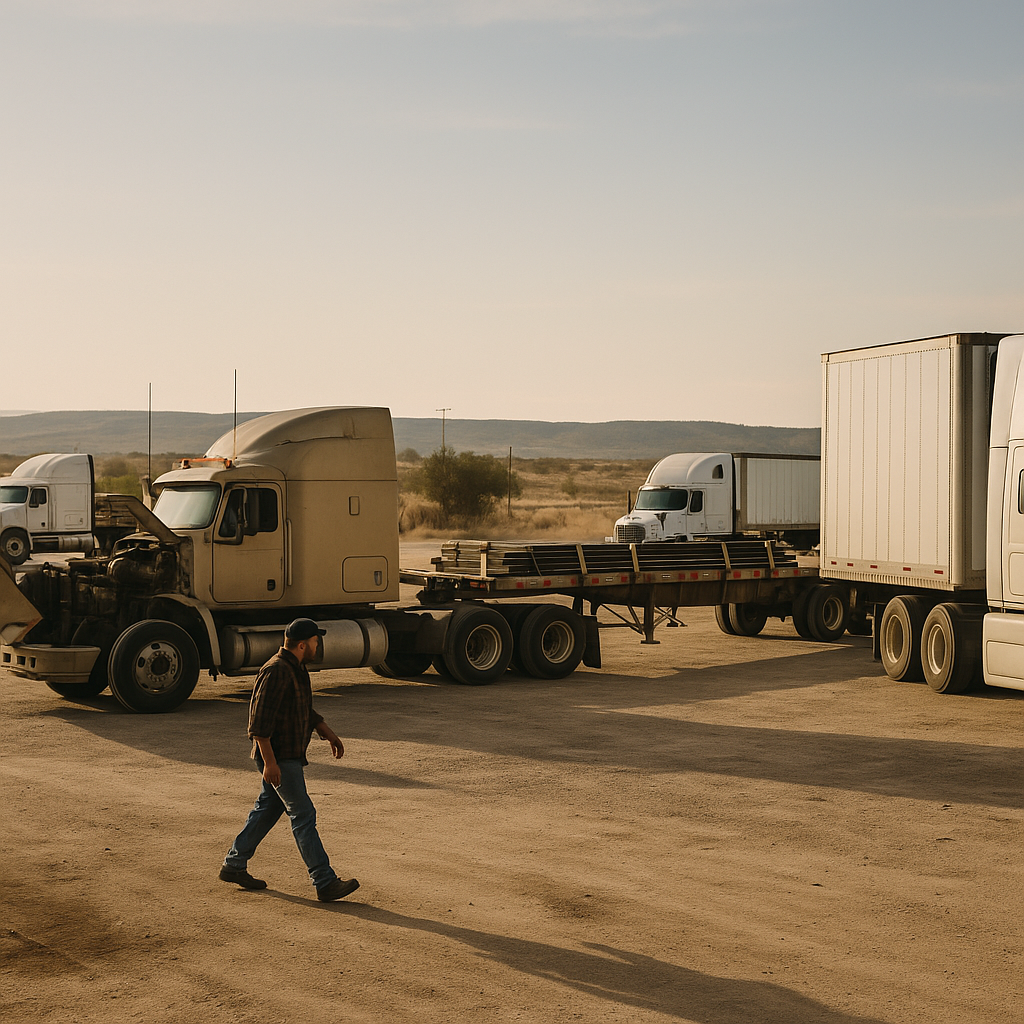
Flatbed hauling is different because the cargo rides exposed on an open deck instead of inside a trailer. That can increase weather exposure, securement risk, shifting-load claims, loading and unloading disputes, and theft risk on some commodities.
A dry van operator may worry more about sealed freight disappearing inside a box. A flatbed operator may be dealing with tarps, chains, straps, edge protectors, binders, and cargo that can be damaged by movement, water, or improper securement even when the truck itself isn’t badly damaged.
Coverage gaps to watch for#
A common gap is trying to use a personal auto policy for a truck that hauls freight for money. Another is carrying cargo coverage that doesn’t match what you actually haul, like assuming “general freight” wording automatically fits higher-risk flatbed commodities.
Trailer issues get missed too. If you pull someone else’s trailer, you may need trailer interchange or non-owned trailer physical damage depending on the arrangement.
When that mismatch shows up, it usually happens at the worst time: a roadside check, a shipper certificate request, or a denied claim after a load is damaged. If you’re not sure what actually fits your operation,
Do You Need Commercial Insurance for a Flatbed Truck?#
Yes, you generally need commercial insurance for a flatbed truck when you use it to haul freight for business. Personal auto usually doesn’t fit a working flatbed, and once you operate for-hire, under authority, or across state lines, compliance gets stricter.
The key question is not just what the truck looks like. It’s how you use it.
Personal auto vs commercial auto#
A personal auto policy is built for personal driving like errands, commuting, or family use. A commercial auto policy is built for business use, including hauling freight, business-owned vehicles, higher liability exposure, and trucking-specific filings when needed.
So if you own a flatbed and only use it on private property or for limited non-commercial purposes, that’s one situation. But if you use that same truck to pick up a paid load of rebar, equipment, or lumber, you’re in commercial territory.
Intrastate and interstate hauling#
Intrastate means you operate only within one state. Interstate means your operation crosses state lines or can be treated as part of interstate commerce.
A Texas owner-operator hauling steel from Houston to Dallas under a local contract may be dealing mainly with Texas intrastate rules and shipper requirements. That same truck hauling pipe from Texas into Oklahoma under for-hire authority can trigger federal FMCSA requirements too.
When the truck’s use makes coverage commercial#
The truck becomes a commercial exposure when it’s part of business hauling, even if you’re a one-truck operation and even if you book loads from the cab yourself. Owning one truck instead of five doesn’t make the risk personal.
Practical example: if you use a pickup with a personal policy to pull a trailer for occasional home projects, that’s one risk. If you use a flatbed tractor to haul construction materials for pay, issue certificates, and move under dispatch, that’s a commercial trucking risk.

Texas Rules vs FMCSA Requirements#
Texas rules and FMCSA requirements are not the same thing. Texas intrastate operations may follow state rules, while for-hire interstate carriers must meet federal financial responsibility rules, and those federal minimums change based on carrier type, vehicle weight, and cargo.
This is where a lot of owner-operators get tripped up. Your state minimum isn’t automatically your federal minimum.
State minimums and who sets them#
Texas commercial insurance rules are shaped at the state level, and the Texas Department of Insurance is the right source for state insurance guidance. For intrastate operations, Texas requirements and contract demands can shape what you need even if you never leave the state.
But “what Texas allows” and “what your operation requires” are not always the same. A broker, shipper, or load board may require higher limits or specific coverages beyond a bare minimum.
Federal requirements for interstate motor carriers#
The FMCSA regulates interstate motor carriers, and federal financial responsibility rules are laid out under 49 CFR Part 387. MCS-90 is a federal endorsement tied to certain public liability requirements for motor carriers.
Under 49 CFR Part 387, for-hire interstate carriers hauling general freight in vehicles over 10,001 lbs must carry at least $750,000 in public liability. Some operations require more: carriers over 10,001 lbs hauling certain hazardous materials can require $5,000,000, and auto haulers typically require $1,000,000. For vehicles under 10,000 lbs, the minimum can be $300,000 depending on the operation.
Why the wrong minimum can leave a gap#
A Texas operator may hear “I only need the state minimum” and buy a policy that looks cheap but doesn’t satisfy federal filing requirements once interstate hauling starts. Or a driver may assume “all truckers need $750K,” when their commodity, equipment, or operation actually points somewhere else.
A flatbed example makes this easier to see. A one-truck operator hauling building materials only inside Texas may be looking at one compliance path. That same operator adds interstate loads, gets an MC number, files for authority, and now needs to make sure the liability policy supports the federal side too.
Your DOT number is your USDOT registration identifier, and an MC number is operating authority for certain for-hire interstate operations. If your operation changes, your insurance has to change with it.
How Much Flatbed Insurance Costs#
Flatbed truck insurance in Texas does not have one standard price because the premium depends on your operation. Two flatbed owner-operators with similar trucks can get very different quotes based on cargo, lanes, authority status, truck value, driving history, garaging ZIP code, and the coverages they choose.
That’s why generic numbers from forums usually create more confusion than clarity. Flatbed is too operation-specific for that.
Main factors that move the price#
Your truck’s value affects physical damage cost because a newer or financed truck usually costs more to insure than an older paid-off unit. Cargo type matters too because hauling steel coils, machinery, building products, or other heavy open-deck freight can create different loss patterns than lighter, less exposed loads.
Your driving record matters because insurers price around claim history, violations, and overall experience. Your operating radius and lanes matter because running dense metro traffic, oilfield corridors, or longer interstate routes can change both liability exposure and claim frequency.
Your ZIP code also matters because garaging location can affect theft, weather, repair cost, and legal environment. Authority type matters because a new venture under its own authority is different from a leased-on operator who may only need part of the coverage stack.
Why two Texas flatbeds can get very different quotes#
One Texas flatbed may run short-haul building materials around San Antonio and return home most nights. Another may run interstate machinery loads from Dallas through multiple states with higher truck value, broader radius, and stricter shipper requirements.
Even if both drivers have clean records, the second operation can look different on paper because the lanes are longer, the cargo may be more specialized, and the contract requirements may push higher limits or added coverages. That’s why comparing only total premium misses the real story.
A lower quote can be lower because the cargo limit is thin, the deductible is much higher, the trailer exposure is missing, or off-dispatch use isn’t set up correctly.
Practical ways to lower cost without creating gaps#
There are smart ways to control cost, but they start with accuracy. If your application reflects your real lanes, cargo, garaging, and use, you have a better shot at a policy that fits instead of one that surprises you later.
You may lower cost by choosing a deductible you can actually absorb, tightening safety habits, cleaning up loss history over time, and carrying only the coverages your operation really needs. For example, a leased-on driver may not need the same structure as a new-venture carrier with their own authority.
Another practical move is making sure you’re not paying for the wrong package. Some operators ask for everything because they’re unsure, while others strip too much out and expose the business. The better approach is to match the policy to how the truck actually runs.
Flatbed Coverage Gaps Texas Owner-Operators Should Avoid#
Most flatbed claim surprises happen because the operator assumed one coverage protected something else. The truck, the trailer, and the cargo are separate exposures, and flatbed work adds extra ways for those lines to get blurry.
That’s why the details matter more than the label on the quote.
Cargo limits and exclusions#
Cargo insurance may not automatically cover every commodity you can strap to a deck. Some loads bring tighter underwriting, tighter exclusions, or limit issues that don’t show up until a claim.
A practical example: if a load shifts because of a securement problem, the argument may center on whether the loss came from a covered transit event, improper securement, or a policy exclusion. Tarp-related water damage, theft from an unattended load, or damage during loading can also become problem areas if the wording isn’t right.
Trailer and equipment exposure#
Your tractor is not your trailer, and the trailer is not the freight. If you borrow, rent, or pull someone else’s trailer, you need to confirm whether you need trailer interchange or non-owned trailer physical damage.
For many non-intermodal owner-operators, non-owned trailer physical damage is the more relevant conversation because it does not require a signed interchange agreement. Trailer interchange usually does.
Non-trucking use and downtime#
Non-trucking liability helps only during non-business use. It does not cover paid hauling, dispatch-related movement, or regular business activity.
A common mistake is assuming bobtail or non-trucking coverage protects every time the trailer is off. It doesn’t. If you’re driving to pick up a load or moving for business, that is not personal use.
Policy mismatch examples#
A Texas flatbed operator hauls lumber locally but occasionally takes machinery out of state without updating the policy. Another carries cargo coverage but never adds trailer protection for borrowed equipment.
Both can think they’re covered until a contract review, roadside issue, or claim exposes the mismatch. On flatbed work, those mismatches show up fast.
How to Compare Quotes for a Flatbed Policy#
The best flatbed quote is not the one with the lowest premium on page one. It’s the one that matches your actual operation, meets your compliance needs, and doesn’t leave obvious cargo, trailer, or use gaps hiding in the details.
A small difference in premium can mean a big difference in protection. That’s why quote comparison should start with coverage fit, not just price.
What to compare beyond price#
Compare liability limits, cargo limits, deductibles, physical damage terms, trailer-related coverage, and any notable exclusions. If one quote looks lower, ask exactly what was removed or tightened.
For a flatbed, cargo wording matters a lot. So does whether off-dispatch use is set up correctly and whether the policy fits your authority structure.
Questions to ask before binding#
Ask whether the policy fits the commodities you actually haul, the lanes you run, and the trailer setup you use. Ask what happens if you add interstate loads, change from leased-on to your own authority, or start pulling a non-owned trailer more often.
Also ask how certificates are handled and how fast policy changes can be made. A busy owner-operator doesn’t have time for vague answers when a shipper is waiting on proof of coverage.
When a quote is probably too thin#
If the quote is dramatically cheaper but no one has clearly explained cargo terms, trailer exposure, or compliance filings, slow down. Thin quotes often look fine until something changes in the operation.
This is also a good time to verify your operating status on SAFER and make sure the insurance structure lines up with how your authority is actually set up.
Ways to Pay Less Without Underinsuring#
You can often pay less for flatbed truck insurance in Texas by tightening the operation, not by gutting the policy. The safest savings usually come from better risk control, accurate application details, and coverage choices that fit the real job.
Small changes that may help#
A higher deductible can help if you could realistically handle that out-of-pocket cost after a loss. Accurate garaging, mileage, radius, and cargo details can also prevent being priced for a broader risk than you actually run.
Operational habits that reduce risk#
Clean inspections, safer driving habits, stronger securement discipline, and fewer preventable claims help over time. Better documentation around loads, tarping, and trailer condition can help too.
What not to cut#
Don’t cut core liability just to chase a lower bill, and don’t assume cargo is optional if your contracts or freight exposure say otherwise. Cheap up front can get expensive fast if the policy doesn’t match the work.
What to Ask Before You Buy#
Before you buy flatbed truck insurance in Texas, ask a few direct questions that confirm coverage fit, compliance, and support. This can save you from buying a policy that looks acceptable on a phone screen but falls apart when a shipper, lender, or claim puts it under pressure.
Coverage fit questions#
Ask: Does this policy fit my cargo, lanes, trailer use, and authority type? Does it cover the kind of flatbed freight I actually haul, or just a narrower class?
Compliance questions#
Ask whether the policy is built for intrastate Texas work, interstate authority, or both. Confirm any needed filings and make sure the liability setup matches your real operation.
Claims and support questions#
Ask how claims are handled, how fast certificates can be issued, and what happens if your operation changes mid-policy. If you’re not sure what coverage fits your operation, LogRock can help you scope it.
FAQ#
Do you need commercial insurance for a flatbed truck?
Yes, if the flatbed truck is used for business hauling, you generally need commercial insurance. A personal auto policy usually is not built for hauling freight for pay, using the truck under dispatch, or meeting shipper, lender, or authority requirements. If you operate only within Texas, your needs may follow a different compliance path than an interstate carrier, but it’s still commercial if the truck is being used for business. If you cross state lines or operate for-hire under authority, FMCSA-related requirements can also apply.
How much is flatbed insurance?
Flatbed insurance costs vary widely because the premium depends on the truck, the freight, the driver, and the operation. Insurers usually look at truck value, cargo type, driving record, operating radius, garaging ZIP code, authority type, prior losses, and the limits and deductibles you choose. A local Texas flatbed hauling basic building materials may price very differently from an interstate operation hauling heavier or more specialized loads. The useful way to compare cost is not chasing a generic number but checking what each quote actually includes.
What coverages do flatbed operators usually need?
Most flatbed operators look at a package that includes auto liability, motor truck cargo, physical damage, and non-trucking liability when it fits the setup. Some also need general liability, especially if contracts or business operations call for it. Trailer-related coverage is another area to confirm because pulling a borrowed or non-owned trailer can create a separate exposure from the truck itself. The right mix depends on whether you’re leased on or operating under your own authority, what cargo you haul, and whether you run intrastate or interstate.
What is the difference between Texas requirements and FMCSA requirements?
Texas requirements generally frame intrastate operation, while FMCSA requirements apply to certain interstate motor carriers. Federal rules under 49 CFR Part 387 set minimum financial responsibility based on factors like carrier type, vehicle weight, and cargo, so there is no one-size-fits-all number for every trucker. That means a policy that seems fine for one Texas-only setup may not satisfy federal filing requirements once the operation starts hauling interstate freight. The safe approach is to scope the insurance to the actual operation, not to a rumor about “minimum coverage.”
Why is flatbed cargo insurance different from other trucking cargo coverage?
Flatbed cargo insurance is different because open-deck freight is exposed in ways enclosed freight often is not. Weather, tarping issues, securement failures, shifting loads, theft, and loading damage can all matter more on flatbed work. The cargo itself can be heavier, oddly shaped, or more vulnerable to edge damage and movement than standard boxed freight. Because of that, the commodity, the securement practices, and the policy wording matter a lot. A flatbed operator should confirm that the cargo policy fits the actual loads being hauled, not just a broad assumption about “general freight.”
Can a flatbed policy cover trailer and equipment damage too?
Yes, but not always automatically. Physical damage covers your truck, while trailer-related damage can require separate review depending on whether you own the trailer, borrow it, or pull one under a specific agreement. If you use a non-owned trailer, non-owned trailer physical damage may be the relevant coverage. If you operate under a signed interchange agreement, trailer interchange may apply instead. Equipment exposure can also depend on what is scheduled and how the policy is written, so it’s worth confirming before a claim forces the issue.





