
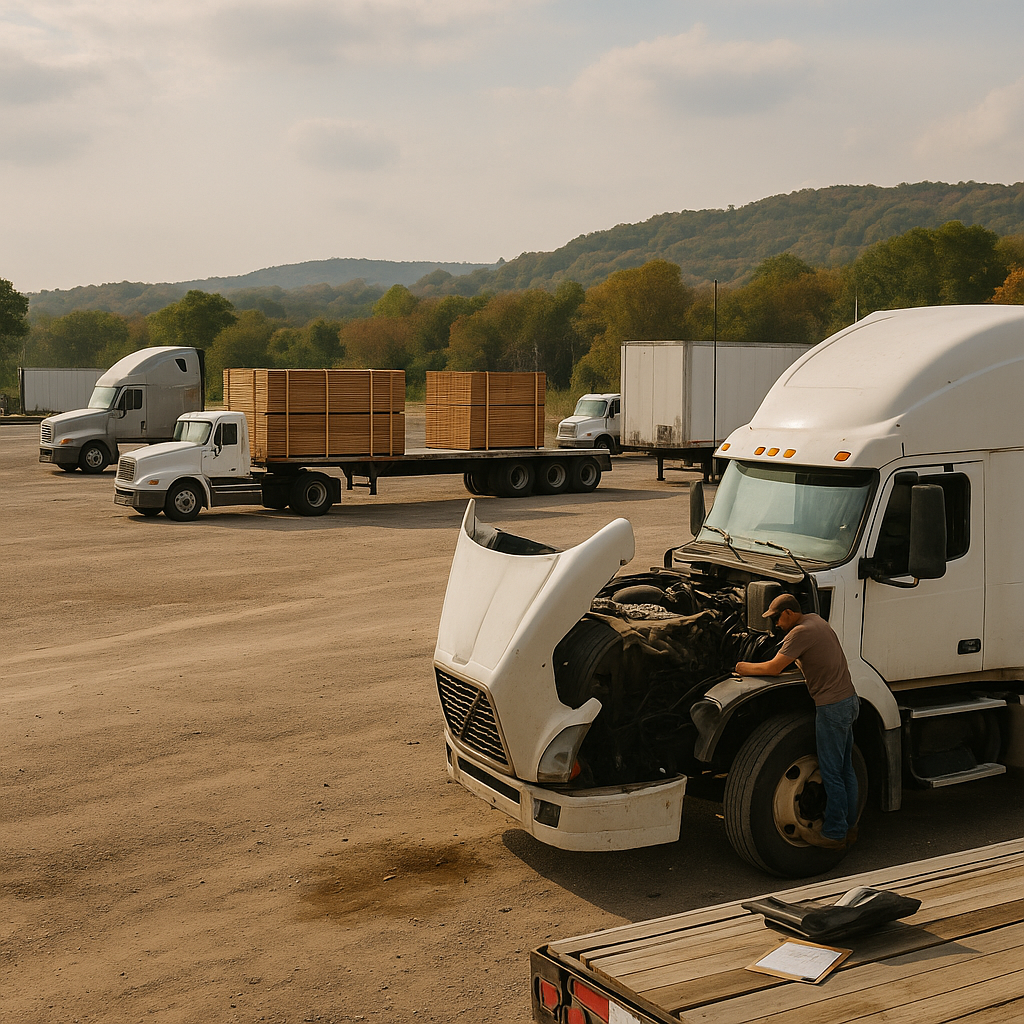

Flatbed trucking insurance in Arkansas isn’t just “truck insurance with cargo added.” For flatbed owner-operators and small fleets, the way you haul matters: open-deck freight, securement, weather exposure, trailer use, and whether you run interstate or intrastate all change what coverage fits and what can go wrong.
Flatbed Trucking Insurance in Arkansas: What It Covers and Why It Costs What It Does#
Flatbed trucking insurance in Arkansas is a commercial insurance package built around open-deck hauling operations, not a one-size-fits-all policy. The right setup usually combines auto liability, cargo, physical damage, and sometimes general liability or trailer-related coverage, depending on how the truck actually runs.
A flatbed trucking insurance package is a set of commercial trucking coverages built for operators hauling exposed freight on open trailers. In plain terms, it’s meant for work where the cargo is strapped, chained, tarped, loaded from the side or top, and more exposed than freight inside a dry van.
The risk looks different from van freight. Open-deck loads can shift, get wet, rust, tear a tarp, attract theft, or get damaged during loading and unloading in ways that create claim fights later.
What makes flatbed risk different#
A flatbed claim often turns on details that wouldn’t matter as much with enclosed freight. Was the load properly secured, were edge protectors used, did the shipper load it, was the tarp torn before pickup, and is there proof of the cargo condition before departure?
That’s why two Arkansas operators with the same truck can see very different coverage recommendations. A single-truck owner-operator hauling steel coils interstate has a different exposure than a local Arkansas hauler moving bundled lumber within the state.
The coverages most Arkansas flatbed operators need to evaluate#
Auto liability is coverage for bodily injury and property damage you cause to others with the truck. It’s the core coverage tied to legal and regulatory requirements.
Motor truck cargo covers freight you’re hauling for someone else, subject to the policy’s terms, limits, and exclusions. For flatbed work, that wording matters because open-deck cargo can bring extra disputes around weather, tarping, securement, rust, and dampness.
Physical damage covers damage to your own truck, usually through collision and comprehensive or fire and theft with combined additional coverage. General liability covers certain business-related third-party injury or property damage claims outside the direct use of the truck.
Some operators also need trailer interchange, which covers a trailer in your care under a signed interchange agreement, or non-owned trailer physical damage, which can fit when you’re using a trailer you don’t own without that kind of signed interchange setup. The NAIC’s plain-language insurance guidance is useful for understanding how policy structure and exclusions work before you buy coverage from NAIC.
Where people overbuy or underbuy#
The common mistake isn’t always buying too little. Sometimes it’s buying a compliance-only package when the freight risk says otherwise, and sometimes it’s piling on coverages that don’t match the operation.
Example: one Arkansas flatbed owner-operator leased on to a motor carrier may only need certain coverages because the carrier provides primary liability under dispatch. Another owner-operator running under their own authority may need a broader package because they handle their own liability, cargo exposure, and filings.
The expensive mistake is finding that out after a loss. If you’re not sure what coverage fits your operation,

Arkansas Rules That Matter: Interstate vs. Intrastate, Filings, and the “New Insurance Law” Question#
The Arkansas “new insurance law” question usually gets answered too loosely. What matters most is whether your flatbed operation falls under Arkansas-only rules or federal motor carrier rules, because state minimums and FMCSA requirements are not the same thing.
Interstate means you transport property across state lines or in a movement tied to interstate commerce. Intrastate means the transportation stays within one state and is governed primarily by that state’s rules.
What changed, and what did not#
A lot of confusion comes from drivers hearing that “Arkansas changed the law” and assuming one rule now applies to everybody. In practice, the real question is still operational: are you for-hire or private, what kind of truck are you using, what are you hauling, and does the work cross state lines?
That means one Arkansas flatbed operator may need federal filings tied to interstate authority, while another may be dealing mainly with Arkansas-only requirements. Before you bind coverage, verify which system you fall under so your policy is built for the right filings from the start.
When FMCSA rules apply#
If you operate interstate as a for-hire motor carrier, federal financial responsibility rules can apply. Under 49 CFR Part 387, for-hire interstate carriers hauling general freight in vehicles over 10,001 pounds must carry at least $750,000 in public liability, while other operations can be subject to different minimums based on weight, commodity, and carrier type.
That doesn’t mean all truckers need the same liability limit. It means your requirement depends on what you haul and how you operate. You can also verify operating status and related authority information through SAFER and broader federal guidance from FMCSA.
When Arkansas-only operation rules apply#
If you run intrastate only in Arkansas, don’t assume FMCSA rules automatically control your insurance just because you drive a commercial truck. At the same time, if you haul interstate freight, don’t assume an Arkansas state minimum handles your federal requirement.
A practical example helps. A local Arkansas flatbed hauling materials only inside the state may be dealing with Arkansas-specific rules. A small Arkansas-based owner-operator taking loads into Missouri, Oklahoma, or Texas is in a different category and needs the policy and filings to match.
The costly mistake is buying first and asking later. Filing requirements should be confirmed before the policy is bound, not after your authority stalls or a shipper asks for proof you don’t have.
How Much Flatbed Insurance Costs in Arkansas#
Flatbed insurance cost in Arkansas depends on your operation, not a single statewide average. Your driving record, authority status, cargo type, garaging location, route radius, truck value, selected limits, and deductibles all push the quote up or down.
Deductible means the amount you pay out of pocket on a covered loss before insurance responds. A higher deductible can lower premium, but it also means more cash has to come out of your business fast after a claim.
Cost drivers that move the quote#
Flatbed work can price differently because the freight is exposed. Weather, theft, shifting loads, strap or chain issues, loading damage, and claim disputes over cargo condition all affect how underwriters view the risk.
Garaging and operating area matter too. A truck based near a busier freight corridor, larger metro traffic, or theft-prone area may not be viewed the same as one running a tighter local radius out of a smaller Arkansas market.
The truck and trailer setup also matter. A newer power unit with a higher stated value changes physical damage cost, and different trailer arrangements can affect whether you need extra protection for equipment you don’t own.
Why new authority often pays more than established operations#
A new authority is a motor carrier operating under its own recently activated authority rather than leasing on to another carrier. New authority often prices higher because there’s less operating history, less claims history to review, and more uncertainty about dispatch pattern, freight mix, and safety controls.
Compare two examples. Driver A just got authority, has one truck, no losses, and plans to haul mixed flatbed freight across several states. Driver B has been operating a single truck for years, has a clean record, stable lanes, and documented experience in the same freight type.
Both may be good operators, but the new authority usually looks less predictable to an underwriter. That’s one reason averages can mislead.
How cargo limits and deductibles change cost#
Cargo pricing changes with the type of freight, the limit you want, your claims background, and how exposed the freight is in transit. A higher cargo limit can raise cost, but the wrong limit can leave you short if the load value is higher than your policy can absorb.
Physical damage value matters the same way. Insuring a truck for more value generally costs more, and changing from a lower deductible to a higher one can reduce premium while increasing cash-flow pressure after a covered loss.
General liability can change the package too, especially if your work brings exposure outside pure driving. That’s why the right question isn’t “What’s the average?” It’s “What does this operation need, and what risk am I keeping if I lower coverage?”
How Cargo Exposure Changes Coverage Decisions on Open-Deck Freight#
Open-deck freight changes claims because the cargo stays visible, secured, and exposed during transport. That means flatbed cargo losses often turn on securement, tarping, weather, surface condition, and paperwork in a way enclosed freight often does not.
Cargo securement is the use of straps, chains, binders, tarps, edge protection, and related methods to keep a load stable and protected in transit. Insurance can help with covered cargo losses, but it does not replace proper securement practices or proof that you handled the load correctly.
Securement, tarp, and weather-related claim issues#
Think about a common Arkansas flatbed scenario. You pick up a steel load on a dry afternoon, run through rain overnight, and deliver with visible moisture or surface issues. If the receiver claims rust, dampness, or tarp failure, the claim may depend on policy wording and your documentation.
Same with lumber, machinery, or fabricated materials. If a strap cuts an edge, a tarp tears, or a chain placement damages the freight, the dispute can become: was it road hazard, improper securement, pre-existing condition, or an excluded cause?
Photos help. So do pickup notes, bills of lading remarks, and records showing how the load was secured before departure and what it looked like at delivery.
Cargo insurance limits and exclusions to review#
The cheap version of cargo insurance can become the expensive version after a loss if the wording doesn’t fit flatbed work. Some cargo losses may be excluded, limited, or challenged based on weather exposure, rust, dampness, improper securement, or missing proof of condition.
That doesn’t mean cargo insurance is useless. It means you should read what it actually covers, what it excludes, and whether the limit matches the freight values you realistically haul.
If you routinely move freight where tarping and exposure are central to the job, ask direct questions. Does the policy fit open-deck hauling, and what documentation will matter if a cargo claim is filed?
When trailer interchange or non-owned trailer physical damage fits#
Trailer interchange covers physical damage to a trailer you use under a signed trailer interchange agreement. Non-owned trailer physical damage covers certain damage to a trailer you don’t own when you’re using it, typically without that signed interchange arrangement.
This matters for flatbed operators more than many people realize. If you’re regularly pulling someone else’s trailer, don’t assume your main truck policy automatically handles trailer damage the way you think it does.
A lot of non-intermodal owner-operators really need the non-owned trailer discussion, not trailer interchange. The right answer depends on whose trailer it is, whether there’s a signed agreement, and what your dispatch arrangement looks like.
What Flatbed Operators Can Skip, What They Should Keep, and Where Mistakes Happen#
Not every flatbed operator needs every coverage on day one, but cutting coverage should be a deliberate choice tied to the operation. The safest approach is to separate true must-haves, situational add-ons, and coverages people misunderstand.
Bobtail generally refers to liability when operating a tractor without a trailer. Non-trucking liability covers certain non-business use, not paid hauling or dispatch-related work.
Leased-on versus independent owner-operator choices#
A leased-on owner-operator often relies on the motor carrier’s primary liability while under dispatch, but that doesn’t mean every gap disappears. You still need to understand what the carrier’s policy covers, what it doesn’t, and what your agreement pushes back onto you.
An independent owner-operator under their own authority carries more direct responsibility. Liability, cargo, filings, and equipment protection usually sit more squarely on that operator’s own insurance setup.
That’s why two drivers with the same truck can need different policies. The lease arrangement changes the insurance job.
When GL matters for flatbed work#
General liability covers certain third-party bodily injury or property damage claims arising out of business operations other than the direct use of the truck. For flatbed work, that can matter if your business exposure extends beyond simply driving from pickup to delivery.
If you interact with yards, customers, loading areas, or business premises in ways that create non-auto liability exposure, GL may still matter. It isn’t always legally required the way auto liability can be, but it can still be part of a smart package.
Common policy gaps that show up after a loss#
The big mistakes are familiar. Drivers assume personal auto covers a commercial truck, assume Arkansas state minimums automatically satisfy federal authority, or assume bobtail or non-trucking liability protects cargo. It doesn’t.
Another common miss is thinking collision can stand alone. Physical damage is typically written as collision paired with comprehensive or fire and theft with combined additional coverage, not as a standalone shortcut.
Before you bind, review:
- Authority status and whether you’re leased-on or running your own authority
- Interstate or intrastate operation
- Liability limit and required filings
- Cargo limit, exclusions, and deductible
- Truck and trailer physical damage setup
- Whether you need non-owned trailer or trailer interchange protection
- Any endorsements tied to flatbed freight, tarping, or securement
How to Shop Arkansas Flatbed Insurance Without Buying the Wrong Policy#
Shopping Arkansas flatbed insurance gets easier when you compare coverage fit first and price second. Two quotes can look close on monthly spend but be far apart on filings, deductibles, exclusions, trailer protection, and cargo wording.
A filing is the insurer’s proof to a regulator that required insurance is in force for a motor carrier authority or operating requirement. If the filing is wrong or missing, the policy may exist but still fail the job you bought it for.
What to collect before requesting quotes#
Bring the details that actually shape the quote:
- USDOT and MC number, if applicable
- Whether you’re new authority, established authority, or leased-on
- Interstate or intrastate operation
- Main freight types and any unusual cargo
- Power unit year, make, model, and value
- Trailer ownership or non-owned trailer use
- Driver history and prior loss history
- Typical radius and operating states
That upfront detail helps prevent the classic “cheap quote, wrong setup” problem. It also makes it easier to compare one option against another on real terms instead of guesswork.
Questions to ask about exclusions and filings#
Ask direct questions, especially if the quote looks surprisingly low. What filings are included, what cargo causes or conditions are limited, what deductible applies, and what happens if you use a non-owned flatbed trailer?
This is where operating status matters. Federal authority, insurance filings, and carrier compliance status all connect, which is why general regulatory context from U.S. DOT matters when you’re trying to understand why the policy has to match your operating setup.
A practical example: a new Arkansas flatbed authority gets a low quote, but the cargo wording is narrow and the deductible is much higher than expected. Another quote costs more, but it fits the filings, trailer use, and cargo profile better. On paper they both look like “insurance.” In practice, they’re not the same product.
How to compare options without focusing only on monthly cost#
Use a simple comparison.
| Comparison point | Quote A question | Quote B question | Why it matters |
|---|---|---|---|
| Compliance fit | Does it match authority and operation? | Does it match authority and operation? | Wrong fit can stall authority or create gaps |
| Cargo wording | Does it fit open-deck freight? | Does it fit open-deck freight? | Cheap cargo can fail on real flatbed claims |
| Deductibles | What do you pay after a loss? | What do you pay after a loss? | Lower premium can mean more cash risk |
| Trailer coverage | Is non-owned or interchange handled? | Is non-owned or interchange handled? | Trailer damage gaps are common |
| Switching impact | What do you lose by changing? | What do you lose by changing? | Lowest price can strip useful protections |
Price matters. But the better question is what happens on your worst Tuesday, not your best month.
A renewing owner-operator with clean history should compare what the current policy already does well before switching. A new authority should focus first on correct setup, because a low premium doesn’t help if the coverage doesn’t match the operation.
Final Take: Build the Policy Around the Way Your Flatbed Actually Runs#
The right flatbed trucking insurance in Arkansas follows the operation, not a generic rule or forum shortcut. Open-deck freight, securement practices, cargo type, trailer arrangement, and interstate versus intrastate status all matter more than a bare minimum mindset.
For a single-truck owner-operator, the simple path is: define the freight, confirm authority status, match filings, then build cargo and equipment coverage around how the truck actually works. For a small fleet, do the same thing truck by truck, then check whether all drivers, trailers, and route patterns still fit the policy.
Revisit coverage when the business changes. Adding trucks, changing freight, expanding beyond Arkansas, switching from leased-on to own authority, or taking on different trailer arrangements can all change what you need.
FAQ#
How much is flatbed insurance?
Flatbed insurance cost depends on the operation, not one standard Arkansas number. Underwriters look at authority status, driving record, cargo type, route radius, where the truck is garaged, the truck’s value, selected limits, and deductibles. Flatbed work can also price differently from enclosed freight because open-deck cargo brings extra exposure around weather, securement, theft, and loading damage.
A new authority often pays more than an established operator with clean experience and stable lanes, even if both have one truck. The useful way to shop is to compare coverage fit, filings, deductibles, and cargo wording, then weigh the premium against the risk you’re keeping.
What is the new insurance law in Arkansas?
Most of the time, drivers asking about the “new insurance law” in Arkansas are really asking which rules apply to their operation. The key split is Arkansas-only intrastate operation versus interstate operation subject to federal motor carrier rules. Those are not the same thing, and the filing needs can differ.
If you’re a for-hire interstate carrier, federal requirements under 49 CFR Part 387 may apply depending on vehicle weight and what you haul. If you’re intrastate only, Arkansas-specific rules may matter more. The safest move is to verify your operating status and filing requirements before binding coverage so you don’t buy a policy that misses the job.
How much does $100,000 cargo insurance cost?
The cost of $100,000 cargo insurance varies with the freight, not just the limit. Underwriters usually care about what you haul, how exposed it is to damage or theft, your claims history, your securement practices, and the deductible you choose. Open-deck hauling can price differently because cargo is visible and weather-exposed, and claim disputes may involve tarps, straps, rust, dampness, or shifting loads.
That’s why two flatbed operators can ask for the same cargo limit and get different pricing. One may haul stable, lower-risk freight on consistent lanes, while another hauls mixed loads with more weather or securement exposure. The limit is only one part of the picture.
What is the average cost of trucking insurance?
Average trucking insurance numbers can be misleading because they blend together very different operations. A leased-on owner-operator, a new authority, a local intrastate hauler, and an interstate flatbed carrier may all insure one truck, but the risk profile isn’t close to the same.
Your actual premium depends on your operation, cargo, radius, driving history, truck value, authority status, selected coverages, and whether you operate interstate or intrastate. Flatbed work adds its own layer because exposed freight can change both cargo risk and claim complexity. If you’re comparing options, use averages as background only, not as proof you’re overpaying or underpaying.
Do leased-on flatbed owner-operators need the same insurance as owner-operators with their own authority?
No. Leased-on flatbed owner-operators and owner-operators running under their own authority usually do not need the exact same insurance setup because responsibility shifts based on the carrier arrangement. A leased-on driver may rely on the motor carrier’s primary liability under dispatch, while still needing to handle other gaps depending on the lease and equipment situation.
An owner-operator with their own authority typically has more direct responsibility for liability, cargo, filings, and equipment protection. The mistake is assuming the truck itself determines the policy. In reality, the operating setup often changes the insurance job just as much as the freight type does.





