
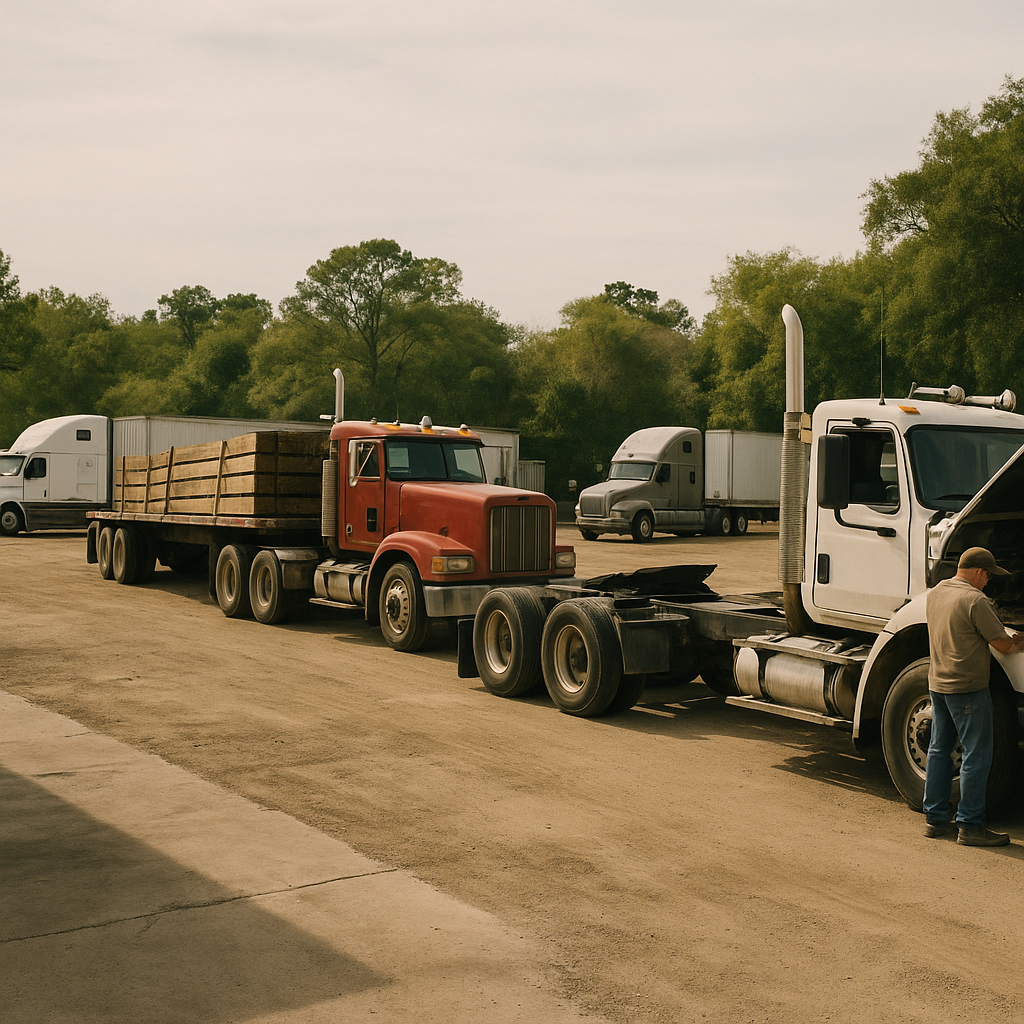

If you’re searching for flatbed trucking insurance in Louisiana, the biggest mistake is assuming a Louisiana state minimum or a personal auto policy will handle a working flatbed. It won’t. Flatbed operators usually need commercial trucking coverage scoped to how they haul, what they haul, and whether they run intrastate or interstate.
This guide breaks down what flatbed truck insurance covers, who needs commercial coverage, how Louisiana rules differ from FMCSA requirements, and what actually drives cost for owner-operators and small fleets.
What flatbed trucking insurance covers#
Flatbed trucking insurance in Louisiana usually combines several coverages, not one policy that does everything. For most flatbed owner-operators, the core pieces are auto liability, cargo, and physical damage, with other coverages added based on how the truck runs, what equipment is used, and whether the truck operates under its own authority or someone else’s.
Auto liability is the coverage that pays when your truck causes bodily injury or property damage to other people. Motor truck cargo is coverage for the freight you’re hauling for someone else. Physical damage covers damage to your truck, typically through collision and comprehensive or fire and theft with combined additional coverage. NAIC consumer guidance is useful here because it explains how deductibles, limits, and exclusions can change what a policy really does in a claim (NAIC).
Core coverages for flatbed operations#
Most Louisiana flatbed operators start with auto liability because it’s the foundation for road use and compliance. Then they look at motor truck cargo coverage for the freight and physical damage coverage for the truck itself.
General liability covers certain third-party claims that happen off the road, not crashes involving the truck itself. It can matter if shippers, yards, or contracts require it. Depending on the setup, some operators also look at trailer-related coverages, or non-trucking use coverage when they lease on and use the truck off dispatch.
Why open-deck hauling changes the risk#
Flatbed freight is exposed in a way dry van freight usually isn’t. Open-deck hauling means more exposure to weather, theft, shifting cargo, securement issues, and loading or unloading damage.
That doesn’t mean every flatbed policy is the same. A truck hauling steel, lumber, machinery, or building materials can present very different cargo and claims patterns, so the policy has to match the real haul profile.
When optional coverages matter#
Optional coverages matter when the truck isn’t used the same way every day. Non-trucking liability covers certain non-business use, and trailer interchange applies when you pull a trailer you don’t own under a signed interchange agreement.
Leased operators, financed trucks, and borrowed trailers usually need extra attention here. The right mix depends on truck use, cargo, authority status, and whether the truck is leased to a motor carrier.

Do you need commercial insurance for a flatbed truck?#
Yes, if the flatbed is being used for business hauling, you usually need commercial trucking insurance, not personal auto coverage. The real question isn’t whether the truck is a pickup or a tractor by itself. The question is how it’s being used, who it’s hauling for, and whether it’s operating under business authority or for-hire dispatch.
Personal auto vs commercial trucking insurance#
A personal auto policy is built for personal driving, not for-hire trucking. If you’re using a flatbed truck to haul loads for a business, personal auto coverage may exclude that use entirely.
That’s where many owner-operators get burned. A truck can look like a personal vehicle on paper but function like a commercial unit in real life. If the use is wrong on the policy, the cheap quote won’t matter when there’s a claim.
If you’re trying to sort out off-dispatch use, it’s also worth understanding the difference between bobtail insurance and other non-business-use setups, because those terms get mixed up constantly.
Carrier type and operating authority#
Whether commercial insurance is needed depends on whether you’re hauling for hire, operating under your own MC number, leased to another carrier, or using the truck only in a limited business role. MC number means your federal operating authority for certain for-hire interstate operations. USDOT number identifies the carrier in the federal safety system.
A one-truck owner-operator leased on to a carrier may need a different setup than a one-truck new authority. A two-to-five-truck fleet with mixed drivers and trailers can need a different structure again.
Misclassification mistakes that create gaps#
The biggest scoping mistakes are simple:
- Listing the wrong operation type
- Describing interstate hauling as intrastate
- Quoting the wrong cargo class
- Treating a working flatbed like a personal-use vehicle
- Assuming all trailer use is covered automatically
Those mistakes can create gaps even if the quote looks complete. The policy has to match the actual business.
Louisiana rules vs. FMCSA requirements#
Louisiana rules and FMCSA requirements are not the same thing. Louisiana can set state-level rules for registration, licensing, and insurance within the state, but interstate for-hire trucking is also subject to federal financial responsibility rules. Your required limit depends on carrier type, vehicle weight, cargo, and whether you operate interstate or intrastate.
What Louisiana can require#
Louisiana may have its own rules around vehicle registration, titling, and insurance expectations for trucks operating in the state. For vehicle and driver administration, operators often deal with state agencies such as the Louisiana Office of Motor Vehicles and the Louisiana Department of Insurance (Louisiana OMV, Louisiana Department of Insurance).
That state layer matters, but it doesn’t replace federal compliance when your operation falls under FMCSA rules.
What FMCSA requires for interstate trucking#
FMCSA requires certain interstate motor carriers to meet federal financial responsibility standards. Under 49 CFR Part 387, for-hire interstate carriers hauling general freight in vehicles over 10,001 pounds must carry at least $750,000 in public liability. Auto haulers require $1,000,000, and certain hazmat operations require $5,000,000. Vehicles under 10,000 pounds can fall under a lower federal minimum depending on the operation.
That’s why shorthand causes trouble. The real answer depends on the operation, not a one-size-fits-all number. If you want a clearer breakdown of auto liability requirements, start with carrier type, weight, cargo, and interstate status.
FMCSA’s main site is the right source for authority and insurance compliance context (FMCSA).
Why state minimums and federal rules are not the same#
A Louisiana state minimum does not automatically satisfy federal trucking rules. If you run interstate freight, federal requirements can control even if the truck is based in Louisiana.
This is where owner-operators get tripped up most often. They hear "Louisiana minimum" from one person and "all truckers need $750K" from another, and both can be wrong for the actual operation. Always scope by:
- For-hire or private use
- Interstate or intrastate operation
- Vehicle weight
- Cargo type
- Authority status
How flatbed insurance cost is determined#
Flatbed trucking insurance cost in Louisiana depends on the operation behind the truck, not just the truck itself. The main pricing drivers are driver history, lanes, garaging, truck value, cargo type, authority status, safety history, limits, and deductibles. Two flatbeds that look similar can price very differently if one hauls exposed steel interstate and the other runs shorter in-state building material loads.
The main rating factors#
Insurers usually start with the basics: who is driving, where the truck runs, how far it runs, what unit is insured, and what filings or coverages are needed. A new authority often prices differently from a leased-on owner-operator because the risk profile is different.
Truck value matters for physical damage. Limits and deductibles matter because they change how losses are shared. Garaging location can matter too, especially when theft, weather, or local loss patterns differ.
Why cargo and operation details matter#
Flatbed pricing can change fast when the freight is higher value, easier to steal, or more exposed to weather and securement problems. Open-deck hauling creates different cargo claims than enclosed freight, and that affects how underwriters look at the risk.
The same goes for loading and unloading habits. If the operation regularly deals with cranes, straps, chains, tarps, or high-touch jobsite deliveries, those details can affect how a policy should be scoped.
How to avoid overbuying or underinsuring#
The best way to compare quotes is to make sure every quote is built on the same facts. Before judging price, confirm the same operation type, liability setup, cargo assumptions, deductibles, and physical damage values.
That matters because one quote may look cheaper simply because it excludes something you thought was included. Your actual premium depends on your operation, cargo, radius, driving history, and other factors.
Common coverage choices for Louisiana flatbed operators#
Most Louisiana flatbed operators look at the same core set of coverages first: auto liability, cargo, and physical damage. After that, the right add-ons depend on whether the truck is leased on, financed, pulling borrowed trailers, or used off dispatch in ways that create separate exposure.
Auto liability and cargo#
Auto liability handles damage or injury you cause to others with the truck. Cargo handles covered loss to the freight you’re hauling.
Flatbed operators should verify the cargo description carefully. A broad label like "general freight" may not tell the full story if the truck regularly hauls steel, lumber, machinery, or other exposed commodities.
Physical damage for the truck#
Physical damage protects the truck itself if it’s damaged in a crash, fire, theft, vandalism, or certain other covered events. Financed trucks usually require this, but even paid-off equipment may need it if losing the truck would shut down the business.
Coverage options for leased or non-owned equipment#
If you’re leased to a motor carrier, ask whether off-dispatch use calls for non-trucking liability. If a shipper, terminal, or contract wants premises-related protection, check whether general liability for truckers applies to your operation.
If you pull trailers you don’t own, verify whether you need trailer interchange or another trailer physical damage setup. A one-truck owner-operator may need a much leaner setup than a small fleet with mixed equipment and multiple drivers.
How to compare quotes without mixing up coverage#
A cheap-looking flatbed quote is useless if it was built on the wrong operation. To compare prices fairly, make sure every quote uses the same carrier status, cargo class, limits, deductibles, territory, and truck details. If one quote assumes intrastate general freight and another assumes interstate flatbed steel hauling, you’re not comparing price. You’re comparing different policies.
What to verify before comparing prices#
Check these basics before you look at the number:
- Is the operation for-hire or private?
- Is it interstate or intrastate?
- What cargo class is being quoted?
- What liability limit is included?
- What deductibles apply?
- Is physical damage based on the same truck value?
- Are trailer-related exposures included or excluded?
You can also verify carrier details and operating status through SAFER, especially when authority, USDOT status, or fleet setup affects scoping.
Questions to ask an agent or broker#
Ask what cargo assumptions are on the quote. Ask whether the policy matches your actual lanes and radius. Ask whether the truck is being quoted as a new authority, a leased-on owner-operator, or a small fleet.
Also ask what is not included. That’s often where the real difference is.
Red flags in a fast quote#
Be careful when a quote comes back fast without much detail. Speed is fine. Guessing is not.
A good quote should reflect how the flatbed actually runs. If you’re not sure what coverage fits your operation, LogRock can help you scope it.
How to request a flatbed insurance quote in Louisiana#
A good flatbed insurance quote starts with clean information. Gather truck details, driver information, cargo type, operating radius, garaging location, and authority status before you ask for pricing. That helps prevent the back-and-forth that leads to mismatched quotes.
Information to gather first#
Have these ready:
- VIN and truck value
- Driver license details and driving history
- USDOT and MC information, if applicable
- Commodity and cargo description
- Typical lanes and operating radius
- Trailer ownership or borrowing details
How to describe your operation clearly#
Be plain about what you haul and how you haul it. "Flatbed general freight" may be too vague if most of your loads are machinery, coils, lumber, or building products.
Also say whether you’re leased on or running under your own authority. That one detail changes a lot.
What a good quote process looks like#
A solid quote process should feel more like scoping than guessing. The right questions should narrow the policy to your real operation, not force your operation into a generic trucking template.
FAQ#
How much is flatbed insurance?
Flatbed insurance doesn’t have one standard price because the premium depends on the operation behind the truck. Insurers look at driver history, years in business, authority status, garaging location, operating radius, truck value, commodity type, and the coverages and deductibles you choose. Flatbed work can also price differently from enclosed freight because open-deck cargo has more exposure to weather, theft, shifting, and securement-related claims. The only useful quote is one built around your actual hauling setup.
Do you need commercial insurance for a flatbed truck?
If the flatbed is used for business hauling, you generally need commercial insurance rather than a personal auto policy. Personal auto coverage is not designed for for-hire trucking and may exclude commercial use. Whether you need full trucking coverage depends on how the truck is used, whether you’re hauling under your own authority or leased to a carrier, and whether the truck operates intrastate or interstate. The key is matching the policy to the actual operation so you don’t end up with a coverage gap.
How much is commercial truck insurance in Louisiana?
Commercial truck insurance in Louisiana varies based on the carrier type, where and how the truck operates, driver history, cargo, truck value, and selected limits. Louisiana-based trucking also has to be scoped correctly against any FMCSA requirements if the operation is interstate or for-hire. That’s why two Louisiana trucks can get very different quotes even if they look similar on paper. To compare pricing fairly, each quote needs to use the same facts about authority, cargo, radius, liability limits, and deductibles.
How much does $100,000 cargo insurance cost?
A $100,000 cargo limit does not have one fixed price because the limit is only part of the rating. The cost also depends on what you’re hauling, how often you haul it, where the truck runs, your loss history, and the policy terms. A flatbed hauling lower-risk building materials may be viewed differently than one hauling higher-value machinery or theft-prone loads, even with the same cargo limit. The useful question isn’t just the limit amount. It’s whether the cargo policy actually matches the commodity and exposure.





