
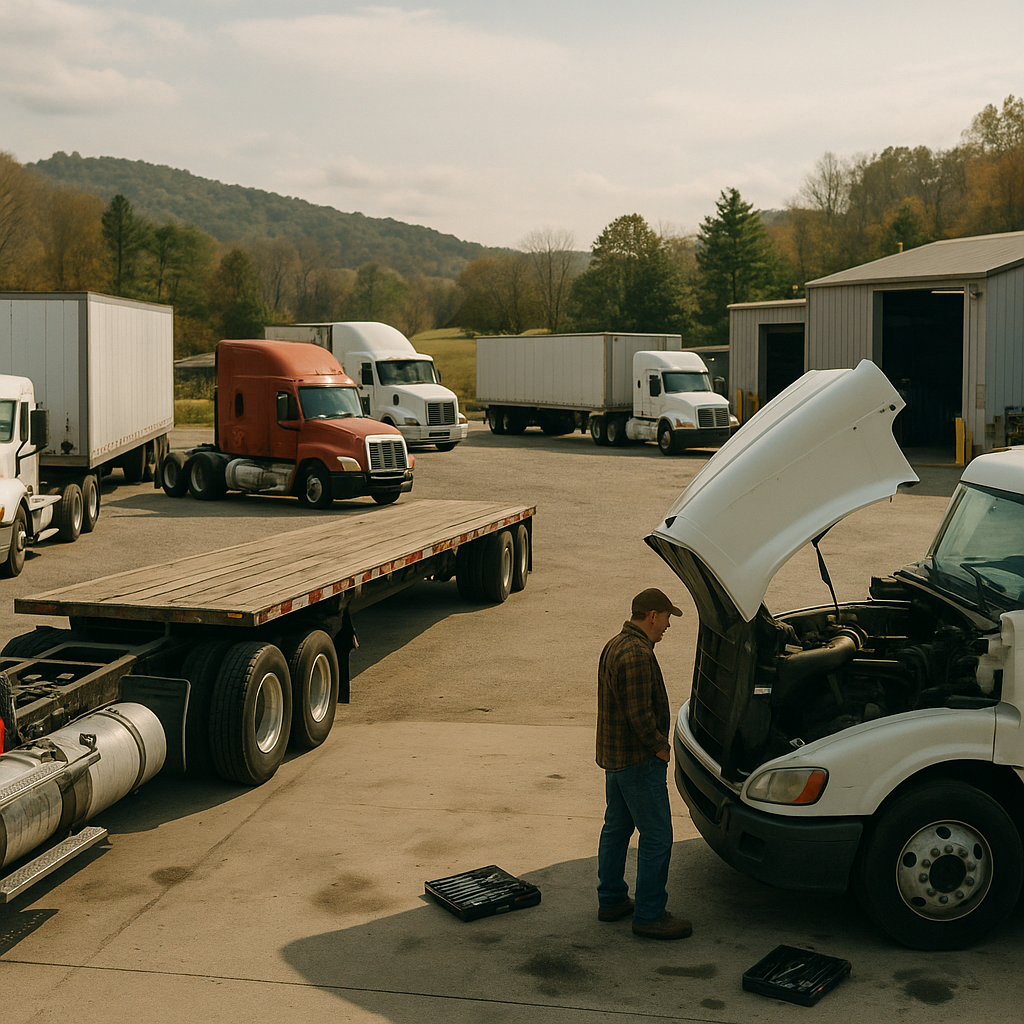

Flatbed trucking insurance in North Carolina isn’t one policy with one price. It’s a group of commercial coverages built around how you haul, what you haul, where you run, and whether your operation falls under North Carolina rules, FMCSA rules, or both.
What Flatbed Trucking Insurance Covers in North Carolina#
Flatbed trucking insurance in North Carolina usually means a commercial insurance package for a working truck, not a personal auto policy and not one blanket form. Most flatbed operators review auto liability, motor truck cargo, physical damage, and sometimes general liability, non-trucking liability, or trailer-related coverage depending on how the truck is used.
Flatbed trucking insurance is a commercial insurance package built for trucks used in business. A commercial auto policy is the policy that covers business vehicle liability and, when selected, damage-related coverages for the insured truck.
Why flatbed risk is different#
Flatbed risk is different because the freight sits out in the open. Weather, road debris, roadside theft, shifting cargo, and load securement issues create exposures that a dry van operator may not face the same way.
A load of steel, lumber, machinery, or building materials can bring more underwriting questions than boxed freight in an enclosed trailer. The insurer may want to know what commodities you haul, how often loads are tarped, who handles securement, and whether you stay local in North Carolina or run interstate lanes.
That matters in real life. Two owner-operators can both run one truck, both have decent records, and both say they “haul general freight.” If one hauls palletized goods in a van and the other hauls exposed machinery or construction materials on an open deck, the insurance conversation usually looks different.
Core coverages most flatbed operators review#
Auto liability pays when your truck causes injury or property damage to others in a covered crash. Motor truck cargo covers covered damage to freight you’re hauling for someone else, subject to the policy’s terms and exclusions.
Physical damage covers damage to your truck, and sometimes scheduled trailer, from causes like collision or comprehensive losses. General liability covers certain non-driving business liability exposures, which is why it isn’t the same as auto liability.
Non-trucking liability, often called bobtail by drivers, covers certain non-business use of the truck when you’re not under dispatch. Bobtail is often used loosely, but the main point is this: it does not cover paid hauling.
A deductible is the amount you pay out of pocket before covered physical damage or cargo coverage responds. The NAIC uses the term this way in plain-language insurance education, and it’s the number many quote shoppers focus on too early.
What coverage depends on your operation#
Your coverage mix depends on carrier type, truck weight, cargo, and whether you operate interstate or intrastate. Requirements vary by carrier type, vehicle weight, cargo, and whether you operate interstate or intrastate.
A single-truck owner-operator leased on to a motor carrier may need a different setup than a flatbed carrier running under its own authority. A North Carolina-based truck that only runs in-state can have a different compliance path than a truck crossing into South Carolina, Virginia, Tennessee, or beyond.
That’s where people get tripped up. They hear “all truckers need the same thing,” buy around a shortcut, and end up comparing quotes that don’t insure the same operation at all.
North Carolina Requirements: State Rules vs FMCSA Rules#
North Carolina flatbed operators need to separate state insurance rules from federal FMCSA rules. If you run interstate for-hire trucking, federal financial responsibility rules often control the liability minimum you need, while intrastate operations may be shaped more by state rules and your actual business setup.
Who sets the rule you actually follow#
FMCSA is the Federal Motor Carrier Safety Administration, the agency that oversees many federal trucking rules. A USDOT number is the identifier used for safety monitoring, and an MC number is operating authority used for certain for-hire interstate carriers.
For interstate trucking, the rule that matters most often comes from federal law, not a driver forum or a state minimum listed for ordinary vehicles. Under 49 CFR Part 387, for-hire interstate carriers hauling general freight in vehicles over 10,001 lbs must carry at least $750,000 in public liability. That same federal framework also includes different minimums for lighter vehicles, auto haulers, and certain hazmat operations.
When federal trucking requirements apply#
If a North Carolina owner-operator hauls flatbed freight across state lines under their own authority, FMCSA rules usually matter right away. The same goes for a small 3-truck fleet based near Charlotte or Greensboro that picks up local loads some weeks but also runs interstate jobs when the freight is there.
A one-truck carrier hauling general freight interstate in a vehicle over 10,001 lbs usually lands in that federal liability framework. A local intrastate fleet may face a different set of state and contract requirements, but that does not mean the insurance can be treated like ordinary personal vehicle coverage.
For regulatory basics, use the FMCSA as the primary source and check the exact federal financial responsibility language in 49 CFR Part 387.
Why personal auto insurance is not enough#
A personal auto policy is built for personal driving, not commercial trucking. If the truck is being used to haul freight for business, especially open-deck freight, personal auto coverage usually does not match the exposure and may exclude business use.
That’s the big misconception this article should clear up. A personal pickup used for errands is one thing. A flatbed truck used to haul steel, equipment, or building materials for pay is a commercial operation, and the policy needs to match that reality.
How Much Flatbed Truck Insurance Costs in North Carolina#
Insurance for a flatbed truck in North Carolina can vary a lot because the quote is built around your operation, not just your ZIP code. Your actual premium depends on your operation, cargo, radius, driving history, truck value, authority setup, and claims record, with flatbed hauling often bringing extra underwriting scrutiny.
What makes flatbed premiums move up or down#
Underwriting is the insurer’s process for evaluating risk before offering terms. For a flatbed operator, underwriting usually looks closely at driving history, years in business, cargo type, operating radius, truck value, and prior claims.
Flatbed hauling adds its own questions. Open-deck cargo exposure, securement practices, weather exposure, and the chance of hauling higher-value or theft-prone freight can all affect how the account is viewed.
North Carolina location can matter too, but not in a simple “city A is cheap, city B is expensive” way. Garaging, route mix, theft exposure, storage arrangements, and where the truck actually runs during the week usually matter more than a broad label.
Examples of common pricing drivers#
Here’s a practical example. Two Raleigh-area owner-operators both run one tractor, both have a few years behind the wheel, and both want liability, cargo, and physical damage. One hauls lower-risk general freight on shorter runs with a clean loss history. The other hauls more exposed open-deck freight, runs longer interstate lanes, and had a cargo or at-fault loss in recent years. Those offers may look very different.
Another example: one small fleet accurately reports that its trucks are garaged in North Carolina, stays within its stated radius, and has documented maintenance habits. Another fleet says it’s local but routinely sends trucks much farther, changes cargo frequently, and can’t clearly explain trailer arrangements. The second account can create more underwriting friction even before price comes up.
What to have ready when requesting quotes#
If you want useful quote comparisons, have the basics ready. That usually means your USDOT number, MC number if you have one, truck details, trailer details, cargo types, radius, driver information, years in business, and current loss history.
It also helps to be precise about ownership and use. Is the trailer owned, borrowed, leased, or swapped under agreement? Do you run under your own authority or leased onto another carrier? Are you strictly intrastate in North Carolina or occasionally interstate?
The cleaner those answers are, the better the quote process goes. You spend less time fixing mismatches and more time comparing policies that actually fit the work you do.
Coverage Choices Flatbed Owner-Operators Usually Compare#
Flatbed owner-operators in North Carolina usually compare liability, cargo, physical damage, and then any add-on coverage tied to off-duty use or borrowed equipment. The key is to compare the same coverage structure across quotes, because a lower number often just means less protection or a policy that assumes different facts.
Primary liability and cargo#
Primary liability, often called auto liability, covers injury or property damage you cause to others in a covered accident. For many for-hire carriers, this is the foundation coverage tied to authority and compliance.

Motor truck cargo covers covered loss or damage to the freight you’re hauling. For flatbed operations, cargo details matter because open-deck loads can bring different concerns around weather, securement, theft, and commodity type.
A quote with low cargo protection may look attractive on paper, but it can leave a big gap if the freight you actually haul is worth more or falls into a more closely reviewed class.
Physical damage for the truck and trailer#
Physical damage covers your truck for collision and other covered causes of loss. Collision pays for impact-related damage, while comprehensive covers non-collision losses like theft, vandalism, or some weather-related events.
For many owner-operators, this is where deductible choices become very real. A higher deductible may lower premium, but it also means a larger out-of-pocket hit after a covered loss.
If you finance the truck, your lender may expect physical damage. Even when it isn’t legally required, many operators carry it because one serious loss can sideline the business fast.
Non-trucking liability, trailer interchange, and general liability#
Non-trucking liability covers certain personal or non-business use of the truck when you are not under dispatch. It does not cover paid hauling, and it is not a replacement for primary liability.
Trailer interchange covers damage to a non-owned trailer when you have it under a written interchange agreement. Non-owned trailer physical damage is often the more practical fit when you use a trailer you do not own but do not have a signed interchange agreement.
General liability covers some business risks away from driving, such as certain premises or operations exposures. For-hire trucking businesses may need it in some setups, but it should never be confused with the auto liability that follows the truck on the road.
How to Pay Less Without Buying the Wrong Coverage#
The best way to pay less for flatbed trucking insurance in North Carolina is to make the risk easier to understand and easier to insure. That usually means cleaner records, better documentation, accurate operating details, and deductible choices you can actually absorb if something goes wrong.
Ways to present a better risk profile#
Start with basics you control. Keep driving records clean, stay on top of maintenance, use consistent load securement procedures, and describe your operation accurately.
For flatbed operators, securement habits matter beyond safety alone. If you can clearly explain what you haul, how you secure it, where you run, and where the truck is garaged, the quote process usually goes smoother.
Years in business also matter, but so does how organized you are right now. A newer carrier with tight records and clear answers can often present better than an experienced operator with vague or changing information.
What to review before you choose deductibles#
A deductible can help move the premium, but don’t pick it in a vacuum. Ask yourself what you could realistically pay after a covered truck or cargo loss without disrupting payroll, fuel, or repairs.
A lower premium can backfire if the first claim leaves you short on cash. That’s especially true for owner-operators who depend on one truck to keep the business alive.
Where quote shoppers often overbuy or underbuy#
The most common mistake isn’t always buying too much. Sometimes it’s trimming required liability or cargo protection just to get the quote down, then finding out the policy doesn’t match the freight or contracts.
The other mistake is buying coverage that doesn’t fit actual use. Non-trucking liability for a truck that’s always under dispatch, or the wrong trailer coverage for borrowed equipment, can create confusion instead of protection.
What North Carolina Flatbed Buyers Should Ask Before Binding#
Before you bind flatbed trucking insurance in North Carolina, ask enough questions to confirm the policy matches the way your truck actually runs. The best quote isn’t the one with the smallest number first; it’s the one that correctly reflects your authority, cargo, equipment, and day-to-day use.
Questions about authority and usage#
Ask whether the quote assumes intrastate-only or interstate operation. Ask whether it’s written for your own authority or for a leased-on setup, because that changes how the policy may need to be structured.
If you have federal authority, verify your public details through SAFER before binding. SAFER is FMCSA’s public system for checking carrier status and operating details, and it helps catch mismatch issues early.
Questions about cargo and equipment#
Ask what commodities the insurer expects you to haul and whether any of your usual loads fall outside that appetite. Ask whether the quote includes your trailer, assumes a non-owned trailer exposure, or requires a written interchange agreement.
Also ask how the policy treats tarps, binders, chains, and other equipment if that matters to your operation. On a flatbed account, equipment details aren’t side issues.
Questions about exclusions and endorsements#
An exclusion is a policy term that removes coverage for certain situations or property. An endorsement is a policy change that adds, removes, or modifies coverage terms.
Ask what’s excluded, what’s endorsed, and what would trigger a problem after a loss. That’s the fastest way to compare quotes apples-to-apples instead of comparing assumptions.
When Flatbed Operations May Not Fit Standard Trucking Coverage#
Some flatbed operations need specialized review instead of a quick generic quote. If the hauling setup is unusual, the cargo profile is specialized, or the operation falls outside a standard small-carrier appetite, it makes sense to pause and confirm fit first.
LogRock specializes in trucking insurance for owner-operators and small fleets. Some classes sit outside scope, including intermodal, household goods movers, driveaway, and last-mile or final-mile as the primary class.
Other red flags include mixed operations that aren’t described clearly, equipment use that changes from week to week, or coverage requests that combine policies that don’t belong together. If you’re not sure what coverage fits your operation, LogRock can help you scope it.
FAQ#
How much is insurance for a flatbed truck?
Insurance for a flatbed truck depends on the full operation, not just the truck itself. Insurers usually look at driving record, years in business, truck value, operating radius, cargo type, authority setup, garaging, and claims history. Flatbed hauling can bring more underwriting attention because of open-deck cargo exposure, securement concerns, weather, and theft risk. That means two similar trucks can still get different offers if one hauls higher-risk freight or runs longer interstate lanes. The best way to compare is to request quotes built on the same limits, deductibles, and cargo assumptions.
Do you need commercial insurance for a flatbed truck?
If the flatbed truck is used for trucking business, you generally need commercial insurance rather than a personal auto policy. A truck hauling freight for pay creates a business exposure that personal coverage usually is not built to handle. The exact policy mix depends on whether you operate under your own authority, what cargo you haul, whether you run interstate or intrastate, and whether you need cargo, physical damage, non-trucking liability, or trailer-related coverage. The main point is simple: a working flatbed should be insured as a commercial trucking operation, not as ordinary personal driving.
How much is truck insurance in North Carolina?
Truck insurance in North Carolina varies based on the truck, the operation, and the coverage structure. A local intrastate setup can look very different from an interstate flatbed operation under federal authority. Insurers typically price around things like driver history, vehicle value, cargo, radius, claims, garaging, and whether the policy includes liability only or a broader package with cargo and physical damage. North Carolina shoppers should compare quotes only after confirming the same limits and assumptions are being used. Otherwise, one quote may look cheaper simply because it covers less or assumes a different type of operation.
What insurance do flatbed operators usually need first?
Flatbed operators usually start with auto liability because that’s the foundation coverage for roadway liability and, in many cases, the coverage tied to authority requirements. After that, most review motor truck cargo and physical damage because the business depends on both the freight and the truck. From there, the right add-ons depend on the operation. Some owner-operators need non-trucking liability for off-duty use, while others need trailer-related coverage for equipment they do not own. General liability may also matter for some trucking businesses, but it is not a substitute for auto liability.
Is flatbed trucking insurance different from dry van insurance?
Yes, it often is. The basic coverage categories may be similar, but flatbed operations usually create different underwriting questions because the freight is exposed on an open deck. Insurers may ask more about cargo type, securement procedures, tarping, theft exposure, weather risk, and the value of the freight being hauled. A dry van operation hauling enclosed freight may not face those same concerns in the same way. That does not automatically mean flatbed insurance is always higher, but it does mean the risk profile is different and the quote process should reflect that difference clearly.
What should I have ready before requesting a flatbed quote?
Have your USDOT number ready, and your MC number too if you operate under your own authority. You should also have truck and trailer details, VINs if available, garaging location, operating radius, cargo types, driver information, prior loss history, and current coverage details if you already have a policy. Be ready to explain whether you run interstate or intrastate, whether the trailer is owned or non-owned, and whether you’re leased onto another carrier. The more precise your information is, the easier it is to get quote options that are actually comparable and built for your real operation.





