
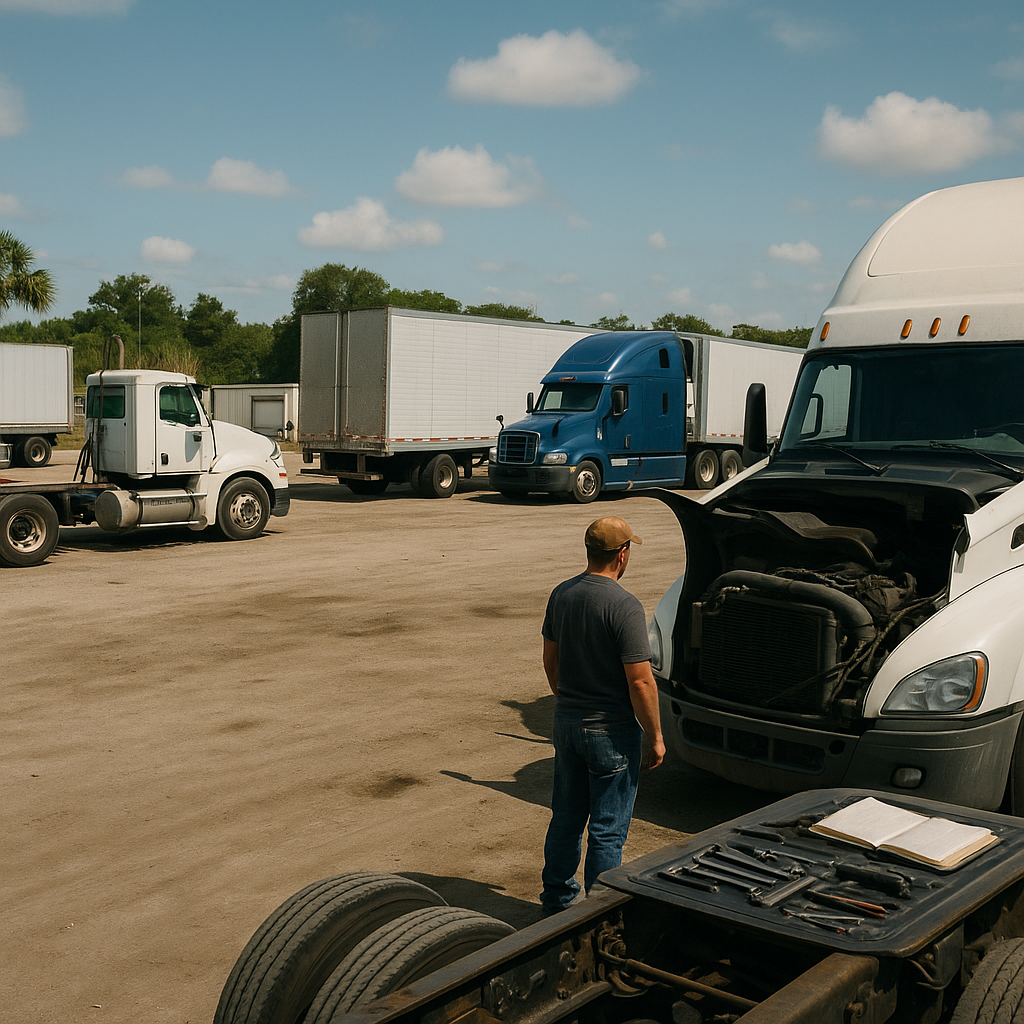
Florida long haul trucking insurance is built for freight hauling, longer routes, and real commercial risk. If you run loads across state lines or spend days at a time on the road, your policy needs to match your operation, not just your truck.
What Florida long-haul trucking insurance actually covers#
Florida long-haul trucking insurance covers the business risks that come with hauling freight over longer distances, often across state lines. It usually combines auto liability, cargo, physical damage, and other operation-specific coverages that a personal auto policy or generic business auto policy was never built to handle.
Long-haul is different from local hauling because the exposure is different. More miles usually means more time in traffic, more overnight stops, more cargo handoffs, and more chances for a claim that involves a shipper, broker, trailer owner, or lender.
Why long-haul is different from local hauling#
A local box truck making short runs in one city doesn’t face the same pattern of risk as a tractor pulling loads through multiple states. A long-haul operator might deal with a crash on I-75, a theft at a truck stop, weather damage in another state, or a cargo dispute after a late delivery window.
That difference is why coverage needs to line up with actual use. A policy for occasional business driving isn’t the same thing as a policy built for for-hire freight hauling.
The core coverages most operators review#
Auto liability pays for injury or property damage you cause to others in a covered accident. Motor truck cargo covers damage to or theft of the freight you’re hauling, subject to the policy terms and exclusions. Physical damage covers damage to your insured truck, usually through collision and comprehensive-style causes, not freight loss. General liability covers certain non-driving business claims tied to for-hire operations, not highway crash liability.
Most owner-operators start by reviewing auto liability, motor truck cargo coverage, physical damage, and general liability for truckers. That mix handles most of the exposures people actually worry about.
What a policy should respond to in a claim#
Think in plain terms. If you rear-end a car in heavy traffic, auto liability is the coverage people look to first. If a load is stolen during an overnight stop, cargo is the policy section that may matter. If you back into a post in a yard and damage your tractor, that’s usually a physical damage issue, not cargo.
The problem is that many operators only find out what they bought after a loss. If you’re not sure whether your current setup matches your long-haul operation,
Florida rules vs. FMCSA requirements#
Florida long-haul trucking insurance has to be viewed through two lenses: Florida state rules and federal trucking rules. Florida can control state-level registration and insurance issues, but interstate for-hire carriers also have to meet FMCSA financial responsibility rules that depend on what they haul and how they operate.
What Florida regulates#
The Florida Department of Highway Safety and Motor Vehicles handles state vehicle and registration functions that matter to truck operators. Florida also has state-level administrative rules and insurance frameworks that can affect how a vehicle is titled, registered, or documented.
But state rules are not the whole picture for a long-haul carrier. A Florida address doesn’t turn an interstate trucking operation into a Florida-only risk.
What federal rules control#
The FMCSA is the Federal Motor Carrier Safety Administration, the federal agency that regulates interstate motor carriers. If you operate for-hire in interstate commerce, your insurance requirements can be tied to your authority, cargo, vehicle weight, and carrier type. Under 49 CFR Part 387, for-hire interstate carriers hauling general freight in vehicles over 10,001 pounds must carry at least $750,000 in public liability, while some operations require more, such as auto haulers or hazmat.
The MCS-90 is an endorsement tied to certain federally required liability filings for motor carriers. Your MC number is your operating authority number for regulated for-hire interstate operations.
Why state minimums and federal minimums are not the same#
A lot of bad advice starts here. A personal auto policy does not satisfy interstate trucking requirements, and a state minimum for a non-trucking vehicle does not automatically satisfy FMCSA rules for a for-hire carrier.
The right question isn’t "What’s Florida’s minimum?" The right question is whether you’re for-hire or private, interstate or intrastate, over the weight threshold, and hauling general freight, autos, hazmat, or something else. You can confirm carrier status and federal operating details through FMCSA and public records through SAFER.

How much semi truck insurance costs in Florida#
Semi truck insurance costs in Florida vary with the operation, not just the truck. Your actual premium depends on your authority history, driving record, cargo, route profile, garaging location, equipment value, deductibles, and prior claims.
The main factors that move price#
A newer authority often prices differently than a seasoned authority because the insurer has less operating history to review. A financed newer tractor can cost more to insure physically than an older paid-off unit because the value at risk is higher. Higher-risk or higher-value cargo can also change the quote.
Garaging matters too. Where the truck is kept, how it’s protected, and how often it runs through dense traffic corridors can all affect underwriting.
Why one-truck owner-operators often see different pricing#
A one-truck owner-operator doesn’t spread risk across multiple units. One driver, one VIN, one loss can carry more weight in the underwriting file than it might in a larger fleet.
That doesn’t mean the policy is simple. One-truck operators still need coverage structured around filings, cargo, truck value, and real route patterns. For a deeper breakdown of trucking insurance cost factors, it helps to review how underwriters separate operation type from vehicle type.
Examples of common cost drivers#
Take two Florida operators hauling similar lanes. One has years of clean authority, garages the tractor securely, and runs lower-risk general freight. The other has newer authority, a recent loss, and hauls more theft-sensitive cargo. Same state, very different quote profile.
Deductible choices also matter. A higher deductible can change the physical damage pricing, but it also means more out of pocket if the truck is damaged. That tradeoff has to make sense for your cash flow, not just the quote screen.
Coverage choices that matter most for long-haul operators#
The right long-haul trucking insurance setup is about matching coverage to exposure. Most owner-operators need to get auto liability right first, then decide how cargo, physical damage, trailer-related protection, and non-trucking use fit their actual arrangement.
Auto liability limits and filing implications#
Auto liability is the coverage most directly tied to legal operation and filings. For interstate for-hire carriers, the required minimum depends on carrier type, vehicle weight, and commodity under 49 CFR Part 387, not a blanket rule for every truck on the road.
That matters when you’re setting limits. Some operators carry only what’s required for their authority type, while others choose higher limits because brokers, shippers, or contract requirements demand it.
Cargo and physical damage gaps#
Cargo and physical damage solve different problems. Cargo addresses the freight. Physical damage addresses your insured equipment.
If a load of electronics disappears from a stop, that’s a cargo problem. If your tractor is damaged in a collision, that’s where physical damage coverage comes into play. If your truck is financed, lenders commonly expect physical damage to stay in force.
Non-trucking use, trailer exposure, and add-ons#
Non-trucking liability covers certain non-business use of the truck when you’re not under dispatch and not hauling for pay. It’s not coverage for paid hauling, and it’s not the same as bobtail in everyday conversation, which is why the details matter. If that exposure applies to your setup, review how non-trucking liability actually works.
Trailer exposure is another area where people buy the wrong thing. If you damage a trailer you don’t own, the right answer can depend on whether there’s a signed interchange agreement or simply physical damage exposure to a non-owned trailer. That’s why trailer coverage should match the lease or dispatch arrangement, not a guess.
How to avoid buying the wrong policy#
The fastest way to buy the wrong policy is to insure a trucking business like a regular vehicle. Florida long-haul operators need commercial trucking insurance built around hauling, filings, and freight risk, not personal driving assumptions.
Personal auto vs. commercial truck insurance#
If you use the truck to haul a commercial load, personal auto is not enough. It isn’t designed for for-hire freight operations, and it won’t replace the coverage structure needed for cargo, filings, and truck-specific commercial risk.
A lot of confusion clears up once you understand the commercial trucking insurance basics. The policy has to match what the truck does for money.
One-truck owner-operator mistakes#
Common mistakes include picking the wrong carrier type, understating the operating radius, or leaving out cargo because "the broker didn’t ask this time." Another one is skipping physical damage even when the truck is financed or too expensive to replace out of pocket.
When to review endorsements and exclusions#
The declaration page is only the summary. Endorsements and exclusions decide a lot of what happens when there’s an actual loss.
That’s especially true with cargo conditions, non-trucking use, trailer arrangements, and filing-related liability language. A policy can look fine until a claim lands in the gray area.
How to get covered faster and stay compliant#
You can usually get covered faster when you show up with complete, accurate operating details. The quoting process goes smoother when the insurer doesn’t have to guess what you haul, where you run, who drives, or what truck needs to be insured.
What information speeds up quoting#
Start with the basics:
- Business name and operating details
- USDOT and MC information, if applicable
- VINs and truck specifications
- Driver history and license details
- Cargo class and normal lanes
- Desired effective date
- Garaging location
- Any trailer or leased-equipment arrangement
How policy changes can affect filings#
Filings are insurance-related documents tied to operating authority and compliance. If you cancel, replace, or delay a policy change without checking the timing, you can create a gap that affects your ability to stay active.
That’s why operators should verify status before and after changes. Use SAFER to check public operating status and authority information after binding or making a carrier change.
What to check before and after bind#
Before the policy is issued, confirm the truck details, garaging address, cargo class, and who is actually driving. After bind, confirm effective dates, listed equipment, certificates, and any filing-related items tied to your authority.
Small errors turn into big delays when a load is booked and the paperwork doesn’t match. If you want help sorting that out before it becomes a compliance problem,
When to compare quotes and talk to a trucking insurance specialist#
You should compare options when your operation isn’t a clean, standard owner-operator setup. Multi-state hauling, unusual cargo, leased trailers, new authority, prior losses, or changing business structure can all make a generic quote less reliable.
Signs your operation is not a standard fit#
If you’re not sure whether the quote matches interstate use, cargo class, trailer exposure, or filing needs, slow down and ask. The right fit looks less like a generic template and more like a policy built around the way your truck actually runs.
FAQ#
How much does semi truck insurance cost in Florida?
Semi truck insurance in Florida varies by operation, so there isn’t one useful flat number for every owner-operator. The biggest cost drivers are driving history, years in business, authority history, truck value, cargo type, route profile, garaging location, prior losses, and deductible choices. A long-haul operator with newer authority and higher-risk freight can price very differently from a seasoned carrier hauling lower-risk general freight. The best way to evaluate a quote is to look at whether the coverages, limits, and filings match your real operation, not just whether the premium looks lower at first glance.
What is the new trucking law in Florida?
Usually, there isn’t one single "new trucking law in Florida" that replaces the main federal rules owner-operators hear about. Florida can have state-level vehicle, registration, and administrative requirements through agencies like the Florida Department of Highway Safety and Motor Vehicles, but interstate for-hire carriers still answer to FMCSA rules. Insurance compliance often comes back to whether you’re interstate or intrastate, for-hire or private, what the truck weighs, and what cargo you haul. That’s why operators should separate Florida state requirements from federal financial responsibility rules under 49 CFR Part 387.
Do Florida long-haul truckers need different coverage than local truckers?
Yes, many do. Long-haul operations usually create more interstate exposure, more cargo exposure, more overnight parking risk, and more compliance issues tied to filings and authority. A local operator may have a simpler route pattern and different contract requirements, while a long-haul owner-operator may need a policy built around interstate hauling, broker expectations, and longer time on the road. The exact mix still depends on the operation, but long-haul truckers often need closer review of auto liability, cargo, physical damage, and trailer-related exposure than someone making short local runs.
Is personal auto insurance enough for a trucking business?
No. Personal auto insurance is built for personal driving, not for-hire freight hauling. If you’re using the truck in a trucking business, personal auto usually does not address the commercial liability structure, cargo exposure, physical damage needs, or filing obligations that come with a long-haul operation. That gap can show up at the worst time, like after a crash, a cargo theft, or a compliance review tied to your authority. Even if the truck is only one unit and owner-operated, the policy still needs to reflect commercial use, cargo class, and operating territory.
What happens if my policy lapses while I still have authority?
A lapse can create both compliance and business interruption problems. If your policy supports filings tied to your authority, a gap or cancellation can affect your ability to operate legally or keep loads moving without interruption. It can also create practical problems with brokers, certificates, financing requirements, and reinstatement timing. That’s why effective dates matter so much when switching carriers or making policy changes. Before the truck stays on the road, confirm that the new policy is active, the right equipment is listed, and any required filings have been processed and reflected in the public systems you rely on.
Which coverages should a one-truck owner-operator review first?
Most one-truck owner-operators start with auto liability, cargo, and physical damage. Auto liability is the foundation for road risk and compliance. Cargo matters if you’re hauling freight for others and need protection against loss or theft of the load. Physical damage matters if you need to repair or replace your insured truck after a covered loss, especially if it’s financed or expensive to replace. After that, review non-trucking or trailer-related coverage only if your actual arrangement creates those exposures. The goal is to match the policy to the operation, not pile on coverages that don’t fit.





